NAFTA countries set to blow through Paul Ryan’s May 17 deadline without a deal

Bloomberg.com / Financial Post / May 14


The three countries’ ministers working on the deal aren’t scheduled to meet this week, sources say, though lower-level talks continue and may yield a breakthrough

NAFTA negotiators from the U.S., Canada and Mexico are poised to miss the deadline this week cited by House Speaker Paul Ryan, the latest blown marker for reworking the 24-year-old deal.

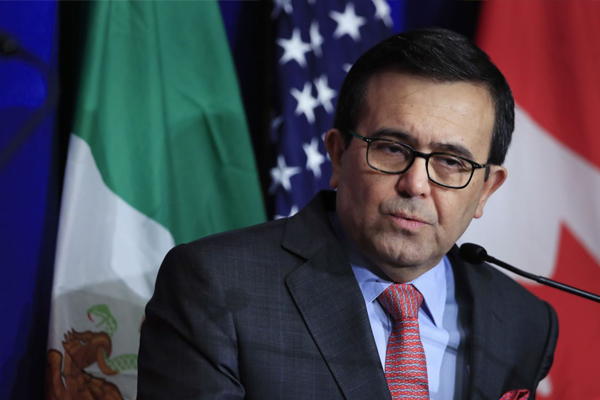
U.S. Trade Representative Robert Lighthizer, Mexican Economy Minister Ildefonso Guajardo and Canadian Foreign Affairs Minister Chrystia Freeland aren’t scheduled to meet together in person this week, according to three government officials familiar with talks who spoke on condition of anonymity. The trio met at least bilaterally every day last week.

The Trump administration is increasingly preoccupied with its efforts to reach a peace deal with North Korea and avoid a trade war with China. Senior economic adviser Liu He will be in Washington this week for talks with the administration on ways to resolve the trade dispute between the two countries.

Lower-level NAFTA talks will continue and could yield a breakthrough and a ministerial meeting, but none has been scheduled so far, according to the people. The three officials said the ministers could meet next week, or later in the month. Chief negotiators are scheduled to hold a conference call early this week to assess the status of the talks and whether a ministerial meeting is feasible later this week, one of the people said.

While the ministers will keep in touch by phone, the lack of a face-to-face meeting after such a big push last week would show how far apart the sides remain on updating the North American Free Trade Agreement. Ryan injected a sense of urgency when he said lawmakers need notice of intent to sign a deal by May 17 so they can vote before this Congress ends in December.

The Canadian dollar pared its gain in Monday trading, while Mexico’s peso extended its losses, falling 0.7 per cent to 19.5585 per dollar at 1:45 p.m. in New York.

WORK CONTINUES

Although Ryan’s comments put the firmest deadline yet on NAFTA talks, many analysts have said U.S. deadlines are murky, and that a deal reached later in May or even in June could theoretically get passed. A spokeswoman for Ryan, AshLee Strong, said the May 17 target is due to timelines set out in U.S. trade law, not an arbitrary political date. “This is not a statutory deadline, but a timeline and calendar deadline,” Strong said by email Friday.

Whether Lighthizer could seek to notify Ryan by Thursday of his intent to sign, without an actual deal in place, is somewhat unclear. Lighthizer cited the House speaker’s deadline to pressure his Canadian and Mexican counterparts during a trilateral meeting Friday, according to two people familiar with the talks. President Donald Trump’s trade chief has indicated he needs a deal this month but hasn’t publicly identified a particular day.

Emily Davis, a spokeswoman for Lighthizer, referred to a written statement he released Friday when asked for comment Monday. In it, Lighthizer said talks have “covered a large number of very complex issues” and the U.S. “is ready to continue working with Mexico and Canada to achieve needed breakthroughs on these objectives.” The statement made no mention of any deadline.

‘TOO STUBBORN’

Former Mexican President Vicente Fox said Mexico will only sign on to a good NAFTA deal, otherwise it could withdraw and pivot to expanded trade with countries such as China, Argentina and Brazil.

“Mexico is not weak on this negotiation. We have leverage, and this should be understood on the U.S. side — which, by the way, everybody understands how this can be solved except Señor Trump,” Fox said Monday in an interview with Bloomberg Television. “He’s too stubborn. He just wants to win, he wants all the marbles for himself and nothing for the rest.”

Freeland is in Mexico City Monday for talks on Venezuela and hasn’t said if she will meet Guajardo privately there. In a sign of the dimming odds for an imminent deal, Guajardo and his team told dozens of stakeholders from Mexico’s private sector they should return home from Washington because no breakthrough was expected, according to two people familiar with the meeting. Stakeholders from all three countries are cancelling or delaying visits to Washington this week, four other people familiar with the talks said.

The existing NAFTA remains on the books unless a country withdraws, which would require six months notice. No country has given that notice, though Trump has threatened to do so. On Friday, the president called NAFTA a “horrible disaster” for the U.S.

Lighthizer has said the political calculus for passing a new NAFTA would change if it had to be voted on by the next Congress. Mexico and Canada have downplayed the urgency to reach a deal this week.

The countries have been holding periodic discussions since August. They had initially sought a deal by December, and then by March, and are now in what they consider a continuous round of negotiations. Talks have focused recently on the auto sector, with Canada hailing progress but with big gaps still remaining. Even if the sides agree on auto rules, they remain far apart on issues such as a sunset clause and dispute-settlement panels.

Ryan is pushing for a deal because of timelines in U.S. trade law, but another deadline looms. Mexico’s election will be held July 1 and looks set to usher in a new president who could seek changes to anything not yet finalized.


Bloomberg.com / Financial Post / May 14

 

NAFTA negotiations enter critical week with the U.S. still pushing a hard line

From: Financial Post / Thomson Reuters / Veronica Gomez and Anthony Esposito / May 7


Sources close to the talks have suggested there is a creeping feeling of uncertainty and pessimism because of gridlock on the most critical issues

WASHINGTON — Talks to update the NAFTA trade deal enter a make-or-break week on Monday, as ministers from Canada, the United States and Mexico seek to resolve an impasse in key areas before elections in Mexico and the United States complicate the process.

Discussions in Washington will center on rules of origin that govern what percentage of a car needs to be built in the North American Free Trade Agreement region to avoid tariffs, the dispute-resolution mechanism and U.S. demands for a sunset clause that could automatically kill the trade deal after five years.

U.S. Trade Representative Robert Lighthizer warned last week that if the talks took too long, approval by the Republican-controlled Congress may be on “thin ice.” The aim is to complete a vote during the “lame-duck” period before a new Congress is seated after November’s congressional elections.

Mexico holds its presidential election on July 1 and the front-runner, leftist Andres Manuel Lopez Obrador, says he wants a hand in redrafting NAFTA if he wins.

“We have a window of opportunity in the next two or three weeks … considering two things: where the talks are now and the political calendars” in Mexico and the United States, said Moises Kalach, head of the international negotiating arm of Mexico’s CCE business lobby, which is leading the private sector’s involvement in the talks.

Sources close to the talks have suggested there is a creeping feeling of uncertainty and pessimism going into the new round because of gridlock on the most critical issues.

At the heart of the NAFTA revamp is U.S. President Donald Trump’s desire to retool rules for the automotive sector in order to try to bring jobs and investment back north from lower-cost Mexico. Despite months of talks on the issue, the sides remain far apart.

A round of talks among Canadian Foreign Minister Chrystia Freeland, Mexican Economy Minister Ildefonso Guajardo and Lighthizer scheduled for last week was cancelled to allow consultations with the Mexican car industry and for the American to go on a trade mission to China.

Mexico’s main auto sector lobby has described the latest U.S. demands, which include raising the North American content to 75 per cent from the current 62.5 per cent over a period of four years for light vehicles, as “not acceptable.”

“The positive momentum on the rules of origin appears to be counterbalanced by the opposite movement on labour wage treatment proposals,” said Flavio Volpe, president of Canada’s Automotive Parts Manufacturers Association.

The U.S. proposal also would require that 40 per cent of the value of light-duty passenger vehicles and 45 per cent for pickup trucks be built in areas with wages of US$16 per hour or higher.

That is seen as a hard pill to swallow for Mexico, where the Ann Arbor, Michigan-based Center for Automotive Research has estimated auto assembly workers average under US$6 an hour, and auto parts plants workers average less than US$3 an hour.

Critics also say it would create a bureaucratic nightmare of paperwork.


From: Financial Post / Thomson Reuters / Veronica Gomez and Anthony Esposito / May 7


Qatar Petroleum to push ahead with expansion despite Gulf crisis

From: REUTERS NEWS AGENCY / 8 Mayo


State energy giant continue with expansion strategy to be on par with oil majors, despite Gulf crisis embargo.

State energy giant Qatar Petroleum (QP) will push ahead with its production expansion and foreign asset acquisition strategy to be on par with oil majors, despite a regional political and economic embargo on Doha, its chief executive said.

Qatar is one of the Organization of the Petroleum Exporting Countries’ smallest producers but is also one of the most influential players in the global liquefied natural gas (LNG) market due to its annual production of 77 million tonnes.

«We are in Mexico, we are in Brazil, we are contemplating investing in the US in many areas, in shale gas, in conventional oil. We are looking at many things,» al-Kaabi said in an interview at QP’s headquarters in Doha.

«We are looking very critically at the United States because we have a position there. We have the Golden Pass that we are investing in,» he said.

Qatar Petroleum is the majority owner of the Golden Pass LNG terminal in Texas, with ExxonMobil Corp and ConocoPhillips holding smaller stakes.

Al-Kaabi said «depending on the project’s cost and feasibility» he expects to take a final investment decision on expanding the Golden Pass LNG by the end of the year.

«I’m not in the business of infrastructure. I’m not going to have a liquefaction plant only. It has to be something that will be linked with an upstream business that we would buy in the US so we need to be naturally hedged,» he added.

To maintain its dominance in the US and Australia, QP is cutting costs at home and seeking to expand overseas through joint ventures with international companies.

«We will always go with one of our international partners that we have business with here in Qatar,» al-Kaabi said. «Some of our partners want to divest, some of our partners want to acquire something together.»

QP is focusing on other opportunities in Mexico, Latin America, Africa and in the Mediterranean, he said. QP is also looking to enter Mozambique, where Exxon and Eni operate, he added.

Al-Kaabi said the share of overseas upstream production will be «a good portion» in the long term, but it will not compare with its share at home.

«Our strategy says we are going to expand in upstream business with a little bit of downstream that will be connected to some other businesses that we are doing and a few one-off deals in petrochemicals,» he said.


We are in Mexico, we are in Brazil, we are contemplating investing in the US in many areas

                                                                        SAAD AL-KAABI


From: REUTERS NEWS AGENCY / 8 Mayo


Mexico Opens Last Round Of Oil Bidding Before Election

From: Oil Price / Oxford Business Group / 28 April 2017


The latest round of open bidding for exploration rights in Mexico’s energy sector received mixed interest, with two further rights sales to take place later in the year.

Of the 35 shallow offshore blocks on offer in the March 27 auction, 16 were sold, with the strongest interest seen in blocks in the Sureste Basin – in the south-eastern portion of the Gulf of Mexico – where all eight offerings found buyers.

Mexico’s state-owned oil producer, Petróleos Mexicanos (Pemex), won seven of the blocks on offer, one in its own right and six more in partnership with overseas energy firms.

Fourteen oil majors were pre-qualified to bid alongside 22 consortia. France’s Total was the biggest winner in the Sureste Basin, coming away with the largest share of three blocks coverin­­g a total of 2342 sq km. It received two of these as part of a consortium with Pemex, and one with BP and Pan American.

The Ministry of Energy estimates that developing and operating the 16 blocks will require investment of $8.6 billion over the lifetime of the deposits.

Related: How High Can Trump Push Oil Prices?

Overall response to the auctions was slightly muted, with local and international majors showing some caution when making offers, partly due to the upcoming presidential election in July 2018, which has sparked concerns about potential changes to energy sector policy and rising supply in the market.

Auctions for shale deposits set for September

Indeed, the March auction was the first of up to three rights sales to be staged this year, with the remaining two land bids scheduled for late July and early September. The former will cover a total of 37 contractual areas in Burgos, Tampico-Misantla-Veracruz and the Sureste Basin.

The September round of bidding will be particularly notable, as it will be the first time that development rights for shale deposits have been auctioned off in Mexico.

Depleting natural gas reserves and high potential for shale – the country has 545trn cu feet of technically recoverable sources of shale gas, according to the World Resources Institute – have driven Mexico to accelerate development of the industry.

Early last month the energy sector regulator, the National Hydrocarbons Commission (Comisión Nacional de Hidrocarburos, CNH), called for bids on nine blocks in the Burgos Basin – located in the state of Tamaulipas, in the north-west of the country – to be auctioned off in September.

The blocks contain an estimated 1.1 billion barrels of oil equivalent (boe), and winning bidders will have the right to conduct exploratory work for conventional oil and gas, as well as any shale deposits identified.

Energy reform supports private sector development

The successive rounds of auctions for exploration and production rights are the keystone of Mexico’s energy reform policy. Launched in 2013, the reforms ended Pemex’s upstream and downstream monopoly, and offer the country the potential to generate $1trn of foreign direct investment by 2040, according to the Mexican Association of Hydrocarbons Companies.


From: Oil Price / Oxford Business Group / 28 April 2017


Mexico’s economy minister says odds of a Nafta deal ‘in principle’ at 80%

From: Market Watch / 9 April

Mexico’s economy minister, Ildefonso Guajardo, said in a TV interview on Monday that the likelihood of signing a renegotiated pact ‘in principle’ on the North American Free Trade Agreement is about 80%. Guajardo, however, said he didn’t expect a Nafta deal would be struck this week, but would likely be signed around the first week of May. He speculated that the U.S. and would be inclined to complete a deal ahead of coming midterm elections. Nafta negotiators are currently meeting in Washington, D.C., for their eighth round of talks. Last week, President Donald Trump said he was looking for a deal in principle at the Summit of the Americas in Lima, Peru, next week. The Mexican peso USDMXN, -0.3324% which started Monday’s session weaker, climbed 0.2% higher versus the dollar, with one buck fetching 18.2450 pesos. The iShares MSCI Mexico ETF EWW, +1.29% was up 0.5% in response.

From: Market Watch / 9 April


A closer look at round seven of the NAFTA negotiations

FROM: Lexology / Dentons / 19 de marzo de 2018


Round seven of the NAFTA negotiations concluded in Mexico City on March 5, 2018. The talks ended with United States Trade Representative, Robert Lighthizer, indicating that the US is prepared to walk away from NAFTA and replace it with separate bilateral agreements. He urged the parties to finish the negotiations quickly, «Now our time is running very short…I fear the longer we proceed, the more political headwinds we will feel.»1 Lighthizer alluded to several ‘political headwinds’ that could impact the future of negotiations, including the presidential election in Mexico, provincial elections in Ontario and Quebec, and the US midterm elections.

The talks were impacted midweek by an announcement from President Trump that his Administration would impose tariffs on steel and aluminum imports. The proposed tariff would be 25% for steel imports and 10% for aluminum imports.

The proposed tariff triggered controversy within the Republican Party and the Administration itself. US House Speaker Paul Ryan, backed by a number of Republicans who support the President, has urged President Trump to back away from threats of a tariff, fearing that it could spark a trade war.2 In a letter to the President, 107 House Republicans wrote, «We urge you to reconsider the idea of broad tariffs to avoid unintended consequences to the U.S. economy and its workers.»3 On March 6, Gary Cohn, President Trump’s economic advisor, resigned. Cohn was a voice of free trade in a White House that is ambiguous at best on trade agreements.4

While the tariffs announced by President Trump ultimately excluded Canada and Mexico «for now», the threat of tariffs proposal loomed over the remainder of the negotiations. Reportedly, the proposed tariff was the starting point for many discussions and was often referred to as «the elephant in the room».5 The tariff proposal further impacted negotiations when President Trump linked the tariffs to the NAFTA negotiations. On March 5, he tweeted «Tariffs on Steel and Aluminum will only come off if new & fair NAFTA agreement is signed».6 Canadian Trade Minister Chrystia Freeland responded in her closing remarks by saying «Canada would view any trade restrictions on Canadian steel or aluminum as absolutely unacceptable.»7 Mexican Economy Minister Ildefonso Guajardo responded by tweeting «Mexico shouldn’t be included in steel & aluminum tariffs. It is the wrong way to incentivize the creation of a new and modern #NAFTA».8 On March 7, President Trump announced that he would initially exclude Canada and Mexico from the proposed tariff. However, the exemption could be rescinded if Canada and Mexico do not agree to an updated NAFTA.9

Notwithstanding the short term exemption on steel, supported by the Steelworkers and Speaker Ryan, President Trump again tweeted on March 5 on the Canadian farm system and how Canada «must treat [US] farmers much better.» Thus, US agricultural demands remain on the table, while Canada continues to steadfastly defend its agricultural sector, including the supply management system. Whether and how the negotiators will successfully bridge this issue remains to be seen.

Limited progress was made in other areas, such as the rules of origin provisions. Jason Bernstein, the US negotiator for rules of origin, was called back to Washington on February 26 to consult with US industry representatives, thus halting negotiations. Talks amongst technical experts are scheduled to resume in advance of the next formal round of negotiations. Similarly, investor-state dispute mechanisms and the proposed sunset clause were not emphasized this round.

With respect to energy, we understand there is agreement to include both a standalone chapter on energy as well as energy related sections in other chapters. The standalone chapter, because it will likely include Mexico unlike certain energy provisions in the current NAFTA, will focus on «more interconnectivity across the networks of energy in North America» and will seek to recognize the changes Mexico has made to allow for foreign investment in its energy sector. 10

Negotiators did close a number of smaller chapters, including regulatory practices, sanitary and phytosanitary measures, and telecommunications. Additionally, Steve Verheul, Canada’s chief negotiator, commented that the parties were close to completing sections on technical barriers but required more time on sections regarding the environment.11 While reportedly half of the chapters are between 80-90% settled, Lighthizer commented that only 6 of NAFTA’s 30 chapters have been officially closed.

With respect to the sanitary and phytosanitary chapter that governs food safety, negotiators have settled on a fast-track system that would prioritize requests between the US, Mexico and Canada. This system is a first of its kind in international food safety agreements. Minister Guajardo said the chapter will help facilitate agricultural trade and it «guarantees animal and vegetable sanitation based in science.»12Additionally, sector annexes on proprietary food formulas and chemicals were closed this round. The annex protects the intellectual property of certain mixes and ingredients and allows for more regulatory cooperation for the use of chemicals. 13

The eighth round of NAFTA talks is expected to take place in Washington in April, subject to availability of Ministers who are traveling for other international meetings, including the upcoming Free Trade Area of the Americas summit.14


FROM: Lexology / Dentons / 19 de marzo de 2018

Energy Reform Could Generate $1T in Foreign Investment for Mexico by 2040

FROM:  Natural Gas Intelligence / Ronald Buchanan / 19 de marzo de 2018


Mexico’s energy reform could generate $1 trillion of direct foreign investment by 2040, said leaders of the industry lobby, Mexican Association of Hydrocarbon Companies, earlier this month.

The association, known by its Spanish acronym Amexhi, was presenting its Agenda 2040, a huge volume that reviews the industry’s past, from its origins at the beginning of last century; the present, including current uncertainties; and a future through 2040 that would «transform Mexico.»

Amexhi President Alberto de la Fuente admitted that the investment goal is ambitious.

The Agenda presupposes that power and hydrocarbons would account for  4% of gross domestic product by the target date. And, de la Fuente emphasized, it would require accurate instrumentation of the reform’s precepts, «as well as the resolution of challenges that are a legacy of the previous model.»

The defense of the Agenda would require four watchwords, he added: «Steadfastness, competence, transparency and knowledge.»

Amexhi has taken pains to remain neutral during the current campaigns for Mexico’s July 1 presidential election.

«All the candidates have shown interesting elements in their policy statements,» said Enrique Hidalgo, president of ExxonMobil Exploracion y Produccion Mexico, and the coordinator of Agenda 2040.

Some of the industry group’s sympathizers, however, have claimed that the pronouncements of the current leader in the race, Andres Manuel Lopez Obrador, who helms the left wing nationalist Morena party, has been less than steadfast in support of the reform. They also claim that his proposal for new refineries show a lack of understanding of the industry.

At the moment, the No. 2 in the race is Ricardo Anaya, leader of the National Action Party, the traditionally pro-business PAN. But Anaya has yet to issue any policy statements on energy.

Anaya also has embraced policies of left-wingers with whom he has formed an alliance. With them, he signed a statement of «No to the gasolinazo» — the liberation of gasoline prices.

Running third in the opinion polls is senior technocrat Jose Antonio Meade of the incumbent Institutional Revolutionary Party, the PRI. Meade was hand-picked by President Enrique Pena Nieto.

Meade’s loyalty to the energy reform has not been questioned. However, his loyalty to Peña Nieto has so far placed a political millstone around his neck. Pena Nieto is said to be the most unpopular Mexican president since political opinion polls were first published in the nation late in the 20th century as its democratic era began to dawn.

The democratic dawn has begun late for the former state monopolies of oil and natural gas, Petroleos Mexicanos (Pemex) and power, Comision Federal de Electricidad, the CFE.

Neither is free to set a budget, as Congress and the Finance ministry keep a tight grip on their spending. The Pemex and CFE unions, particularly that of Pemex, have corporate powers that go well beyond the defense of the interests of the workers in terms of pay and conditions.

The challenge are considerable, said senior analyst Arturo Carranza of Mexico’s National Institute of Public Administration. But, he added, the rewards are realistic.

Agenda 2040 proposes 15 bid rounds to lease oil and gas acreage. Since the 2013-14 reform was enacted, there have been two rounds featuring eight separate completed lease auctions. Three auctions are currently underway for the third round.

«But the pace has been stepped up and it can be pushed further,» Carranza said. «The country’s potential is beyond question for the industry. And the government has to do its part by identifying opportunities that the companies can grasp. In return, it can reap the benefits, such as royalties, on behalf of the nation.

«At the same time, the government has to cast off the restrictions on the budgets of Pemex and the CFE,» he added.

De la Fuente said at the presentation that about 80% of the nation’s oilfields are currently in decline, «but the best tool that’s available to revert the trend is the energy reform.»


FROM:  Natural Gas Intelligence / Ronald Buchanan / 19 de marzo de 2018

Mexico Economy Minister: NAFTA Must Remain Trilateral Accord

FROM: Voa News / Reuters / 3 de marzo de 2018

MEXICO CITY — Mexico’s Economy Minister Ildefonso Guajardo on Tuesday rejected making a bilateral trade treaty with the United States, saying the North American Free Trade Agreement, which is currently being renegotiated, must remain a three-country accord.

On Monday, U.S. Trade Representative Robert Lighthizer said time to rework the deal was running «very short» and again raised the possibility of the United States pursuing bilateral deals with its partners, while stressing that Washington would prefer a three-way agreement.

NAFTA «has to be a trilateral accord, given the conditions of integration in North America,» Guajardo said in an interview with the Televisa network on Tuesday. «It must be that way.»

Lighthizer said on Monday that Mexico’s presidential election and the looming expiry of a congressional negotiating authorization in July puts the onus on the United States, Mexico and Canada to come up with a plan soon.

The latest round of talks have been clouded, however, by U.S. President Donald Trump’s plans to launch metals tariffs. On Monday, Trump tweeted that «tariffs on Steel and Aluminum will only come off if new & fair NAFTA agreement is signed.»

Guajardo said on Tuesday that if the U.S. government were to push ahead with metals tariffs that included Mexico, the country would be forced to respond with politically targeted tit-for-tat responses.

«There’s a list (of U.S. products) that we are analyzing internally, but we won’t make it public, we’re going to wait,» Guajardo said.

He also said that in a meeting in Washington last week, in which he met Commerce Secretary Wilbur Ross, he told the U.S. official that Mexico should not be included in the proposed tariffs.

«We’re allies in national security … our industries are highly integrated, we buy more (U.S.) steel than we sell, and so there’s no point in shooting oneself in the foot,» he said.


FROM: Voa News / Reuters / 3 de marzo de 2018

The economic relationship between Mexico and the United States

FROM: Oup Blog / Roderic Al Camp / 17 de febrero de 2018

Mexico and the United States share a highly integrated economic relationship. There seems to be an assumption among many Americans, including officials in the current administration, that the relationship is somehow one-sided, that is, that Mexico is the sole beneficiary of commerce between the two countries. Yet, economic benefits to both countries are extensive.

Mexico has played a significant role in the rapid expansion of US exports in the 1990s and 2000s. It alternated between the second and third most important trade partner of the United States in the last decade. In 2014, the United States exported a total of $240 billion worth of goods to Mexico, with the largest  products coming from the computers and electronics, transportation, petroleum, and machinery sectors. By contrast, China only purchased $124 billion of US exports. Exports to Mexico accounted for approximately 1,344,000 jobs in the United States.

California alone, boasting the eighth largest economy in the world, exported more than 15% of its products to Mexico by 2014, exceeding what it trades with Canada, Japan, or China. As of 2014, Mexico’s purchases of California exports supported nearly 200,000 jobs in the state. In fact, 17% of all export-supported jobs in California, which account for a fifth of all individuals employed in the state, are linked to the state’s economic relationship with Mexico. More than half of those export-related positions can be traced to the North American Free Trade Agreement. California and Texas – the two largest economies in the United States, and two of the three largest state/provincial economies in the world – are significantly influenced economically by Mexico.

In 2014, a heavy portion of exports from six US states were purchased by Mexico: 41% in Arizona, 41% in New Mexico, 36% in Texas, 25% in New Hampshire, 23% in South Dakota, and 23% in Nebraska. As Senator John McCain noted several weeks ago, the Trump administration’s decision to renegotiate, rather than withdraw from NAFTA, prevented a horrific economic impact on Arizona. The GDP of the United States and Mexican border states accounts for a fourth of the national economy of both countries combined, exceeding the GDP of all the countries in the world except for the United States, Japan, China, and Germany.

The United States provides the single largest amount of direct foreign investment in Mexico, but what I want to stress, and to educate Americans about, is that Mexican entrepreneurs and venture capitalists invest heavily in the United Sates. By 2013, Mexico had invested $33 billion, the only emerging economy among the top fifteen countries with direct foreign investments in the United States. In 2015, Pemex, the government oil company, opened the first retail gasoline station in the United States, in Houston, and plans on opening four more in that city. This is a pilot project to test the American market nationally. OXXO, another Mexican firm, has opened two convenience stores in Texas, and plans on investing $850 million to open 900 stores in the United States.

Finally, Mexico also influences the US economy through tourism in the same way that American tourists play a central role in Mexico’s economy. In 2014, 75 million foreigners visited the United States, generating $221 billion dollars. Canada accounts for the largest number of visitors each year, followed by Mexico, which provided 17 million tourists in 2014, who spent $19 billion. Along the border, at the end of the decade, Mexican visitors generated somewhere around $8 billion to $9 billion dollars in sales and supported approximately 150,000 jobs.

Another way to look at the relationship between Mexico and the United States is through cultural influences.  Mexico exerts impact through music, food, film, and language. For example, there are multiple fast-food chains that spe­cialize in Mexican food. Grocery stores stock more items originating from Mexico than any other ethnic cuisine in the world, including beers, beans, hot sauces, peppers, and torti­llas. Corona is the best-selling foreign beer in the United States. Mexican foods such as guacamole and caesar salad are so com­monplace that they have lost their identity as Mexican cuisine.

The use of Spanish words and Mexican slang is evident in ev­eryday language in the United States; such terms range from “mano a mano” to “macho,” “enchilada” to “margarita,” and “rancho” to “hacienda.” According to a Pew Center study in 2011, 38 million individuals in the United States five years or older showed that the majority of them were Mexican, and were speaking Spanish at home. Spanish is also the most widely spoken non-English language among Americans who are not from a Hispanic country. The size of the Spanish-speaking audience in the United States has also influenced the growth of Mexican films. The musical influence has kept pace with cuisine. In 2010, the New Yorker magazine ran an extensive article about Los Tigres del Norte, a musical group from San Jose, California, who represent the norteño musical style. They boast a huge following among music fans. Selena, who died two decades ago, has sold more than 60 million albums, including songs representing the mariachi and ranch­era genres, and the number of copies of her posthumous best-selling album of all time, Dreaming of You, reached five million by 2015. Among young adults (18 to 34 years of age) who listen to the radio, Mexican regional music ranks seventh in popularity.

The relationship between the United States and Mexico has become more complex over time, incorporating cultural, musical, economic, familial, political, and security relationships beneficial to both countries and its citizens. But the most dramatic change in those many facets of our relationship with each other is the degree to which Mexico’s impact on and within the United States has grown in importance. Equally important to consider is that in spite of President Trump’s public criticisms of Mexico, our relationship at numerous levels, public and private, remains strong.


FROM: Oup Blog / Roderic Al Camp / 17 de febrero de 2018

Mexico’s economy rebounds in fourth quarter as elections loom

FROM: Reuters / Michael O´Boyle / 30 de enero de 2018


MEXICO CITY (Reuters) – Mexico’s economy bounced back more than expected in the fourth quarter, according to preliminary data, but signs of slowing growth could feed discontent ahead of the presidential election in July.

Gross domestic product in Latin America’s second-biggest economy grew around 1.0 percent in seasonally adjusted terms in the October-December period, compared with the previous quarter, the national statistics agency said on Tuesday.

A Reuters poll had forecast an expansion of 0.6 percent. The economy rebounded after shrinking 0.3 percent in the third quarter as the country recovered from two devastating earthquakes that dented activity in the July-September period.

Higher interest rates and persistent inflation could weigh on consumer demand that helped support the Mexican economy last year amid uncertainty around U.S. President Donald Trump’s threats to pull out of a free-trade deal with Mexico.

It is still unclear if Mexico, Canada and the United States will be able to renegotiate the North American Free Trade Agreement (NAFTA), adding to concerns about the outcome of Mexico’s presidential race, which a leftist candidate leads in the polls.

“Important investment decisions may potentially be postponed, scaled down or even canceled,” Goldman Sachs economist Alberto Ramos wrote in a note to clients.

Data showed that the industrial sector edged up 0.1 percent in the fourth quarter compared with the prior quarter, crimped by a decline in oil production.

Agriculture grew 3.1 percent on a quarter-on-quarter basis while services grew 1.2 percent.

Mexico’s central bank is expected to hike interest rates again in February to contain a surge in inflation. Higher prices and more expensive loans could weigh on consumer demand, analysts said.

Mexico’s economy grew 1.8 percent in unadjusted terms compared with the same quarter a year earlier, the agency said.

For full-year 2017, the economy expanded at an unadjusted 2.1 percent rate, down from 2.9 percent in 2016. That is the lowest annual rate of expansion since 2013, President Enrique Pena Nieto’s first full year in office.

”The Mexican economy is surviving rather than thriving,” said Neil Shearing, an economist at Capital Economics.

Pena Nieto promised to boost Mexico’s anemic growth rates by passing major economic reforms, such as opening the energy sector to private investment. But an oil price slump sabotaged hopes to supercharge growth, as Pena Nieto had promised.

Slack growth could fuel support for opposition candidates in the July 1 election.

A poll on Monday showed leftist Andres Manuel Lopez Obrador consolidated support in his bid for the Mexican presidency, but the race has tightened as another opposition contender gained ground while the ruling party trailed.


FROM: Reuters / Michael O´Boyle / 30 de enero de 2018