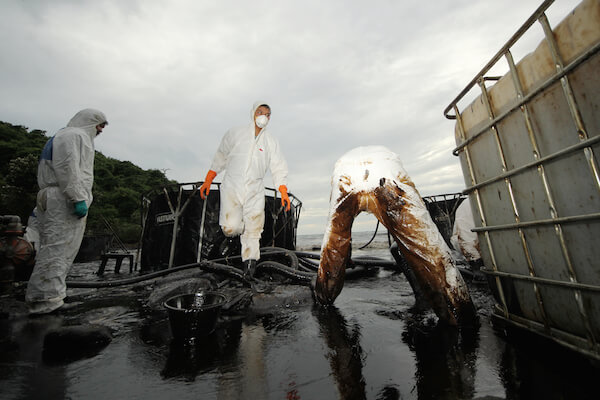
Is Mexico Set To Boost Oil Output?
Oil Price / By The Dialogue / August 16
On July 27, Mexican president-elect Andrés Manuel López Obrador said his government will earmark more than $9 billion for state-run energy companies next year and start working on a new oil refinery in southern Mexico. The moves seek to reduce reliance on fuel imports from the United States while boosting the country’s oil production, which has significantly fallen off in recent years. López Obrador did not say how he would fund his proposals, an omission that worries analysts concerned about Pemex’s already heavy debt burden. He also announced Octavio Romero Oropeza as the incoming head of Pemex. Will the promised investment help accelerate Pemex’s oil and gas production? What else is needed to boost output? How well prepared is Romero Oropeza to lead Pemex, and what should his priorities be? Four Mexican energy experts weighed in with their opinions on these developments.
George Baker, publisher of Mexico Energy Intelligence in Houston: The 116-page energy sector document that the Morena transition team issued on July 10 sports both good and bad ideas. First, among the good ideas, is advocating independent unions in the oil sector (the first time since 1935 that a political party has done this). Second is suspending until further review the so-called farm-outs of Pemex—the idea that civil servants (Pemex employees) and market-disciplined managers of oil companies can have a joint venture based on sharing risk and reward only makes sense on paper. Third is promoting the concept of intelligent cities, including low energy consumption, renewable energy and intelligent grids. A fourth good idea is expanding the grid of natural gas pipelines and the use of renewable energy sources and cogeneration. Among the bad ideas: first is reactivating the refinery project in Tula and analyzing the construction of another refinery in the Gulf of Mexico. Pemex refinery upgrades have gone badly for the past 20 years, notably in Cadereyta, Villahermosa and Tula. A new refinery could take three years just for design and another three for contracting and financing. López Obrador would likely leave office before the first shovelful of earth was turned for the new refinery. Second is the upgrade of the role of Pemex in the energy space. The Morena team proposes to eliminate the so-called ‘asymmetrical regulations’ that restrict Pemex to compete effectively—to aspire to ‘make Pemex great again’ as a state agency is to ignore global success stories of state oil companies with mixed-equity structures, market financing and professional management. Finally, a third bad idea is to overstate (and obfuscate) the potential for change via public policy: there is nothing that is actionable in statements such as ‘the necessary investments in Pemex should be made,’ or ‘efforts to increase exploration and production of natural gas should be made to favor the petrochemical industry,’ or ‘deepen and coordinate all efforts to eliminate the black market in petroleum products.’ Notably, one word that does not appear in the text is ‘corruption,’ an unexpected omission by a candidate that vowed to end corruption by example. Finally, former Pemex director general Adrián Lajous recently calculated the average tenure of a director general as two years and four months. Pemex, legally configured as an agency of the federal government, always has a dozen cooks in its kitchen of corporate governance. If a director general had the authority to order early retirement for 35,000 Pemex unionized workers, there would be opportunities for leadership.
David Shields, independent energy consultant based in Mexico City: In a previous comment for the Energy Advisor on June 15, I mentioned that President-elect López Obrador’s energy team has excellent, progressive plans in renewable energy. Sadly, the same does not apply to conventional energy. The naming of Octavio Romero and Manuel Bartlett to head state-run Pemex and the Federal Electricity Commission (CFE) has been severely criticized because of their hardline political, ideological, non-technical, non-business nature. They may be okay for rooting out corruption, but they add to fears that recent energy reforms may be rolled back, even if they and López Obrador himself deny legal amendments will be made. Congress will ultimately decide on this, and the outlook there is bad. Reforms can be reversed in practice, anyway, just through day-to-day opposition. López Obrador says he will push oil output up sharply to 2.5 million barrels per day, but reserves and reservoirs are largely depleted, there are no new discoveries, and there is not enough money for a vast exploration effort. Foreign operators will need several years to develop their projects. His best bet for ramping up output quickly would be fracking, but he promises to prohibit that, thinking that environmental risks will be greater than the benefits. His refining plans are unrealistic, too. López Obrador´s native Tabasco State offers the wrong site and the wrong logistics for a large-scale refinery to be built in just three years. Such a project normally requires two years to study, plan and tender, then another five or six years to build. Even then, it can hardly be profitable if Mexico produces and processes only very heavy crude. Intentions to rescue Pemex and reduce reliance on energy imports are good, but the prospects are not.
Oil Price / By The Dialogue / August 16
Iberdrola está lista para participar en proyectos energéticos
En México, la petrolera española Iberdrola está preparada para aprovechar las oportunidades de crecimiento derivadas de la reforma energética aprobada por el gobierno mexicano.
En México, la petrolera española Iberdrola está preparada para aprovechar las oportunidades de crecimiento derivadas de la reforma energética aprobada por el gobierno mexicano.
En ese sentido anunció el miércoles que avanza en la construcción de dos nuevos ciclos combinados y de una planta de cogeneración, a la que se le añadirá una segunda en el segundo trimestre del año.
Además, la empresa está construyendo dos parques eólicos en el país, donde su cartera renovable asciende a 900 MW.
Reporte financiero
Iberdrola repórtó un flujo operativo (EBITDA) de 6.964,5 millones de euros durante el 2014, esto es un aumento del 3.1% comparado al año previo.
Sin embargo su utilidad neta se situó en 2,326.5 millones de euros, esto es una caída del 9.5% al cierre del año.
La caída obedeció, además de a las medidas regulatorias que afectan fundamentalmente al negocio en España, al menor importe de resultados no recurrentes en comparación con el 2013.
Estos resultados reflejan el avance en el cumplimiento de las perspectivas de EBITDA y utilidad neta de la compañía para el periodo 2014-2016, como consecuencia del desarrollo de un modelo basado en un mix de negocio adecuado, con una diversificación geográfica equilibrada, una gestión financiera activa y un alto nivel de eficiencia operativa.
Por países, en Reino Unido destacó la aprobación de un marco regulatorio y retributivo hasta el 2023 para la distribución, y hasta el 2021 para el transporte, con los que se espera realizar una inversión total de 8,270 millones de euros. También la puesta en marcha de West of Duddon Sands -el primer parque eólico marino de Iberdrola, con 389 megavatios (MW)- y la adjudicación de capacidad para todas las plantas de generación en funcionamiento ofertadas en las subastas de capacidad celebradas recientemente (2.261 MW).
En Estados Unidos, 2014 estuvo marcado por la mejora de la retribución para el negocio de redes en Maine, la culminación de la línea de transporte que conecta EU con Canadá y la finalización del parque eólico de Baffin (202 MW).

Copyright: El Economista
Empresas globales invertirán 11,000 mdd en México
El Consejo Ejecutivo de Empresas Globales en México, un organismo que aglutina a 39 compañías internacionales con operaciones en el país, anunció una inversión de 11,170 millones de dólares (mdd) para instalar o aumentar presencia.
El consejo está integrado por empresas como HP, Bayer, Siemens, GE, Exxon, IBM, BBVA Bancomer o Accenture.
El presidente del Consejo, Pedro Padierna, dijo en un anuncio conjunto con el presidente de México, Enrique Peña Nieto, que además de los 11,170 mdd, se destinarán 13,503 mdd para gastos de operación en estas empresas.
Se espera que estas inversiones generen hasta 56,000 empleos directos e indirectos.
Por su parte, el presidente Enrique Peña Nieto dijo que este anuncio demuestra “la confianza que se tiene en México en un contexto de enorme volatilidad”.
“Esperamos que más anuncios como éste se repliquen y extiendan en nuestro país. Las reformas estructurales cimentaron las plataformas de crecimiento en el país, para generar bienestar para las familias mexicanas. Sea en materia de seguridad, económica, todos nuestros esfuerzos están orientados”, agregó Peña Nieto.

Fuente: Forbes
Imagen: Reuteurs