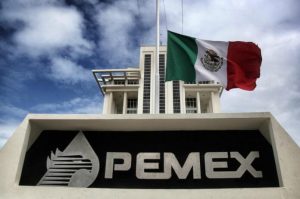
Unfinished business: Putting the final touches on the USMCA

The Hill /  David L. Goldwyn / October 29


The proposed US Mexico Canada Agreement (USMCA) makes important, but incomplete, progress in securing an integrated North American energy market.

In terms of progress, the agreement preserves zero tariffs for trade in oil, gas and petroleum products across North America. It effectively locks in Mexico’s historic energy reforms by ensuring that Mexico cannot reinstate restrictions on US investment in the oil and gas sector. A “ratchet” clause ensures that if Mexico decides to further liberalize the sector, then that higher floor becomes the new USMCA commitment.

While Investor-state dispute settlement (ISDS) mechanisms are weaker, they remain in force for certain “covered sectors,” including oil and gas investments in Mexico and power generation and pipeline investments where the investor has a contract with the government.

These are all positive steps for North American energy security. Mexico and Canada provide the United States with the heavy grades of oil not produced domestically, helping US refineries produce gasoline at the lowest possible cost. Thanks to this relationship,  the United States is an efficient net exporter of petroleum products.

However, while this progress is laudable, it remains incomplete.

In the rush to conclude the agreement, effective protection for power generation investments like new wind and solar plants, refining and natural gas infrastructure, and power transmission lines were left out, perhaps inadvertently. Contracts for these investments are with state owned enterprises (SOEs) like Mexico’s CFE and PEMEX, which do not now fall within the definition of “federal government” because they are not disposing of assets but signing a contract for service. These essential investments, in the gas and refined product infrastructure which carry US products to and through Mexico, transmission lines which carry US electricity south, and investments in power generation are not permitted to bring ISDS claims to enforce their rights.

This is an oversight, and a protection these investments should enjoy. Rather, the proposed agreement creates an uneven playing field as investors who do have a contract with the Federal government, say for exploration, are entitled to bring an ISDS claim for any of their businesses, while those who do not have such contract do not. The problem can be easily fixed by expanding the definition of federal government to include these wholly owned SOEs.

These (for now) unprotected investments are critical to North American energy security. They secure US exports of electricity and natural gas and assure the continued reliability of the North American electricity system. They are the lifelines which carry US exports to Mexico – currently our number one customer for natural gas and petroleum products.

Protecting investments in Mexico’s electricity sector improves US national security by supporting Mexico’s prosperity through a more resilient power system.

Finally, if US power sector investments in Mexico are not protected and thus potentially hindered or lost, China is certain to fill the gap.

Chinese investment in all forms of power generation, transmission, and distribution is rapidly accelerating throughout Latin America. According to a recent Atlantic Council report, cumulative flows of Chinese foreign direct investment in Latin America have reached $110 billion, with $25 billion in oil and gas investment, and $13 billion in electricity, utilities and alternative energy. China’s State Grid has invested $7 billion in Brazil, through a combination of greenfield investments and acquisitions.

If the Mexican government is willing to offer these investments protections (and they are), and create a level playing field for American companies investing in our closest neighbor, the US should not object.

Fortunately, there is still time to correct the definition of eligible claimants as both sides ready the agreement for ratification.  With these modest steps, the United States, Mexico and Canada can improve the resilience of North America’s energy system, and the US can simultaneously advance its economic and national security interests.

David L. Goldwyn is president of Goldwyn Global Strategies, an international energy advisory consultancy and serves as chairman of the Atlantic Council Global Energy Center Energy Advisory Group. He served as the U.S. State Department’s special envoy and coordinator for international energy affairs from 2009 to 2011; he previously served as assistant secretary of energy for international affairs and as national security deputy to U.S. Ambassador to the United Nations Bill Richardson. He is a member of the U.S. National Petroleum Council and the Council on Foreign Relations.


The Hill /  David L. Goldwyn / October 29

 

Is Mexico Set To Boost Oil Output?

Oil Price / By The Dialogue / August 16


On July 27, Mexican president-elect Andrés Manuel López Obrador said his government will earmark more than $9 billion for state-run energy companies next year and start working on a new oil refinery in southern Mexico. The moves seek to reduce reliance on fuel imports from the United States while boosting the country’s oil production, which has significantly fallen off in recent years. López Obrador did not say how he would fund his proposals, an omission that worries analysts concerned about Pemex’s already heavy debt burden. He also announced Octavio Romero Oropeza as the incoming head of Pemex. Will the promised investment help accelerate Pemex’s oil and gas production? What else is needed to boost output? How well prepared is Romero Oropeza to lead Pemex, and what should his priorities be? Four Mexican energy experts weighed in with their opinions on these developments.

George Baker, publisher of Mexico Energy Intelligence in Houston: The 116-page energy sector document that the Morena transition team issued on July 10 sports both good and bad ideas. First, among the good ideas, is advocating independent unions in the oil sector (the first time since 1935 that a political party has done this). Second is suspending until further review the so-called farm-outs of Pemex—the idea that civil servants (Pemex employees) and market-disciplined managers of oil companies can have a joint venture based on sharing risk and reward only makes sense on paper. Third is promoting the concept of intelligent cities, including low energy consumption, renewable energy and intelligent grids. A fourth good idea is expanding the grid of natural gas pipelines and the use of renewable energy sources and cogeneration. Among the bad ideas: first is reactivating the refinery project in Tula and analyzing the construction of another refinery in the Gulf of Mexico. Pemex refinery upgrades have gone badly for the past 20 years, notably in Cadereyta, Villahermosa and Tula. A new refinery could take three years just for design and another three for contracting and financing. López Obrador would likely leave office before the first shovelful of earth was turned for the new refinery. Second is the upgrade of the role of Pemex in the energy space. The Morena team proposes to eliminate the so-called ‘asymmetrical regulations’ that restrict Pemex to compete effectively—to aspire to ‘make Pemex great again’ as a state agency is to ignore global success stories of state oil companies with mixed-equity structures, market financing and professional management. Finally, a third bad idea is to overstate (and obfuscate) the potential for change via public policy: there is nothing that is actionable in statements such as ‘the necessary investments in Pemex should be made,’ or ‘efforts to increase exploration and production of natural gas should be made to favor the petrochemical industry,’ or ‘deepen and coordinate all efforts to eliminate the black market in petroleum products.’ Notably, one word that does not appear in the text is ‘corruption,’ an unexpected omission by a candidate that vowed to end corruption by example. Finally, former Pemex director general Adrián Lajous recently calculated the average tenure of a director general as two years and four months. Pemex, legally configured as an agency of the federal government, always has a dozen cooks in its kitchen of corporate governance. If a director general had the authority to order early retirement for 35,000 Pemex unionized workers, there would be opportunities for leadership.

David Shields, independent energy consultant based in Mexico City: In a previous comment for the Energy Advisor on June 15, I mentioned that President-elect López Obrador’s energy team has excellent, progressive plans in renewable energy. Sadly, the same does not apply to conventional energy. The naming of Octavio Romero and Manuel Bartlett to head state-run Pemex and the Federal Electricity Commission (CFE) has been severely criticized because of their hardline political, ideological, non-technical, non-business nature. They may be okay for rooting out corruption, but they add to fears that recent energy reforms may be rolled back, even if they and López Obrador himself deny legal amendments will be made. Congress will ultimately decide on this, and the outlook there is bad. Reforms can be reversed in practice, anyway, just through day-to-day opposition. López Obrador says he will push oil output up sharply to 2.5 million barrels per day, but reserves and reservoirs are largely depleted, there are no new discoveries, and there is not enough money for a vast exploration effort. Foreign operators will need several years to develop their projects. His best bet for ramping up output quickly would be fracking, but he promises to prohibit that, thinking that environmental risks will be greater than the benefits. His refining plans are unrealistic, too. López Obrador´s native Tabasco State offers the wrong site and the wrong logistics for a large-scale refinery to be built in just three years. Such a project normally requires two years to study, plan and tender, then another five or six years to build. Even then, it can hardly be profitable if Mexico produces and processes only very heavy crude. Intentions to rescue Pemex and reduce reliance on energy imports are good, but the prospects are not.


Oil Price / By The Dialogue / August 16


BALANCING SHALLOW WATER AND DEEPWATER INSURANCE RISKS

Graciela Álvarez, Chief Executive Officer of NRGI Broker

“We know perfectly how Mexico works, not only from a risk point of view, but also in terms of how the Mexican government and the regulators are setting the pace of this reform” Graciela Álvarez, Chief Executive Officer of NRGI Broker

Interview for Mexico Oil & Gas Review

Grupo Vitesse with their specialized new division NRGI Broker (Energy Insurance Broker) is a boutique firm targeting clients who want a personal advisor, either because they are new to the industry or because they want to pay close attention to the details in their business. The most important thing for NRGI Broker’s clients is that the firm has been at the forefront of the oil and gas sector for 25 years and is well acquainted with PEMEX. Having been active for a third of Mexico’s contemporary petroleum history, the firm witnessed the booming of the Sound of Campeche, where the largest field in the country, Cantarell, is located. “I was there at that time securing the EPC1, EPC2, and EPC3 contracts that gave rise to the Cantarell project,” shares Graciela Álvarez, Chief Executive Officer of NRGI Broker. She says a new period has now begun for NRGI Broker, as the firm seeks to consolidate itself in the shallow waters niche while keeping an eye out for any deepwater opportunities that might arise.

However, the capacity required to cover risks in deepwater operations is higher given the kind of incidents that could occur. Risks are lower for shallow waters, as operations are less complex. Certain international insurers are highly specialized in deepwater, a segment that is new to Mexico, where they will be able to make their niche. In addition, international insurers will find their mark in Mexico, according to Álvarez. This is because they have already tamed the challenging climactic conditions of the North Sea and overcome the socio-political risks of the Persian Gulf.

Another issue is that insurance companies are concerned about the accumulation of risks that will result from the number of platforms that are estimated to come into the same basin and the probability of hurricanes or wind storms. Despite these issues, NRGI Broker believes it will find working in Mexican deepwaters to be a familiar setting. “In Mexico, everything that has to do with the sea or subsoil is placed in foreign markets as a way to diversify risks, which is what we do through reinsurance. That is a normal and standard practice worldwide,” Álvarez comments.

For NRGI Broker, the opening of the sector comes at a great time as the company has spent years attaining knowledge and creating trust from its local customers. Their client list is made up of PEMEX contractors as well as oil and gas industries around the world through reinsurers. Alvarez states, “Our position has enabled the group to become a benchmark. We know perfectly how Mexico operates; not only from a risk point of view, but also in terms of how the Mexican government and the regulators are setting the overall pace of this Energy Reform.”

Álvarez is aware of the expectations surrounding the Energy Reform, and of the investment possibilities this brings about to oil companies, particularly those involved in deepwaters. However, the devaluation of the Mexican peso, the drop in the price of oil per barrel in the global market, and PEMEX’s budget cuts are affecting the entire industry. In fact, many of NRGI Broker’s long-term clients are now experiencing liquidity problems. “They had great expectations, so they hired senior professionals and made large investments to be ready to continue working competitively,” tells Álvarez. “The price drop and cuts to PEMEX’s budget cannot go unnoticed and the situation affects us all tremendously.”

The oil industry is globally regulated and based on international safety standards. Insurance and security go hand in hand and, according to Álvarez, the entry of new players will spark positive changes. In terms of maintenance, I assume PEMEX will do what it has to do internally, and will be open to participating with foreign players in shallow water operations.” Nevertheless, she points out that the global industry is not well aware of PEMEX’s internal mechanisms. “It has traditionally been a paternalistic company that did provide some coverage to its contractors, but nowhere near enough to satisfy an insurer,” she adds. However, the Energy Reform will force players, including PEMEX, to make proper risk management plans. If not, the NOC and IOCs would risk being in serious trouble if an accident occurred without the proper coverage being in place.

BEGINS A NEW ERA IN THE MEXICO’S ENERGY INDUSTRY

Two of the 14 shallow-water Gulf of Mexico blocks on offer in the first phase of Mexico’s historic Round One oil auction were awarded, both to a consortium featuring a domestic company.shutterstock_923929

Mexico is starting small with its offer of shallow-water fields and onshore blocks this year and saving the big prizes – deep-water fields in the Gulf of Mexico – for later tenders.

Both of the blocks awarded on Wednesday were won by a consortium made up of Mexico’s Sierra Oil & Gas, Houston-based Talos Energy and Britain’s Premier Oil plc.

One of them covers a 194-sq.-kilometer (75-sq.-mile) area off the coast of the Gulf coast state of Veracruz and is projected to contain light oil and dry gas.

The other covers a 465-sq.-kilometer (180-sq.-mile) area off the Gulf coast state of Tabasco and was contested by four other bidders: Norway’s Statoil, U.S.-based Hunt Overseas Oil Company, Argentina’s E&P Hidrocarburos y Servicios and a consortium made up of Italy’s ENI International and U.S.-based CASA Exploration.

The other 12 blocks either received no bids or had offers that were below the minimum 40 percent of pre-tax profits demanded by Mexico’s Finance Secretariat.

Eighteen individual companies and seven consortia had been pre-qualified for Round One’s first phase, but only nine registered on Wednesday and only seven submitted bids for at least one of the blocks.

The initial batch of 14 Gulf of Mexico blocks – located off the coasts of Veracruz, Tabasco and Campeche states – were placed on offer in the first of five phases of Round One, which comprises a total of 169 onshore and offshore blocks.

The second phase of Round One, in which nine shallow-water fields will be on offer, is scheduled to take place on Sept. 30, while the third phase consisting of 26 onshore blocks is to be held on Dec. 15.

The final two phases of Round One still have no established timetable.

Pemex, which obtained 83 percent of Mexico’s proven and probable reserves and 21 percent of its potential resources in a so-called «Zero Round» of non-competitive bidding last year, said last week it would not participate in the initial phase of Round One.

Mexico’s government is looking to the energy overhaul to attract tens of billions of dollars in investment and reverse a roughly 30 percent decline in Mexico’s oil output, which peaked at 3.38 million barrels per day (bpd) in 2004 and currently stands at roughly 2.3 million bpd.