Mexico to postpone deep water auction, adjust next oil tender terms

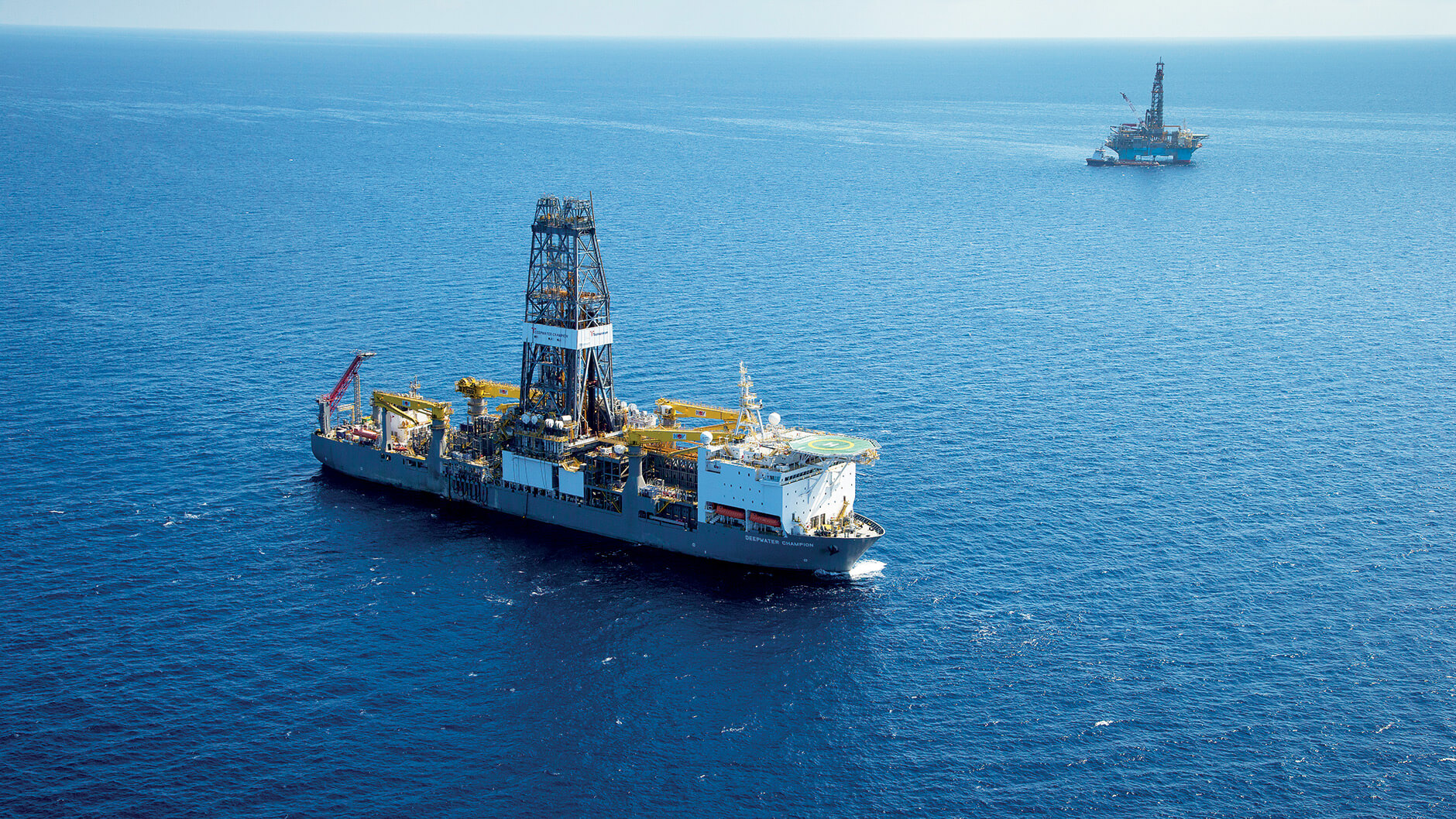
Mexico, which has started to open its nationalized oil industry to additional private investment, will postpone auctions for deep-water oil exploration and production contracts and adjust the terms of upcoming tenders after an inaugural oil auction failed to meet the government’s modest expectations.
shutterstock_173495Energy Minister Pedro Joaquin Coldwell told local television the government will change rules that scared off potential bidders earlier this month, when it was able to auction only two of 14 blocks in a pivotal oil and gas tender.

He signaled that the government will relax its requirement that consortia bidding on oil parcels must have one member act as a guarantor and hold shareholder equity of at least $6 billion to protect the state’s interest in the event of a major accident.

«We are revising the issue of the guarantees,» said Joaquin Coldwell in a Tuesday night interview with top Mexican broadcaster Televisa’s cable news channel Foro TV.

He also said the government would tweak rules prohibiting a consortium from selecting a new company to replace a pre-selected operator that pulls out. He said that rule thwarted bids in this month’s auction.

He said the government will also allow companies to make a second bid in auctions if an initial bid fails to meet a government set minimum.

This month’s disappointing auction was the first of a scheduled five-phase auction that will extend into next year for oil regulator CNH.

Joaquin Coldwell, also chairman of the board of state-owned oil company Pemex, said the critical fourth phase covering lucrative deep water acreage in the Gulf of Mexico would be postponed to allow the government and companies more time to pore over details.

«We are conducting a full evaluation in order to launch the deep water call for bids by the end of September and give us more time to perfect the criteria because we shouldn’t have any margin for error on that,» he said.

The oil regulator had previously said the call for bids, followed by the opening of the corresponding data rooms, would be made by the end of this month.

Joaquin Coldwell said the fifth phase, which was to focus on higher-cost shale and other so-called non-conventional oil and gas fields, has been frozen.

«Right now we have suspended it pending a future evaluation,» he said.

The government had previously said that the fifth phase would be trimmed but would still go forward.


Con información de REUTERS
BEGINS A NEW ERA IN THE MEXICO’S ENERGY INDUSTRY

Two of the 14 shallow-water Gulf of Mexico blocks on offer in the first phase of Mexico’s historic Round One oil auction were awarded, both to a consortium featuring a domestic company.shutterstock_923929

Mexico is starting small with its offer of shallow-water fields and onshore blocks this year and saving the big prizes – deep-water fields in the Gulf of Mexico – for later tenders.

Both of the blocks awarded on Wednesday were won by a consortium made up of Mexico’s Sierra Oil & Gas, Houston-based Talos Energy and Britain’s Premier Oil plc.

One of them covers a 194-sq.-kilometer (75-sq.-mile) area off the coast of the Gulf coast state of Veracruz and is projected to contain light oil and dry gas.

The other covers a 465-sq.-kilometer (180-sq.-mile) area off the Gulf coast state of Tabasco and was contested by four other bidders: Norway’s Statoil, U.S.-based Hunt Overseas Oil Company, Argentina’s E&P Hidrocarburos y Servicios and a consortium made up of Italy’s ENI International and U.S.-based CASA Exploration.

The other 12 blocks either received no bids or had offers that were below the minimum 40 percent of pre-tax profits demanded by Mexico’s Finance Secretariat.

Eighteen individual companies and seven consortia had been pre-qualified for Round One’s first phase, but only nine registered on Wednesday and only seven submitted bids for at least one of the blocks.

The initial batch of 14 Gulf of Mexico blocks – located off the coasts of Veracruz, Tabasco and Campeche states – were placed on offer in the first of five phases of Round One, which comprises a total of 169 onshore and offshore blocks.

The second phase of Round One, in which nine shallow-water fields will be on offer, is scheduled to take place on Sept. 30, while the third phase consisting of 26 onshore blocks is to be held on Dec. 15.

The final two phases of Round One still have no established timetable.

Pemex, which obtained 83 percent of Mexico’s proven and probable reserves and 21 percent of its potential resources in a so-called «Zero Round» of non-competitive bidding last year, said last week it would not participate in the initial phase of Round One.

Mexico’s government is looking to the energy overhaul to attract tens of billions of dollars in investment and reverse a roughly 30 percent decline in Mexico’s oil output, which peaked at 3.38 million barrels per day (bpd) in 2004 and currently stands at roughly 2.3 million bpd.

ExxonMobil starts production from Hadrian South in deepwater gulf

ExxonMobil Corp. has started production in the deepwater Gulf of Mexico from Hadrian South field, where gross output will reach 300 MMcfd of gas and 3,000 b/d of liquids.

Gross production from the field—the company’s deepest subsea tie-back in a mile and a half of water—is expected to reach 300 MMcfd of gas and 3,000 b/d of liquids from two wells.

Hadrian South is 230 miles offshore in the Keathley Canyon area in 7,650 ft of water. The Hadrian-2 discovery well was drilled in 2008 and the Hadrian-4 sidetrack was completed in 2009.

A subsea production system with flowlines is connected to the nearby Anadarko Petroleum Corp.-operated Lucius truss spar, reducing additional infrastructure requirements. Lucius, where ExxonMobil holds 23.3% interest, started production in January (OGJ Online, Jan. 19, 2015).

Net production from Hadrian South and Lucius will reach more than 45,000 boe/d. Gas transport from the fields is supported by a long-term agreement with Williams Partners, operator of the newly launched Keathley Canyon Connector (OGJ Online, Feb. 20, 2015).

“Cooperating closely with Lucius operator, Anadarko, has facilitated the development of a deepwater resource that may not have been possible using a standalone approach,” commented Neil W. Duffin, president of ExxonMobil Development Co.

ExxonMobil operates Hadrian South with 46.7% interest. Partners are Eni SPA 30% and Petroleo Brasileiro SA (Petrobras) 23.3%.

Copyright OGJ

Photo ExxonMobil

NRGI-Broker-news-Radrian-south-in-gulf_inline

Wood Mac: Deepwater Gulf of Mexico to be ‘Resilient’ in 2015

Deepwater Gulf of Mexico (GOM) is proving to be resilient in the face of a sharp decline in oil prices. We expect momentum from 2014, which marked the first year of production growth since 2009, to continue in 2015. Six new projects are expected to come online this year, which are expected to bring an additional 177,000 boe/d in new production. The number of rigs contracted is also close to record levels. Development capex is projected to increase for the fifth year in a row and reach a record level of $14.9 billion. This activity will to lead to a sharp increase in production, which we anticipate to grow 23 percent this year and reach 1.6 mmboe/d.

The robust level of GOM activity is expected to remain buoyant over the short-term due to lower breakeven costs for sanctioned projects. The mix of sunk E&A wells and facility costs creates attractive projects on a point-forward basis. Lucius, Jack/ St. Malo and Tubular Bells all started up in the past six months and had breakevens of US$10-US$50 at first production. The advantage in point-forward breakevens for sanctioned projects is significant compared to some pre-FID projects with breakevens as high as $60-$80/bbl. Additionally, GOM developments are less impacted by  short-term oil price uncertainty due to the long life profiles (30-40 years) for typical stand-alone projects. While onshore shale wells can decline as much as 80 percent on an annual basis, the typical offshore well decline is 30 percent.

Due to the massive influx of newbuild rigs in the Gulf, Mobile Offshore Drilling Units (MODUs) are operating at almost record levels with rigs contracted for development drilling leading the activity. Small independent players have less flexibility for shuffling rig activity given portfolios limited in scale. While Majors can re-direct rigs globally within the portfolio, GOM is seen as a core area for several players. The current environment presents a counter-cyclical opportunity for players with strong balance sheets that can capitalise on lower rig and service costs. However, should oil prices remain lower for a prolonged period of time, operators might choose to let rig contracts expire and pull back on Ultra Deep Water (UDW) frontier drilling activity.

In the short term, GOM is expected to defy the overall trend and sentiment in the lower oil price environment, but if oil prices remain depressed for an extended period, the long term outlook of the region changes drastically. Projects like Kaskida, North Platte, Shenandoah, and Tiber have point forward breakevens in the ~$70-80 range as currently modelled. All of these projects possess high development costs, but there is value to be found in the large reserve size. Under our current price forecast, our base case valuation for these fields ranges from $0.6 – 1.5 billion, NPV10. However, if we hold the oil price at $60/bbl permanently, the base case for these fields drops to the range of $-1.7 – 1.1 billion, NPV10.

All four of the aforementioned fields are in the Lower Tertiary play, which is in the very early stages of development. Consequently, development costs are high and well performance is uncertain, making the play most vulnerable should the oil price remain low. The reserves potential in the play is high, but if the projects are uneconomic, it’s possible that operators won’t develop these existing projects, much less continue exploring in the play.

GOM as it stands in the current price environment is bucking the trend of decreased drilling and massive capital spend reductions. However, if the low oil price persists and operators can’t develop unique ways to decrease the capital required for new projects and/or improve recovery rates, projects will slip and it will be difficult for the region to sustain high level of activity and maintain production growth.

Copyright Rigzone

NRGI-Broker-news-deepwater-gulf-mexico-to-be-resilient-in-2015

Pemex Plans To Compete In Mexico’s First Two Oil Tenders

(Reuters) – Mexican state-owned oil company Pemex plans to take part in the first two public tenders of the so-called Round One opening of the country’s oil and gas industry, a senior executive said on Thursday.

Mexico has already announced terms and conditions for the first phase of the sector opening, which follows a reform finalized last year that ended Pemex’s 75-year-old oil and gas monopoly in a bid to attract more private investment.

Gustavo Hernandez, Pemex’s head of exploration and production, said the firm would take part in the «first two tenders» – one for 14 production and exploration areas and the second for five contracts spread over nine production fields.

A lot of companies have approached Pemex because we have knowledge of the shallow water basin with more than 40 years of exploration and 35 years of production,» Hernandez told reporters after an event in Mexico City.

Mexico has opened the oil and gas industry in a bid to end a decade-long slide in production. But the reform has been blunted by the sharp decline in crude prices in recent months. (Reporting by Adriana Barrera; Editing by Dan Grebler)

Copyright Reuters

NRGI-Broker-new-pemex-plans-to-compete-in-mexicos-first-two-oil-tenders

Mexico’s Cemex creates electricity unit to tap into energy reform

Feb 19 (Reuters) – Mexican cement-maker Cemex said on Thursday it has created an energy division to take advantage of Mexico’s landmark energy reform, and launch power projects that could provide up to 5 percent of Mexico’s electricity requirements within five years.

Cemex has struggled with a large debt load and cost-cutting since an ill-timed $16 billion takeover of Australian rival Rinker in 2007, when the U.S. housing market nosedived.

In recent years the company has been slashing costs and looking to sell assets to regain a coveted investment grade rating. Cemex executives are hopeful that Mexico’s energy reform will be a lucrative new path for the giant cement-maker.

We are very enthusiastic about Mexico’s energy sector future, and we will leverage on our experience in developing projects that benefit the country, Cemex Chief Executive Officer Fernando Gonzalez said in the statement.

The company will invest $30 million in the new unit, to be called Cemex Energia, over the next five years, the statement said.

Cemex also said it had signed a joint venture agreement with Pattern Energy Group Inc, which owns wind power projects, to create 1,000 megawatts of renewable power in Mexico within the next half decade.

In a separate statement, Pattern said new legislation in Mexico, which mandates that 35 percent of Mexico’s power must come from renewable sources by 2024, prompted it to expand into Latin America’s second largest economy.

Mexico’s energy reform, finalized last year, is President Enrique Pena Nieto’s big bet to kick-start Mexico’s long-lagging economy, by bringing private investors into the country’s ailing oil, gas and electricity sectors to stem a 10-year decline in crude output and steep power costs for manufacturers. (Reporting by Cyntia Barrera; Writing by Gabriel Stargardter; Editing by Jeffrey Benkoe)

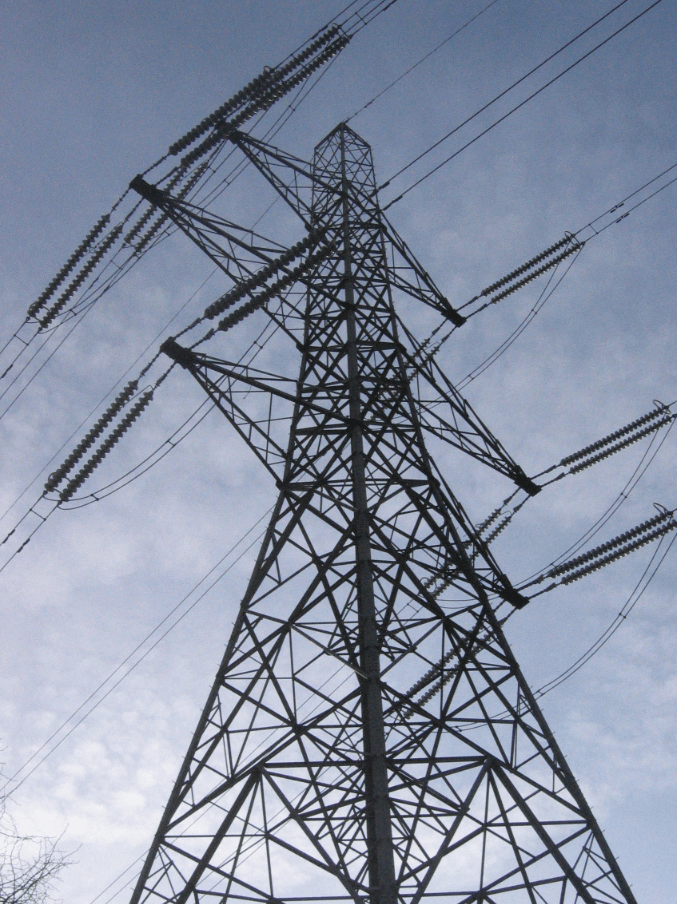
NRGI-Broker-news-Electricity_pylon_near_colliers_wood_london

Copyright Reuteurs

Photo by Secretlondon (Own work) 

The World’s Biggest Oil Companies

How much has the shale boom shifted the rankings of the world’s 20 biggest oil and gas companies? We compared today’s giants with data from 2003 to see what, if anything, has changed for the likes of Exxon, Shell, BP, Saudi Aramco and Chevron. Who do you think is on top?

1. Saudi Aramco

Plataforma 1

Copyright: Shutterstock

2013: 12.7 million BOE per day (barrels of oil + natural gas equivalents)
2003: 9.9 million BOE per day (rank: 1)    
Saudi Arabia’s Minister of Petroleum and Mineral Resources Ali Ibrahim Al-Naimi speaks to journalists at a hotel in in Vienna, Austria, on Monday, June 11, 2012. Al-Naimi joined Saudi Aramco in 1947, age 12, studied in the U.S., rose to become CEO and is now the world’s most powerful oilman. Data courtesy WoodMackenzie. 

2. Gazprom

shutterstock_7893784

Copyright: Shutterstock

2013: 8.1 million BOE per day (oil + natural gas equivalents)   

2003: 9.5 million BOE per day (rank: 2)   

In this Tuesday, Nov. 12, 2013 photo, Russian President Vladimir Putin, right, talks with Russian state energy giant Gazprom CEO Alexey Miller during the cooperation signing ceremony between Russia and Vietnam at the Presidential Palace in Hanoi, Vietnam. Putin announced that Russia and Vietnam would be strengthening their energy and military ties.   Data courtesy WoodMackenzie.

3. National Iranian Oil Company

shutterstock_95528917

Copyright: Shutterstock

2013: 6.1 million BOE per day (oil + natural gas equivalents)  
2003: 4.9 million BOE per day (rank: 3)   
Iran’s Minister of Petroleum, Rostam Ghasemi, gestures before the start of the 161st meeting of the OPEC in Vienna, on June 14, 2012. Despite international sanctions on its nuclear program, Iran has been able to grow its natural gas output.  Data courtesy WoodMackenzie.

4. ExxonMobil

shutterstock_38528809

Copyright: Shutterstock

2013: 5.3 million BOE per day (oil + natural gas equivalents)  
2003: 4.6 million BOE per day (rank: 4)   
Russia’s President Vladimir Putin (R) and ExxonMobil Chairman and CEO Rex Tillerson (L) attend at the ceremony of the signing of an agreement between state-controlled Russian oil company Rosneft and ExxonMobil in the Black Sea port of Tuapse on June 15, 2012.   Data courtesy WoodMackenzie.

Continue reading >>>

Copyright Forbes

Images Getty Images

Slim’s Carso, consortium wins U.S.-Mexico gas pipeline contract

Jan 8 (Reuters) – A consortium including an energy company controlled by billionaire Carlos Slim won a contract to build a 230 km (143 mile) pipeline to supply gas to central, northern and western Mexico, the state power company said on Thursday.

The consortium, which consisted of Slim’s Carso Energy and U.S. companies Energy Transfer Partners and MasTec Inc, presented the lowest bid of $767 million for the work.

That bid was significantly below the $1.365 billion budgeted for the project by Mexico’s state power company CFE.

The Waha-Presidio pipeline will run through Texas and connect with a pipeline in Mexico’s northern Chihuahua state, the CFE said in a statement.

Last year, CFE announced various infrastructure projects near Mexico’s northern border with the United States that are part of the company’s aim to boost U.S. natural gas imports and help lower electricity rates via cheaper inputs and more modern power infrastructure.

Slim’s conglomerate Grupo Carso makes most of its revenue from its retail and real estate businesses but in recent years it has been boosting its energy unit, which includes drilling and energy services.

Mexico last year finalized a sweeping energy reform that ended decades-long oil and power monopolies. (Reporting by Elinor Comlay)

Copyright 2015 Reuters

NRGI-broker-news-grupo-carso-wins-gas-pipeline-contract