Mexico’s incoming leftist President could open US-Mexico energy relations

The Daily Caller /Jason Hopkins / July 2


The election of Andrés Manuel López Obrador as Mexico’s next president has investors around the world on edge, waiting to see how the leftist leader will approach the oil and gas industry.

López Obrador handily won Mexico’s presidential election Sunday, capturing over 53 percent of the vote — more than double the percentage of the second-place finisher. His victory brings a new era of progressive populism to the U.S.’ southern neighbor. A member of the National Regeneration Movement Party, López Obrador touts a far-left pedigree: universal access to public colleges, an expansion of welfare programs, increased investment in industries and other big government proposals.

The president-elect’s calls for energy reform, however, has been the most striking to international observers. López Obrador pledged during the campaign to hold a referendum on reforms the country made several years ago that embraced measured degrees of privatization of the country’s oil sector.

Outgoing President Peña Nieto opened the country’s petroleum industry in 2013 to foreign investment, ending a decades-old monopoly held by Pemex, the country’s state-run petroleum company. The move was intended to revive Mexico’s oil and gas production, which is plagued with rampant inefficiency, debt and outdated equipment.

During the 2018 campaign, López Obrador derided these pro-market reforms. While promising to honor existing oil contracts, he believes the country should prioritize nationalization of the industry once again.

“As a long-time ally of national labor unions and a supporter of a strong [Pemex], [López Obrador] may seek to maximize national investment and employment in the sector, hedging Mexico’s political risk, even at the cost of economic efficiency,” David Goldwyn, chairman of the Atlantic’s Global Energy Center Advisory Group, noted Sunday.

Such reforms could have major implications for Mexico-U.S. energy relations, which hold very deep ties.

The U.S. currently exports a large amount of gas across the border and the Mexican government, in turn, sends heavy crude to American consumers. As crude oil imports to the U.S. has declined over the years, the trade imbalance between the two countries has shifted. U.S. energy exports to Mexico now exceeds its imports, according to the Energy Information Administration. These issues may come up as the Trump administration is set to renegotiate key agreements within the North American Trade Agreement with Mexico and Canada.

López Obrador, for his part, is no fan of Trump. The longtime Mexican politician wrote a book entitled “Oye, Trump” (“Listen, Trump”) that blasts the American leader for his calls to build a border wall and his “attempts to persecute migrant workers.” The book includes a number of speeches López Obrador has given. In one such speech, he compared Trump to Hiter, saying “Trump and his advisers speak of the Mexicans the way Hitler and the Nazis referred to the Jews, just before undertaking the infamous persecution and the abominable extermination.”


The Daily Caller /Jason Hopkins / July 2


Competitive fuel market is still some years off, analysts say

Mexico News Daily / Mileno / June 25


Time, more investment required before gas prices will drop

It will take another two to five years to attain a truly competitive fuel market with lower gasoline prices for motorists, according to industry specialists.

The federal government’s 2013 energy reform opened up Mexico’s retail fuel market to foreign and private companies and there are now more than 2,000 gas stations that operate under a brand other than the state-owned Pemex.

But the increased competition hasn’t translated into cheaper fuel prices as had been expected.

“It was thought that it would be faster but that’s not the case,” said Rodrigo Favela, a consultant and fuel market analyst.

Favela told the newspaper Milenio that based on experiences in other countries, creating a competitive market takes time.

In addition, greater competition in the retail fuel market is not enough on its own to generate lower fuel prices, according to Mexico’s central bank.

In its regional economies report for the last quarter of 2017, the Bank of México said greater investment is needed in the entire gasoline supply chain from the refinery to the gas station in order for prices to drop.

Sebastián Figueroa, CEO of energy operator FullGas, told Milenio that gas stations in the north of the country could start competing on price within one to two years.

He cited proximity to the United States, the presence of existing pipelines, greater ease with which fuel can be imported and lower logistics costs as factors that will likely see fuel prices drop more quickly there than in other parts of the country.

In central states, Figueroa predicted that it would be another three to four years before competitiveness among gas stations increases due to the need for more infrastructure while in the southeast of Mexico, it could take up to five years or more.

In the latter region, the development of the new infrastructure that is needed — such as pipelines —is more complicated because of geological factors, he said.

Considering that fuel prices have actually risen since Mexico’s previously monopolized fuel market opened up, Milenio asked the president of the Senate’s energy committee whether energy reform should be considered a failure.

Salvador Vega Casillas, of the opposition National Action Party (PAN), rejected that suggestion but said it was a mistake to liberalize fuel prices at a time when the value of the US dollar was high against the peso. Gasoline prices were fully deregulated by November 30 last year.

However, Figueroa said that if the government had waited any longer to free prices, more problems could have been created for the sector because a subsidized model is not sustainable.

He maintained that the reform is a positive for Mexico, charging that having only one participant in the downstream sector led to inefficiency whereas competition forces gas stations to offer better deals to motorists.

Federal Energy Secretary Pedro Joaquín Coldwell has also contended that an open and competitive market is the best way to achieve gasoline prices that are accessible to all Mexicans.

Favela explained that there are three main factors that determine the price of petroleum at the pump: international crude oil prices, the prevailing exchange rate and logistics costs.

In order to generate a more competitive market, he argued, all petroleum companies should have non-discriminatory access to the nation’s oil terminals and ports.

Despite opening up the domestic fuel market to new players, the majority of Mexico’s petroleum infrastructure is still controlled by the state oil company Pemex.

The average price of regular — or Magna — gasoline has risen 17% this year, according to the consultancy PETROIntelligence, from 16.24 pesos per liter at the beginning of January to 19 pesos. Prices were as high as 19.11 pesos on Friday in Guadalajara.


Mexico News Daily / Mileno / June 25


Enbridge (ENB) Commences Mex-Border Pipeline’s Offshore Work

Zacks Equity Research / June 14


Enbridge Inc. (ENB – Free Report) recently started construction work on its Valley Crossing natural gas pipeline’s border crossing offshore part, per Reuters. The $1.6 billion pipeline that lies between Mexico and Texas is scheduled to come online in October.

The energy infrastructure company is currently working on a 305-meter part of the pipeline’s offshore section, while the rest 165-mile onshore and offshore section is ready for operation. The company has plans to start the pipeline’s commissioning process soon.

Significance of the Pipeline

The Valley Crossing pipeline has a shipping capacity of 2.6 billion cubic feet of natural gas per day (Bcf/d). It will transport gas from Texas to Mexico’s growing energy market. Following the energy reform in Mexico, the country witnessed a rising interest from international oil and gas companies.

Energy-related imports have risen in the country over the past few years. Mexico’s year-to-date average gas import from the United States currently stands at 4 Bcf/d.

The pipeline is designed to supply clean burning gas primarily to the Mexican state-run utility company, Federal Electricity Commission aka CFE, which has around 37 million clients. Moreover, the pipeline is expected to open new market opportunities for the gas producers in Texas. As a result, Enbridge’s cash flow is expected to benefit immensely.

There’s More

The Valley Crossing pipeline would to be connected to the Sur de Texas-Tuxpan pipeline in the Gulf of Mexico, and is expected to create a huge pipeline network between the United States and Mexico. The Sur de Texas-Tuxpan pipeline is currently being built by a joint venture between Sempra Energy (SRE – Free Report) and TransCanada Corp. (TRP – Free Report) .

Price Performance

Calgary Canada-based Enbridge has lost 14% in the past year compared with 7.4% decline of its industry.

Zacks Rank and One Stock to Consider

Enbridge Energy carries a Zacks Rank #3 (Hold). Investors interested in the Energy sector can opt for a better-ranked stock like Delek US Holdings, Inc. (DK– Free Report) that sports a Zacks Rank #1 (Strong Buy). You can see the complete list of today’s Zacks #1 Rank stocks here.

Brentwood, TN-based Delek is an energy company. The company’s top line for 2018 is anticipated to improve 39.2% year over year, while its bottom line is expected to increase 230.2%.


Zacks Equity Research / June 14


Risk And Reform: Observing Effective Controls In Mexico’s Rapidly Transforming Energy Sector

Forbes / Armando Ortega / 11 Junio


MEXICO CITY—For decades, the most relevant compliance legislation for international companies operating in Mexico was the US Foreign Corrupt Practices Act. Now, as a result of major national economic and legal reforms enacted during President Peña Nieto’s administration from 2012-2018, Mexico’s compliance environment has undergone a transformation. As foreign investment pours into Mexico’s recently opened oil and gas sector, legal entities are now criminally liable for any offenses or irregularities committed in their name, making the case for a robust compliance strategy that includes due diligence investigations into possible business partners.

A changing landscape: Mexico’s Energy Reform

Mexico enacted a historic reform program in December of 2013 that opened its oil and gas sector to foreign investment following 75 years of government ownership. Mexico’s energy reform plan was part of a broader, cross-sector effort by President Enrique Peña Nieto to boost the Mexican economy. Since its implementation, there have been three bidding rounds—the latest of which closed in March 2018—that have raised a total of $161.3 billion for investments that will take place until 2025. Fourteen percent of total investment is for public-private partnership projects between domestic and international companies and the Mexican state-owned oil company, Petróleos Mexicanos (Pemex). With these investments, Pemex expects to significantly increase Mexico’s current production of 2 million barrels per day to a hypothetical 3.4 million barrels per day.

There is significant international interest in the process, with 34 companies securing bids. The US, with nine companies, and the UK, with four, lead the pack. Royal Dutch Shell, Qatar Petroleum, British Petroleum and Chevron are just a few of the major multinationals that have a stake in Mexico as a result of the energy reform.

Although significant opportunities are opening up in the sector, it is key that international investors understand the complexities involved with the energy reforms, as they are occurring amid a rapidly changing regulatory environment and era of overall reform resulting from the Peña Nieto years, and as part of a broader shift in sentiment among the Latin American public in the fight against corruption.

The National Anticorruption System and the new compliance environment

In what can be best understood as a citizens’ effort, a set of new legislative and constitutional reforms have been introduced in Mexico since May 2014, culminating in the establishment of the National Anticorruption System (SNA) in July 2016. The SNA is defined as a coordinating body between various institutions, including the Superior Audit of the Federation and the Federal Court of Administrative Justice, among others, to create mechanisms of collaboration and coordination to effectively prosecute corrupt practices.

The SNA is still in its early stages; a Specialized Prosecutor’s Office in Combating Corruption has yet to be properly established, and the Mexican Congress has yet to elect the Anticorruption Prosecutor. However, despite the lack of distinct progress, parts of the legal reforms introduced to create the SNA already have far-reaching implications.


Forbes / Armando Ortega / 11 Junio


Netherland Sewell Adds Mexico City to the 2018 Oil & Gas Property Evaluation Seminar Lineup

Oil & Gas 360º / May 29


NSAI Oil & Gas Property Evaluation seminars coming to London, Singapore and Mexico City this summer

Netherland Sewell & Associates (NSAI) has again expanded the reach of its popular Oil & Gas Property Evaluation Seminars for financial professionals, with the new addition of a seminar in Mexico City on September 5-6, 2018.

“We are very excited to introduce the NSAI Oil & Gas Property Evaluation seminars to Mexico,” said NSAI SVP & CFO Scott Frost. “With the country opening its hydrocarbon sector to foreign investors and international partners, the time is right for NSAI to host a seminar in Mexico.”

Seminars deliver a basic understanding of the upstream oil and gas industry

The two-day seminars are designed to help energy finance professionals gain a deeper understanding of the various aspects of the evaluation of hydrocarbon reserves and learn how to use reserves reports and studies.  Participants can expect to gain a basic understanding of the upstream oil and gas industry, including basic geology of different plays, reservoir evaluation basics, reserves and resources definitions, understanding hydrocarbons-in-place, recovery factors and rates, operating expenses and capital costs, and more.

The seminar speakers are NSAI professionals that have significant career expertise in reserves determination methods, the economics of hydrocarbon extraction, and petroleum geology. The seminars are popular with financial institutions that invest in energy development as well as banks that are involved in making lending decisions for oil and gas exploration and production projects.

Below is the 2018 NSAI Oil & Gas Property Evaluation seminar calendar:

  • May 7 & 8 and 9 & 10, 2018 – Dallas (Both sessions had record attendance with a waiting list)
  • June 26 & 27, 2018 – London: Grange City Hotel
  • July 10 & 11, 2018 – Singapore: Singapore Exchange – SGX Auditorium
  • September 5 – 6, 2018 – Mexico City: Asturiano Polanco Banquet Room

NSAI encourages energy industry and oil and gas financial professionals to pass this information on to colleagues who may benefit from attending. “We are excited about the opportunity to meet again with petroleum industry financial professionals and would like to thank you for recommending our seminars to your colleagues,” said NSAI SVP Joseph Spellman.

Scott Rees, NSAI Chairman and CEO, told Oil & Gas 360® that the firm has graduated about 6,500 people during 38 cumulative years of seminars in Dallas, London and Singapore. “We are glad to be adding Mexico City to that list,” Rees said.

Interested parties may learn more and register at NSAI’s website.


Oil & Gas 360º / May 29


Mexico’s Billion Dollar Oil Industry Ripe for the Picking

Baystreet Staff / May 22


It may have taken the better part of a century, but Mexico figured out that their state-owned energy monopoly, PEMEX, was a business model that just wasn’t working out. After hammering out legislation in 2013 to denationalize the nation’s oil and gas industry, the worst thing that could happen, did; oil prices collapsed, and companies globally hit the brakes on spending. What was expected to be the opening of floodgates to invest in arguably the biggest energy opportunity today didn’t happen quite as expected. With oil prices climbing to fresh three-and-a-half year highs, all that is changing and the Mexico’s oil space is starting to heat up with investment of $150 billion now secured.

As it happens, investors’ conservative approach worked perfectly in favor of Steve Hanson and his team at International Frontier Resources Corp. (TSX-V: IFR) . «We knew that we were heading to Mexico for the first onshore licensing round to build the cornerstones of our operations,» Hanson said in a phone call with Baystreet.ca. «We were in a strong financial position with a clear mission to become the next energy leader in Mexico. Others staying on the sidelines as oil bottomed in 2016 really worked to our benefit as a first-mover in Mexico’s energy reform.»

The savvy leadership at IFR, formed an equal partnership with a Mexican petrochemical giant, as a result, this Canadian company became the first foreign-owned joint venture (JV) and independent oil company to actively explore onshore opportunities in Mexico in over 80 years. Through its strategic JV, IFR is also the first foreign company to complete the regulatory review and drill onshore conventional oil in Mexico under license contract. You’d think it would have been a major like Halliburton (NYSE: HAL) or Baker Hughes (NYSE: BHGE) or Schlumberger (NYSE: SLB), companies that were already working in the area as service providers to PEMEX, but it wasn’t. It was a little $30 million market cap. company that was nimble enough to beat everyone to the punch.

«We weren’t afraid of the price of oil. Not even at the $40 per barrel that oil was fetching at the time; we knew we could still make money based on our expertise and interpretation of the geology,» said Hanson. «At $70 oil, we’re obviously excited with our position, » he added.

Confident for Good Reason

Hanson’s confidence isn’t unfounded. He has over two decades of well-grounded experience in finance and corporate development, serving as chairman and managing director at the award-winning equity money management firm Van Arbor Asset Management before selling it with a sizable payout to the ZLC Private Investment Management in 2008. Next he was the CEO and president of PanAsian Petroleum that was sold profitably to Ivanhoe Energy, shortly after Hanson took charge. Likewise, that was followed by serving as a director at Lion Petroleum, a company focused on oil and gas in East Africa which was then acquired by Taipan Resources.

IFR’s management team is the embodiment of success and has experience across the finance and energy spectrum throughout the globe, including COO and director Andy Fisher, who has a history of taking companies with negligible assets to robust oil and gas production. For instance, he founded Arcan Resources and grew it from no production to 4,000 barrels of oil equivalent per day (boe/d), before the company was sold to Aspenleaf Energy Ltd., in June 2015 for CDN. $300 million. He was also VP, international contracts and negotiation, at Pacalta Resources Ltd. («Pacalta») in Ecuador, where he helped in growing the company from 100 boe/d in production to roughly 45,000 boe/d. In 1999, Alberta Energy Co., the predecessor to EnCana’s (TSX: ECA) (NYSE: ECA), bought Pacalta in a deal worth approximately CDN. $1.0 billion!

For the sake of brevity, the profiles of everyone contributing to IFR’s future can’t be covered; however, it certainly is worth mentioning that Colin Mills, an independent director at IFR, has more than three decades of diverse international experience in power generation, including building two power plants in Mexico, which adds to the local advantage of IFR in terms of navigating the regulatory environment in Mexico.

The commitment and confidence of these individuals to IFR is best recognized based on the fact that insiders hold more than one-third of the company’s outstanding shares.

It’s this experience and dedication at IFR that led to the formation of Tonalli Energia, a 50-50 JV between IFR’s Mexican subsidiary, Petro Frontera S.A.P.I de CV, and Mexican petrochemical giant Grupo IDESA. As a first mover, the partnership and its in-country experience gives Tonalli a serious competitive edge to catapult it forward into becoming the next energy leader in Mexico.

The Tecolutla Project – Now a Producer!

Imagine every bit of oil in Texas was controlled by one company for the last 80 years. That’s a rough analogy for what has been going on in Mexico. It’s explored enough (both on- and offshore) to know that there are tremendous reserves, possibly comparable to the all-resilient Permian Basin, but woefully little with respect to extracting oil and gas. Right now, Mexico ranks as the Western hemisphere’s third largest oil producer and host of the fourth largest known oil reserves.

Those could be conservative positions in the future considering Premier Oil last summer made a major offshore discovery in a block next to Talos Energy and Sierra Oil and Gas that is estimated to hold in excess of one billion barrels of oil that possibly extend into the adjacent block. This was discovered through the first shallow water offshore exploration well drilled since denationalization. Shares of Premier rocketed higher with the find. «Few think of Mexico in the same terms as Saudi Arabia, despite the fact that Mexico has similar quantities of hydrocarbon resources,» argued a recent report published by Manhattan Institute for Policy Research. However, this is about to change with higher oil prices and growing investor interest.

Lending further credence to Mexican oil potential, IHS Markit thinks the country’s untapped Tampico-Misantla Basin on the east coast of Mexico could be one of the world’s next «super basins.» Part of the basin includes the massive Poza Rica oil field, estimated to contain 3.8 billion boe, and IFR’s Tecolutla project which has now commenced completion operations for its recently drilled TEC-10 well.

The Tampico basin is known to have geology similar to the prolific North American basins, with stacked conventional and unconventional pay zones. In fact, IFR recently drilled 138 meters of reef thickness at its directional evaluation, TEC-10 well. It is also known that such basins tend to have «halo» zones of tight oil (light oil that is easily produced) surrounding them, this may be supported by the limited amount of exploration that has so far occurred at Tecolutla.

Seven wells were drilled between 1956-1972, with a well with last recorded production rates in January 2016. IFR announced the completion of a successful workover of a legacy TEC-2 well which was tested for production for a total of seven days and far exceeded management expectations. The well reported an average flow of 125 barrels of oil per day which was more than 13 times higher compared to last recorded production on the well! Newly drilled TEC-10 is next to test for production rates which is the most exciting moment for IFR JV since its inception!

IFR was awarded the block in May 2016 with no cash payment, merely a royalty agreement which offered one of the most favourable terms in comparison to the royalties on other blocks offered during the bid round. Furthermore, Export Development Canada (EDC) backstopped IFR by putting up the company’s portion of the performance bond required by Tonalli, allowing the company to conserve its cash, while lending a great deal of validation to the project. IFR ended the first quarter of 2018 with $2.81 million in cash and cash equivalents and no debt.

The first drill rig penetrated the ground in April, reached depth of 2,453 meters total vertical depth and was cased for production testing this month which was a historic moment for the Mexican oil and gas sector. Several points stand out when looking at the disclosed results, namely the fact that visible oil was noticeable from the core and the fact that oil was hit at deeper levels than oil was ever produced in the zone historically, indicating the El Abra reservoir at Tecolutla could have greater volume than ever believed.

Moreover, IFR, via Tonalli, is using modern exploration technology at Tecolutla for the first time. IFR is using the first-ever 3D seismic data shot for the whopping 81-billion-barrel Chicontepec formation with the aim of helping better understand Tecolutla field.

The beauty of the rock, according to Hanson, is not just that it is apparently flush with oil, but naturally fractured as well, making horizontal drilling easy, without the need for fracturing that draw the ire of environmentalists. These characteristics mean that the drilling is low cost, to the extent that Hanson believes the company can produce profitably at a cost of less than $20-$25 per barrel.

The Upcoming Catalysts

IFR is presently working on production testing, continuing analysis of the wireline, image logs and core analysis, refining the 3D seismic model and identifying the next drill target. The JV is looking ahead to the second tender of Round Three of bidding for projects (scheduled for September 27, 2018). Given the surge in value that Premier Oil experienced with its find, any positive data regarding the initial drill hole underpinned by historic production, should energize IFR shares and likely drive the attention of the investment community.

«We started IFR and moved aggressively in Mexico with the purpose of building a billion-dollar company,» Hanson added during the call. He continued, «We are very proud of being a first-mover in what we believe is going to quickly emerge as one of the most vibrant energy markets in the world and we’re not going to relent in our efforts to build value just as we have with previous companies.»

It’s difficult to disagree with anything Hanson says. They have nailed all of their milestones so far and certainly have plenty of running room to add to their portfolio. They have an outstanding partner in Grupo IDESA, the backing of EDC, are fully-funded for the existing work program, all the necessary infrastructure is in place, and they have outstanding experience across the entire supply chain that should allow IFR to sell oil at a price that couldn’t be realized anywhere else in the Western hemisphere.

Now, if they just start to prove the oil and the economic viability of the resource as they believe, IFR should be off to the races as the company looks to notch the next major success in their already impressive accomplishments.

Disclaimer: Nothing in this article should be considered as personalized financial advice. We are not licensed under securities laws to address your particular financial situation. No communication by our employees to you should be deemed as personalized financial advice. Please consult a licensed financial advisor before making any investment decision. This is a paid advertisement and is neither an offer nor recommendation to buy or sell any security. We hold no investment licenses and are thus neither licensed nor qualified to provide investment advice. The content in this article is not provided to any individual with a view toward their individual circumstances. Baystreet.ca has been paid a fee of four thousand dollars for International Frontier Resources Corp. advertising. This compensation constitutes a conflict of interest as to our ability to remain objective in our communication regarding the profiled company. Because of this conflict, individuals are strongly encouraged to not use this article as the basis for any investment decision. While all information is believed to be reliable, it is not guaranteed by us to be accurate. Individuals should assume that all information contained in this article is not trustworthy unless verified by their own independent research. Also, because events and circumstances frequently do not occur as expected, there will likely be differences between any predictions and actual results. Always consult a licensed investment professional before making any investment decision. Be extremely careful, investing in securities carries a high degree of risk; you may likely lose some or all of the investment.


Baystreet Staff / May 22
 

Energy Reform Could Generate $1T in Foreign Investment for Mexico by 2040

FROM:  Natural Gas Intelligence / Ronald Buchanan / 19 de marzo de 2018


Mexico’s energy reform could generate $1 trillion of direct foreign investment by 2040, said leaders of the industry lobby, Mexican Association of Hydrocarbon Companies, earlier this month.

The association, known by its Spanish acronym Amexhi, was presenting its Agenda 2040, a huge volume that reviews the industry’s past, from its origins at the beginning of last century; the present, including current uncertainties; and a future through 2040 that would «transform Mexico.»

Amexhi President Alberto de la Fuente admitted that the investment goal is ambitious.

The Agenda presupposes that power and hydrocarbons would account for  4% of gross domestic product by the target date. And, de la Fuente emphasized, it would require accurate instrumentation of the reform’s precepts, «as well as the resolution of challenges that are a legacy of the previous model.»

The defense of the Agenda would require four watchwords, he added: «Steadfastness, competence, transparency and knowledge.»

Amexhi has taken pains to remain neutral during the current campaigns for Mexico’s July 1 presidential election.

«All the candidates have shown interesting elements in their policy statements,» said Enrique Hidalgo, president of ExxonMobil Exploracion y Produccion Mexico, and the coordinator of Agenda 2040.

Some of the industry group’s sympathizers, however, have claimed that the pronouncements of the current leader in the race, Andres Manuel Lopez Obrador, who helms the left wing nationalist Morena party, has been less than steadfast in support of the reform. They also claim that his proposal for new refineries show a lack of understanding of the industry.

At the moment, the No. 2 in the race is Ricardo Anaya, leader of the National Action Party, the traditionally pro-business PAN. But Anaya has yet to issue any policy statements on energy.

Anaya also has embraced policies of left-wingers with whom he has formed an alliance. With them, he signed a statement of «No to the gasolinazo» — the liberation of gasoline prices.

Running third in the opinion polls is senior technocrat Jose Antonio Meade of the incumbent Institutional Revolutionary Party, the PRI. Meade was hand-picked by President Enrique Pena Nieto.

Meade’s loyalty to the energy reform has not been questioned. However, his loyalty to Peña Nieto has so far placed a political millstone around his neck. Pena Nieto is said to be the most unpopular Mexican president since political opinion polls were first published in the nation late in the 20th century as its democratic era began to dawn.

The democratic dawn has begun late for the former state monopolies of oil and natural gas, Petroleos Mexicanos (Pemex) and power, Comision Federal de Electricidad, the CFE.

Neither is free to set a budget, as Congress and the Finance ministry keep a tight grip on their spending. The Pemex and CFE unions, particularly that of Pemex, have corporate powers that go well beyond the defense of the interests of the workers in terms of pay and conditions.

The challenge are considerable, said senior analyst Arturo Carranza of Mexico’s National Institute of Public Administration. But, he added, the rewards are realistic.

Agenda 2040 proposes 15 bid rounds to lease oil and gas acreage. Since the 2013-14 reform was enacted, there have been two rounds featuring eight separate completed lease auctions. Three auctions are currently underway for the third round.

«But the pace has been stepped up and it can be pushed further,» Carranza said. «The country’s potential is beyond question for the industry. And the government has to do its part by identifying opportunities that the companies can grasp. In return, it can reap the benefits, such as royalties, on behalf of the nation.

«At the same time, the government has to cast off the restrictions on the budgets of Pemex and the CFE,» he added.

De la Fuente said at the presentation that about 80% of the nation’s oilfields are currently in decline, «but the best tool that’s available to revert the trend is the energy reform.»


FROM:  Natural Gas Intelligence / Ronald Buchanan / 19 de marzo de 2018

Mexico Energy Reform Slowdown Would Be ‘A Shame,’ Pemex CEO Says

FROM: Bloomberg / Adam Williams / 7 de marzo de 2018

Mexico’s 2013 decision to end the government monopoly on energy has resulted in billions in investment and the arrival of dozens of international oil companies.

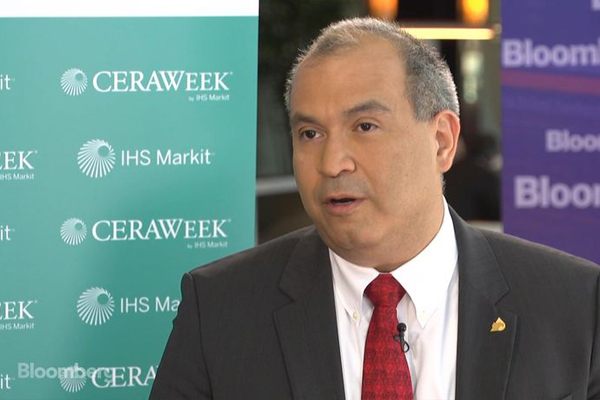
Carlos Trevino, Petroleos Mexicanos’s new chief executive officer, thinks it would be unfortunate for that to be interrupted by the next administration.

The top concern of Trevino, who took over at Pemex in November, is that Mexico will elect a president in July that will “slow down the energy reform pace,” he said in an interview with Bloomberg Television at the CERAWeek by IHS Markit event in Houston.

“Someone who doesn’t believe in the energy reform may reduce the speed very much and I think that would be a shame in Mexico,” Trevino said. “The energy reform has a lot of benefits to the country, to the people, so the the worst case scenario in my point of view is that the speed that we are implementing the energy reform will be reduced.”

Trevino’s concern matches that of many energy industry leaders in Mexico, which has signed more than 90 oil and gas production contracts with international majors such as Royal Dutch Shell Plc, Chevron Corp. and Exxon Mobil Corp. since a landmark 2015 crude auction. Presidential front-runner Andres Manuel Lopez Obrador, who leads polls ahead of the July 1 election, has vowed that his administration will slow the pace of the current oil auctions and review contracts signed by the current government.

A reversal or significant modification to the overhaul would be “almost impossible because to change the energy reform you will need to change the constitution,” Trevino said. It would require a majority in Mexico’s upper and lower houses and it “is really difficult for any president to have that amount” of support.

“It is possible but improbable,” Trevino said. “We have a lot of certainty on what is going to happen in the future no matter who wins the election.”

Refining partner
Pemex, which has reiterated that partners will improve crude production and refining margins, will formalize a joint-venture agreement with Mitsui & Co. at its flagship refinery this month, Trevino said. The partnership with Mitsui is an estimated $2.6 billion deal that will increase production to help reduce the nation’s reliance on imported fuels.

Pemex also expects to sign at least one additional refinery partnership as soon as this summer, Trevino said, without providing additional details. The company continues to seek partners for refinery auxiliary services in areas such as power generation, water treatment and steam generation, he said.

he partnership with Mitsui is an estimated $2.6 billion deal that will increase production to help reduce the nation’s reliance on imported fuels.

Pemex also expects to sign at least one additional refinery partnership as soon as this summer, Trevino said, without providing additional details. The company continues to seek partners for refinery auxiliary services in areas such as power generation, water treatment and steam generation, he said.

The company’s Salina Cruz refinery, which was offline for several months last year following a series of natural disasters, is operating at half of its capacity, processing around 150,000 daily barrels, according to Trevino. Pemex’s Madero refinery, which is in the process of a restart, is currently processing between 60,000 and 80,000 barrels, he said. The Madero refinery, which has the capacity to process 190,000 barrels per day, should ramp up to normal rates at the end of the month.

Oil Auctions
Pemex, which won rights to develop four deep water areas in Mexico’s Jan. 31 auction, is going to bid for a few block in the March 27 tender of 35 shallow water zones, he said. Pemex would prefer to bid in partnerships but is willing to go it alone if need be, Trevino said.

The company, which launched its own oil hedge last year to safeguard against a potential price drop, will continue the program next year, Trevino said.


FROM: Bloomberg / Adam Williams / 7 de marzo de 2018

Mexico raises the bar on oil deals as Latin America vies for investment

FROM: Reuters / Marianna Parraga, Adriana Barrera / 2 de Febrero de 2018


MEXICO CITY (Reuters) – Mexico has raised the bar on oil contracts in Latin America after sweetening terms to attract international energy firms, luring $93 billion in future investment in the region’s first big auction this year.

On Wednesday, Mexico awarded 19 of 29 deepwater blocks onoffer, comfortably more than the seven areas expected to be assigned. Anglo-Dutch oil major Royal Dutch Shell emerged as the biggest winner, with nine blocks.

Unique for generous terms such as setting a cap on royalties that oil firms can pledge to the government in bids, Mexico faces off this year with Brazil, Argentina, Ecuador and Uruguay.

They will all hold auctions for oil and gas fields in 2018 that require billions of dollars in investment from foreign firms.

Mexico is due to hold major auctions in March and July.

While Brazil’s prolific deepwater presalt oilfields are expected to attract aggressive bidding from oil majors, other regional rivals could be forced to revise the terms of their auctions if Mexico scores another win in its next auction for shallow water areas in March, analysts said.

Argentina and Ecuador have already changed their terms over the past year in preparation for their 2018 auctions. Argentina has lowered labor costs and some taxes, while Ecuador switched to production sharing from service contracts.

Oil prices have reached three-year highs near $70 per barrel in 2018, giving the world’s top energy companies a cash boost and improving the chances that they will have the funds needed for big-ticket projects in Latin American.

The industry is, however, emerging from a recession that cost tens of thousands of jobs and forced companies to slash spending on expensive projects such as those in deep waters. Oil majors have committed to keeping tight control on costs and will only bid for what they see as the most profitable projects.

Oil executives and industry specialists say the terms on offer in Mexico, as well as the potential for major finds in the country’s deep water, made it attractive on Wednesday.

At the auction, the decisive bidding parameter was the cash bonus that firms pledged. Shell won several bids with cash bonuses that drew surprised gasps from an audience mostly made up of executives from bidding firms and members of the media.

Mexico collected $525 million in cash.

While the government has limited its own take at the auction, the estimated $93 billion in investments pledged to develop the blocks auctioned is about 1.5 times greater than the amount involved in the previous eight auctions.

”COMPETITION FOR CAPITAL’

After the government of Mexico started auctioning oilfields in 2015, it tweaked the terms of the bidding process several times, following a historic energy reform that ended state oil firm Pemex’s 75-year monopoly over the sector.

The liberalization, the most ambitious plank of President Enrique Pena Nieto’s economic policy, started just as oil prices crashed in 2013-2014.

The government had to balance the need for a big enough take for the state to placate opponents of the reform with ensuring there was enough potential profit to attract foreign firms.

“Mexico understood how tough the competition for capital was in a very difficult oil price environment,” consultant Pablo Medina told Reuters.

After failing to award a large number of blocks in previous auctions, the government regarded the results of this week’s deepwater bidding round as a success.

As well as the limits on royalties, sweeteners included allowing foreign firms to propose areas to be included in the bidding rounds and relaxing the qualification process.

Mexico also put a stop to “additional investment pledges.” This makes it harder for small companies to win by making unrealistic promises, but further limits the mandatory investment in projects.

“What we are looking for is that the market tells us how big royalty should be and how much government take is possible to achieve,” Salvador Ugalde, head of the Mexican Finance Ministry’s Hydrocarbon Income Unit, said Wednesday.

Brazil, which plans a busy auction schedule for 2018, does not expect Mexico’s auctions will lower interest in its own offerings, said Marcio Felix, Brazil’s oil and gas secretary.

In Brazil’s last round in October, Shell and BP were the biggest winners.

“We have a set of companies that have an appetite for a certain type of asset,” Felix told Reuters on Thursday.


FROM: Reuters / Marianna Parraga, Adriana Barrera / 2 de Febrero de 2018

Jefferson Energy Companies Originates the First ExxonMobil Unit Trains of Refined Products to Mexico

From: GlobeNewswire / 11 de Diciembre de 2017

NEW YORK, Dec. 11, 2017 (GLOBE NEWSWIRE) — Jefferson Energy Companies (“Jefferson”), a subsidiary of Fortress Transportation and Infrastructure Investors LLC (NYSE:FTAI), is playing an important role in ExxonMobil’s recent Mexico market entry.  With logistics support from Jefferson, ExxonMobil is the first company to provide an integrated product offering along the entire fuels value chain in Mexico.  Unit trains of gasoline and diesel delivered to Central Mexican markets originated at Jefferson’s terminal in Beaumont, Texas.  The unit train loading was done under an agreement with ExxonMobil. These volumes originated at Jefferson were safely delivered through a destination terminal in San Luis Potosi to retail gasoline stations in the Bajio region. ExxonMobil previously announced its intent to spend $300 million in fuel logistics, product inventories and marketing in support of Mobil-branded stations and Synergy-branded fuels, and these unit train shipments are part of that program.

About the Jefferson Energy Terminal

Jefferson Energy CEO and President Greg Binion said, “We are excited to be an integral part of the transformation of the Mexican energy sector. Further, we are very pleased that ExxonMobil recognized the operational flexibility and advantages that our terminal provides. As this opportunity in Mexico expands, we plan to continue to enter into other contracts to provide logistics for refined products export to Mexico. We also plan to continue to invest in associated tanks as well as rail and loading infrastructure in order to meet the rapidly growing demands of this market.”

The terminal is owned and operated by Jefferson Energy Companies, a midstream oil and terminal company that serves the Gulf Coast. The terminal is located on 243 acres in Beaumont, Texas, positioned in one of the largest refinery markets in the U.S., located in the center of the 9.2 million bbdGulf Coast refining market (PAD III). The terminal is a public-private partnership between the Port of Beaumont Navigation District of Jefferson County, Texas and Jefferson Energy Companies. The Port of Beaumont is the fourth busiest port in the United States, according to the U. S. Army Corp of Engineers tonnage statistics, and the busiest military port in the U.S. The terminal is currently served by three Class I railroad carriers, allowing delivery from most origination terminals and plants in North America.

About Fortress Transportation and Infrastructure Investors LLC

Fortress Transportation and Infrastructure Investors LLC (NYSE:FTAI) owns and acquires high quality infrastructure and equipment that is essential for the transportation of goods and people globally. FTAI targets assets that, on a combined basis, generate strong and stable cash flows with the potential for earnings growth and asset appreciation. FTAI is externally managed by an affiliate of Fortress Investment Group LLC, a leading, diversified global investment firm. For more information about FTAI, visit www.ftandi.com.

Transporte de combustible con ferrocarril

Ferrocarril

From: GlobeNewswire / 11 de Diciembre de 2017