Listado de la etiqueta: USMCA

Chamber of Commerce conditions support for Trump’s USMCA deal on lifting metals tariffs for Mexico and Canada

The Chamber of Commerce announced Monday that it would lobby Congress to pass the U.S.-Mexico-Canada Agreement on trade when it comes up for a vote next year, but that support was contingent on exempting Canada and Mexico from the U.S. tariffs on steel and aluminum imports.

The announcement comes as Democratic and Republican lawmakers have been hedging on whether they would support the deal, which would replace the 1993 North American Free Trade Agreement. The Chamber’s support could be crucial in tipping the balance in Congress.

«After carefully assessing the new deal and its impact on our members, the U.S. Chamber of Commerce has thrown its support behind the USMCA, which is critical to maintaining strong economic growth in the U.S.» Chamber President Tom Donohue said in a blog post Monday. «We will work with the administration and other stakeholders to address a handful of outstanding issues and secure approval of the USMCA in Congress.»

The Chamber had previously complained that the deal’s language limiting protections for investors and stiffening of the «rules of origin» for when autos can be duty-free were problematic. It pointedly did not endorse the deal when it was announced in October. However, the trade association’s biggest complaint has been that deal’s announcement did not lead to the administration restoring Canada and Mexico’s exemptions from the Trump administration’s 25 percent tariffs on steel and 10 percent ones on aluminum.

Donohue said Monday restoring the exemptions was «a critical first step» to ensure the deal’s passage. The exemptions were only removed, he argued, as a negotiating tactic for the USMCA deal, so there’s no reason to maintain them now that the talks are over. «Every week that the tariffs remain in place, $500 million in U.S. imports and exports are affected, inflicting significant harm on American workers, farmers, and ranchers. They must be eliminated without delay,» he said.

He added that he disagreed with the administration’s announced plan to formally withdraw from NAFTA as a tactic to pressure Congress to approve USMCA, arguing it was «neither necessary nor productive and could actually cost votes.»


Washington Examiner / Sean Higgins / December 10


Unfinished business: Putting the final touches on the USMCA

The Hill /  David L. Goldwyn / October 29


The proposed US Mexico Canada Agreement (USMCA) makes important, but incomplete, progress in securing an integrated North American energy market.

In terms of progress, the agreement preserves zero tariffs for trade in oil, gas and petroleum products across North America. It effectively locks in Mexico’s historic energy reforms by ensuring that Mexico cannot reinstate restrictions on US investment in the oil and gas sector. A “ratchet” clause ensures that if Mexico decides to further liberalize the sector, then that higher floor becomes the new USMCA commitment.

While Investor-state dispute settlement (ISDS) mechanisms are weaker, they remain in force for certain “covered sectors,” including oil and gas investments in Mexico and power generation and pipeline investments where the investor has a contract with the government.

These are all positive steps for North American energy security. Mexico and Canada provide the United States with the heavy grades of oil not produced domestically, helping US refineries produce gasoline at the lowest possible cost. Thanks to this relationship,  the United States is an efficient net exporter of petroleum products.

However, while this progress is laudable, it remains incomplete.

In the rush to conclude the agreement, effective protection for power generation investments like new wind and solar plants, refining and natural gas infrastructure, and power transmission lines were left out, perhaps inadvertently. Contracts for these investments are with state owned enterprises (SOEs) like Mexico’s CFE and PEMEX, which do not now fall within the definition of “federal government” because they are not disposing of assets but signing a contract for service. These essential investments, in the gas and refined product infrastructure which carry US products to and through Mexico, transmission lines which carry US electricity south, and investments in power generation are not permitted to bring ISDS claims to enforce their rights.

This is an oversight, and a protection these investments should enjoy. Rather, the proposed agreement creates an uneven playing field as investors who do have a contract with the Federal government, say for exploration, are entitled to bring an ISDS claim for any of their businesses, while those who do not have such contract do not. The problem can be easily fixed by expanding the definition of federal government to include these wholly owned SOEs.

These (for now) unprotected investments are critical to North American energy security. They secure US exports of electricity and natural gas and assure the continued reliability of the North American electricity system. They are the lifelines which carry US exports to Mexico – currently our number one customer for natural gas and petroleum products.

Protecting investments in Mexico’s electricity sector improves US national security by supporting Mexico’s prosperity through a more resilient power system.

Finally, if US power sector investments in Mexico are not protected and thus potentially hindered or lost, China is certain to fill the gap.

Chinese investment in all forms of power generation, transmission, and distribution is rapidly accelerating throughout Latin America. According to a recent Atlantic Council report, cumulative flows of Chinese foreign direct investment in Latin America have reached $110 billion, with $25 billion in oil and gas investment, and $13 billion in electricity, utilities and alternative energy. China’s State Grid has invested $7 billion in Brazil, through a combination of greenfield investments and acquisitions.

If the Mexican government is willing to offer these investments protections (and they are), and create a level playing field for American companies investing in our closest neighbor, the US should not object.

Fortunately, there is still time to correct the definition of eligible claimants as both sides ready the agreement for ratification.  With these modest steps, the United States, Mexico and Canada can improve the resilience of North America’s energy system, and the US can simultaneously advance its economic and national security interests.

David L. Goldwyn is president of Goldwyn Global Strategies, an international energy advisory consultancy and serves as chairman of the Atlantic Council Global Energy Center Energy Advisory Group. He served as the U.S. State Department’s special envoy and coordinator for international energy affairs from 2009 to 2011; he previously served as assistant secretary of energy for international affairs and as national security deputy to U.S. Ambassador to the United Nations Bill Richardson. He is a member of the U.S. National Petroleum Council and the Council on Foreign Relations.


The Hill /  David L. Goldwyn / October 29


Comment: Investors keep a watchful eye on Mexico’s new leftist leader

International Investment / Jonathan Clare / October 22


Jonathan Clare recalls the strikingly different Mexico of the 1990s, and looks at the country’s prospects today under a new, left-wing, administration.

The Mexico of today is very different from the country I first experienced in the late 1990s. Back then I was based in Mexico City – the local population was still reeling from a banking crisis and severe recession.

Talking to locals in the fashionable coffee shops you would hear of the steady exodus of the middle class from the sprawling metropolis. There was a sense of gloom that the Institutional Revolutionary Party’s long stranglehold on Mexican politics would never end. Investor confidence was pretty low and lawlessness was a constant worry.

The bleak financial news and security risks preyed on people’s minds, but there were some notable compensations, principally the idyllic beaches and a world-class cuisine. Today, high-levels of crime continue to scar the nation, but the country has undergone an economic transformation – and one that has not been confined to the urban and industrial centres in Mexico City and Monterrey, where gleaming office blocks dominate the skyscape.

Since the PRI lost power in 2000, successive governments have worked hard to forge trading relationships with some 44 countries, as far afield as Israel and Japan. The previous perception of a tourism-and agriculture-based economy no longer holds. The country has diversified to include a variety of sectors from chemical, telecommunications and automotive, to energy to name just a few.


Taking the lead
Mexico is recognised as the leading emerging market in Latin America, while top Mexican companies are significant players across the Americas, Europe and Asia through a wave of mergers and acquisitions over the last decade. Increasingly, they are helping to drive growth in these markets. CEOs of top local conglomerates I speak to enthuse about the opportunities they have forged by connecting and partnering with research and development centres and companies in the UK, Germany and Switzerland.

Some question whether the recent economic progress, albeit sluggish of late, can be maintained following the election victory in July of the leftist Andres Manuel Lopez Obrador (popularly known as AMLO, an acronym of his initials). His key campaign theme was curbing corruption, which remains a national scourge. More broadly, though, Mexicans are still trying to gauge what his leadership will mean for the country, in particular its impact on foreign investors in the energy sector.

AMLO has sought to salve business fears over the direction he will take by insisting there will be no nationalisation and promising fiscal discipline. But over time he will come under pressure from his support base of those “left behind” by the country’s revival to introduce populist measures. He has already pledged to double pensions when he officially takes office on 1 December.

Indeed, the business community remains nervous about possible attempts to reverse previous administrations’ reforms, many of which have helped Mexico to make some important advances, not least within the telecommunications and energy sectors. However, his critics’ concerns should be tempered by AMLO’s record in office. As mayor of Mexico City in the early 2000s, he proved to be an effective operator, and one would hope that his penchant for organising disruptive political protests during national election campaigns is now a thing of the past.

Fortunately for AMLO, his tenure begins amid some positive developments. The protracted and thorny re-negotiation of NAFTA has been completed. The parties prudently agreed the successor United States-Mexico-Canada Agreement (USMCA) in advance of the new administration being sworn in at the end of year. And the strong economic outlook in the US can only benefit Mexico, as it will continue to be one of Washington’s most important regional trading partners for the foreseeable future.

The trade war between China and the US may also reap dividends for AMLO’s term as US companies look to their immediate neighbour to fill any supply chain gaps. According to the OECD, the Mexican economy is set to maintain its growth rate of over 2% in 2018. The same is forecast to hold in 2019.


The benefit of the doubt
In Mexico City and Monterrey it’s business as usual: traffic madness, buoyant trade, and deals still getting done. Looking ahead, there is no doubt there will be a shift in the new government’s approach to ensure the needs of AMLO’s support base are met, but there is likely to be a strong dose of pragmatism and deal-making when addressing the various challenges ahead. In all probability, AMLO will balance the needs of his constituency with keeping the political elite and business community onside.

Critically, the international investment community, for now at least, appears to have given the president-elect the benefit of the doubt, despite all the background noise and fears over the reversal of reforms. Building a consensus is the key going forward, and AMLO will be well advised to maintain close relations with foreign investors, and local business leaders in general, however much his supporters might protest.

The sentiment on the street is that he has shown enough to be trusted to move the economy in the right direction. Nearly twenty years on, in the trendy coffee shops, restaurants and bars of the capital’s upscale districts of Polanco and Roma there is little talk of escaping the city – quite the reverse in fact.


International Investment / Jonathan Clare / October 22


United States seeking Mexican steel export quotas: negotiator

Reuters / Frank Jack Daniel / October 15


MEXICO CITY (Reuters) – The United States is seeking to impose quotas on Mexican steel exports as part of a negotiation to remove metals tariffs, the chief trade negotiator of Mexico’s incoming government said on Monday, adding the issue needed to be resolved within weeks.

The administration of U.S. President Donald Trump imposed the tariffs on Canada and Mexico in June, citing national security reasons. Although the three countries agreed a renewed trade deal earlier this month, the measures remain in place.

Jesus Seade, who represented Mexico’s President-elect Andres Manuel Lopez Obrador in the wider trade talks, said the current Mexican government was leading the metals talks but that he had spoken to U.S. Trade Representative Robert Lighthizer on the matter.

“I have had a couple of calls with Lighthizer, and it is along those lines, to manage volumes etc with Mexico and with Canada,” Seade said in an interview with Reuters, declining to give more details about the content of the discussions.

Seade said the issue of tariffs on Mexican steel had to be resolved before the new government takes office on Dec. 1.

“There is a month-and-a-half left, so it needs to be resolved now,” he said.

Mexico’s economy ministry, which leads trade talks, did not immediately respond to a request for comment.

Mexico is a net importer of steel from the United States, although it did export $2.5 billion of iron and steel to its northern neighbor in 2017, according to the U.S. Census Bureau.

In March, the United States signed a deal with Seoul where in exchange for an end to steel tariffs, South Korea agreed to cut exports by 30 percent of the past three years’ average.

During talks on the new United States-Mexico-Canada Agreement (USMCA), U.S. officials told Canada they wanted a similar arrangement for steel and aluminum, one source told Reuters last week, declining to give specific details.

Canada rejected the demand and made clear any cap on the metals would have be at a level higher than current exports to allow room for shipments to grow.


Reuters / Frank Jack Daniel / October 15


broker-de-seguros-especializado

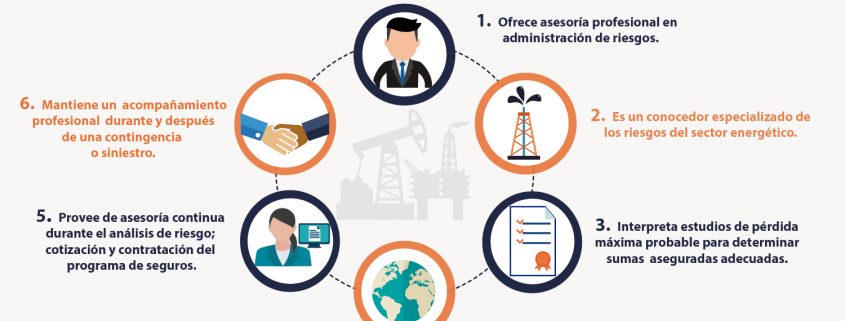
¿Por qué contratar un broker de seguros especializado en energía?

Los seguros son instrumentos financieros de previsión que nos ayudan a reducir la incertidumbre económica que se presenta con posterioridad a los acontecimientos súbitos e imprevistos que puedan afectar el patrimonio de las empresas o de las personas cuando sufren un  siniestro.

La principal característica de los seguros es la de fungir como un instrumento de transferencia de riesgos para obtener respaldo económico ante diversas contingencias, ya sea que recaigan en el mismo asegurado o un tercero afectado, como consecuencia de una acción u omisión del asegurado.

Su costo se reduce al pago de primas y por ende, no inmovilizan el capital de los asegurados.

Los seguros que se requieren en el sector energético son complejos, a través de ellos, se amparan los riesgos de las  operaciones de exploración y extracción de hidrocarburos en aguas profundas; transporte de petróleo por barco; tendido de ductos; construcción y operación de terminales de almacenamiento, etc.

Para asegurar adecuadamente a una empresa  es necesario conocer su experiencia, resultados, sus medidas de seguridad operativa e industrial, los trabajos a realizar pactados en sus contratos y lo más importante, el tipo de riesgos a los que está  expuesta, considerando que:

1) Los hidrocarburos y petrolíferos son peligrosas por sus características de inflamabilidad y explosividad;

2) Se les considera actividades altamente riesgosas;

3) Conllevan  infraestructura de grandes dimensiones y con altos grados de inversión económica;

4) pueden encontrarse en zonas social y ambientalmente vulnerables y

5) Están expuestas a las acciones u omisiones de contratistas, sub-contratistas y proveedores de servicio.

Por todo lo anterior no cualquier  agente de seguros puede hacerse cargo del programa de aseguramiento de una empresa de este sector, se requiere de la asesoría de un broker especializado  en esta materia.

Este tipo de brókerofrece asesoramiento profesional para la contratación de los programas integrales de seguros, con las coberturas que pueden contratarse en México, pero también debe contar con la capacidad para colocar coberturas en el mercado internacional de reaseguro, cuando se trata de “grandes riesgos”.

Además, ofrece una variedad de soluciones innovadoras y puntuales aprovechando economías de escala, con base en las necesidades particulares de cada negocio,  el  perfil de la organización, su tamaño y su real exposición a riesgo  a los que ésta se expone diariamente en sus operaciones.

El conocimiento de la industria petrolera y de los mercados de seguro y reaseguro, les permite implementar y operar las mejores estrategias en la gestión de administración de riesgos, para maximizar las oportunidades y limitar los riesgos de sus clientes, desde la  interpretación de  un estudio de cuantificación de riesgos,  uno de  impacto ambiental,  el cumplimiento de una medida  regulatoria en la materia y el acompañamiento profesional  durante y después de una contingencia o siniestro.

En México experimentamos la reconfiguración del sector energético, que dio lugar a una mayor  participación del sector privado, nacional e internacional,  así como  nuevas obligaciones  por lo que las empresas  requieren que sus inversiones estén correctamente respaldadas  y trabajar con proveedores experimentados, con costos y tiempos de respuesta eficientes y para la consecución de ese objetivo es  fundamental la contratación de un corredor de seguros confiable.

 En NRGI Broker®,contamos con la experiencia y la especialización en seguros para el sector energético que necesitas. Acércate a nosotros, con gusto te atenderemos.


USMCA protege de la expropiación a ferrocarriles, puertos, hidrocarburos y energía

Construcción Pan-Americana / Info.Transportes / 15 Octubre


El Acuerdo Estados Unidos-México-Canadá (USMCA, por sus siglas en inglés) protege las inversiones norteamericanas en México. El pasado 30 de setiembre se alcanzó el acuerdo definitivo para modernizar al Tratado de Libre Comercio de América del Norte (TLCAN), vigente desde 1994.

En el capítulo 14 del USMCA, se puntualiza las modalidades para reclamar afectaciones a las inversiones si éstas impactaran cinco sectores: transportes, proyectos de infraestructura, generación de energía, hidrocarburos o telecomunicaciones.

De esta manera las empresas que ya disfruten concesiones mediante contratos en estos sectores (como ferrocarriles, puertos, aeropuertos, explotación de minerales, hidrocarburos) contarán con la certidumbre necesaria, al evitar expropiaciones o interpretaciones expansivas del Acuerdo por parte de tribunales arbitrales.

Además de que el USMCA mantiene un mecanismo de solución de diferencias entre México y EE.UU., los inversionistas tienen derecho a reclamar daños y prejuicios por la afectación de su inversión a través de dos modalidades: violación a las obligaciones de trato nacional, y declarar una trasgresión al capítulo de inversión cuando ésta sea parte de un contrato.

Tan solo durante este sexenio (que va del 2013 al segundo trimestre de 2018), la inversión extranjera directa proveniente de la Unión Americana asciende a 78.427.100.000 de pesos (US$4.171.811.943), convirtiendo a la Ciudad de México, Estado de México y Nuevo León, en las entidades con mayor percepción, en tanto, el sector transportes aporta el 4.3% del total de los recursos.

Mientras que Canadá reporta una inversión de 15.460.700.000 de pesos (US$822.408.745), favoreciendo mayormente a los estados de Zacatecas, Chihuahua y Sinaloa. El sector de transportes aporta el 35.8% del dinero que arriba a México.

Con un marco institucional actualizado y un mecanismo de arbitraje moderno, México refuerza la imagen del país, como un destino atractivo y seguro para invertir. El USMCA podría ser ratificado en la segunda parte de 2019 y entrar en vigor a inicios del 2020, según el presidente de Fomento Industrial de la Canacintra de México, Juan Manuel Chaparro.


Construcción Pan-Americana / Info.Transportes / 15 Octubre


How President Trump’s Trade Deals Could Lift the US Economy

Market Realist / Mark O’Hara / October 8

Trade deals

President Donald Trump has long lashed out against existing trade deals, calling them unfair to the United States. The Trump administration has been working to renegotiate several trade deals, and the focus has been on reducing the country’s massive trade deficit by moving its manufacturing onshore.

UMSCA

The Trump administration has used tariffs as well as tariff threats to obtain trade concessions. Less than halfway into his presidential term, Trump has renegotiated NAFTA and KORUS FTA (the United States–Korea Free Trade Agreement).

Under the new NAFTA—renamed USMCA (the United States–Mexico–Canada Agreement)—the United States is expected to gain access to Canada’s historically protected dairy industry. It also calls for more regional content in automotive manufacturing.

Under the new KORUS terms, South Korea relaxed the norms for automotive imports from the United States. It also agreed to a quota to obtain long-term exemptions from the Section 232 steel tariffs in the United States (QQQ).

Section 232 tariffs

Trump’s trade rhetoric has received support as well as opposition. Retail and tech giants such as Walmart (WMT), Alphabet (GOOG), Apple (AAPL), and Amazon (AMZN) are lobbying against these tariffs. However, the new trade deals have allowed the Trump administration to obtain incremental benefits that are expected to support US jobs. We’ve seen plant restarts in the US steel and aluminum industry after the Section 232 tariffs were implemented.


Market Realist / Mark O’Hara / October 8


USMCA traerá más beneficios que el TLCAN

Publimetro / María Leonor Noyola Cervantes / 8 octubre


La senadora Leonor Noyola respondió ¿El nuevo tratado USMCA será más o menos beneficioso para México que el TLCAN?

Del Tratado de Libre Comercio con América del Norte, se puede destacar que, en el periodo que comprenden los años de 1993 al 2015, el comercio entre los tres países se cuadruplicó, al pasar de 297 mil millones de dólares a 1.14 billones de dólares, lo que impulsó la economía de los tres países y redujo los precios para los consumidores. Gracias a este efecto, millones de mexicanos pueden comprar productos que antes les estaban reservados a una clase media que representaba menos de una tercera parte de la población.

El TLCAN, para convertirlo en un nuevo Acuerdo Estados Unidos-México-Canadá (USMCA, por sus siglas en inglés) logra que, cuando menos en el papel, promoverá el aprovechamiento de nuevas tecnologías en el comercio, fortaleciendo la competitividad de América del Norte como plataforma industrial; aun y cuando gran parte de la producción recae en el intercambio con los Estados Unidos y, en menor medida, con Canadá.

Se tendrán más beneficios que el Tratado de Libre Comercio de América del Norte, puesto que las tres naciones en su negociación se enfocaron en adaptarse a las nuevas necesidades de todos los sectores de la economía mexicana; lo que se reflejará en la estabilidad y certeza a los intercambios comerciales entre, significando el inicio de una nueva etapa de las relaciones productivas y comerciales en nuestra región.

De los temas trascendentes que deseo destacar, es el concerniente al ramo de la industria automotriz; en dicho rubro, EU garantiza a sus socios, amplio acceso; libre de aranceles en caso de que impusiera nuevos a aquellos automóviles provenientes de otros países; adicional que, incentivará la creación de más empleos y mejores salarios en beneficio de los trabajadores de nuestro país (16 dólares la hora). Mientras tanto, la introducción de una cláusula de caducidad: el USMCA finalizará en 16 años, a menos que las partes acuerden extenderlo.

Además, el Consejo Coordinador Empresarial (CCE), coincide con que las exportaciones mexicanas crecerán 50 por ciento hacia la región de Norteamérica durante los siguientes 10 años, esto implica que las empresas instaladas en México tendrán mejor productividad y mayores ganancias, además de tener crecimiento en el empleo que tanto necesitamos.


Publimetro / María Leonor Noyola Cervantes / 8 octubre


USMCA: Who are the winners and losers of the ‘new NAFTA’?

Washington Post / Heather Long / October 1

Trump and Trudeau can tout this as a major victory ahead of key elections in their countries. It’s a lot less clear whether ‘NAFTA 2.0’ is good for Mexico and U.S. automakers.

The United States, Canada and Mexico finalized a sweeping new trade deal late Sunday, just hours before their Oct. 1 deadline. President Trump was up early Monday tweeting that the agreement is “a great deal for all three countries,” and Prime Minister Justin Trudeau said Sunday night that it was a “good day for Canada.”

The deal is expected to take effect around Jan. 1, 2020. Congress has to approve it, a process that will take months, but confirmation looks likely, given that Republicans are pleased Canada got on board and some Democrats are pleased with the stronger labor provisions.

Here’s a look at who’s smiling — and who’s not — as the world sees this news.

Winners:

President Trump. He got a major trade deal done and will be able to say it’s another “promise kept” to his voters right before the midterm elections. And he won the messaging game — he persuaded Canada and Mexico to ditch the name “NAFTA,” for North American Free Trade Agreement, which he hated, and to instead call the new agreement “USMCA,” for United States-Mexico-Canada Agreement. It’s not a total trade revolution, as Trump promised, but USMCA does make substantial changes to modernize trade rules in effect from 1994 to 2020, and it give some wins to U.S. farmers and blue-collar workers in the auto sector. Trump beat his doubters, and his team can now turn to the No. 1 trade target: China.

Prime Minister Justin Trudeau. There might not be a lot of love lost between Trump and Trudeau, but in the end, Trudeau didn’t cave much on his key issues: dairy and Chapter 19, the treaty’s dispute resolution mechanism. Trudeau held out and got what he wanted: Canada’s dairy supply management system stays mostly intact, and Chapter 19 remains in place, a win for the Canadian lumber sector. On dairy, Canada is mainly giving U.S. farmers more ability to sell milk protein concentrate, skim milk powder and infant formula. On top of the substantive issues, Trump went out of his way to criticize the Canadian negotiating team in the final days of deliberations, which Trudeau can play up as a sign of just how hard his staff fought on this deal.

Labor unions. This agreement stipulates that at least 30 percent of cars (rising to 40 percent by 2023) must be made by workers earning $16 an hour, about three times the typical manufacturing wage in Mexico now. USMCA also stipulates that Mexico must make it easier for workers to form unions. The AFL-CIO is cautiously optimistic that this truly is a better deal for U.S. and Canadian workers in terms of keeping jobs from going to lower-paying Mexico or to Asia, although labor is looking carefully at how the new rules will be enforced. It’s possible this could accelerate automation, but that would take time.

U.S. dairy farmers. They regain some access to the Canadian market, especially for what is known as “Class 7” milk products such as milk powder and milk proteins. The United States used to sell a lot of Class 7 products to Canada, but that changed in recent years when Canada started heavily regulating this new class. USMCA also imposes some restrictions on how much dairy Canada can export, a potential win for U.S. dairy farmers if they are able to capitalize on foreign markets.

Stock market investors. A major worry is over, and the U.S. stock market rallied Monday with the Dow gaining nearly 200 points.

Robert E. Lighthizer. Commerce Secretary Wilbur Ross and Treasury Secretary Steven Mnuchin couldn’t get major trade deals done for the president, but U.S. Trade Representative Lighthizer did. He led negotiations with South Korea on the revamped U.S.-South Korea trade deal (KORUS) that the president just signed, as well as on the “new NAFTA.” Lighthizer is proving to be the trade expert closest to Trump’s ear.

Losers:

China. Trump is emboldened on trade. A senior administration official said Sunday that the U.S.-Canada-Mexico deal “has become a playbook for future trade deals.” The president believes his strategy is working, and he’s now likely to go harder after China because his attention won’t be diverted elsewhere (at least on trade matters).

U.S. car buyers. Economists and auto experts think USMCA is going to cause car prices in the United States to rise and the selection to go down, especially on small cars that used to be produced in Mexico but may not be able to be brought across the border duty-free anymore. It’s unclear how much prices could rise (estimates vary), but automakers can’t rely as heavily on cheap Mexican labor now and there will probably be higher compliance costs.

Canadian steel. Trump’s tariffs on Canadian steel and aluminum remain in place for now, something Trudeau has called “insulting” since the two countries are longtime allies with similar labor standards.

Unclear:

Mexico. America’s southern neighbor kept a trade deal in place, but it had to make a lot of concessions to Trump. It’s possible this could stall some of Mexico’s manufacturing growth, and it’s unclear whether wages really will rise in Mexico because of this agreement. Big energy companies can also still challenge Mexico via Chapter 11, something that could constrain Mexico’s new government as it aims to reform energy policies.

Ford, GM, Chrysler and other big auto companies. There’s relief among auto industry executives that the deal is done, but costs will be high for big car companies: The steel tariffs are still in place on Canada; more car parts have to come from North America (not cheaper Asia); and more car components have to be made at wages of $16 an hour. It remains to be seen how car companies are able to adjust and whether this has long-term ramifications for their bottom lines.

Big business. Many business groups are relieved that Trump got a trilateral deal and didn’t end up tearing up NAFTA entirely, as he had threatened to do. And they like a lot of the trademark and patent provisions. But the details of USMCA include some losses for big business. Some regulatory compliance costs will probably rise, especially for automakers, and big business lost Chapter 11, the investor dispute settlement mechanism that companies have used to sue Canadian and Mexican governments (the one exception is that energy and telecommunications firms still get a modified Chapter 11 with Mexico).

Washington Post / Heather Long / October 1
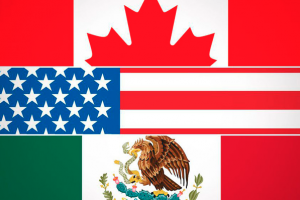
AMLO y sector energético: ¿cómo se respetó en el USMCA-TLCAN?

Político MX / 1 Octubre


Al paso de las horas luego de conocerse el documento del USMCA, Acuerdo Comercial que reemplazará al Tratado de Libre Comercio de América del Norte (TLCAN), aparecen las “letras pequeñas” en sectores clave o “intocables” de nuestra economía, como es el energético. En apenas dos párrafos se despeja casi cualquier atisbo de duda sobre eventuales intervenciones de nuestros socios; el presidente electo Andrés Manuel López Obrador asumió que ellos determinaron esta postura que finalmente destrabó las negociaciones.

Hasta donde ha sido posible revisar el nuevo texto, además de las definiciones y el preámbulo, se compone de 32 capítulos sectoriales: destacan precisamente comercio agrícola, reglas de origen, medidas fitosanitarias, derechos de propiedad intelectual, protección a inversiones, servicios financieros y telecomunicaciones.

Trasciende que en un capítulo que se volvió a redactar luego de la inclusión del equipo de transición en la renegociación, quedó explícito el derecho del Estado mexicano a los hidrocarburos y la posibilidad de modificar sus leyes para proteger esta propiedad.

«Reconocimiento del Estado mexicano directo, inalienable e impresionable a la propiedad de hidrocarburos», se nombró al capítulo 8 del documento donde se advierte:

– «En el caso de México, y sin perjuicio de sus derechos y recursos disponibles en virtud de en este Acuerdo, Estados Unidos y Canadá reconocen que México se reserva el derecho soberano de reformar su Constitución y su legislación interna”.

– «El Estado mexicano tiene la propiedad directa, inalienable e imprescriptible de todos hidrocarburos en el subsuelo del territorio nacional, incluida la plataforma continental y la zona económica exclusiva ubicada fuera del mar territorial y adyacente, (al igual) que en estratos o depósitos, independientemente de sus condiciones físicas de conformidad con Constitución de México«.

Es a partir de esto que en León, Guanajuato, López Obrador explicó su apoyo a este acuerdo, junto al incremento a los salarios de trabajadores del sector automotriz y que se otorga certidumbre a los inversionistas.

“Se aceptó nuestra propuesta de reducir al mínimo, el capítulo de energéticos, originalmente en un capítulo muy amplio se hablaba inclusive de una comunidad energética para América del Norte… Esto, consideramos, no era conveniente para nuestro país, y ese capítulo se redujo a dos pequeños párrafos, qué podría decirles, dos pequeños históricos, porque quedó a salvo la soberanía de nuestro país en materia energética…” explicó a grandes rasgos.

Pese a ello, los expertos del sector energéticos consultados acotan que a pesar del lenguaje “fuertemente redactado”, el capítulo de energía no impide que las compañías extranjeras extraigan petróleo en México bajo la liberalización de la industria aprobada por el gobierno saliente, esto es, lo que establece la reforma energética.

¿Armonización o continuismo? plantearán algunos escépticos sobre este movimiento por demás estratégico y que no deja de ilustrar cómo fueron las negociaciones, “el estire y afloje” para que al final todos los actores involucrados quedaran conformes. Ahora habrá que lidiar con los efectos que generen esos lineamientos: la base con la que habrá que iniciar el 1 de diciembre el próximo gobierno.


Político MX / 1 Octubre