Listado de la etiqueta: PEMEX

Mexico’s Pemex Jan crude output drops 10.6 pct from a year ago

Mexican national oil company Pemex produced 10.6 percent less crude oil in January than in the same month last year, the company said.

January crude output averaged 2.02 million barrels per day (bpd), down from 2.26 million bpd during the same month in 2016, according to company data released on Friday.

Meanwhile, crude oil exports were down 3 percent in January compared to the year-ago period.

Shipments for the month averaged nearly 1.09 million bpd, compared to 1.12 million bpd exported in January 2016.

About half of Mexico’s crude exports currently go to the United States.

The Mexican government is in the midst of implementing a sweeping energy reform finalized in 2014 that ended the decades-long production monopoly enjoyed by Pemex, formally known as Petroleos Mexicanos.

The reform also paved the way for first-ever oil auctions open to private and foreign producers, four of which were concluded last year. While a range of oil companies won the blocks on offer, significant streams of new output are not expected for at least several years.

Mexico’s oil regulator, the administrator of the auctions, is expected to oversee three auctions covering a mix of shallow water and onshore fields, in addition to a deep water auction over the course of this year.

Mexican crude output has declined over the past dozen years from a peak of 3.4 million barrels per day in 2014.

The government expects crude production to average 1.94 million bpd this year, and between 1.9 million to 2.0 million bpd in 2018.

mexico-economia

Reuters (Reporting by David Alire Garcia; Editing by David Gregorio) / Hellenic Shipping News

Proposed border tax could harm U.S.-Mexico energy trade: official

A border tax floated by aides to U.S. President Donald Trump is «not a good idea» for bilateral energy trade, a senior Mexican official said on Wednesday, also confirming that Mexico’s second-ever deepwater oil auction would happen this year.

A 20 percent border tax on Mexican imports to the United States has been pitched by the Trump administration as one way to force Mexico to pay for a new border wall, a top campaign promise.

Separately, a so-called border adjustment tax has been proposed by the new administration and its Republican allies in Congress that in theory would tax imports but not exports.

Both proposed taxes face opposition from U.S. oil refiners and automakers, among other sectors, warning they would raise consumer prices.

«We don’t see this kind of a tax as a good idea,» said Aldo Flores, Mexico’s deputy energy minister for hydrocarbons.

«Our position continues to be that free trade and the free flow of these goods has benefited both countries, strengthening the energy security of both,» he said.

Relations between the United States and Mexico are especially tense as Trump has threatened to upend nearly a quarter century of free trade, deport millions of illegal immigrants and build his signature border wall while getting Mexico to pay it, something the Mexican government has said it will not do.

For decades, the two neighbors have nurtured a robust cross-border energy trade, with crude oil produced by state company Pemex sold to U.S. refiners, while American producers sell natural gas and fuels like gasoline and diesel to Mexican buyers.

Last year, the total value of U.S. energy exports to Mexico totaled $20.2 billion, while Mexico exported mostly crude oil worth $8.7 billion to the United States, in a reversal of the historic balance of energy trade between the two countries, according to U.S. Energy Information Administration data.

Similarly, Mexico’s crude shipments could be pressured if the United States approves the new Trump-backed permit for TransCanada’s (TRP.TO) proposed Keystone XL pipeline and the project brings new supplies of Canadian heavy crude to U.S. refineries.

«Supposing that (the pipeline) is completed, that changes the competitive playing field for Mexican crude,» said Flores, adding that producers of oil in Mexico would have to be more creative in how they market their output.


DEEPWATER AUCTION

Mexican and Canadian heavy crudes have competed for years for buyers among U.S. Gulf coast refineries.

While Mexico’s oil regulator is planning three new oil auctions later this year, covering shallow water and onshore fields, a new deepwater auction is also planned.

«It will be toward the end of the year,» said Flores, who also sits on the Pemex board and took over as deputy energy minister in August.

He declined to specify where the deepwater blocks would be located.

Flores added that a first-ever auction of shale oil and gas blocks would «probably» be scheduled, noting that necessary regulations would be published before the end of the year.

Last year, Mexico concluded four first-ever oil auctions, part of a landmark energy opening finalized in 2014 that ended Pemex’s decades-long monopoly, including a December deepwater auction that awarded 10 blocks to a wide range of international oil majors.

While Mexican crude output has declined over the past dozen years from a peak of 3.4 million barrels per day, Flores said he expected output to total 1.9 million to 2.0 million bpd in 2018, similar to a forecast of 1.94 million bpd for this year.


3 Octubre_shutterstock_331572071


David Alire Garcia and Adriana Barrera / Reuters

Wed Feb 15, 2017 | 8:09pm EST

Las temporadas abiertas en el transporte por ducto de hidrocarburos y petrolíferos

De acuerdo con cifras de la Comisión Reguladora de Energía (CRE), hasta el 6 de febrero del 2017, se han emitido 1648 permisos de transporte para petróleo, petrolíferos y petroquímicos, 249 de transporte de gas natural y 209 de gas licuado de petróleo (https://www.gob.mx/cre/acciones-y-programas/como-vamos-en-materia-de-hidrocarburos); una parte importante corresponde a ductos, toda vez que es uno de los medios más utilizados por su eficiencia y seguridad.


El transporte de ductos se puede llevar a cabo para usos propios, pero también con el fin de proporcionar servicios a terceros. En éste último caso, la CRE ha establecido ciertas condiciones, considerando que se trata de un servicio estratégico en la cadena de valor de los hidrocarburos y petrolíferos.


Para llevar a cabo la actividad de transporte por ducto, se requiere la realización de temporadas abiertas como un proceso en el que la empresa de transporte y operadora de un ducto ofrece al mercado la posibilidad de reserva de capacidad y transporte en el ducto, la cual de acuerdo con el artículo 4 de la Ley Hidrocarburos, tiene el propósito de brindar equidad y transparencia en la asignación o adquisición de capacidad disponible a terceros de un sistema o de un nuevo proyecto o con motivo de una renuncia permanente de capacidad reservada, que debe realizar un permisionario de transporte, almacenamiento o distribución de hidrocarburos, petrolíferos y petroquímicos para ponerla a disposición del público, a efecto de reasignar capacidad o determinar las necesidades de expansión o ampliación de capacidad”.


Actualmente la Comisión Federal de Electricidad (CFE) y Petróleos Mexicanos (PEMEX), son las principales empresas que están llevando a cabo las temporadas abiertas para ofrecer a terceros la infraestructura que tienen disponible.


En el caso de Pemex su temporada abierta para la infraestructura ubicada en el norte del país se encuentra vigente hasta el 17 de febrero (http://www.pemex.com/nuestro-negocio/logistica/temporadasabiertas/Paginas/default.aspx).


Al respecto, es importante destacar que uno de los requisitos de la CRE para otorgar los permisos de transporte por ducto es demostrar que se cuenta con los seguros suficientes para responder por los daños o perjuicios que se pudieran ocasionar en el desarrollo de sus actividades. En el caso de las temporadas abiertas, contar con seguros adquiere especial relevancia, toda vez que se trata de una forma de dar certeza a quienes deseen contratar capacidad y transporte en el ducto, que el sistema que les prestará el servicio se encuentra amparado.


En NRGI Broker somos expertos en Seguros para la Construcción y Operación de transporte por ductos de hidrocarburos y petrolíferos. Acércate a nosotros.


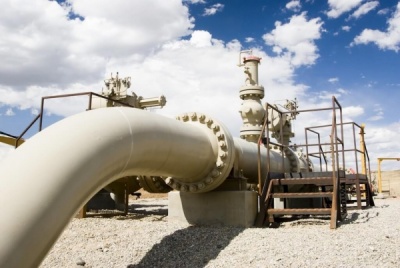
Gas pipeline in Wyoming

BHP Billiton ticks $2.8 billion Gulf oil deal

BHP Billiton has approved its share of the $US9 billion ($11.8bn) Mad Dog 2 offshore oil project in the US Gulf of Mexico, six weeks after operator BP ticked off on the project.

For BHP, its 23.9 per cent stake in the 140,000 barrels per day platform will set it back $US2.2bn ($2.8bn) and offset some of its declining oil production from 2021-22 when oil starts to flow.

“Mad Dog Phase 2 is one of the largest discovered and undeveloped resources in the Gulf of Mexico, one of BHP Billiton’s preferred conventional deepwater basins,” said BHP’s Houston-based petroleum president Steve Pastor.

“It offers an attractive investment opportunity for BHP Billiton and aligns with our strategic objective to build our conventional portfolio through the development of large, long-life, high-quality resources.”

BHP’s petroleum unit is focused on conventional oil after $US20bn of US shale acquisitions in 2011, and nearly as much spending since, have failed to deliver expected returns because of subsequent falls in oil and gas ­prices. Mad Dog 2 was originally expected to cost $US20bn but after going back to the drawing board three years ago, the joint venture, which also includes Chevron, has shaved more than 50 per cent off the costs.

According to Deutsche Bank estimates, the Mad Dog stake is worth $US866m of value for BHP, which is also expanding in the Mexican waters of the Gulf.

Shortly after BP approved Mad Dog, BHP beat BP in a $US1.2bn bid to partner Mexico’s national oil company, Pemex, in the Gulf, making it the first company to do so since the Mexican industry was nationalised in 1938.

The deal on the known 485 million-barrel Trion oil discovery, about 30km from Mexico’s sea border with the US, delivers BHP a near-term development opportunity in partnership with Pemex, which the Mexican government estimates could cost $US11bn.

First production at a daily rate of 120,000 barrels a day by 2022 would be possible by the joint venture — BHP (60 per cent operator) and Pemex (40 per cent).

Mexico undid Pemex’s oil industry monopoly in December 2013 under a reform agenda designed to bring in foreign capital and expertise to accelerate the pace of development, particularly for the backlog of projects in the deepwater oil fairways of the Gulf of Mexico. Macquarie estimates that Trion will cost $US11bn to develop. The bank forecasts that BHP’s petroleum production will slide from 132 million barrels of oil equivalent this financial year to 113.4 million in 2020-21. BHP is due to report first-half profits on February 21.

RBC is expecting BHP to log underlying net profit of $US3.11bn, up from $US514m a year earlier and its interim dividend to fall to US14c a share, down from US16c.

Copyright: The Australian

Pemex, tras alianzas con privados en refinación

Pemex Transformación Industrial (TRI) busca tener alianzas con el sector empresarial tanto a nivel de refinadores, para reducir sus pérdidas y mejorar su capacidad de producción; como con el sector gasolinero con quien compartirán sus marcas, además podría crear un consejo consultivo con sus franquiciatarios, informó Carlos Murrieta Cummings, director de la empresa subsidiaria del Estado.

La alianza con las refinadoras es para mejorar la actual capacidad de producción del Sistema Nacional de Refinación en las instalaciones que requieren una reconfiguración, a largo plazo, este tipo de inversiones impedirán que la empresa tenga pérdidas por 109,000 millones de pesos en el balance del año 2025; las alianzas son para invertir en las refinerías de Salina Cruz, Salamanca y Tula.

“Sí estamos buscando participar con otros refinadores y con otras empresas petroleras para que trabajen con nosotros”, dijo, “si no hiciéramos nada estaríamos perdiendo en el 2025 alrededor de 109,000 millones de pesos”.

En su presentación durante el Primer Seminario Nacional Gasolinero, organizado por El Economista y Grupo Besco, el funcionario explicó que el combate al mercado negro de combustibles es una de las prioridades en Pemex por lo que en un mes estarán listos los primeros barriles de combustible marcado.

Murrieta Cummings expuso que en el caso de la refinería de Tula están trabajando en su planta de coque (carbón de petróleo) y en las siguientes semanas van a tener listos los primeros resultados de las licitaciones de servicios auxiliares de Pemex. La transformación de Pemex consiste en concentrarse más en los procesos de producción de refinados que en querer hacer todo como antes, por eso es que en el plan de negocios se anuncia que se dejan de hacer cosas como trabajar en el suministro de hidrógeno, por ejemplo.

En el tema de las ventas al detalle, el directivo explicó que ven viable el cobranding en las estaciones de servicio, lo que permitirá desarrollar nuevas marcas mexicanas que se anunciarían al lado de la franquicia Pemex; sin embargo, la limitante es que para poderse anunciar de manera conjunta sólo pueden adquirir producto de Pemex, ya sea nacional o importado.

Otra opción de negocio que se tiene adicional a la Franquicia Pemex o al cobranding es que sean solamente proveedores de combustible, con lo que el gasolinero podría tener diferentes opciones de producto, aunque, señala, esa opción “no la he visto ni en Estados Unidos, ni en Europa, ni en Asia”.

“Lo que estamos viendo muy de cerca es qué hacemos para que a nuestra franquicia le aumente el ticket promedio y lo otro, cómo le aumentamos el flujo (…) somos socios, tenemos que preocuparnos por cómo les va a ir mejor a ustedes”, expresó.

En ese sentido, el consejo consultivo con los empresarios servirá para recabar la información necesaria y así, mejorar el servicio y la marca, además de que van a crear un club de lealtad.

NRGI-Broker-fianza-de-buena-calidad-y-vicios-ocultos

Copyright: El Economista

What’s Next for Mexico’s Energy Sector?

Mexico’s recent deepwater bidding round marked a major milestone for the country in its transformation of its energy sector. However, more work is needed to prepare Mexico and its state energy firm, Petroleos Mexicanos (PEMEX), for competition in the global oil market.

The success of Mexico’s Round 1.4 deepwater bidding compared with other Round 1 bids shows that major international oil companies were waiting for the right properties and fields to be bid out, Juan Francisco Torres Landa R., partner with the Mexico City office of law firm Hogan Lovells, told Rigzone. The award of fields to key global industry players in the deepwater round, and PEMEX’s farm-out agreement with BHP Billiton, would not have been possible a few years ago.

Both PEMEX and Mexican government officials deemed the deepwater auction process and results as a major success. However, government officials from 2013 to 2015 expressed a “naïve optimism” regarding the production and reserve replacement and short and mid-term impact of upstream reform. It wasn’t until last year that officials realized that the upstream auctions will have little effect on production and fiscal revenues during this decade, Adrian Lajous, a fellow with Columbia University’s SIPA Center on Global Energy Policy, stated in a Jan. 9 research paper on Mexico’s deepwater auctions.

“The compounding impact of low oil prices and falling oil production on public finance and particularly on the financial position of PEMEX has forced the oil industry to limit debt and drastically cut expenditures,” Lajous said. “The mid-term consequences of these constraints should not be underestimated.”

Despite president-elect Donald Trump’s controversial comments on building a wall along the U.S.-Mexico border and tough talk on immigration, Mexico still wants the United States investing in its energy sector, Antonio Garza, U.S. ambassador to Mexico during the George W. Bush Administration and now Counsel in the Mexico City office of the White & Case LLP, told Rigzone.

“The U.S. energy sector is too dynamic,” Garza said. “There is far too much strategic expertise and know-how not to want them involved. I think the response of Mexican leadership, the Mexican private sector and the Mexican people would [be that] the U.S. energy sector is best-in-class – of course, they’re welcome. Of course, we want them to participate.”

However, companies looking to invest in Mexico face some tough economic headwinds. Companies buying long are still preserving cash, Garza explained. From the standpoint of energy, it’s just going to take time to see where the energy sector and economy is over the year and early 2018.

“They’re still very cautious about major capital expenditures and to the extent that they’re going to be doing much with their capital expenditures, I think it’s going to be in domestic plays or plays where they’re already somewhat vested or have been active before.”

Still, U.S. energy companies are the best positioned proximate to this market.

What Could Be Next for Mexico’s Energy Sector

The outlook for Mexico’s energy sector could be impacted by the 2018 president elections and its regulatory regime.

It’s too early to tell what the outcome of Mexico’s 2018 presidential elections will be. But the mood in Mexico is that a left-wing presidency is more likely than ever, Duncan Wood, director of the Woodrow Wilson International Center for Scholars, told Rigzone. This shift is due to corruption scandals that have tarnished the image of current Mexican President Enrique Pena Nieto. Energy reform has also been unpopular in Mexico. Wood said he expected energy reform to become even more unpopular with the liberalization of gasoline prices in 2017, which would cause gas prices to rise.

Leftist candidate Andres Manuel Lopez Obrador has consistently opposed energy reform, Wood stated. Manuel believes in taking a more nationalistic approach to the energy sector.

“At the same time, he’s a pragmatist and actually understands the basics of the national economy and the need to attract investment,” Wood added.

Whoever succeeds Pena Nieto is also unlikely to have the votes in Congress to repeal the constitutional reform. But the new president could slow energy reform momentum by simply cancelling future bidding rounds, and taking steps to create a business climate less friendly for investment. Cancelling existing contracts would be difficult and costly for the Mexican government, as investors are protected by international and bilateral treaties, Wood said.

“It also would destroy confidence among investors,” Wood said. “I don’t see anybody taking that risk.”

Currently, the oil and gas industry and the government are both trying to ensure that Round 2 of bidding for exploration and production opportunities will be a bigger success and move forward in 2017. Given that the timing and sequencing of the Round 1 auctions has been severely affected by global oil industry conditions, Lajous argues that the Mexican government could have had better results by conducting a more rigorous selection of assets and a slower paced calendar could have offered better results under these circumstances.

“The institutional stress under which policy makers operated allowed little time to evaluate and more fully understand the results of each auction and pose alternative contractual options in the following ones,” Lajous stated. “The argument that they had no other options is mistaken.”

One issue that Mexico needs to address is its regulatory capacity, Wood said. Wood believes that the Mexican government should focus not only on expanding the workforce of the nation’s energy regulatory agencies, but investing in regulatory processes as well. This investment will ensure that permitting takes less time, shortening the amount of time to first oil.

“This is to ensure agility and to make investors happy with the way their contracts are being applied,” Wood said. “If not, they’ll tell those stories to other investors, and other investors won’t come, and Mexico becomes less competitive.”

PEMEX Faces Further Challenges in Evolving for Competition

Mexico’s state energy firm PEMEX is on the right track long-term, but will continue to face challenges in 2017. PEMEX’s biggest challenge is its business culture, which still tends to think like a government agency rather than an oil company, Wood explained.

“What the government should have done was show that PEMEX is actually healthier and stronger at the beginning of the reform process,” Wood said. “But time has run out for the government to show that.”

PEMEX has dealt with international companies before, but it wasn’t really competing with those companies under the previous regulatory environment. Landa believes that PEMEX will need to significantly reduce its workforce if it wants to meet the margins that public companies will impose and new framework for the oil and gas industry.

“It’s a good idea to make sure that PEMEX is not a politically-driven company, but one where economic efficiency is a major driving force,” Landa said.

How long will it take for PEMEX to complete its evolution hinges on a number of factors? The current CEO has made good changes; but the president who will follow Pena Nieto will likely want to bring in a new PEMEX CEO, Wood said. If the current CEO remains, the meaningful changes within PEMEX will continue to impact its bottom line over the next five years. But if somebody comes in with a different plan, that could delay everything.

Wood predicts that PEMEX’s production will fall below 2 million barrels per day (MMbpd) over the next 12 to 18 months because of Mexico’s aging oil and gas fields. Optimistically, Mexico’s production will climb above 2 MMbpd in 2020. Wood thinks that production up 2 MMbpd is too ambitious, but between 2.5 MMbpd and 3 MMbpd.

shutterstock_346100930

Copyright: Rig Zone

La liberación del precio de los petrolíferos

A partir del 01 de enero de 2017, los precios de los petrolíferos en México experimentaron un considerable aumento, debido a que el gobierno mexicano dejó de establecerlos por mandato, para que se ajusten con base en los costos reales de logística e infraestructura. Se trata de una medida previa a la liberación de los precios que iniciará el 30 de marzo de 2017.


La liberación de los precios de los petrolíferos es el proceso, a través del cual los precios del gas LP, la gasolina y el diésel ya no estarán sujetos a la imposición de “topes”, sino a los ajustes que dicte la dinámica del mercado, es decir, a la oferta y la demanda, los precios internacionales del petróleo, así como al desarrollo de infraestructura.


Este proceso se realizará gradualmente y por regiones, de acuerdo con lo que determinó la Comisión Federal de Competencia Económica (Cofece), a fin de que sean acordes con las condiciones y costos de cada localidad[1].


Con esta medida se busca atraer nuevas inversiones al país y preparar al mercado energético para una mayor competencia, así como para incrementar la infraestructura de los hidrocarburos y sus derivados.


El tema de la infraestructura es uno de los más importantes en el marco de la Reforma Energética, ya que los nuevos inversionistas requerirán de ductos para la distribución y transporte de los petrolíferos, además de centros de almacenamiento y establecimientos para la venta al público.


Actualmente sólo Petróleos Mexicanos (Pemex) cuenta con la infraestructura suficiente para estas tareas, la cual deberá permitir que las empresas privadas utilicen su infraestructura, mediante el costo de tarifas accesibles y no discriminatorias, las cuales fueron fijadas por la Comisión Reguladora de Energía (CRE), con base en la información que Pemex Logística presentó para los sistemas de almacenamiento con los que cuenta: 77 de petrolíferos; 1 de petroquímicos; 1 de petróleo crudo en terminal marítima y 1 de gas licuado de petróleo en terminal marítima.


Es importante destacar que esta medida se encuentra inserta en el esquema de transición hacia un mercado competitivo de los petrolíferos. Sin embargo, las empresas nacionales y extranjeras tenderán a construir su propia infraestructura.


Para ello deberán contar con seguros que los protejan ante eventuales daños que puedan causar durante la construcción y operación de sus instalaciones.


En NRGI Broker, somos expertos en seguros para la industria de los hidrocarburos.
 

shutterstock_395862259

[1] Transición hacia mercados competidos de gasolina y diésel, Comisión Federal de Competencia Económica (Cofece), consultado en https://www.cofece.mx/cofece/attachments/article/38/DOC-GASOLINAS-FINAL.pdf
¿Sabías que planean construir un gasoducto de Progreso a Cancún?

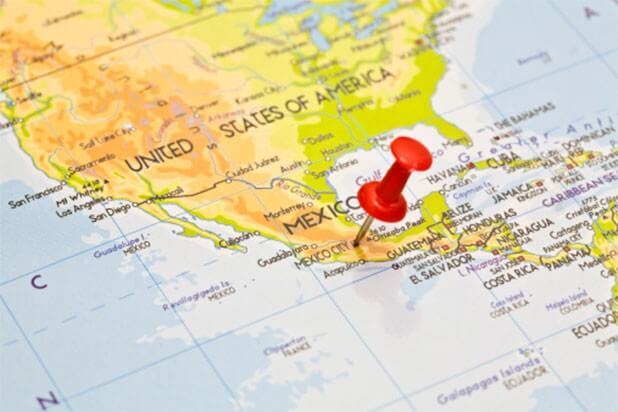
El subsecretario de Energía a nivel federal, Leonardo Beltrán, informó que el Plan de Negocios de Pemex 2017-2021, incluye una inversión no menor a 700 millones de pesos para la construcción del gran gasoducto que correrá de Puerto Progreso (Yucatán) a Cancún.

De acuerdo con el portal de noticias El Economista, el funcionario dijo que de hecho el proyecto del gasoducto está considerado como una obra que deberá realizarse entre el 2017 y el 2018 y que todos los proyectos de Pemex contenidos en el Plan de Negocios no están sujetos a los recortes presupuestales, sino que están fincados en su propia rentabilidad y retorno de inversión.

El gasoducto, no sólo implica la obra como tal, sino que detonará oportunidades de negocios aledañas, tanto para el sector de la construcción, como para los servicios especializados, ingenieriles, de transporte y almacenaje que se derivarán de esta obra.

El Plan de Negocios presentado hace unas semanas por Pemex consigna en el apartado de Logística un total de 13 grandes proyectos, incluido el gasoducto de Puerto Progreso a Cancún, que será operado bajo el esquema de socio operador con contribución de activos existentes.

El subsecretario dijo que la reforma energética abrió la posibilidad de nuevos esquemas de negocios con participación de la iniciativa privada en transporte, almacenamiento y suministro de hidrocarburos, por lo que el gasoducto entre Puerto Progreso y Cancún está en la mira de actores privados que irían en asociación con Pemex para operarlo.

Proyecto de Gas Natural

Ya anteriormente, en Cancún, se desechó un proyecto de gasoducto que iba a operar la empresa Gas Natural Industrial SA de CV.

El proyecto consistía en un sistema para transporte de gas natural, con el objeto de dar suministro a la zona comercial y de servicios en el centro y zonas habitacionales del noroeste de la ciudad. La Secretaría de Medio Ambiente y Recursos Naturales otorgó los permisos federales para la instalación de 3,600 metros lineales (3.6 km) de tubería en acero al carbón, así como 30.49 kilómetros detubería en polietileno de alta densidad que iba a operar a una presión normal de 21 kg/cm2 para tuberías en acero y 7 kg/cm2 para tuberías en polietileno.

El proyecto concitó el rechazo no sólo de sectores de la sociedad civil, sino de las propias autoridades municipales de Cancún, las cuales terminaron por negarles los permisos de construcción, lo cual a la postre terminó por descarrilar el proyecto.

Empresarios concesionarios de transporte urbano aseguran que un gasoducto permitiría abatir los costos de operación de la flotilla de autobuses en Cancún, dando margen a bajar o al menos dejar de incrementar el costo del pasaje en la ciudad.

Santiago Carrillo, director general de Autocar, una de las dos empresas concesionarias de transporte de pasajeros en Cancún, dijo que existe una gran expectativa por la construcción del gasoducto, debido a que sólo entonces tendría caso invertir en tecnología automotriz a gas, la cual les permitiría reducir hasta en 50% el costo diario de combustible.

11 Octubre_shutterstock_372630700

Fuente:SIPSE

Crippled Latin Oil Giants Get No Miracle Cure in Post-OPEC Rally

For the three titans of Latin American oil — Pemex, PDVSA and Petrobras — last week’s OPEC-driven price rally won’t be enough to halt a slow descent from the ranks of international crude heavyweights.

Even as news of the cartel’s 1.2 million-barrel-a-day output cut spurred the steepest three-day oil gain in 15 months, the biggest Latin American producers remain hobbled by financial, political, technical and structural problems. Mexico and Brazil have been turning to outside investors to help boost output, with Mexico on Monday offering up stakes for the first time to drill in its deep waters.

Oil prices are an especially pressing issue for the behemoths responsible for large chunks of their local and national economies, all while supplying one of every 13 barrels of crude produced around the globe every day. Unlike North American explorers who were free to fire workers and abandon costly, high-risk projects as crude collapsed, the Latin companies operate under close bureaucratic controls that hinder their ability to respond to market forces, said Thomas McNulty of Navigant Consulting Inc.

“Higher prices are always a good thing but these are state-owned quasi-companies that have tremendous social obligations to their countries and little freedom to take rational cost-cutting steps,” said McNulty, director of Navigant’s valuations and financial risk management practice. “U.S. companies have to pay taxes, sure, but they don’t have to build schools.”

Petroleo Brasileiro SA said it isn’t changing its business plan in response to OPEC’s production agreement. Mexico’s Energy Ministry said it won’t change its auction plans because of OPEC. Petroleos de Venezuela SA, as the Venezuelan state-oil company is formally known, didn’t respond to requests for comment.

Brent Surge

Brent crude, the international benchmark, surged as much as 15 percent in the three trading sessions following a Nov. 30 meeting at which the Organization of Petroleum Exporting Countries agreed to individual production cuts for the first time in eight years. The three-day rally was the largest since August 2015. Brent dipped to a 12-year low around $27 a barrel as recently as January; since then, the price has doubled to more than $54.

“Higher prices are positive for these companies to varying degrees,” said Lucas Aristizabal, a senior director at credit-rating company Fitch Inc. For Petroleos Mexicanos and PDVSA, the benefits are diminished by staggering debt loads that eat up cash that could otherwise go toward drilling to sustain production and replenish spent reserves, he said.

“Pemex needs much higher prices than this under the current taxation scheme to become cash-flow neutral while investing enough to replenish reserves,” Aristizabal said.

Mexican Oil

Once the world’s third-largest oil producer, Mexico now pumps less than the U.S. state of Texas, thanks to dwindling output from the once-gargantuan Cantarell field and lack of investment in new drilling technology. Aristizabal estimated the Mexican company, whose nearly $100 billion in debt is more than twice that of Exxon Mobil Corp., needs crude to fetch $80 a barrel to $100 a barrel to escape it downward spiral.

Mexico’s deep-water oil auction is designed to attract international oil giants to develop offshore production. It’s a crucial test of foreign investment, with Mexican oil output forecast to fall below 2 million barrels a day next year, the lowest level since 1980.

Pemex CEO Jose Antonio Gonzalez Anaya praised the OPEC agreement and price rise as “a breath of fresh air.

“It’s a good development for the energy market and for Pemex,” he said in a Dec. 1 interview on Bloomberg Television.

PDVSA Payments

PDVSA, facing $6.4 billion in debts coming due next year, won’t get much relief from its liquidity crisis, despite the nascent crude rally, Aristizabal said. Company Chairman Eulogio Del Pino said the cut may push oil prices to $70 in six months. Added cash is important as the producer uses a 30-day grace period to pay interest due on a 2035 bond. Venezuelan President Nicolas Maduro has blamed the U.S. Treasury and Citigroup Inc. for the delayed payment.

Venezuela is one of only two cartel members in the Western Hemisphere, and PDVSA will be required to cut some output. That means abandoning some of the potential upside from the price increase, Aristizabal said.

Petrobras, which has been enmeshed in Brazil’s biggest corruption scandal, is in a better position to take advantage of rising prices than it was in 2011 when crude surged past $100 a barrel. The previous Brazilian administration of Dilma Rousseff pressured the state-controlled company to keep domestic gasoline and diesel prices below international levels in an effort to contain inflation, costing an estimated $35 billion in fuel subsidies in the middle of a commodities boom.

Fuel Sales

The Rio de Janeiro-based producer has been selling fuel at a premium for the past two years, partially recovering the losses from import subsidies. In October, the company set a policy of monthly revisions to guarantee prices remain above import costs. Petrobras reiterated its commitment to keep fuel prices above international parity in an e-mailed response to questions.

Rising prices will also guarantee the viability of deep-water fields that are estimated to hold billions of barrels of oil. Chief Executive Officer Pedro Parente has said the company’s break-even cost is around $40 a barrel. Petrobras has been in talks with potential bidders, including Total SA, for joint ventures to get oil from the so-called pre-salt areas offshore.

Brazil’s energy ministry has said it has no authority to set production limits for Petrobras and other companies producing in Latin America’s largest economy, offering the potential for it to capitalize with more output as OPEC members scale back.

Copyright: Bloomberg

Multan a Pemex con 2.1 mdp por no aprovechar gas

Durante la 64 sesión extraordinaria del Órgano de Gobierno de la Comisión Nacional de Hidrocarburos (CNH) se sancionó a Pemex Exploración y Producción con 2.1 millones de pesos por no cumplir con las metas de aprovechamiento de gas en Ku-Maloob-Zaap.

La comisión detectó que durante 2014 y 2015 la quema y venteo de gas en el activo incumplió las metas de aprovechamiento, las cuales eran de 39.6 millones de pies cúbicos en 2014 y se quemaron 133.5, mientras que en 2015 el limite máximo era de 105 y se quemaron 137.8 millones de pies cúbicos de gas.

Juan Carlos Zepeda Molina, comisionado presidente de la CNH, detalló que los 550 millones de pies cúbicos que Pemex quema cada día equivalen a 32% del gas natural que México importa.

Pemex justificó el incumplimiento a la reducción presupuestal de 100,000 millones de pesos “El cumplimiento a la meta establecida de 98% en el aprovechamiento de gas en aguas someras fue pospuesta, alcanzándose un índice de 96”, dijo la empresa  el pasado 11 de noviembre.

Además de la sanción económica impuesta  a la empresa se le obligó a  implementar inversiones por 2 mil 446 millones de dólares en distintas actividades por los próximos tres años, así como presentar un plan para subsanar la situación.

shutterstock_325897400

Copyright: Oil and Gas Magazine