Listado de la etiqueta: Oil & Gas

Riesgos-y-seguridad-en-los-proyectos-de-OilGas-EIEM2018

Riesgos y seguridad en los proyectos de Oil & Gas

El pasado 14 de noviembre, se inauguró el Encuentro Internacional de Energía en México (EIEM, 2018), en la Torre Virreyes, CDMX, evento organizado por la revista Oil & Gas Magazine, que reúne a los actores más importantes del sector energético.

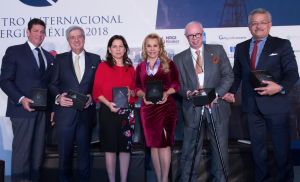
Uno de los paneles que más interés despertó fue el de Voces de Energía[1], con el tema “Riesgos y Seguridad en los Proyectos de Oil & Gas”, en el que participaron la Mtra. Angélica Ruiz Celis, Head of Country President de British Petroleum (BP); la Lic. Graciela Álvarez Hoth, CEO de NRGI Broker; el Lic. Jesús Rodríguez Dávalos, CEO de Rodríguez Dávalos Abogados; el Dr. Herbert Bettinger, CEO de Bettinger Asesores y el Mtro. David Zárate, CEO de Consultores en Gestión, Política y Planeación Ambiental.

El panel fue moderado por el Dr. Octavio Pastrana, Consejero Independiente y Presidente del Comité de Inversión Estratégica de Petróleos Mexicanos, quien compartió unas breves palabras sobre el contexto energético mexicano y realizó dos preguntas a cada uno de los especialistas con el fin de orientar la discusión en torno a lo que se ha hecho bien hasta el momento y los riesgos que se identifican en cada uno de los ámbitos de influencia de los panelistas.

La Mtra. Angélica Ruiz, destacó que en México hay suficientes recursos para atender la demanda de energía al año 2050, por lo que se trata de un país rentable técnica y económicamente. Lo que se ha hecho bien, desde su punto de vista, es que las licitaciones petroleras han sido abiertas y transparentes con base en las mejores prácticas internacionales, lo que convierte a México en un país atractivo para los inversionistas nacionales y extranjeros, como lo demuestra la propia BP, que cuenta actualmente con 5 contratos petroleros, inversión en midstreamy 380 gasolineras en todo el país con un plan de expansión muy ambicioso.

Sobre los riesgos que prefirió denominar retos, se refirió principalmente al de la transición política, considerando que los proyectos petroleros dado que son de largo plazo, requieren acciones y programas que generen certezas.

El licenciado Jesús Rodríguez Dávalos, experto en regulación del sector de petróleo y gas, comentó que la Reforma Energética estableció un contexto de certidumbre jurídica a los inversionistas, lo cual es evidente a partir de las cifras en toda la cadena de valor de los hidrocarburos.

Se refirió específicamente a midstream, donde insistió que se requiere certeza jurídica en los proyectos que ya se encuentran en proceso. Mencionó tres retos importantes: sobre-regulación; relación con las comunidades y el inicio de la nueva administración.

El doctor Herbert Bettinger, puso el acento en el tema fiscal, materia de su especialidad, respecto al cual señaló que no existe unidad en las reglas fiscales del sector energético; a la fecha se cuenta con las misceláneas fiscales, pero no es suficiente para obtener certeza. Insistió en la necesidad de contar con reglas claras.

Comentó que quizá en esta etapa los operadores no le han dado suficiente importancia al tema porque aún no se encuentran en esa etapa, pero deben ser muy cuidadosos en relación a depreciaciones, amortizaciones, documentación de costos y devolución del Impuesto al Valor Agregado (IVA).

El Mtro David Zárate, especialista en temas ambientales, mencionó como aspecto positivo que la regulación derivada de la apertura energética buscó alinear los instrumentos ambientales y sociales, lo cual tiene el objetivo de desarrollar una industria sustentable y sostenible, que además significa un respaldo para las inversiones económicas.

En relación a los riesgos que visualiza, el Mtro. Zárate mencionó que hay empresas prestadoras de servicio que están desarrollando estudios tan importantes como la Línea Base Ambiental o los estudios de impacto ambiental y/o social con poca seriedad y sin el rigor científico necesario.

La licenciada Graciela Álvarez Hoth, experta en administración de riesgos y seguros, mencionó que se ha generado las bases para crear una industria limpia y segura. Enfatizó la importancia de los dos pilares que conforman la política energética de México, por un lado, las medidas de seguridad y protección ambiental, que buscan evitar la ocurrencia de accidentes y, por otro lado, las garantías financieras que son el respaldo financiero para la reparación de los daños en caso de siniestros ya sea por error o negligencia humana o por fenómenos de la naturaleza.

Destacó que durante la participación de su empresa, NRGI Broker, como consultor en materia de garantías financieras de la Agencia de Seguridad, Energía y Ambiente (ASEA), pudo corroborar la importancia que le han dado las autoridades en elaborar la regulación con base en las mejores prácticas y estándares internacionales.

Los principales riesgos que identifica son los propios de las actividades relacionadas con hidrocarburos, pero insistió que ante ellos, el mejor respaldo es contar con un programa integral de seguros.

[1]Voces de Energía es una iniciativa promovida por NRGI Broker y Rodríguez Dávalos Abogados, la cual busca generar espacios de acercamiento y confianza para comentar y debatir acerca de los retos y experiencias del sector energético.
 

Los peores accidentes con hidrocarburos en México: Primera Parte

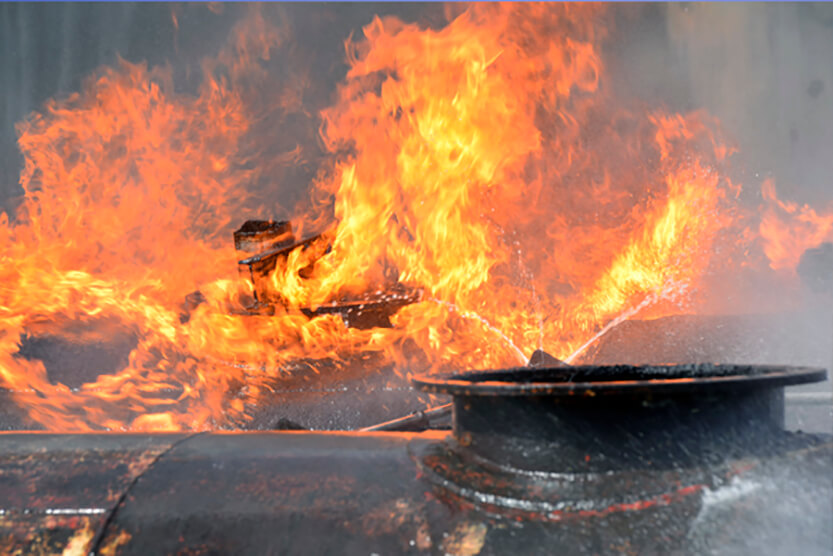
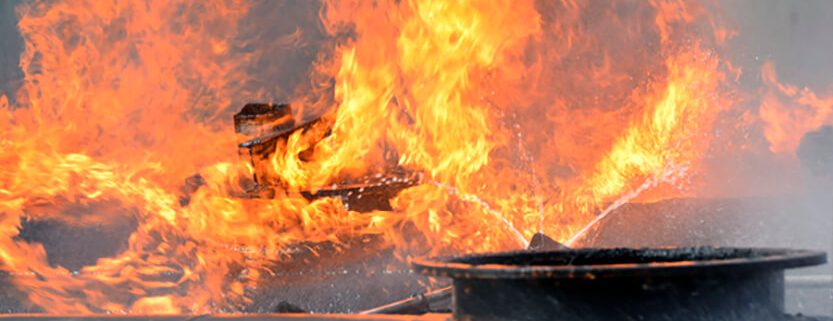
En México, la actividad petrolera es una de las más importantes por su contribución al desarrollo económico, sin embargo también está considerada una industria altamente riesgosa, por su potencial para causar daños a personas, bienes y al medio ambiente. En ocasiones, a pesar de contar con diversas medidas de seguridad, los accidentes ocurren y pueden llegar a tener consecuencias catastróficas.

A continuación, se presentan dos de los peores accidentes con hidrocarburos y/o petrolíferos sucedidos en México:

19 de noviembre de 1984. Se registraron diversas explosiones en las plantas de almacenamiento y distribución de Gas de Pemex en San Juan Ixhuatepec, Tlalnepantla, Estado de México. La planta de almacenamiento contaba con 4 tanques con un volumen de 1600 m3 y 2 con un volumen de 2400 m3, equivalente a 11,000,000 de litros aproximadamente[1].

El accidente provocó la muerte de entre 500 y 600 personas y un aproximado de 4,500 heridos, 200 mil damnificados.

El 22 de abril de 1992.  Una fuga de gasolina de un ducto de Pemex en Guadalajara vertió al subsuelo y al sistema de drenaje de la ciudad, lo que causó una gran explosión que dejó unos 210 muertos además de cuantiosos daños.

Estos dos siniestros significaron un importante precedente para la regulación de actividades altamente riesgosas, consideradas todas aquellas que manejan alguna de las sustancias contenidas en el Primer Listado (Manejo de Sustancias Tóxicas), de fecha 28 de marzo de 1990 y el Segundo Listado (Sustancias Inflamables y Explosivas) de fecha 04 de mayo de 1992.

Los listados fueron publicados posteriormente a cada uno de los siniestros antes mencionados, como una forma de incrementar las medidas de seguridad y evitar que volvieran a suceder.

En esos listados, se encuentran los hidrocarburos y petrolíferos, por lo que todos aquellos manejan estas sustancias están obligados a cumplir con la regulación aplicable a las actividades altamente riesgosas.

Una de esas obligaciones es contar con seguros de responsabilidad civil y responsabilidad ambiental para responder por los daños que puedan causar a terceros.

En NRGI Broker somos expertos en seguros para el Sector Hidrocarburos. Acércate a nosotros, con gusto te atenderemos.


[1] Ver “The tragedy of San Juanico- the most severe LPG disaster in history”, disponible en:http://www.ncbi.nlm.nih.gov/pubmed/358094

Record Year for Europa Oil & Gas

 From: Rigzone Staff / Monday, October 30, 2017


2016/17 was a record year for Europa Oil & Gas (Holdings) plc in terms of corporate activity, according to the company’s CEO Hugh Mackay.

During this time, Europa achieved a successful farm-out to Cairn of a 70 percent interest in one of the company’s South Porcupine licenses, two separate sales of Europa’s interest in the Wressle oil field in the East Midlands, the acquisition of Shale Petroleum, and the farm-out of a 12.5 percent stake in the upcoming Holmwood well in the Weald basin.

“In our view, this activity is testament to the quality of the technical work we have carried out on our licenses, the excellent location of our assets both offshore Ireland and onshore UK, and the major uptick in industry interest and activity in new plays across our areas of focus,” Mackay said in a company statement.

“The year ahead should see more of the same. We remain focused on securing farm-outs for the remainder of our Irish licenses with partners with whom we can advance our assets towards drilling. At the same time, we are looking forward to commencing drilling activity at the conventional Holmwood prospect in the Weald, an area that is generating considerable excitement following the opening up of the Kimmeridge limestone play,” he added.

Europa registered revenues of $2.1 million (GBP 1.6 million) for the 12 month period ended July 31, 2017. This marked a slight increase over last year’s figure of $1.7 million (GBP 1.3 million). Net cash balance as at July 31, 2017 stood at $4.7 million (GBP 3.6 million), compared to $2.2 million (GBP 1.7 million) last year.


 From: Rigzone Staff / Monday, October 30, 2017

Mexico expects to hold a third oil and gas auction in 2018

From: Reuters.com / OCTOBER 19, 2017 / 2:04 PM / Mariana Parraga

HOUSTON (Reuters) – Mexico’s oil regulator will likely add another auction in 2018 featuring conventional onshore oil and gas blocks, the head of the National Hydrocarbons Commission (CNH) said on Thursday, potentially teeing up a third tender in an election year. The bid terms will be announced later this year or in early 2018 while contracts will likely be awarded by the summer, said Juan Carlos Zepeda on the sidelines of a forum in Houston.  The onshore tender is in addition to a deepwater Gulf auction expected to attract in January some of the world’s biggest producers, as well as a March shallow water auction.
A landmark 2013 constitutional energy reform championed by President Enrique Pena Nieto paved the way for the auctions, in which private firms can bid to operate oil and gas fields on their own. Before the reform, state-owned company Pemex had a monopoly on hydrocarbons production.
Depending on the winner, Mexico’s July 2018 presidential election could alter the pace and scope of future auctions, which are organized and supervised by the CNH, while the energy ministry designs the contracts and sets the schedule.

Zepeda added that so-called non-conventional blocks to produce shale oil and gas are also being analyzed for inclusion in an additional separate auction.
The CNH has run eight oil auctions to date, awarding 72 exploration and production contracts to more than 60 companies. The contracts are seen generating almost $61 billion in investment over their lifetime.

The 64 blocks to be offered in the two upcoming offshore auctions account for more than 65 percent of Mexico’s estimated resources. Along with the January bidding round, Pemex could also find a partner for the promising Nobilis-Maximino deeepwater project close to the U.S. maritime border.

A development plan for another large deepwater project, Trion between Pemex and Australia’s BHP Billiton, has not yet been submitted to the regulator, Zepeda said, but it is expected before year end.

UNITIZATION UNDERWAY
New regulation to establish how operators of two different blocks should produce oil from a single shared reservoir was recently finished by authorities and is now under public consultation, said Aldo Flores, Mexico’s deputy energy minister.

“The final version (of the regulation) should be ready by November,” Flores said.

The well Zama-1 containing over 1 billion barrels of oil in place discovered in July by U.S. firm Talos Energy and its partners in Mexico’s shallow water could extend into a Pemex area, Zepeda said.
“The first unitization case could be Zama, but it has not yet been officially presented (to authorities),” Zepeda said.

The reservoir unitization regulation will establish the need to nominate a single operator to produce oil in shared reservoirs even keeping two separate companies or consortia for each one of the blocks. The energy ministry will have the final word if the parties do not agree on how to develop the field.


From: Reuters.com / OCTOBER 19, 2017 / 2:04 PM / Mariana Parraga

OPEC’s Stable Market Outlook Points to Status Quo at Meeting

OPEC kept forecasts for global oil supply and demand unchanged in its last monthly assessment before members meet to review the market.

The 13 nations of the Organization of Petroleum Exporting Countries pumped 32.44 million barrels a day in April, slightly less than will be required to meet demand in the third quarter. Production rose as gains in Iran and Iraq compensated for losses in Nigeria and Kuwait. Investment by the global oil industry through 2018 will slump to less than half the amount spent from 2012 to 2014 following the collapse in prices, OPEC said.

Oil prices have rebounded more than 75 percent from the lows reached in February as U.S. shale production falters, signaling that Saudi Arabia’s strategy to re-balance oversupplied world markets is taking effect. OPEC, which failed to complete an accord with non-members last month on capping output, has no current plans to revive supply limits when ministers meet on June 2, six delegates said on May 4.

“We shouldn’t expect any freeze and definitely not any cut because OPEC sees things are improving from a fundamental point of view,” said Torbjoern Kjus, an analyst at DNB ASA in Oslo. “The structural decline based on lower investment is starting to show up in numbers for non-OPEC. That damage is done, even if prices recover in the second half.”

April Increase

OPEC production increased by 188,200 barrels a day last month to 32.44 million, according to the report. While the group’s supply has typically exceeded the required amount in recent months, April output is about 380,000 barrels a day below the 32.8 million that OPEC estimates will be needed in the third quarter. That potential shortfall is a further indication the organization’s policy is working.

Global oil demand will increase by 1.2 million barrels a day, or 1.3 percent, this year to 94.18 million a day, according to the report. Supplies from outside the group will shrink by 740,000 barrels a day to 56.4 million.

“A return to balance is a shared interest among consumers and producers alike,” the group’s Vienna-based research department said in the monthly report.


Font: Bloomberg

BEGINS A NEW ERA IN THE MEXICO’S ENERGY INDUSTRY

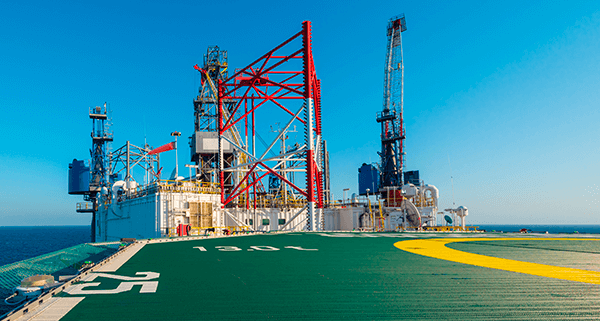
Two of the 14 shallow-water Gulf of Mexico blocks on offer in the first phase of Mexico’s historic Round One oil auction were awarded, both to a consortium featuring a domestic company.shutterstock_923929

Mexico is starting small with its offer of shallow-water fields and onshore blocks this year and saving the big prizes – deep-water fields in the Gulf of Mexico – for later tenders.

Both of the blocks awarded on Wednesday were won by a consortium made up of Mexico’s Sierra Oil & Gas, Houston-based Talos Energy and Britain’s Premier Oil plc.

One of them covers a 194-sq.-kilometer (75-sq.-mile) area off the coast of the Gulf coast state of Veracruz and is projected to contain light oil and dry gas.

The other covers a 465-sq.-kilometer (180-sq.-mile) area off the Gulf coast state of Tabasco and was contested by four other bidders: Norway’s Statoil, U.S.-based Hunt Overseas Oil Company, Argentina’s E&P Hidrocarburos y Servicios and a consortium made up of Italy’s ENI International and U.S.-based CASA Exploration.

The other 12 blocks either received no bids or had offers that were below the minimum 40 percent of pre-tax profits demanded by Mexico’s Finance Secretariat.

Eighteen individual companies and seven consortia had been pre-qualified for Round One’s first phase, but only nine registered on Wednesday and only seven submitted bids for at least one of the blocks.

The initial batch of 14 Gulf of Mexico blocks – located off the coasts of Veracruz, Tabasco and Campeche states – were placed on offer in the first of five phases of Round One, which comprises a total of 169 onshore and offshore blocks.

The second phase of Round One, in which nine shallow-water fields will be on offer, is scheduled to take place on Sept. 30, while the third phase consisting of 26 onshore blocks is to be held on Dec. 15.

The final two phases of Round One still have no established timetable.

Pemex, which obtained 83 percent of Mexico’s proven and probable reserves and 21 percent of its potential resources in a so-called «Zero Round» of non-competitive bidding last year, said last week it would not participate in the initial phase of Round One.

Mexico’s government is looking to the energy overhaul to attract tens of billions of dollars in investment and reverse a roughly 30 percent decline in Mexico’s oil output, which peaked at 3.38 million barrels per day (bpd) in 2004 and currently stands at roughly 2.3 million bpd.