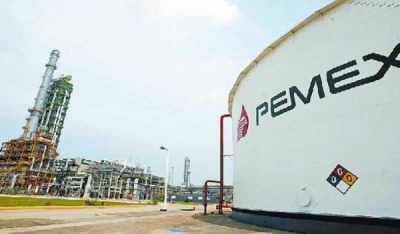
An ambitious plan to boost Mexico’s oil and gas production could potentially slow the country’s energy sector reforms and hinder trade opportunities for U.S. refiners and pipeline companies that have ramped up exports to meet growing demand there, according to research firm Morningstar.
Mexican president-elect Andrés Manuel López Obrador announced late last month a plan to invest billions of dollars in Pemex, the country’s state-owned energy company, in an effort to reverse years of declining production. He also reaffirmed his intent to review more than 100 exploration and production contracts awarded to private oil and gas companies since the 2013 reforms, which opened the country’s energy sector to foreign investment for the first time in decades.
Mexico’s energy reforms are enshrined in its constitution, and López Obrador has said that he will he will honor existing contracts so long as they don’t reveal corruption. But Morningstar noted that any effort to scale back the reforms or increase Mexican energy production could jeopardize some $200 billion in outside investments planned for the country’s oil and gas, power, refining and distribution sectors.
Part of López Obrador’s plan involves investing $2.6 billion to upgrade the nation’s six existing refineries as well as building a new, $8.6 billion refinery at the oil port of Dos Bocas in Tabasco. The country’s existing refineries have been operating at less than 70 percent capacity since 2012, according to Mexico’s energy department, requiring the country to import more gasoline, diesel, jet fuel and other refined products.
https://v2.nrgibroker.com/wp-content/uploads/2018/08/shutterstock_186351839-e1533665411749.jpg433600Soportehttps://v2.nrgibroker.com/wp-content/uploads/2025/12/logo-nrgi.svgSoporte2018-08-07 13:10:482018-08-07 13:10:48Mexican energy sector overhaul could reduce U.S. export demand
El encargado de la renegociación del TLCAN del gobierno de transición de AMLO aseguró que la industria automotriz no está entorpeciendo el diálogo.
El nuevo acuerdo del Tratado de Libre Comercio de América del Norte podría firmarse antes del primero de diciembre, aseguró Jesús Seade, encargado de la renegociación del TLCAN del gobierno de transición de Andrés Manuel López Obrador.
A su salida de la casa de transición, se le preguntó sobre el rumbo de las negociaciones y aunque no entró en detalles, dijo que podría estar antes del primero de diciembre.
“Estamos llegando a los temas que no se han avanzado. Cada vez estamos más cerca, pero al mismo tiempo enfrentando la realidad de lo que no se ha manejado «.
Comentó también que no son las condiciones de la industria automotriz las que están entorpeciendo las negociaciones.
«Ningún tema en particular. No quiero entrar en detalles, se negocia mejor en el silencio, pero estamos trabajando para que se pueda firmar antes del primero de diciembre”.
Esta mañana el secretario de Economía mexicano, Ildefonso Guajardo, dijo que México ha puesto en la mesa de negociación con Estados Unidos una contrapropuesta sobre reglas de origen de automóviles para la modernización del TLCAN, y está estudiando la planteada por Washington.
“Nosotros tenemos una propuesta en la mesa, estamos analizando algunas de las características de la posición norteamericana, y lo estamos haciendo claramente en función de un diálogo que tenemos con la industria automotriz mexicana, pero si quiero remarcar, todo el acuerdo aterriza conjuntamente, nada está acordado hasta que todo está acordado”, apuntó Guajardo al ser entrevistado en el marco de la inauguración del diplomado “Guillermo Aguilar Álvarez sobre negociaciones comerciales internacionales”.
El secretario aseguró que se está buscando avanzar en la negociación para darle certidumbre a los inversionistas por medio de la definición de acuerdos benéficos en las reglas de origen de los diversos sectores involucrados en las discusiones.
https://v2.nrgibroker.com/wp-content/uploads/2018/08/Copia-de-shutterstock_24076447-e1533662602792.jpg400600Soportehttps://v2.nrgibroker.com/wp-content/uploads/2025/12/logo-nrgi.svgSoporte2018-08-07 12:23:432018-08-07 12:23:43Firma de TLCAN 2.0, antes de diciembre: Seade
MADRID (Reuters) – Mexican tycoon Carlos Slim said on Tuesday that the best wall between Mexico and the United States was investment and job opportunities, referring to the U.S. President Donald Trump’s promise to build a border fence between the two countries.
«The best wall is investment and creating opportunities in Mexico,» Slim said during an strategy conference for the Spanish builder FCC (MC:FCC), of which he is the main shareholder, in Madrid.
Slim also noted that the United States and Central American countries need to make deals on investment and not just for trade.
https://v2.nrgibroker.com/wp-content/uploads/2018/07/shutterstock_29299006-e1533075444350.jpg400600Soportehttps://v2.nrgibroker.com/wp-content/uploads/2025/12/logo-nrgi.svgSoporte2018-07-31 17:17:372018-07-31 17:32:14Mexico’s Carlos Slim says best wall for Mexico and U.S. is investment, opportunities
Mexico’s incoming president has begun fleshing out his rescue plan for the country’s long-neglected oil sector.
Andrés Manuel López Obrador’s proposals include a $4bn capital injection for state oil company Pemex to boost exploration, a new refinery to slash reliance on US fuel imports and a 600,000 barrel-a-day increase in crude production in two years.
But analysts warn that his nationally focused energy policy risks putting unsustainable pressure on the world’s most indebted oil company. In particular, they point to plans for a 160bn peso ($8.6bn) refinery to be built in his home state of Tabasco over the next three years — an investment equal to the size of Pemex’s loss in the second quarter.
Mr López Obrador has not spelt out how he would fund his proposals but has named Octavio Romero Oropeza, a long-time confidante and agronomist from Tabasco, to take the helm of Pemex. “We are estimating overall investment to rescue the sector of 175bn pesos next year,” said the president-elect, who takes office on December 1.
The cash injection comes as Pemex has seen output fall from a peak of 3.4m barrels a day in 2004 to 1.866m in the second quarter this year.
Mr López Obrador said output was plunging because “the energy sector and oil industry were abandoned”, and has pledged to lift production to 2.5m b/d in two years.
He has yet to make clear whether he intends to continue with oil tenders that have seen more than 100 contracts awarded to 73 companies since 2015 under a landmark reform designed to lift Mexico’s oil output from a four-decade low. The new administration wants at least a temporary pause to oil tenders.
“Four billion dollars is a significant amount, there’s no doubt. But it is important to put it in perspective . . . One single tender round can inject more investment,” said Pablo Zárate at think-tank Pulso Energético.
Mr López Obrador has promised to achieve energy self-sufficiency by spending 49bn pesos upgrading Pemex’s six lossmaking refineries, where output has halved since May 2013, and building two new ones to halt dependence on US gasoline imports, which have increased by a third in the past two years.
But investors are alarmed at the potential for snowballing costs. The price tag for the first new refinery, to be built in Dos Bocas, has already risen from the $6bn Mr López Obrador’s team had previously indicated. “I don’t know of a single refinery that’s ever been done to budget,” said an investor at a large fund who follows Pemex closely.
Pemex, a monopoly for eight decades, has spent the past two years putting its finances in order and making huge outlays on new refineries could be a serious risk, say analysts.
“Pemex today does not have the cash or free cash flow to take on the construction of new refineries, and if the company decided to finance such an investment with debt or shift capital from exploration and production to refining, its credit metrics would weaken,” cautioned Moody’s Investors Service.
Ramping up refinery capacity could lead to Pemex halving the value of lucrative oil exports, it added.
But Mr López Obrador has said his government would keep its promise of halting gasoline imports in three years and would lower fuel prices.
Pemex has net debt of about $106bn and is expected to post earnings before interest, tax, depreciation and amortisation of approximately $25bn this year. With the state taking about 70 per cent of profits in tax, Pemex could bump up its debt to pay for refineries — but it already has hefty debt repayments due in 2019 and 2020.
Mr López Obrador’s team has indicated that it wants to halt oil tenders while it reviews contracts awarded to date and decides on whether and how fast to continue auctions.
Indeed, the government has delayed two upcoming tenders, which include joint ventures with Pemex, until next February.
Adrián Lajous, a former Pemex chief executive, has called for a moratorium on oil auctions until 2020 but said joint ventures with Pemex should resume next year.
Even if oil tenders are put on ice, analysts are urging the new administration to allow Pemex to continue forging joint ventures.
“Partnerships will be needed to grow output — international companies bring capital and technical expertise,” said Ruaraidh Montgomery at Wood Mackenzie.
Above all “Pemex should start partnering with companies that specialise in enhanced oil recovery, given the maturity of its portfolio”, to allow it to squeeze more oil from existing fields, said Pablo Medina at Welligence Energy Analytics.
One radical revamp for Pemex could be to follow the “China model”, said Juan Carlos Zepeda, head of Mexico’s oil regulator, keeping the parent company in state hands, but spinning some assets into a partially listed unit, as China National Petroleum Corp has done.
“I would like us to do the same with Pemex but that would require changing the constitution,” he said.
This article has been amended to correct the amount of oil Pemex plans to increase production by in the next two years.
Una docena de capítulos, entre ellos el textil y energético, podrían cerrarse en los próximos días
Estados Unidos está haciendo un progreso “absolutamente increíble” en torno a las negociaciones del Tratado de Libre Comercio de América del Norte (TLCAN) y se podría llegar a un acuerdo en otoño, señaló el presidente del Consejo de Asesores Económicos de la Casa Blanca, Kevin Hassett.
“Creo que veremos algo para otoño”, dijo Hassett en una entrevista para Fox News.
Mientras advertía que no era “un negociador” involucrado en las negociaciones entre Estados Unidos, México y Canadá, Hasset afirmó que sus colegas que están renegociando el acuerdo han indicado que las cosas están yendo bien.
“Es absolutamente increíble el progreso que están haciendo”, señaló.
No soy un negociador involucrado en las negociaciones… (pero) mis colegas indican que las cosas están yendo bien
El comentario de Hassett hizo eco del Representante de Comercio de Estados Unidos, Robert Lighthizer, quien dijo el 26 de julio ante el Congreso que es posible que los socios del TLCAN lleguen a un acuerdo tentativo en agosto para renovar el pacto.
El presidente Donald Trump también ha dicho recientemente que Estados Unidos está avanzando sólidamente en las conversaciones con México, pero ha indicado que su administración puede buscar primero un acuerdo bilateral con este país antes de negociar por separado con Canadá.
Una docena de capítulos, próximos a cerrarse
Una docena de capítulos, entre ellos el textil y energético, podrían cerrarse en los próximos días para avanzar en la renegociación del TLCAN, informó Juan Pablo Castañón, presidente del Consejo Coordinador Empresarial (CCE) y parte del ‘cuarto de junto’, grupo de la iniciativa privada que acompaña al gobierno en el proceso.
“Textiles, que ha sido un capítulo difícil; energía que nos da mucha potencialidad en la zona si hacemos sinergia entre los tres países; medio ambiente, aduanas y facilitación comercial; medidas disconformes; servicios financieros e inversión; comercio transfronterizo; comercio digital y anexo sectorial de cosmético. Estos son los capítulos cercanos a terminar y quedarían 8 o 10 capítulos adicionales y dentro de ellos están el tema laboral, de propiedad intelectual, que son temas aún en la mesa de negociación y que para nosotros es importante profundizar”, señaló el líder empresarial.
En una llamada telefónica con medios desde Washington, Castañón se mostró confiado, ya que identificó un claro interés por parte de Estados Unidos para avanzar en las negociaciones del TLCAN y llegar a un acuerdo en principio.
“En el ambiente de lo que vivimos, se sigue pensando que durante agosto estaríamos usando esta ventana de oportunidad y hay la voluntad para hacerlo”, señaló el empresario.
El secretario de Economía, Ildefonso Guajardo, detalló en Washington que los equipos negociadores convinieron iniciar con los temas menos complicados, para avanzar luego hacia los más complejos, y espera que Canadá participe tanto en las reuniones bilaterales, como trilaterales con Estados Unidos.
El jueves se reanudaron en Washington las conversaciones para actualizar el pacto comercial con reuniones ministeriales entre Estados Unidos y México, tras haberse estancado desde mayo, debido a algunas demandas estadounidenses controversiales y en espera de las elecciones presidenciales de México.
Buscan fórmula para reglas de origen
En el tema de las reglas de origen se avanza en las negociaciones con una fórmula que pueda ser factible, que no dañe los empleos en México, ni las nuevas inversiones dirigidas al mercado mexicano, “pero aún no se concreta”, reconoció el presidente del CCE.
Están sobre la mesa con “raya roja”, en las que México no va a ceder, el capítulo de estacionalidad, la cláusula sunset y Capítulo 20 sobre resolución de controversias gubernamentales. En el Capítulo 11 sobre seguridad para las inversiones, los empresarios estadounidenses son los que presionan para que se mantenga, detalló.
Eliminación de sanciones
En caso de que el acuerdo trilateral se pueda dar, desaparecerían las sanciones de aranceles, tanto en materia de acero automotriz con la eliminación del estudio que hacen en la 232, y las tarifas de acero y aluminio. A la par, México eliminaría las sanciones de respuesta que se dieron, aseguró Castañón.
Hoy ya hay repercusiones en los precios en Estados Unidos y la Casa Blanca en Estados Unidos está consciente de que si se logra un acuerdo se eliminarían esas sanciones.
https://v2.nrgibroker.com/wp-content/uploads/2018/07/Copia-de-shutterstock_147729473-e1533074479367.jpg388600Soportehttps://v2.nrgibroker.com/wp-content/uploads/2025/12/logo-nrgi.svgSoporte2018-07-31 17:02:502018-07-31 17:02:50Renegociación del TLCAN tuvo un progreso ‘increíble’: asesor de Trump
PUERTO VALLARTA, Mexico (Reuters) – U.S. President Donald Trump spoke warmly of Mexico’s incoming leftist president on Monday, saying he expected to get «something worked out» on NAFTA, while a top Mexican official said there was scope to revive the trade talks this week.
«We’re talking to Mexico on NAFTA, and I think we’re going to have something worked out. The new president, terrific person,» Trump said in a speech at the White House about American manufacturing.
«We’re talking to them about doing something very dramatic, very positive for both countries, he said, without giving more details.
Talks to reshape the 1994 trade accord have been underway since last August. But they stalled in the run-up to the July 1 presidential election in Mexico, which produced a landslide victory for veteran leftist Andres Manuel Lopez Obrador.
The United States, Mexico and Canada have been at odds over U.S. demands to impose tougher content rules for the auto industry, as well as several other proposals, including one that would kill NAFTA after five years if it is not renegotiated.
Mexican Economy Minister Ildefonso Guajardo, who last week expressed hope an agreement in principle on NAFTA could be reached by the end of August, is due to hold talks with U.S. Trade Representative Robert Lighthizer at the end of the week in Washington.
He will be accompanied by Jesus Seade, the designated chief NAFTA negotiator of the incoming Mexican administration.
«There’s clearly a window of opportunity to be able to bed down a series of open issues which are not numerous, but are very complex,» Guajardo said on the sidelines of a summit of the Pacific Alliance trade bloc in the western coastal city of Puerto Vallarta.
Guajardo is due to meet his Canadian counterpart Chrystia Freeland on Wednesday, also to discuss NAFTA.
After the election, top officials from both the outgoing and new Mexican governments met in Mexico City with senior Trump administration officials led by Secretary of State Mike Pompeo.
Seade said the visit had sent out «excellent» signals.
«We hope these signals translate into a willingness to move forward,» Seade told reporters in Puerto Vallarta.
The talks have been clouded by tit-for-tat measures over trade after the Trump administration slapped tariffs on U.S. steel and aluminum imports.
The United States is also exploring the possibility of imposing tariffs on auto imports, though Guajardo said it was too early to speculate on how that would play out.
Mexico’s foreign ministry said on Monday that South Korea had initiated the process of seeking associate membership in the Pacific Alliance, which comprises Colombia, Chile, Mexico and Peru and is seeking to deepen free trade.
Singapore, Australia, New Zealand and Canada were last year admitted as associate members by the alliance. For Mexico, the expansion is part of a push to diversify its trading partners in the wake of Trump’s previous threats to pull out of NAFTA.
Guajardo indicated that despite his optimism about reaching a deal, risks still exist.
«The biggest risk is that instead of moving forward with an agenda of opening and integration, we move backwards, closing our economy and really undoing what we’ve built in the last two and a half decades,» Guajardo said.
A California energy company is moving ahead with a $150 million fuels terminal in the Mexican state of Sinaloa.
Sempra Energy of San Diego is building the fuels terminal in Topolobampo, Mexico through its Mexican subsidiary Infraestructura Energética Nova, S.A.B. de C.V. or IEnova after the company secured a 20 year contract with the Topolobampo Port Administration.
The first phase of the project will have a storage capacity of 1 million barrels for fuels including gasoline and diesel. Sempra Energy expects operations to start in the fourth quarter of 2020.
In April Sempra Energy announced that IEnova would build a $130 million, 1 million barrel fuels terminal at Ensenada, a city in the Mexican state of Baja California.
San Antonio refiner Valero Energy Corp., the largest independent refiner in the U.S., signed a deal in August with IEnova to export refined product into Mexico. The gasoline, diesel and jet fuel would ship to new $155 million storage terminals IEnova will build in the Gulf of Mexico port city of Veracruz. Other storage terminals will be constructed in Puebla, southeast of Mexico City, and in Mexico city itself, to the tune of $120 million.
https://v2.nrgibroker.com/wp-content/uploads/2018/07/Copia-de-Fotolia_6161179_Subscription_L-e1531860393677.jpg399600Soportehttps://v2.nrgibroker.com/wp-content/uploads/2025/12/logo-nrgi.svgSoporte2018-07-17 15:46:572018-07-17 15:46:57California-based energy company building $150 million Mexico fuels terminal
The United States launched five separate World Trade Organization dispute actions on Monday challenging retaliatory tariffs imposed by China, the European Union, Canada, Mexico and Turkey following U.S. duties on steel and aluminum. The retaliatory tariffs on up to a combined US$28.5 billion worth of U.S. exports are illegal under WTO rules, U.S. Trade Representative Robert Lighthizer said in a statement.
“These tariffs appear to breach each WTO member’s commitments under the WTO Agreement,” he said. “The United States will take all necessary actions to protect our interests, and we urge our trading partners to work constructively with us on the problems created by massive and persistent excess capacity in the steel and aluminum sectors.”
Lighthizer’s office has maintained that the tariffs the United States has imposed on imports of steel and aluminum are acceptable under WTO rules because they were imposed on the grounds of a national security exception.
Mexico said it would defend its retaliatory measures, saying the imposition of U.S. tariffs was “unjustified.”
“The purchases the United States makes of steel and aluminum from Mexico do not represent a threat to the national security,” Mexico’s Economy Ministry said in a statement.
“On the contrary, the solid trade relationship between Mexico and the U.S. has created an integrated regional market where steel and aluminum products contribute to the competitiveness of the region in various strategic sectors, such as automotive, aerospace, electrical and electronic,” the ministry added.
Lighthizer said last month that retaliation had no legal basis because the EU and other trading partners were making false assertions that the U.S. steel and aluminum tariffs are illegal “safeguard” actions intended to protect U.S. producers.
Los expertos consideran que además de provenir de la iniciativa privada, el nuevo líder de la petrolera deberá contar con experiencia para tomar decisiones.
Aunque son tres nombres los que ‘suenan’ para sustituir a Carlos Treviño, actual director de Pemex, en el próximo gobierno de Andrés Manuel López Obrador, expertos definieron el perfil que debe cumplir el nuevo capitán de la petrolera nacional.
Para Arturo García, socio de Energía y Recursos Naturales de Deloitte, el próximo dirigente de la empresa productiva del Estado “debe ser extraído de la iniciativa privada ya sea mexicana o extranjera, además de tener la experiencia que Pemex requiere”, apuntó en entrevista.
De manera extraoficial quienes suenan para ocupar el cargo son Fluvio Ruiz Alarcón, exconsejero independiente de Pemex; Mario Delgado Carrillo, senador y economista colimense; y Octavio Romero Oropeza, Oficial Mayor de Andrés Manuel López Obrador durante su gestión como jefe de gobierno de la Ciudad de México.
En ese sentido, Arturo Carranza, asesor en energía del Instituto Nacional de la Administración Pública, señaló que de ser elegido, Romero Oropeza, a quien se ha señalado como el de mayor predilección para ocupar el cargo, le permitiría tomar decisiones que sacudan a la empresa y que permitan fortalecerla.
“Se requiere un director que tenga toda la confianza del presidente y por ese lado el perfil de Oropeza embona perfectamente a la par que tiene conocimientos financieros”, señaló.
Luis Miguel Labardini, analista de Marcos y Asociados, señaló que desafortunadamente los nombramientos hasta ahora han sido de carácter político. 
https://v2.nrgibroker.com/wp-content/uploads/2015/11/TERCERA-LICITACION-TABASCO-e1531851843217.jpeg234400Soportehttps://v2.nrgibroker.com/wp-content/uploads/2025/12/logo-nrgi.svgSoporte2018-07-17 13:25:072018-07-17 14:07:28¿Cómo debe ser el nuevo CEO de Pemex?
Estados Unidos intentará tener listo el documento antes del cambio de Gobierno en México
El representante del Partido Republicano en México, Larry Rubin, confió en que hacia finales de noviembre próximo, antes del cambio de Gobierno en el país, se tenga un nuevo Tratado de Libre Comercio de América del Norte (TLCAN).
“Tenemos la expectativa de que (el acuerdo comercial) se acabe de negociar antes de que entre el virtual ganador de las elecciones” en México, expresó después de asistir a la reunión entre Andrés Manuel López Obrador y representantes de la Confederación de Cámaras Industriales (Concamin).
Señaló en entrevista que lo anterior le permitirá al Gobierno entrante empezar a trabajar en otros acuerdos y tratados comerciales importantes, sin que tenga un desgaste innecesario por el TLCAN.
Rubin dijo que también resulta positivo el hecho de que continúe el actual equipo negociador de la administración federal y el llamado “Cuarto de Junto”, equipo asesor que acompaña al Gobierno mexicano en la negociación comercial, hasta culminar la transición.
Reiteró que el acuerdo comercial no sólo es importante para México, Estados Unidos y Canadá, sino también para el presidente Donald Trump en términos políticos, pues las elecciones de noviembre próximo en el vecino país son clave para la continuidad del TLCAN.
Con el hecho de que México, Estados Unidos y Canadá sigan con los trabajos se ofrece un mensaje político importante para EU y “es un buen voto para el comercio, para la próxima elección”, a pesar de que aún hay temas controversiales en el proceso de modernización, apuntó.
“Aunque no es una tarea fácil, Estados Unidos tiene la consigna de que el TLCAN sea aprobado. Hay una gran interés por parte de senadores y gobernadores fronterizos”, mencionó.
El coordinador de “Cuarto de Junto” participante en las renegociaciones del TLCAN, Eugenio Salinas, dijo que se continuarán apoyando los trabajos para lograr un documento exitoso para México, además reconoció la disposición de Andrés Manuel López y su equipo para cooperar en sus labores.
“Vamos a mantener una globalización de México siempre cuidando el mercado interno y atendiendo los sectores sensibles, pero los procesos de renegociación y de apertura continuarán”, comentó.
Automotrices solicitan activar reuniones
Asociaciones de la industria automotriz de Canadá, Estados Unidos y México urgieron a sus gobiernos a retomar las negociaciones para renovar el Tratado de Libre Comercio de América del Norte (TLCAN).
“Consideramos que, mientras se conforma un nuevo Gobierno en México hacia el 1 de diciembre de 2018, ahora es el momento oportuno para que las partes retomen las negociaciones con un compromiso renovado”, indicó el comunicado divulgado por la Asociación Mexicana de la Industria Automotriz, AMIA y firmado por otras ocho organizaciones, entre ellas la Auto Alliance Driving Innovation de Estados Unidos y la Canadian Vehicle Manufacturers´Association.
https://v2.nrgibroker.com/wp-content/uploads/2018/07/shutterstock_219786661.jpg400600Soportehttps://v2.nrgibroker.com/wp-content/uploads/2025/12/logo-nrgi.svgSoporte2018-07-10 13:01:292018-07-10 13:01:29Prevén concluir renegociación del TLCAN en noviembre