Listado de la etiqueta: México

Comment: Investors keep a watchful eye on Mexico’s new leftist leader

International Investment / Jonathan Clare / October 22


Jonathan Clare recalls the strikingly different Mexico of the 1990s, and looks at the country’s prospects today under a new, left-wing, administration.

The Mexico of today is very different from the country I first experienced in the late 1990s. Back then I was based in Mexico City – the local population was still reeling from a banking crisis and severe recession.

Talking to locals in the fashionable coffee shops you would hear of the steady exodus of the middle class from the sprawling metropolis. There was a sense of gloom that the Institutional Revolutionary Party’s long stranglehold on Mexican politics would never end. Investor confidence was pretty low and lawlessness was a constant worry.

The bleak financial news and security risks preyed on people’s minds, but there were some notable compensations, principally the idyllic beaches and a world-class cuisine. Today, high-levels of crime continue to scar the nation, but the country has undergone an economic transformation – and one that has not been confined to the urban and industrial centres in Mexico City and Monterrey, where gleaming office blocks dominate the skyscape.

Since the PRI lost power in 2000, successive governments have worked hard to forge trading relationships with some 44 countries, as far afield as Israel and Japan. The previous perception of a tourism-and agriculture-based economy no longer holds. The country has diversified to include a variety of sectors from chemical, telecommunications and automotive, to energy to name just a few.


Taking the lead
Mexico is recognised as the leading emerging market in Latin America, while top Mexican companies are significant players across the Americas, Europe and Asia through a wave of mergers and acquisitions over the last decade. Increasingly, they are helping to drive growth in these markets. CEOs of top local conglomerates I speak to enthuse about the opportunities they have forged by connecting and partnering with research and development centres and companies in the UK, Germany and Switzerland.

Some question whether the recent economic progress, albeit sluggish of late, can be maintained following the election victory in July of the leftist Andres Manuel Lopez Obrador (popularly known as AMLO, an acronym of his initials). His key campaign theme was curbing corruption, which remains a national scourge. More broadly, though, Mexicans are still trying to gauge what his leadership will mean for the country, in particular its impact on foreign investors in the energy sector.

AMLO has sought to salve business fears over the direction he will take by insisting there will be no nationalisation and promising fiscal discipline. But over time he will come under pressure from his support base of those “left behind” by the country’s revival to introduce populist measures. He has already pledged to double pensions when he officially takes office on 1 December.

Indeed, the business community remains nervous about possible attempts to reverse previous administrations’ reforms, many of which have helped Mexico to make some important advances, not least within the telecommunications and energy sectors. However, his critics’ concerns should be tempered by AMLO’s record in office. As mayor of Mexico City in the early 2000s, he proved to be an effective operator, and one would hope that his penchant for organising disruptive political protests during national election campaigns is now a thing of the past.

Fortunately for AMLO, his tenure begins amid some positive developments. The protracted and thorny re-negotiation of NAFTA has been completed. The parties prudently agreed the successor United States-Mexico-Canada Agreement (USMCA) in advance of the new administration being sworn in at the end of year. And the strong economic outlook in the US can only benefit Mexico, as it will continue to be one of Washington’s most important regional trading partners for the foreseeable future.

The trade war between China and the US may also reap dividends for AMLO’s term as US companies look to their immediate neighbour to fill any supply chain gaps. According to the OECD, the Mexican economy is set to maintain its growth rate of over 2% in 2018. The same is forecast to hold in 2019.


The benefit of the doubt
In Mexico City and Monterrey it’s business as usual: traffic madness, buoyant trade, and deals still getting done. Looking ahead, there is no doubt there will be a shift in the new government’s approach to ensure the needs of AMLO’s support base are met, but there is likely to be a strong dose of pragmatism and deal-making when addressing the various challenges ahead. In all probability, AMLO will balance the needs of his constituency with keeping the political elite and business community onside.

Critically, the international investment community, for now at least, appears to have given the president-elect the benefit of the doubt, despite all the background noise and fears over the reversal of reforms. Building a consensus is the key going forward, and AMLO will be well advised to maintain close relations with foreign investors, and local business leaders in general, however much his supporters might protest.

The sentiment on the street is that he has shown enough to be trusted to move the economy in the right direction. Nearly twenty years on, in the trendy coffee shops, restaurants and bars of the capital’s upscale districts of Polanco and Roma there is little talk of escaping the city – quite the reverse in fact.


International Investment / Jonathan Clare / October 22

 

Pese a T-MEC, México debe diversificar mercados: Comce

El Economista/ Patricia Romo / 23 Octubre


El país debe aprovechar también otros acuerdos comerciales, como el TPP 11: Diez Morodo.

Guadalajara, Jal. Pese a haber alcanzado un nuevo acuerdo comercial con Estados Unidos y Canadá (T-MEC), México debe apostar por la diversificación de mercados y aprovechar otros tratados trasnacionales para “no permanecer rezagados en momentos de crecimiento económico”, afirmó el presidente del Consejo Mexicano de Comercio Exterior (Comce), Valentín Diez Morodo.

“No hay que concentrarse en un solo mercado, hay que diversificarse; no puedes estar a expensas, por muy poderoso que sea, como en el caso nuestro con Nafta, no puedes estar en exclusiva”, destacó el también presidente del capítulo México de la Alianza del Pacífico, durante su participación en la XVI México Cumbre de Negocios.

Diez Morodo destacó que, sólo en la Alianza del Pacífico, Colombia, Chile, México y Perú ya consiguieron eliminar todas las barreras arancelarias, mientras que hay 55 países asociados que intentan formar parte del organismo.

“No se trata de afectar a nadie sino que queremos repartir el pastel mejor entre más gente”, sostuvo Diez Morodo al insistir en la necesidad de que México aproveche mejor otros acuerdos comerciales como el TPP 11 y el tratado de libre comercio con la Unión Europea.

Durante el pánel México en el escenario global, Ian Goldin, profesor de la Universidad de Oxford, afirmó que, pese a las políticas proteccionistas de algunos países, no existe en la actualidad un proceso de “desglobalización”; por el contrario, indicó, nunca ha habido un mejor momento para la globalización.

“Esto no se debe a Estados Unidos ni al Reino Unido sino al resto del mundo y, en particular, a Asia que ahora representa 70% del crecimiento global”, sostuvo Goldin, quien advirtió que “los mayores riesgos que cualquiera enfrenta vienen de la reducción de la operación global”.

El experto enfatizó que el crecimiento económico en la actualidad está en Asia y en los mercados emergentes, incluido México. “Es donde debe estar el enfoque; es donde está el crecimiento del mercado, son los estabilizadores de la economía global, porque los mercados emergentes están creciendo al doble de las economías avanzadas. México está ahí, aunque su primera novia sea Estados Unidos, pero debe haber una diversificación y una reorientación”.

En tanto, John Rennie Short, profesor de Geografía y Política Pública de la Universidad de Maryland, Estados Unidos, coincidió en la apuesta de la diversificación de mercados ya que, dijo, Europa se convertirá en un mercado que duplicará el tamaño de Estados Unidos “y lo mismo aplica para América Latina y otros mercados emergentes”.


El Economista/ Patricia Romo / 23 Octubre


United States seeking Mexican steel export quotas: negotiator

Reuters / Frank Jack Daniel / October 15


MEXICO CITY (Reuters) – The United States is seeking to impose quotas on Mexican steel exports as part of a negotiation to remove metals tariffs, the chief trade negotiator of Mexico’s incoming government said on Monday, adding the issue needed to be resolved within weeks.

The administration of U.S. President Donald Trump imposed the tariffs on Canada and Mexico in June, citing national security reasons. Although the three countries agreed a renewed trade deal earlier this month, the measures remain in place.

Jesus Seade, who represented Mexico’s President-elect Andres Manuel Lopez Obrador in the wider trade talks, said the current Mexican government was leading the metals talks but that he had spoken to U.S. Trade Representative Robert Lighthizer on the matter.

“I have had a couple of calls with Lighthizer, and it is along those lines, to manage volumes etc with Mexico and with Canada,” Seade said in an interview with Reuters, declining to give more details about the content of the discussions.

Seade said the issue of tariffs on Mexican steel had to be resolved before the new government takes office on Dec. 1.

“There is a month-and-a-half left, so it needs to be resolved now,” he said.

Mexico’s economy ministry, which leads trade talks, did not immediately respond to a request for comment.

Mexico is a net importer of steel from the United States, although it did export $2.5 billion of iron and steel to its northern neighbor in 2017, according to the U.S. Census Bureau.

In March, the United States signed a deal with Seoul where in exchange for an end to steel tariffs, South Korea agreed to cut exports by 30 percent of the past three years’ average.

During talks on the new United States-Mexico-Canada Agreement (USMCA), U.S. officials told Canada they wanted a similar arrangement for steel and aluminum, one source told Reuters last week, declining to give specific details.

Canada rejected the demand and made clear any cap on the metals would have be at a level higher than current exports to allow room for shipments to grow.


Reuters / Frank Jack Daniel / October 15


Mexican President-Elect Pledges to Save Country’s Oil Sector

Sputnik News / October 15


MEXICO CITY (Sputnik) – Mexican President-elect Andres Manuel Lopez Obrador has pledged to save the country’s oil sector just like former Mexican President Lazaro Cardenas, who headed the country from 1934 to 1940, had done.

In March 1938, Cardenas announced the nationalization of the oil industry, and only in 2013, the Mexican Congress approved an energy reform opening the oil sector to private companies, including the foreign ones.

«We will produce oil because oil and gas production has been decreasing since the beginning of the energy reform. We will save the oil industry like Gen. Cardenas did in 1938,» Lopez Obrador posted on Twitter late on Sunday.

In September, Lopez Obrador, who won the election in July and will assume office on December 1, pledged that crude oil production would increase up to 2.6 million barrels per day from the current level of 1.8 million barrels per day by the end of his six-year-long administration.

In August, Pemex, Mexico’s major oil and gas company, produced oil at the average level of 1,816 million barrels per day, which is a 5.9 percent decrease year-on-year, and a 28 percent decrease compared with the notch registered in August 2013.


Sputnik News / October 15


USMCA protege de la expropiación a ferrocarriles, puertos, hidrocarburos y energía

Construcción Pan-Americana / Info.Transportes / 15 Octubre


El Acuerdo Estados Unidos-México-Canadá (USMCA, por sus siglas en inglés) protege las inversiones norteamericanas en México. El pasado 30 de setiembre se alcanzó el acuerdo definitivo para modernizar al Tratado de Libre Comercio de América del Norte (TLCAN), vigente desde 1994.

En el capítulo 14 del USMCA, se puntualiza las modalidades para reclamar afectaciones a las inversiones si éstas impactaran cinco sectores: transportes, proyectos de infraestructura, generación de energía, hidrocarburos o telecomunicaciones.

De esta manera las empresas que ya disfruten concesiones mediante contratos en estos sectores (como ferrocarriles, puertos, aeropuertos, explotación de minerales, hidrocarburos) contarán con la certidumbre necesaria, al evitar expropiaciones o interpretaciones expansivas del Acuerdo por parte de tribunales arbitrales.

Además de que el USMCA mantiene un mecanismo de solución de diferencias entre México y EE.UU., los inversionistas tienen derecho a reclamar daños y prejuicios por la afectación de su inversión a través de dos modalidades: violación a las obligaciones de trato nacional, y declarar una trasgresión al capítulo de inversión cuando ésta sea parte de un contrato.

Tan solo durante este sexenio (que va del 2013 al segundo trimestre de 2018), la inversión extranjera directa proveniente de la Unión Americana asciende a 78.427.100.000 de pesos (US$4.171.811.943), convirtiendo a la Ciudad de México, Estado de México y Nuevo León, en las entidades con mayor percepción, en tanto, el sector transportes aporta el 4.3% del total de los recursos.

Mientras que Canadá reporta una inversión de 15.460.700.000 de pesos (US$822.408.745), favoreciendo mayormente a los estados de Zacatecas, Chihuahua y Sinaloa. El sector de transportes aporta el 35.8% del dinero que arriba a México.

Con un marco institucional actualizado y un mecanismo de arbitraje moderno, México refuerza la imagen del país, como un destino atractivo y seguro para invertir. El USMCA podría ser ratificado en la segunda parte de 2019 y entrar en vigor a inicios del 2020, según el presidente de Fomento Industrial de la Canacintra de México, Juan Manuel Chaparro.


Construcción Pan-Americana / Info.Transportes / 15 Octubre


México y EU comparten red de más de 25 gasoductos

Opportimes / Redacción Opportimes / 15 Octubre


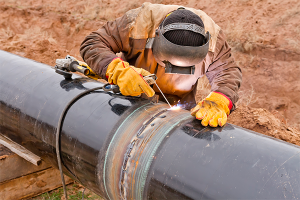
El comercio, la innovación y la inversión del sector privado han creado un mercado de energía en América del Norte que es interdependiente y multidireccional, con más de 25 gasoductos transfronterizos entre Estados Unidos y México.

Algunos expertos estiman que Estados Unidos, México y Canadá representan el 20% del suministro mundial de petróleo y gas, así como entre 20-25% de las adiciones esperadas al suministro internacional en los próximos 25 años.

Por ejemplo, la empresa TransCanada Corporation informó que construye tres gasoductos que suman 1,520 kilómetros en México.

De acuerdo con un análisis del Congreso estadounidense, una mayor cooperación energética con México le dará a América del Norte una ventaja industrial.

Añade que existe cierta incertidumbre con respecto a los planes del presidente electo, Andrés Manuel López Obrador (AMLO), para el sector energético de México.

Aunque López Obrador alguna vez se opuso a la reformas energética de 2013, él y sus futuros funcionarios del Gabinete han dicho que su gobierno honrará los contratos existentes que no impliquen corrupción.

No está claro, sin embargo, si el gobierno entrante intentará reducir las reformas o el ritmo de su implementación.

En julio de 2018, López Obrador anunció un plan de energía que incluía 2,600 millones de dólares para mejorar seis refinerías existentes y 8,600 millones de dólares para construir una nueva refinería en Tabasco.

Gasoductos y reforma energética

Si bien la reforma energética permitió la inversión de forma inmediata en la mayoría de las actividades del sector de los hidrocarburos, la apertura en algunos casos ha sido gradual.

Por ejemplo, en lo relativo a la comercialización de los hidrocarburos, la Comisión Nacional de Hidrocarburos ha designado a Pemex para comercializar los hidrocarburos extraídos mediante contratos.

Pemex tuvo un contrato exclusivo hasta el 31 de diciembre de 2017, el cual no era renovable. A partir de 2018, la comercialización se contrató mediante un proceso de licitación, en el cual participa el sector privado.

En lo relativo a la venta de gasolina y diésel al por menor, hasta finales de 2015 las gasolineras operaron solo bajo la marca Pemex, pero a partir de 2016 empezaron a operar bajo cualquier marca, y a abastecerse por medio de Pemex u otro proveedor.

Para fomentar la competencia, la Ley de Hidrocarburos estipula que Pemex debe separar los contratos de franquicia de los contratos de suministro. Asimismo, a partir de 2016, se les permite a las gasolineras rescindir sus contratos de franquicia con Pemex.

70 Hasta finales de 2015 solo PEMEX podía importar gasolina, diésel y GLP para ser comercializado. Sin embargo, a partir de 2015 la SENER empezó a otorgar permisos previos a empresas privadas para importar turbosina y desde 2016 para importar petrolíferos.71 De acuerdo con las autoridades, a octubre de 2016 la SENER había concedido 473 permisos previos de importación.


Opportimes / Redacción Opportimes / 15 Octubre


How President Trump’s Trade Deals Could Lift the US Economy

Market Realist / Mark O’Hara / October 8

Trade deals

President Donald Trump has long lashed out against existing trade deals, calling them unfair to the United States. The Trump administration has been working to renegotiate several trade deals, and the focus has been on reducing the country’s massive trade deficit by moving its manufacturing onshore.

UMSCA

The Trump administration has used tariffs as well as tariff threats to obtain trade concessions. Less than halfway into his presidential term, Trump has renegotiated NAFTA and KORUS FTA (the United States–Korea Free Trade Agreement).

Under the new NAFTA—renamed USMCA (the United States–Mexico–Canada Agreement)—the United States is expected to gain access to Canada’s historically protected dairy industry. It also calls for more regional content in automotive manufacturing.

Under the new KORUS terms, South Korea relaxed the norms for automotive imports from the United States. It also agreed to a quota to obtain long-term exemptions from the Section 232 steel tariffs in the United States (QQQ).

Section 232 tariffs

Trump’s trade rhetoric has received support as well as opposition. Retail and tech giants such as Walmart (WMT), Alphabet (GOOG), Apple (AAPL), and Amazon (AMZN) are lobbying against these tariffs. However, the new trade deals have allowed the Trump administration to obtain incremental benefits that are expected to support US jobs. We’ve seen plant restarts in the US steel and aluminum industry after the Section 232 tariffs were implemented.


Market Realist / Mark O’Hara / October 8


USMCA traerá más beneficios que el TLCAN

Publimetro / María Leonor Noyola Cervantes / 8 octubre


La senadora Leonor Noyola respondió ¿El nuevo tratado USMCA será más o menos beneficioso para México que el TLCAN?

Del Tratado de Libre Comercio con América del Norte, se puede destacar que, en el periodo que comprenden los años de 1993 al 2015, el comercio entre los tres países se cuadruplicó, al pasar de 297 mil millones de dólares a 1.14 billones de dólares, lo que impulsó la economía de los tres países y redujo los precios para los consumidores. Gracias a este efecto, millones de mexicanos pueden comprar productos que antes les estaban reservados a una clase media que representaba menos de una tercera parte de la población.

El TLCAN, para convertirlo en un nuevo Acuerdo Estados Unidos-México-Canadá (USMCA, por sus siglas en inglés) logra que, cuando menos en el papel, promoverá el aprovechamiento de nuevas tecnologías en el comercio, fortaleciendo la competitividad de América del Norte como plataforma industrial; aun y cuando gran parte de la producción recae en el intercambio con los Estados Unidos y, en menor medida, con Canadá.

Se tendrán más beneficios que el Tratado de Libre Comercio de América del Norte, puesto que las tres naciones en su negociación se enfocaron en adaptarse a las nuevas necesidades de todos los sectores de la economía mexicana; lo que se reflejará en la estabilidad y certeza a los intercambios comerciales entre, significando el inicio de una nueva etapa de las relaciones productivas y comerciales en nuestra región.

De los temas trascendentes que deseo destacar, es el concerniente al ramo de la industria automotriz; en dicho rubro, EU garantiza a sus socios, amplio acceso; libre de aranceles en caso de que impusiera nuevos a aquellos automóviles provenientes de otros países; adicional que, incentivará la creación de más empleos y mejores salarios en beneficio de los trabajadores de nuestro país (16 dólares la hora). Mientras tanto, la introducción de una cláusula de caducidad: el USMCA finalizará en 16 años, a menos que las partes acuerden extenderlo.

Además, el Consejo Coordinador Empresarial (CCE), coincide con que las exportaciones mexicanas crecerán 50 por ciento hacia la región de Norteamérica durante los siguientes 10 años, esto implica que las empresas instaladas en México tendrán mejor productividad y mayores ganancias, además de tener crecimiento en el empleo que tanto necesitamos.


Publimetro / María Leonor Noyola Cervantes / 8 octubre


USMCA: Who are the winners and losers of the ‘new NAFTA’?

Washington Post / Heather Long / October 1

Trump and Trudeau can tout this as a major victory ahead of key elections in their countries. It’s a lot less clear whether ‘NAFTA 2.0’ is good for Mexico and U.S. automakers.

The United States, Canada and Mexico finalized a sweeping new trade deal late Sunday, just hours before their Oct. 1 deadline. President Trump was up early Monday tweeting that the agreement is “a great deal for all three countries,” and Prime Minister Justin Trudeau said Sunday night that it was a “good day for Canada.”

The deal is expected to take effect around Jan. 1, 2020. Congress has to approve it, a process that will take months, but confirmation looks likely, given that Republicans are pleased Canada got on board and some Democrats are pleased with the stronger labor provisions.

Here’s a look at who’s smiling — and who’s not — as the world sees this news.

Winners:

President Trump. He got a major trade deal done and will be able to say it’s another “promise kept” to his voters right before the midterm elections. And he won the messaging game — he persuaded Canada and Mexico to ditch the name “NAFTA,” for North American Free Trade Agreement, which he hated, and to instead call the new agreement “USMCA,” for United States-Mexico-Canada Agreement. It’s not a total trade revolution, as Trump promised, but USMCA does make substantial changes to modernize trade rules in effect from 1994 to 2020, and it give some wins to U.S. farmers and blue-collar workers in the auto sector. Trump beat his doubters, and his team can now turn to the No. 1 trade target: China.

Prime Minister Justin Trudeau. There might not be a lot of love lost between Trump and Trudeau, but in the end, Trudeau didn’t cave much on his key issues: dairy and Chapter 19, the treaty’s dispute resolution mechanism. Trudeau held out and got what he wanted: Canada’s dairy supply management system stays mostly intact, and Chapter 19 remains in place, a win for the Canadian lumber sector. On dairy, Canada is mainly giving U.S. farmers more ability to sell milk protein concentrate, skim milk powder and infant formula. On top of the substantive issues, Trump went out of his way to criticize the Canadian negotiating team in the final days of deliberations, which Trudeau can play up as a sign of just how hard his staff fought on this deal.

Labor unions. This agreement stipulates that at least 30 percent of cars (rising to 40 percent by 2023) must be made by workers earning $16 an hour, about three times the typical manufacturing wage in Mexico now. USMCA also stipulates that Mexico must make it easier for workers to form unions. The AFL-CIO is cautiously optimistic that this truly is a better deal for U.S. and Canadian workers in terms of keeping jobs from going to lower-paying Mexico or to Asia, although labor is looking carefully at how the new rules will be enforced. It’s possible this could accelerate automation, but that would take time.

U.S. dairy farmers. They regain some access to the Canadian market, especially for what is known as “Class 7” milk products such as milk powder and milk proteins. The United States used to sell a lot of Class 7 products to Canada, but that changed in recent years when Canada started heavily regulating this new class. USMCA also imposes some restrictions on how much dairy Canada can export, a potential win for U.S. dairy farmers if they are able to capitalize on foreign markets.

Stock market investors. A major worry is over, and the U.S. stock market rallied Monday with the Dow gaining nearly 200 points.

Robert E. Lighthizer. Commerce Secretary Wilbur Ross and Treasury Secretary Steven Mnuchin couldn’t get major trade deals done for the president, but U.S. Trade Representative Lighthizer did. He led negotiations with South Korea on the revamped U.S.-South Korea trade deal (KORUS) that the president just signed, as well as on the “new NAFTA.” Lighthizer is proving to be the trade expert closest to Trump’s ear.

Losers:

China. Trump is emboldened on trade. A senior administration official said Sunday that the U.S.-Canada-Mexico deal “has become a playbook for future trade deals.” The president believes his strategy is working, and he’s now likely to go harder after China because his attention won’t be diverted elsewhere (at least on trade matters).

U.S. car buyers. Economists and auto experts think USMCA is going to cause car prices in the United States to rise and the selection to go down, especially on small cars that used to be produced in Mexico but may not be able to be brought across the border duty-free anymore. It’s unclear how much prices could rise (estimates vary), but automakers can’t rely as heavily on cheap Mexican labor now and there will probably be higher compliance costs.

Canadian steel. Trump’s tariffs on Canadian steel and aluminum remain in place for now, something Trudeau has called “insulting” since the two countries are longtime allies with similar labor standards.

Unclear:

Mexico. America’s southern neighbor kept a trade deal in place, but it had to make a lot of concessions to Trump. It’s possible this could stall some of Mexico’s manufacturing growth, and it’s unclear whether wages really will rise in Mexico because of this agreement. Big energy companies can also still challenge Mexico via Chapter 11, something that could constrain Mexico’s new government as it aims to reform energy policies.

Ford, GM, Chrysler and other big auto companies. There’s relief among auto industry executives that the deal is done, but costs will be high for big car companies: The steel tariffs are still in place on Canada; more car parts have to come from North America (not cheaper Asia); and more car components have to be made at wages of $16 an hour. It remains to be seen how car companies are able to adjust and whether this has long-term ramifications for their bottom lines.

Big business. Many business groups are relieved that Trump got a trilateral deal and didn’t end up tearing up NAFTA entirely, as he had threatened to do. And they like a lot of the trademark and patent provisions. But the details of USMCA include some losses for big business. Some regulatory compliance costs will probably rise, especially for automakers, and big business lost Chapter 11, the investor dispute settlement mechanism that companies have used to sue Canadian and Mexican governments (the one exception is that energy and telecommunications firms still get a modified Chapter 11 with Mexico).

Washington Post / Heather Long / October 1

Canada trade minister pushes quick ratification of trade deal with Asia Pacific

The Business Times / AFP / September 18


[OTTAWA] Canada’s trade minister on Monday signalled that the government will push ratification of the Trans Pacific Partnership quickly through parliament, as stalled North American free trade talks have raised concerns it could lose its privileged access to the US market.

«Rapid ratification of the TPP» will mean «farmers, ranchers, entrepreneurs and workers across the country can finally tap into new markets,» trade minister Jim Carr said in a speech to parliament.

Signed in March without the United States, the Trans-Pacific Partnership will come into effect 60 days after ratification by at least six of the 11 signatories – Australia, Brunei, Canada, Chile, Japan, Malaysia, Mexico, New Zealand, Peru, Singapore and Vietnam.

The trading bloc represents 500 million consumers and 13 percent of the world’s economic output.

Ottawa wants to be among the first six TPP signatories, but is facing pushback from the powerful union representing Canadian auto workers. Unifor wants stricter labour standards written into the pact and for negotiations with the United States and Mexico to revamp the North American Free Trade Agreement completed first.

High-level talks ended last week with no deal, and no date has been set yet for Canada’s foreign minister Chrystia Freeland to return to Washington to continue negotiations.

For Canada, implementing the TPP is «of paramount importance,» said Mr Carr, if only to act as a counterbalance to growing US protectionism under US President Donald Trump, who has threatened to cut Canada out of a new continental trade deal if Ottawa didn’t give in to his demands.

«This is not just a new trade agreement for Canada, it is also a message we send to the rest of the world: trade is important, the rules are important and we will not give in to protectionism,» the minister said.


The Business Times / AFP / September 18