Listado de la etiqueta: México

Fundamental factors to strengthen Pemex

The Government of Mexico has repeatedly mentioned that one of its main goals in the National Hydrocarbons Plan is the production of 2.6 million barrels of crude oil per day at the end of 2024.

The production profile brings components such as the base production already in place of oil fields operating in the country, the plan proposes operations of drilling and development of more than 20 new fields of which PEMEX has already been hiring and asking for authorizations for the development, contains projects related to secondary and improved recovery of the deposits that already exist and production that is associating future discoveries.

PEMEX has 22 fields for new development, of which 18 are in shallow waters.

Thanks to the investment that is planned for drilling and infrastructure, there is the possibility that in these 18 fields we might find more extension and thickness in their deposits to be found, since this has happened before.

The energy policy is being modified by the nature of the political change in the Country, the strengthening of PEMEX could be increased with support of the process of migration of Oil Assignments (Farmouts).

Fracking is a technique that is required to obtain physical resources, in the United States the increase in production is known derived from the use of this technique. Thanks to it, a high production of liquids and gas is obtained which are offered at a low price to countries like Mexico. Fracking in Mexico is a prospective resource since, whether or not it can be used as a production technique depends of a previous exploration in order to know if it can be extracted profitably since the operation in Mexico might be more expensive.

Using all the tools provided by the current legal framework in Mexico regarding energy is essential for PEMEX to increase its technical execution and financial capacity in such a way that it shares the risk.

Successful decisions will give more opportunities for the development not only of the sector, but also of the human component that makes it possible, such as engineers, people who have service companies, investors, among others.

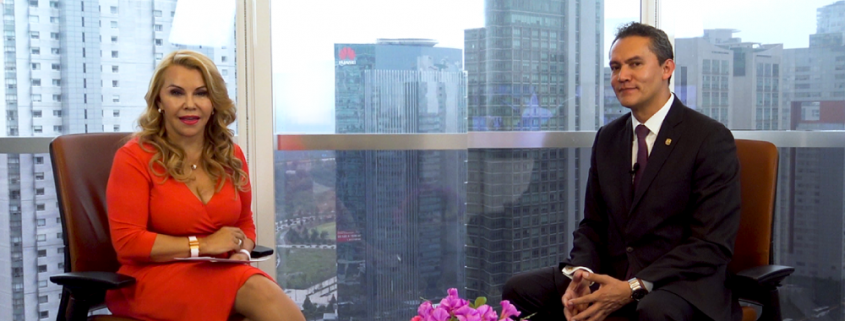
If you want to know more information about experts from the Energy Sector in Mexico, click on the video to see the interview of Gaspar Franco Former Commissioner of the CNH and Graciela Álvarez Hoth, General Director of NRGI Broker.

Check out our news section and follow us on our social media networks.

¿Qué le hace falta al Sector Energético?

*Entrevista para la televisión en el programa Ecos Sociales.
La nueva estrategia para el desarrollo del Sector Energético de nuestro país, demanda el esfuerzo coordinado de todos los actores de la industria petrolera, principalmente de Pemex quien ha iniciado una nueva era, que busca alcanzar objetivos ambiciosos y bien definidos, entre ellos:

  1. Dar a Pemex los recursos económicos y el espacio presupuestal suficientes, lo que no fue posible en los últimos 4 años, con el fin de re-posicionarla como una verdadera empresa productiva del estado mexicano, que se convierta en el motor que impulse el desarrollo económico de nuestro país, a través de la inyección de un presupuesto de operación que le asigne los recursos necesarios para alcanzar el objetivo prioritario de la nueva administración, que encabeza el Presidente López Obrador.
  2. Incrementar la plataforma de producción de manera rentable, segura y sustentable, para revertir y reemplazar la caída de la producción por la declinación del que fuera el mega yacimiento Cantarell, e invertir recursos suficientes en exploración y en el desarrollo de los yacimientos descubiertos en los últimos años, los que por restricción presupuestal no se desarrollaron hasta ahora, para lo cual el gobierno nacional ha comprometido 75 mil millones de pesos de recursos frescos en adición a los ya presupuestados.
  3. Se busca privilegiar la refinación de crudo, en lugar de exportarlo como se había venido llevando a cabo en los últimos 18 años, lo que demanda recursos del orden de 25 mil millones de pesos adicionales al año en mantenimiento y recuperación de la capacidad productiva mediante rehabilitación de la seis refinerías del sistema nacional de refinación, lo que demandará un aumento en la capacidad de producción de crudos ligeros, los que se se busca sean suministrados por los desarrollos de los yacimientos indicados atrás.
  4. Otro objetivo de grandes proporciones lo representa la construcción de la nueva refinería que ya se ha iniciado en dos bocas Tabasco y que según las estimaciones iniciales  entraría en operación dentro de tres años.

¿Quiénes pueden acercarse al Sector Energético?

En este nuevo esquema de trabajo deben concurrir en primer lugar los técnicos y personal especializado de Pemex, quienes deberán ejercer su liderazgo, pero también deben participar las empresas privadas tanto mexicanas como extranjeras que siempre han participado en los contratos de ingeniería y procura para la construcción de la infraestructura o para la perforación y mantenimiento de pozos es decir empresas especialistas en geociencias, en ingeniería, en perforación, en construcción y tendido de líneas de oleogasoductos, mantenimiento y reparaciones, y todos los servicios complementarios que demanda esta industria.

Lo que se requiere es llevar a cabo los procesos de selección de los proveedores y prestadores de servicios que suscriban los contratos respectivos mediante la utilización procedimientos efectivos, transparentes y simplificados para llevar a cabo en el corto plazo las obras y programas necesarios para incrementar la producción diaria de petróleo.

¿Cuál es la importancia del Sector Energético?

El sector petrolero de México ha sido tradicionalmente un motor para el desarrollo económico de México, su contribución al producto interno bruto ha sido fundamental, pero para estar en posibilidad de alcanzar los grandes objetivos de la nueva administración, que es llegar a cifra récord de 3 millones de barriles de petróleo crudo equivalente diariamente, se requiere dotar a Pemex de los recursos presupuestales que ya ha anunciado el Presidente Lopez Obrador, tanto en las áreas de producción como en la refinación, pero yo considero que además se debe revisar el régimen fiscal de Pemex para hacerla rentable, sustentable y segura en su operación.

De no hacerse ajustes en la operación de Pemex. ¿Qué pasaría?

Se pondría en peligro la estrategia económica del nuevo gobierno, los programas asistenciales que ya se han anunciado, es decir no hay otra opción, o se fortalece nuevamente a Pemex mediante la inyección de recursos y alivio fiscal que no se le dieron en el pasado. No hacerlo significa poner en riesgo la sustentabilidad de Pemex en el mediano y largo plazo, ante la declinación de las reservas por falta de exploración y desarrollo, y en refinación llevaría a continuar el deterioro de la capacidad de producción de gasolina y diesel por falta de mantenimiento preventivo, sumado al riesgo de accidentes operacionales.


Mexico’s incoming government names ally from left to central bank

Reuters / Frank Jack Daniel / November 26


MEXICO CITY (Reuters) – Mexico’s incoming finance minister on Monday nominated left-leaning economist Gerardo Esquivel as central bank deputy governor, the second appointment to the board by the new government following an independent named in September.

In a 2016 newspaper opinion piece, Harvard-educated Esquivel raised the question of whether the autonomous Banco de Mexico should adopt a dual-mandate to promote growth as well as low inflation, and argued for more diverse views on the board.

Esquivel was a spokesman on economic matters for the campaign of President-elect Andres Manuel Lopez Obrador. He is married to Lopez Obrador’s choice for economy minister, Graciela Marquez, and was previously due to serve as a deputy finance minister in the cabinet.

Lopez Obrador, who secured a landslide election victory in July, takes office on Saturday.

In his profile on Twitter, Esquivel says “his heart beats to the left.” In 2015 he co-authored an Oxfam study titled “Extreme Inequality in Mexico” that explored the rapidly increasing wealth of Mexico’s small group of billionaires.

He did not immediately respond to an interview request for this story.

In a December 2016 column in Mexican daily El Universal, Esquivel strongly defended the bank’s independence, but suggested a debate about whether to change its objective.

“Maybe what we should start to ask ourselves is whether it is time to move to a dual objective (growth and inflation) in the central bank, instead of a single objective (inflation), in the same way as happens in other countries, like the United States,” he wrote.

He also cited an article in which he said economist Jonathan Heath argued for “a plurality of visions and perspectives about the economy” on the central bank’s five-strong board.

Incoming finance minister Carlos Urzua nominated Heath to the board in September, to replace a departing deputy governor. Esquivel is replacing another deputy, who is standing down on health grounds.

Incoming finance minister Carlos Urzua told Reuters earlier this year that the central bank should preserve its single objective.

Heath is an outspoken and well-known private economist who was previously chief economist for HSBC bank in Mexico. He told Reuters in September he had a “balanced” view on monetary policy. He has been critical of the outgoing government as well as some of Lopez Obrador’s policies.

Both nominations must be approved by the Senate, which is controlled by Lopez Obrador’s MORENA party and its allies.

Urzua announced the appointment in a news conference aimed at calming investors, after Mexico’s S&P/BVM IPC stock index .MXXcrashed to its lowest in more than four years on Monday and the peso weakened.

Urzua later told Reuters he would name Victoria Rodriguez Ceja, another close ally who previously worked with him in Mexico City’s local government, to replace Esquivel.

The losses to the index and the peso MXN=, which slipped to its weakest against the dollar in more than five months on Monday, come after Lopez Obrador announced he would stop the construction of a $13 billion airport and after a series of bills from his party aimed at regulating business more closely.


Reuters / Frank Jack Daniel / November 26


As new Mexican president takes office, experts foresee rocky road in relations with U.S.

Houston Chronicle / Olivia P. Tallet / November 15

Two men with outsized personalities, both intent on bringing dramatic change to their societies. Two countries, side by side, with a long history of friendly trade and sometimes hostile diplomacy.

As leftist president Andres Manuel Lopez Obrador takes the mantle of the Mexican presidency Dec. 1, political experts, former diplomats and business leaders are bracing for a potential collision with self-styled nationalist President Donald Trump.

The anticipated confrontation between Trump and Lopez Obrador — commonly called by his initials, AMLO — could affect Texas more than any other state given the billions of dollars in Lone Star products that are sold south of the border.

The possible flash points include a changing energy policy, trade protections, increased heroin and methamphetamine trafficking and an abrupt reversal of the Mexican government’s costly campaign to confront the powerful drug cartels. But perhaps the biggest is the bitterness engendered by Trump’s harsh immigration policies and his plan to erect an impenetrable wall along 1,200 miles of U.S.-Mexico border.

“There is a rocky road ahead for the relationship between the U.S. and Mexico and the two presidents,” said Duncan Wood, the director of the Wilson Center’s Mexico Institute, during in a recent visit to Houston.

Lopez Obrador is a skilled politician who was mayor of Mexico City from 2000 to 2005 and national party leader, running twice for the presidency prior to winning. He and Trump are forceful, charismatic leaders with a populist, anti-establishment bent to their politics and are adept at inflaming the passions of their base supporters. And perhaps more to the point when it comes to a personality contest, “Neither of them likes to be contradicted,” said Wood.

Indeed, Trump had reportedly referred to the Mexican president-elect as “Juan Trump,” a recognition of the similarities between him and the populist Mexican politician, according to a story in Americas Quarterly.

Both leaders have taken unexpected steps to demonstrate their resolve. Lopez Obrador has put Mexico’s $218 million presidential jet up for sale, while Trump earlier renegotiated the price tag of two Air Force One replacements and claimed savings of $1.4 billion.

But Lopez Obrador has distanced himself from any semblance to Trump, who, in his opinion, “fuels racism … as a political strategy” and a leader who has done Mexico much damage, according to an interview with the Spanish language TV network Univision.

Vice President Mike Pence will lead the U.S. delegation to Mexico to attend Lopez Obrador’s inauguration.

New course for Mexico?

Observers say the Mexican leader has already given some key indications of the course he will steer.

Lopez Obrador’s plan to cancel the construction of the Mexico City airport, a $13.3 billion project with a third of the work already completed, sent shock waves through the investment and business sectors. With U.S. foreign direct investments in Mexico of $110 billion last year, concerns rose about Mexico as a reliable business partner.

“We are already getting a sense of what an AMLO presidency might look like, since the administration has named many of the key policy personnel and moved forward on some campaign promises, such as its consultation for whether or not to keep building the new Mexico City airport,” said Antonio “Tony” Garza, the former U.S. ambassador to Mexico.

Lopez Obrador was able to easily wrest power from outgoing President Enrique Peña Nieto, whose Institutional Revolutionary Party (PRI) had supported global open markets and free trade. But Peña Nieto’s presidency was also hamstrung by unchecked corruption and what was perceived by the Mexican populace as a submissive stance when Trump met with the president and insisted that Mexico would pay for the border wall.

“Trump’s nationalism looks outward; it manifests in attacks on international institutions and the leaders and people from other countries,” said Tony Payan, the director of the Baker Institute’s Mexico Center.

Lopez Obrador’s nationalism looks inward to restoring Mexico’s working class with subsidized policies, “seeking to restore the state as a central economic agent, and his criticism of globalization and the (North American) free trade agreement has to do with his belief that previous administrations implemented a neoliberal economic model that punished the poor,” Payan said.

Key energy policy changes

The stakes are high for the future of the U.S. economic relationship with Mexico, its third-largest trading partner with combined trade of $616 billion.

Mexico was the second largest export market for U.S. products in 2017, while becoming the largest provider of fruits and vegetables and other agricultural products, according to the Office of the United States Trade Representative. Cross-border trade between Texas and Mexico was $187 billion.

Wood agreed that Lopez Obrador’s appointees so far signal a cabinet that is committed to unraveling the energy reforms signed into law in August 2014 by the previous administration, with AMLO already announcing a plan to suspend auctions for oil production contracts in the Gulf of Mexico. “I am particularly worried about the energy sector and what happens next with it,” Wood said.

So far, 110 oil and gas contracts representing about $200 billion in foreign investment have been granted under Mexico’s reform of its energy sector and the national PEMEX oil monopoly, with U.S. companies winning the second highest number of contracts after private Mexican firms.

The energy reforms were considered to be particularly beneficial to Houston’s economy, given its leadership in offshore oil exploration and production technologies.

At a minimum, the airport pullout signaled that Lopez Obrador plans to deliver on campaign promises.

In a recent speech, he pledged to “rescue the oil and gas industry,” from a decline in production that he blamed to the historic opening of PEMEX to foreign investment. When enacted, Lopez Obrador accused the current president of being a “traitor to the country” for handing over “the country’s natural resources to foreigners.”

“The likelihood of the next (Mexican) administration impacting how business is done in the energy sector is high,” said Garza, who’s now counsel to the law firm of White & Case in Mexico City. “The question is how disruptive will it be and if returns will be seen as justifying the additional risk.”

“So far AMLO’s party has proposed legislation aimed at the new regulatory framework,” said Garza, adding that the president elect has been “all over the board on issues having to do with gas and power, and essentially come out against fracking, all of which, if he’s serious about, have the potential to impact Texas.”

Gov. Greg Abbott, through a press aide, said he welcomes working with Mexico’s new administration to build on economic and cultural bonds.

“Governor Abbott believes that a strong relationship with Mexico, our largest trade partner, is essential to Texas’ economic success,” said Ciara Matthews, deputy communications director. “Through cooperation on infrastructure, energy, trade, and security, Texas and Mexico will continue to strengthen our long-standing relationship and bring even greater prosperity to both sides of the border.”

Differences over immigration

Differences with Mexico regarding Trump’s immigration policies, analysts said, could be another contentious topic.

As caravans of migrants departed Central America to seek asylum at the U.S. border in the weeks before midterm elections, Trump moved quickly to politicize the “caravan” by branding it an “invasion” and claiming that Middle Eastern terrorists and gang members were among their ranks.

Trump ordered the U.S. military to the border, and meanwhile threatened to withhold foreign aid to Mexico and the Central American countries whose citizens are fleeing economic hardship and violence.

Mexico choose not to halt the migrants by force, but instead offered visas and asylum to the Central Americans in an effort to induce many to abandon the long trek to the north. Trump has declared the migrant caravans a national security threat, and ordered border agents not to accept asylum seekers who enter the U.S. away from legal ports of entry.

Lopez Obrador has repeatedly criticized Trump’s “xenophobic” and disrespectful depiction of migrants and insisted they should receive humanitarian treatment.

During his presidential campaign, Lopez Obrador introduced a petition before the Inter American Commission on Human Rights condemning Trump for allegedly persecuting immigrants and implementing hate speeches and policies, such as the border wall, in violation of human rights, as he and a lawyer explained the action.

War on drugs in flux

Earlier this month, Lopez Obrador said his administration will de-emphasize the fight against drug cartels, focusing instead on roots of crime, according to a Bloomberg report.

Main points of the strategy include creating a national guard and stressing regional coordination of security efforts, eradicating corruption, rethinking the prohibition of some drugs and creating job opportunities, Lopez Obrador and cabinet members have said.


Houston Chronicle / Olivia P. Tallet / November 15


Will Mexico’s New President Have An Economic Impact on RGV?

KVEO / Joanna Guzman / 12 November


MCALLEN, Texas – Mexico’s president-elect, Andres Manuel Lopez Obrador, plans on canceling the construction of a $13 billion airport project in Mexico City. Officials say this will have an economic impact for both the United States and Mexico.

Duncan Wood, Director for Wilson Center-Mexico Institute says, «We’re seeing that the United States has invested very heavily in Mexico over the past 20 years, since the signing of NAFTA. Mexico is investing increasingly north of the border as well. we see integrated production chains that have been created where by factories in the United States depend upon the input counterparts in Mexico and vice-versa.»

With more than 1.5 million Americans living in Mexico, Woods says the U.S. and Mexico share over $2 million in goods traded every hour. Adding the Rio Grande Valley is a part of the Untied States that depends heavily on the trade between the two countries.

Wood says, «In a place like McAllen which is depending so heavily upon Mexican’s coming north to do their shopping, issues like the border, how easily you can get across the border. Issues like public security in northern Mexico, Mexican’s are more willingly to take the journey from let’s say Monterrey into McAllen to do their shopping. Those are issues which really matter and will have a very important economic impact on these communities.”

One-third of the new international airport in Mexico City is already finished. It is estimated the cost to cancel the project is nearly $5 billion. Lopez Obrador says the country has money set aside for. Meanwhile, Woods says the focus right now is on what the future holds.

«We’re trying to work out exactly what the prospects are for the economy, for security; public security in particular, for migration, and of course the energy sector which matters so much down here in McAllen.» says Wood.

Lopez Obrador says the airport project is corrupt and will end ties between economic and political power. Lopez Obrador will take office on December 1.


KVEO / Joanna Guzman / 12 November


Relief On Horizon for Mexico Natural Gas Market, Despite Short-Term Challenges

Mexico’s natural gas market faces multiple short-term challenges, the most urgent of which is a lack of supply to power generators, petrochemical plants, and industrial consumers in the southern and southeastern part of the country, as the state-owned oil and gas producer struggles to increase output.

Amid declining gas output by national oil company Petróleos Mexicanos (Pemex) and delays to critical midstream infrastructure that would bring abundant and inexpensive gas from Texas, consumers in southern Mexico now face the prospect of switching to more expensive fuel oil, diesel and liquid petroleum gas (LPG) in order to continue operating over the coming months.

A lack of Pemex supply and scarce available cross-border pipeline capacity for private sector gas shippers, as well as a dearth of storage capacity, are compounded by the fact that a new government will take over on Dec. 1.

However, relief appears to be on the horizon. The 2.6 Bcf/d Sur de Texas-Tuxpan marine pipeline is expected to enter operation next month or in January, with the Cempoala compressor station reversal project slated to finish in April. Both projects should provide relief to consumers in the south, the energy ministry’s general director of natural gas and petrochemicals, David Rosales, told NGI’s Mexico Gas Price Index.

While details of a planned tender to construct 45 Bcf of underground storage capacity still need to be ironed out, Rosales said the hope is for the new administration to give an order to proceed with the tender by early next year.

“I think it’s very clear for them that this is a [project] that will not cost the state, and will be paid for by the users of the gas system themselves,” Rosales said.

The incoming administration has generated unease among investors with its proposed oil policies, such as a pledge to halt crude exports and to divert Pemex investments from exploration and production to new refineries, but Rosales said a dramatic shift in course on natural gas policy is less likely. An efficiently run gas segment translates directly to cheaper electricity prices for end-users, he noted.

Recent days have also seen progress on other cross-border pipeline projects that should help meet rising demand from the power sector.

San Antonio, TX-based Mirage Energy Corp. last week said it has a memorandum of understanding (MOU) for reserved capacity on its proposed Texas-to-Mexico gas pipeline with commodities trader TrailStone NA Asset Holdings LLC.

The nonbinding MOU would allow TrailStone to purchase 150,000 MMBtu/d (146 MMcf/d) of reserved capacity for 10 years at a fixed tariff from the Banquete/Agua Dulce area in South Texas to Compressor Station 19 and Los Ramones interconnection points on the national pipeline network Sistrangas,” Mirage said. TrailStone is a partner and commercial operator in the recently commissioned Banquete header near Corpus Christi, TX.

The 42-inch diameter, bi-directional pipeline system under development would include nearly 140 miles of pipeline in Texas and about 103 miles of pipeline in Mexico. In addition to the four sections of pipelines in the two countries, Mirage said another interconnect in Falfurrias, TX, also in far South Texas, to Transcontinental Gas Pipe Line (Transco) is being considered, as is a 14-mile pipeline in Mexico known as the Storage Line that would connect the Progreso, TX, on the border to the Brasil storage field in Tamaulipas, Mexico.

Mirage expects to begin final development work on the project in December, “with a view toward receiving required United States and Mexico permits and authorizations in 3Q2019. The company has completed the necessary engineering and design of the pipeline. The alignment for the pipeline has also been substantially completed and Mirage is in the process of securing right-of-way agreements.”

Valley Crossing To Supply CFE Import Capacity

The Mirage news follows the startup of Enbridge Inc.’s Valley Crossing gas pipeline, which spans 168 miles in Texas from the Agua Dulce hub near Corpus to the Gulf of Mexico east of Brownsville.

Valley Crossing’s primary customer is Mexican state power utility Comisión Federal de Electricidad (CFE), which is undertaking a massive shift to combined-cycle gas turbines (CCGT) from fuel oil and diesel-fired power generation capacity. Mexico’s installed CCGT capacity stood at 28,084 MW at the end of 2017, a figure that is expected to double by 2032, according to the Energy Ministry’s 2018-2032 power sector development program.

“Valley Crossing is expected to account for about half of the CFE’s total import capacity,” Enbridge said last week. Transport capacity is “half the average daily production output of the entire Eagle Ford Shale basin — in fact, it’s more than 10% of the average daily production for the entire state of Texas.”

The pipeline is designed to “support Mexico’s growing electricity generation needs, as power companies like the CFE choose natural gas,” which is a “cleaner” burning fuel and more economical than imported liquefied natural gas, the Calgary-based operator said.

“Supply in Mexico continues to decline, but at the same time their demand continues to grow,” said Enbridge Executive Vice-President Bill Yardley. “And the U.S. has some of the most economical, plentiful and reliable natural gas supplies in the world.”

Valley Crossing connects to the Sur de Texas-Tuxpan pipeline, a joint venture of Sempra Energy unit Infraestructura Energética Nova and TransCanada Corp.

Fitch Bullish On Mexico Power Sector

A FitchRatings unit said last week it holds a positive outlook for Mexico’s gas-dependent electric power sector over the next 10 years, despite uncertainty over the energy and infrastructure policies of incoming President Andrés Manuel López Obrador, who is commonly known by his initials AMLO.

“We expect the Mexican power sector to register strong growth and offer investors significant opportunities over the coming decade, thanks to rising energy demand, a supportive market structure and favorable policies,” Fitch analysts said. “Our positive view for the market is premised on the expectation that AMLO will adopt a pragmatic approach and will not reverse reforms of the power sector that contribute to attracting investment in the market.”

Fitch analysts said they expect “Mexico’s total installed capacity — net of project retirements — to increase by almost 30% between 2018 and 2027, driven primarily by the development of wind, solar and thermal power projects. Moreover, we expect Mexico’s power consumption to increase by an annual average of 2.4% over the same period.”

Although wind and solar capacity is expected to increase the most on a proportional basis to current levels, conventional thermal power is seen accounting for about two-thirds of the country’s total capacity through 2026, Fitch said, citing projections from Mexican energy ministry Sener and the U.S. Energy Information Administration.

Despite the overall optimistic outlook, analysts cautioned that, “AMLO’s unorthodox approach toward decision making for the infrastructure sector could weaken private companies’ interest in investing in the market.” Fitch cited investor unease over López Obrador’s recent decision to cancel a $13 billion airport for which construction was more than 30% complete via a referendum in which only about 1.1 million of Mexico’s 129.2 million people voted.

Other risks to the power sector include López Obrador’s ability, because of the comfortable majorities held by his coalition in both of the national legislative chambers, to reverse the 2013-14 energy reform of predecessor Enrique Peña Nieto.

“AMLO has long opposed the liberalization of the Mexican energy sector, although his criticisms have mostly focused on the oil and gas industry rather than the electricity industry. A risk of changes to the power sector’s regulatory framework, however, must be taken into account.”

Fitch also cited the risk of an economic slowdown in Mexico, but noted that this risk is mitigated by the tentative agreement reached Oct. 1 by Mexico, Canada and the United States on the U.S. Mexico Canada Agreement, an updated version of the North American Free Trade Agreement. The agreement has yet to be completed.


Natural Gas Intelligence / Andrew Baker / November 12


¿Viene una crisis económica mundial? Estos datos parecen confirmarlo

Forbes México / Forbes Staff / 12 Noviembre


Por ahora, pocos economistas predicen una recesión mundial, ya que la economía de Estados Unidos sigue liderando con fuerza

Reuters.- Dos de las mayores economías mundiales se contrajeron probablemente el pasado trimestre, en una nueva muestra de que el crecimiento global ya dejó atrás su pico y aumenta el riesgo de una recesión.

Se espera que Alemania y Japón reporten cifras negativas de crecimiento en los próximos días e, incluso si se dejan de lado algunos eventos extraordinarios, la tendencia subyacente es débil y el panorama se presenta arriesgado, una situación empeorada por la guerra comercial global.

Por ahora, pocos economistas predicen una recesión mundial, ya que la economía de Estados Unidos sigue liderando con fuerza, y la mayoría ve incluso la posibilidad de un rebote, tal vez en 2020. Pero los riesgos se están inclinando hacia un resultado más negativo ahora que el ciclo global de negocios entra en una fase madura, tras haber dejado atrás el pico de su crecimiento en 2017.

“Parece que la economía global está entrando nuevamente en una gran zona blanda. El deterioro de los datos ‘duros’ y ‘blandos’ a nivel global es el más severo desde la crisis de la zona euro”, señaló UBS en un reporte de análisis.

“Consideramos que esta debilidad es transitoria y proyectamos que el consumo y la inversión se reacelerarán en 2020”, agregó. “No hay precedente del comienzo de una recesión con una aceleración del crecimiento de la inversión, como es el caso actual con Japón y la zona euro”.

Las economías avanzadas están sufriendo restricciones de capacidad, la guerra comercial mundial está minando la confianza y el alza de las tasas de interés a nivel global, impulsada por el ajuste de la política monetaria en Estados Unidos, está afectando a los mercados financieros.

Por si no fuera suficiente, los recientes reportes de resultados corporativos estuvieron en la parte débil de las expectativas, el mercado inmobiliario chino sigue desacelerándose, el riesgo de un “Brexit duro” sigue latente e Italia están enzarzada en un pulso con la Unión Europea por su presupuesto.

“Como el crecimiento estadounidense es fuerte y la inflación está subiendo, la Fed está ajustando su política. Por desgracia, el resto de la economía mundial no está ni la mitad de fuerte que la de Estados Unidos”, dijo Han de Jong, economista jefe de ABN Amro.

“Debido al papel de liderazgo de Estados Unidos en la economía mundial y, de forma más crucial, la importancia de las tasas de interés estadounidenses para los mercados financieros globales, eso crea un gran problema”, agregó.

Los expertos creen que Alemania, la mayor economía de la zona euro, reportará el miércoles un declive trimestral del 0.1% en su Producto Interno Bruto, su primera lectura negativa en más de tres años.

Los economistas atribuyen la cifra a las dificultades de la industria del automóvil para ajustarse a las nuevas regulaciones de emisiones, que atascaron la producción durante meses. En su opinión, el crecimiento se reanudará cuando se libere el cuello de botella, algo que se espera a fines de año.

En lo relativo a Japón, los analistas creen que el miércoles reportará que su economía se encogió un 0,3 por ciento en el tercer trimestre, su segunda lectura negativa de este año.

Como en el caso germano, la contracción se debe sobre todo a eventos excepcionales como el impacto de desastres naturales como tifones y terremotos. No obstante, al igual que Alemania, estos hechos podrían ocultar el hecho de que la tendencia de crecimiento apunta a la baja.


Forbes México / Forbes Staff / 12 Noviembre


Mexico, Canada play hardball on trade deal over steel tariffs

Washington Examiner / Sean Higgins / October 26


Juan Carlos Baker, Mexico’s deputy commerce minister, said Friday that his government may not sign the final text of the United States-Mexico-Canada Agreement on trade if the U.S. does not agree to provide exemptions to its tariffs on steel and aluminum.

The Trump administration is balking at that demand, however, as its counter-proposal, a quota system, is getting the cold shoulder from both Mexico and Canada, which is also seeking an exemption from the tariffs.

“We believe we need to solve that issue before the signing takes place,” Baker told reporters in Ottawa. The signing has been tentatively set for the end of November.

It was the toughest threat yet from one of the negotiators over the deal that would replace the North American Free Trade Agreement. Mexico and Canada have lobbied the U.S. to lift exemptions to the tariffs, 25 percent for steel and 10 percent for aluminum, arguing that now that the talks for the USMCA deal are complete, there’s no need to maintain those tariffs.

The U.S. however has resisted providing the exemptions, fearing that doing so would allow China, the main target of the tariffs, to harm the U.S. steel industry.

«The president is reviewing the steel and aluminum tariffs,” said Kelly Craft, U.S. ambassador to Canada, Friday at a forum hosted by the Ontario Chamber of Commerce. «That is not something that is against Canada … It’s just protecting North America from other countries that will be passing raw materials through, and also to protect our steel industry at home.»

The White House initially carved out exceptions for Canada and Mexico to its steel and aluminum tariffs , then revoked them in June as a way to pressure both countries during the talks to replace the North American Free Trade Agreement.

The U.S. has proposed replacing the tariffs with a quota system, similar to what it did for South Korea regarding steel, when in August it allowed a quota of 70 percent of average steel exports to the United States in the years 2015 to 2017. Neither Canada nor Mexico are expressing interest on that, according to an administration official who requested anonymity to discuss ongoing talks. As a consequence, there isn’t much talk going on between the countries to resolve the tariff issue, the official said.

A Canadian government official, speaking anonymously, told the CBC earlier this week, that a quota proposal was a concession that Canada would make. Officials see no reason why they cannot return to status quo on metal imports from before the NAFTA talks. “There is no need for those tariffs to be in place,» Canadian Ambassador David MacNaughton said Friday in Ottawa.

Backers of the administration’s policies say a quota is still the best compromise for all sides. «From a U.S. industry perspective, tariffs are similarly effective to quotas if done right,» said Michael Stumo, chief executive officer of the business-labor Coalition for a Prosperous America. «From Canada’s perspective, they should want quotas rather than tariffs because with a quota, their industry gets the money, but with a tariff, the U.S. government gets the money.»

Critics charge that the systems lead to cronyism. «They empower foreign governments to pick winners and losers by deciding which steel or aluminum companies are allocated part of each country’s quota to export to the United States,» said Bryan Riley, trade policy analyst for the National Taxpayers Union. «That’s one reason quotas may be harder to get rid of than tariffs — they can create a political constituency in foreign countries in support of the quotas.»

Hugo Perezcano Diaz, deputy director of the international law research program at Canada’s Centre for International Governance Innovation and a former NAFTA negotiator, speculates that the quota talk may be leading to an alternate solution, a closed three-country market. «Canada has already adopted a safeguard against imports of steel products from the rest of the world, including Mexico,» he said. «If Mexico were to do something similar and the three countries close the North American market, the U.S. may feel sufficiently protected to eliminate the tariffs.»


Washington Examiner / Sean Higgins / October 26


Unfinished business: Putting the final touches on the USMCA

The Hill /  David L. Goldwyn / October 29


The proposed US Mexico Canada Agreement (USMCA) makes important, but incomplete, progress in securing an integrated North American energy market.

In terms of progress, the agreement preserves zero tariffs for trade in oil, gas and petroleum products across North America. It effectively locks in Mexico’s historic energy reforms by ensuring that Mexico cannot reinstate restrictions on US investment in the oil and gas sector. A “ratchet” clause ensures that if Mexico decides to further liberalize the sector, then that higher floor becomes the new USMCA commitment.

While Investor-state dispute settlement (ISDS) mechanisms are weaker, they remain in force for certain “covered sectors,” including oil and gas investments in Mexico and power generation and pipeline investments where the investor has a contract with the government.

These are all positive steps for North American energy security. Mexico and Canada provide the United States with the heavy grades of oil not produced domestically, helping US refineries produce gasoline at the lowest possible cost. Thanks to this relationship,  the United States is an efficient net exporter of petroleum products.

However, while this progress is laudable, it remains incomplete.

In the rush to conclude the agreement, effective protection for power generation investments like new wind and solar plants, refining and natural gas infrastructure, and power transmission lines were left out, perhaps inadvertently. Contracts for these investments are with state owned enterprises (SOEs) like Mexico’s CFE and PEMEX, which do not now fall within the definition of “federal government” because they are not disposing of assets but signing a contract for service. These essential investments, in the gas and refined product infrastructure which carry US products to and through Mexico, transmission lines which carry US electricity south, and investments in power generation are not permitted to bring ISDS claims to enforce their rights.

This is an oversight, and a protection these investments should enjoy. Rather, the proposed agreement creates an uneven playing field as investors who do have a contract with the Federal government, say for exploration, are entitled to bring an ISDS claim for any of their businesses, while those who do not have such contract do not. The problem can be easily fixed by expanding the definition of federal government to include these wholly owned SOEs.

These (for now) unprotected investments are critical to North American energy security. They secure US exports of electricity and natural gas and assure the continued reliability of the North American electricity system. They are the lifelines which carry US exports to Mexico – currently our number one customer for natural gas and petroleum products.

Protecting investments in Mexico’s electricity sector improves US national security by supporting Mexico’s prosperity through a more resilient power system.

Finally, if US power sector investments in Mexico are not protected and thus potentially hindered or lost, China is certain to fill the gap.

Chinese investment in all forms of power generation, transmission, and distribution is rapidly accelerating throughout Latin America. According to a recent Atlantic Council report, cumulative flows of Chinese foreign direct investment in Latin America have reached $110 billion, with $25 billion in oil and gas investment, and $13 billion in electricity, utilities and alternative energy. China’s State Grid has invested $7 billion in Brazil, through a combination of greenfield investments and acquisitions.

If the Mexican government is willing to offer these investments protections (and they are), and create a level playing field for American companies investing in our closest neighbor, the US should not object.

Fortunately, there is still time to correct the definition of eligible claimants as both sides ready the agreement for ratification.  With these modest steps, the United States, Mexico and Canada can improve the resilience of North America’s energy system, and the US can simultaneously advance its economic and national security interests.

David L. Goldwyn is president of Goldwyn Global Strategies, an international energy advisory consultancy and serves as chairman of the Atlantic Council Global Energy Center Energy Advisory Group. He served as the U.S. State Department’s special envoy and coordinator for international energy affairs from 2009 to 2011; he previously served as assistant secretary of energy for international affairs and as national security deputy to U.S. Ambassador to the United Nations Bill Richardson. He is a member of the U.S. National Petroleum Council and the Council on Foreign Relations.


The Hill /  David L. Goldwyn / October 29


El T-MEC regula normas de eficiencia energética

Opportimes / Redacción Opportimes / 29 Octubre


El Tratado entre México, Estados Unidos y Canadá (T-MEC) incluye un Anexo sectorial de normas de eficiencia energética.

Por lo tanto, el anexo aplica a la elaboración, adopción y aplicación de reglamentos técnicos que estén relacionados a normas y reglamentos técnicos y procedimientos de evaluación de la conformidad sobre eficiencia energética.

El T-MEC promueve la cooperación regulatoria en materia de Normas de Eficiencia Energética a fin de facilitar el comercio entre los tres países.

Además, impulsa la cooperación entre las partes mediante el uso de foros bilaterales y trilaterales y busca armonizar, en la medida de lo posible, los procedimientos de prueba establecidos por los productos sujetos al cumplimiento de normas de Eficiencia Energética.

Energía en el T-MEC

Por otra parte, las disciplinas en el Capítulo de Energía, responden a las nuevas condiciones y realidad del sector de energía en la región y de México, y garantiza la soberanía de México sobre los recursos energéticos.

También el Capítulo promueve la cooperación en aras a fomentar la integración de un mercado energético regional, la entrada de nuevos participantes y flujos de inversión en el sector.

El T-MEC reafirma el valor supremo de la Constitución de México y de las leyes que de ella emanan en materia de hidrocarburos, incluyendo que el Estado Mexicano tiene la propiedad directa, imprescriptible e inalienable sobre los hidrocarburos en el subsuelo.

A la vez, México extenderá a los socios del T-MEC el trato comprometido en los otros tratados comerciales que ha suscrito.

En general, el T-MEC, compuesto por 34 capítulos y 12 cartas paralelas, conserva la mayoría de los capítulos del Tratado de Libre Comercio de América del Norte (TLCAN), realizando cambios notables en las disposiciones de acceso al mercado para autos y productos agrícolas, y en normas como la inversión, la contratación pública y los derechos de propiedad intelectual.

Adicionalmente, aborda nuevos aspectos, como el comercio digital, las empresas estatales y la manipulación cambiaria.


Opportimes / Redacción Opportimes / 29 Octubre