Listado de la etiqueta: Canada

Oil industry encouraged by Trump’s trade deal with Mexico


President Trump’s announcement with Mexico on Monday is being taken as an encouraging sign by the U.S. oil and natural gas industry.

“We are encouraged that negotiators have reached a preliminary agreement to modernize our trade relationships,” said Mike Sommers, the new president and CEO of the American Petroleum Institute, the oil industry’s top lobbyist in Washington.

“America’s natural gas and oil industry depends on trade to continue to grow U.S. jobs and our economy, and deliver for consumers,” he added.

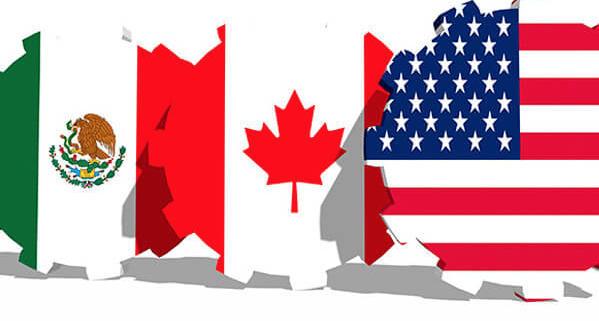
Trump announced Monday morning that progress had been made toward a deal with Mexico on renegotiating the North American Free Trade Agreement. Negotiations with Canada, the final piece in the agreement, are still ongoing.

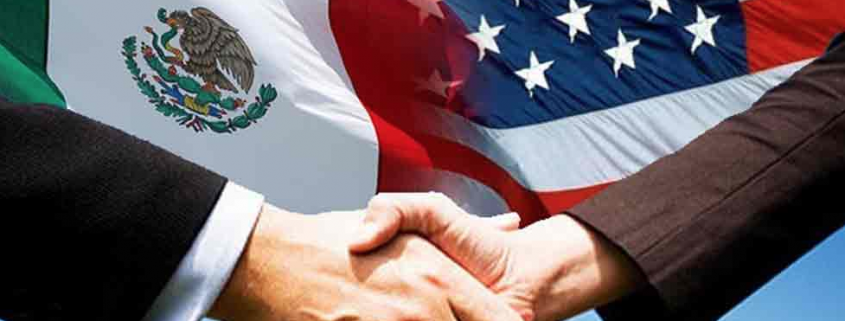
Trump called it a «big day for trade» and the nation in an Oval Office announcement in which he teleconferenced with outgoing Mexican President Enrique Pena Nieto.

Energy has been a key aspect of the negotiations on a revamped version of NAFTA. However, no announcement on energy trade was made on Monday. The agreement with Mexico centered on ensuring that a higher percentage of automobiles sold in North America are made with parts produced on the continent.

Negotiations on an update to the free trade agreement had stalled in recent months amid disagreements over, among other things, provisions related to the automotive and energy industries. U.S. and Mexican negotiators, however, had made breakthroughs on those issues ahead of Monday’s announcement.

Jesus Seade, the incoming Mexican government’s chief NAFTA negotiator, said Sunday the energy issues have been “ironed out,” without going into detail, Reuters reported.

Mexico has become a large importer of U.S. natural gas and oil in recent years. Energy Secretary Rick Perry had visited Mexico ahead of Monday’s announcement. He was there to discuss «how the U.S. and Mexico can continue to work together to make North America a world-wide leader in energy production and exports,» Perry said last week in a tweet.


Washington Examiner/ John Siciliano / August 27


Trump deal with Mexico eases fears of trade wars, offers template to end other conflicts

Market Watch / Jeffry Barthash / August 27


That sound of ice thawing? It’s the Trump administration’s tentative deal with Mexico to rewrite the controversial Nafta free-trade pact, the first clear evidence the White House is willing to compromise on its hardline demands and avert ruinous trade wars.

News of the deal sent U.S. markets surging Monday. The Nasdaq Composite IndexCOMP, +0.17%  topped 8,000 points and the S&P 500 SPX, +0.06%  index almost hit 2,900, both touching record highs. The Dow Jones Industrial AverageDJIA, +0.15%   jumped nearly 260 points to surpass 26,000.

Details of the pending agreement are sketchy for now. Senior White House officials suggested the new pact would result in more new cars and trucks being made in the U.S. using steel and other materials produced in North America. That was one of President Donald Trump’s chief goals.

Other key provisions could lead to higher wages for Mexican auto workers and even give them greater rights to unionize, moves meant to reduce the incentive for U.S. automakers to shift operations south of the border due to lower labor costs.

The new agreement also puts greater emphasis on crafting rules to govern the “digital economy” and protect copyrights and intellectual-property rights, areas in which the U.S. is a global leader.

“I think this is an extremely historic time,” said Robert Lighthizer, the chief U.S. trade negotiator, in a call with reporters. “We had a Nafta agreement that got seriously out of whack … and needed modern updating.”

A deal is far from done, of course. Canada is the third country that was party to the original North American Free Trade Agreement signed in 1994, but negotiations have been at a standstill. The White House hopes Canada will now rejoin the talks and quickly join with the U.S. and Mexico to ratify a successor agreement to Nafta.

“We hope that Canada can join in now,” Lighthizer told reporters Monday. Talks are expected to resume soon, and at this point, it’s unlikely that any Nafta successor would be voted upon until the next Congress convenes in early 2019.

The Canadians and no doubt the Europeans and Chinese are likely to comb over the details of the agreement. The U.S. is sure to use the deal with Mexico as a template for negotiations in talks with other countries to update trade rules that Trump has long complained are unfair.

What the Mexico deal also shows, though, is the Trump administration is ready to compromise on some of its toughest demands. The U.S., for instance, dropped its insistence on a hard “sunset” clause that would cause the trade deal to expire after a certain number of years.

“Despite the Trump administration’s intransigence over trade disputes in recent months, it is willing to negotiate in good faith and accept a compromise, which will be welcomed in both China and Europe,” contended Paul Ashworth, chief U.S. economist at Capital Economics.

The new pact calls for the U.S. and Mexico to review an updated North American free-trade deal six years into a 16-year window. The countries could extend the pact another 16 years at any point after that six-year period.

The U.S. also appears to have softened its demand for an end to an arbitration process for determining if a country was violating the trade agreement. Industries in the U.S. mostly support the current process for resolving problems and lobbied the White House to back off.

Yet even if the agreement is not entirely what the White House wanted, the deal with Mexico allows Trump to claim partial victory for his “America First” policy.

What’s more, the deal will go a long way in easing tensions on Wall Street and in Washington that Trump’s tough talk on trade would ignite a conflagration damaging to economies all around the world.

Major industry lobbying group and trade experts were cautiously optimistic after the White House deal.

It’s “a victory for rationality over rhetoric,” said Steve Nelson, a partner at the law firm Dorsey & Whitney and a former state department lawyer.


Market Watch / Jeffry Barthash / August 27


“La integración de los equipos de EPN y AMLO en la negociación es madurez de México”: Jesús Seade

Sin Embargo / Por Redacción / 27 Agosto 


La duración del acuerdo alcanzado entre México y Estados Unidos en el Tratado de Libre Comercio de América del Norte (TLCAN) será de 16 años y no de cinco como proponía el Presidente Trump, así lo confirmó el representante comercial de EU, Robert Lighthizer. El pacto contempla revisiones cada seis años, en las que se podrán añadir prórrogas de otros dieciséis años, si las partes lo acuerdan.

Ciudad de México/Washington, 27 agosto (SinEmbargo).–  “Hoy es un buen día para México en materia de comercio internacional”, dijo esta tarde Luis Videgaray Caso, Secretario de Relaciones Exteriores, al iniciar la conferencia de prensa en la que estuvieron presentes Jesús Seade Kuri, integrante del equipo de Andrés Manuel López Obrador; Ildefonso Guajardo Villarreal, titular de la Secretaría de Economía, y Juan Pablo Castañón Castañón, presidente del Consejo Coordinador Empresarial (CCE).

“Si por alguna razón el Gobierno de Canadá y EU no llegaran a un entendimiento, hoy lo que sabemos los mexicanos es que habrá un acuerdo con Estados Unidos”, explicó Videgaray.

El representante del Presidente electo Andrés Manuel López Obrador, Jesús Seade, dijo que la integración de los equipos saliente y entrante para estas negociaciones es una demostración de la madurez democrática del país, que a pesar de haber un cambio de gobierno trabajaron juntos. “Gana México. Estamos muy contentos con todo lo logrado”, dijo Seade. “Quiero en particular celebrar el hecho de que hayamos podido colaborar de una forma tan maravillosamente efectiva, solidaria, de equipo único, con el distinguido equipo del Presidente Enrique Peña Nieto. Es un ejercicio de cooperación que me llena de orgullo, que me llena de satisfacción, que en sí mismo es una magnífica señal para México”.

“Muestra –agregó– que México es un país muy maduro como economía como economía y muy maduro como democracia, que puede tener cambios de orientación sin que esto signifique en lo absoluto un drama para el área económica ni una fuente de incertidumbre”.

“Ha sido muy satisfactorio haber estado en esta batalla y haberla sacado hasta ahora”, reiteró Seade y agradeció a Videgaray y a Guajardo, a quienes llamó “mis amigos y compañeros de lucha”.

Sobre el tema energético, que causó discrepancias entre los equipos negociadores mexicanos, Seade explicó: “El Presidente electo ha sido muy claro desde toda su campaña que él no va a echar para atrás la Reforma Energética, y eso incluye los contratos. Él políticamente expresó su opinión contraria a esa Reforma, pero la respeta. Lo que él sentía era que él no podía políticamente avalar un tratado en el que una gran parte del lenguaje era copia de esta Reforma. Él decía busquemos la forma de tener el mismo contenido, dejando claro las facultades del Gobierno mexicano, pero no haciendo un copiado literal de la Reforma Energética que simbólicamente sería avalarla”.

Hoy se dio a conocer el principio de acuerdo comercial entre Estados Unidos y México, que tendrá una vigencia inicial de 16 años, según explicó el Representante de Comercio Exterior estadounidense, Robert Lighthizer.El pacto contempla revisiones cada seis años, en las que se podrán añadir prórrogas de otros dieciséis años, si las partes lo acuerdan.

Los negociadores estadounidenses y mexicanos llegaron también a un pacto sobre las reglas de origen de los automóviles, pero “no se tocó” el tema de los aranceles de Estados Unidos al acero y aluminio de México, y por tanto seguirán en vigor, dijo Lighthizer.

“Vamos a sustentar el aterrizaje en algunos sectores. Primero, el entendimiento es en un fortalecimiento de las reglas de integración. Segundo, logramos cambiar un posicionamiento original que demandaba 50 por ciento del contenido regional en un nuevo concepto que se mueve a un concepto de interacción de zona de Alto Salario, que se maneja en el 40 por ciento dependiendo del tipo de vehículo, pero que deja el 60 por cieno para hacerlo en cualquier otro lugar y un 40 que en un momento determinado se puede hacer en Canadá y EU”, explicó Ildefonso Guajardo sobre el acuerdo en el sector automotriz.

“Las negociaciones han sido intensas y esperamos que en esta semana así sigan siendo para lograr el acuerdo trilateral. Nos genera la plataforma para traer y desarrollar tecnología en México. Es un paso importante para la competitividad de México y me parece que los pequeños, medianos grandes empresarios estamos comprometidos”, dijo el presidente del CCE, Juan Pablo Castañón.

“México ha dado el testimonio de que unidos salimos adelante, haciendo cada quien lo que nos corresponde, y así debemos seguir”, destacó Castañón.

En la ronda de preguntas y respuestas, Guajardo explicó que “los temas más álgidos tenían que ver con la definición del capítulo 20 y el aterrizaje de los temas automotrices eran los dos temas pendientes para México. En el tema automotriz tuvimos que definir los escenarios”.

Guajardo también explicó que México no se moverá de Washington hasta que Canadá se incorpore para participar en la negociación trilateral. “Seguiremos en Washington toda la semana”.

Sobre los aranceles al acero y aluminio que EU impuso a México y Canadá, el titular de la SE dijo que este tema se platicó y acordaron retomarlo más adelante. “Las cuotas se mantienen sobre el acero mexicano”, dijo, pero “no dejamos la posibilidad de vislumbrar posibles soluciones, no es un tema que se haya resuelto en este proceso”.

“Este tratado establece las premisas que fueron comprometidas con el Senado de la República: mejora la relación con América del Norte, preserva la certidumbre de que México no aceptó cuotas ni restricciones ni tarifas en el comercio y genera las bases para poner los atractivos de México en la economía”, dijo Guajardo.

En la solución de controversias, ante la posibilidad de la eliminación del capítulo 11, éste se mantiene para poder dar certidumbre, explicó. En el sector agrícola hoy queda fortalecido y se elimina la sombra o amenaza de un mecanismo de subsidios; lo que genera confianza entre las compras de México al campo estadounidense y viceversa.

El Canciller mexicano hizo un reconocimiento a los integrantes del equipo negociador del TLCAN y resaltó la integración del equipo del Presiente electo Andrés Manuel López Obrador en estas negociaciones. “Jesús Seade es un experto en la materia, un verdadero conocedor del tema”, dijo Videgaray y agradeció a Marcelo Ebrard, próximo Secretario de Relaciones Exteriores de México.

“Lo más importante es que cumpliendo con estas reglas de fortalecimiento, que está confirmado que el 70 por ciento de las exportaciones mexicanas la cumplirán y para ellos el arancel será a cero tasa, sin ningún tipo de limitación”, agregó.

“He estado platicando con muchos de los representantes del sector privado, y me agrada mucho constatar que un área en la que salimos ganando, es el área de productos químicos. Queda claramente reforzada. Quisiera celebrar muy en particular no solo lo logrado. Quiero celebrar el hecho de que hayamos podido colaborar en un forma tan maravillosamente solidad de equipo único con el equipo del Presidente Enrique Peña Nieto. Éste es un ejercicio de cooperación que me llena de orgullo”, dijo Seade.

“Esta negociación no puedo haber llegado a buen puerto sin un acuerdo con la iniciativa privada”, reconoció el Canciller. “Quiero agradecer a Juan Pablo Castañón, presidente del CCE y Moisés Kalach Mizrahi, integrante del equipo negociador por parte de la iniciativa privada.

“Primero quiero compartir con ustedes dos elementos fundamentales para este proceso (del TLCAN). El espacio para que pudiéramos negociar lo dio el Presidente de la República y en segundo, el apoyo del Canciller Luis Videgaray y su equipo”, dijo Ildefonso Guajardo.

Donald Trump, Presidente de Estados Unidos, confirmó en la Casa Blanca el cierre de las negociaciones comerciales entre Estados Unidos y México. Pero no hay tratado trilateral. Falta Canadá. Ahora, dijo Trump, “haremos un trato con Canadá. Es un segmento más pequeño el que hay que negociar”.

“Daremos por terminado el TLCAN para dar paso a este nuevo acuerdo, vamos a empezar a negociar con Canadá. Yo sé que Canadá tiene mucho interés en negociar, pero hay muchos puntos que tenemos que limar”, señaló el Presidente de Estados Unidos.

Trump habló con el Presidente mexicano Enrique Peña Nieto durante la conferencia. Dijo a los asistentes que el acuerdo ahora se llamará “acuerdo comercial entre EU y México” y ya no tendrá el nombre anterior. “Este es un tratado muy positivo para ambos países”, dijo Peña.

“Es nuestro deseo”, añadió Peña, “que Canadá pueda ahora incorporarse a este acuerdo. Asumo que ellos estarán evaluando”.


Sin Embargo / Por Redacción / 27 Agosto 
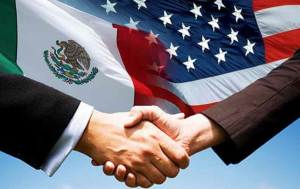
 

Mexico’s outgoing President Peña Nieto and President-elect Lopez Obrador vow to work together despite differences

Los Angeles Times / Patrick J. McDonnell / August 20

Mexican President Enrique Peña Nieto and his once-fierce rival, President-elect Andres Manuel Lopez Obrador, on Monday pledged cooperation in confronting the nation’s challenges despite differences on issues such as education reform and a controversial airport project.

Peña Nieto and Lopez Obrador — along with many current Cabinet members and the president-elect’s designated ministers — appeared together at the National Palace downtown and stressed themes of mutual respect.

It was the latest in a series of gestures meant to demonstrate stability and continuity as leftist Lopez Obrador prepares to assume power amid pledges for a far-reaching “transformation” of Mexican society. Peña Nieto has faced widespread unpopularity and the perception that he has been an ineffective leader.

“It is an institutional transition but it is also a respectful transition because we have received help without conditions from the constitutional president, Enrique Peña Nieto,” said Lopez Obrador, who won the presidency after losing in the two previous national elections, in 2012 and 2006.

Peña Nieto, in turn, vowed to do all he could to ensure that “the next government begins its term in a successful fashion.”

Lopez Obrador, elected July 1 in a landslide, is scheduled to take office Dec. 1 for a single six-year term. Peña Nieto was not a candidate in the election as Mexican law bars reelection of presidents.

The two men Monday answered a half dozen questions from the press but didn’t veer from differences on a number of contentious issues — notably national education reform and a planned new multibillion dollar airport for Mexico City.

Lopez Obrador reiterated his vow to review the controversial airport plan — critics say it is too expensive and not needed — and to rescind the current administration’s education overhaul blueprint. The president-elect has said he will seek out views from all sectors on how to improve the nation’s moribund public education system and what to do about the airport proposal.

Education reform was a centerpiece of Peña Nieto’s administration, but it drew fierce criticism from teachers opposed to revised rules to evaluate teacher performance. The new airport, already under construction, was the major infrastructure project of the outgoing administration.

Lopez Obrador and Peña Nieto met July 3, two days after the election, but that was a one-on-one meeting before Lopez Obrador had been legally declared president-elect.

Despite many preelection fears of an economic slide after a Lopez Obrador victory, Mexico’s economy has remained stable and the peso has retained its value against the U.S. dollar and other currencies. The incoming president has vowed to revitalize the sluggish Mexican economy, but has provided few specifics beyond a broad anti-corruption push.

Since election day, Lopez Obrador has generally toned down his often fiery rhetoric— he campaigned relentlessly against what he labeled “mafia of power,” including Peña Nieto’s administration — and has met repeatedly with investors and business interests.

The president-elect has also reached out to Washington and said he would invite President Trump to his inauguration.

U.S.-Mexico relations have experienced turbulence since Trump took office and repeatedly criticized Mexico and Mexicans.

Negotiations are continuing between the United States, Mexico and Canada in crafting a new North American Free Trade Agreement, the three-nation accord that has governed commerce on the continent for almost a quarter century. Trump has assailed the pact as unfair to U.S. interests.

The free-trade regimen is a cornerstone of the Mexican economy. Almost 80% of the nation’s exports go to the United States. Peña Nieto and Lopez Obrador have voiced support for a new trade accord.

Lopez Obrador, who ran on a leftist populist campaign vowing fundamental change, won 53% of the vote, defeating his nearest challenger by more than 30 percentage points. He has vowed to increase social-welfare payments to the poor, make higher education available to all and eliminate deep-rooted corruption.

Lopez Obrador is the first Mexican president to take office with a majority vote since 1988, during the days of dominance by the country’s Institutional Revolutionary Party, known as the PRI.

The PRI’s more than seven-decade hold on the presidency ended in 2000, with the election of Vicente Fox of the right-of-center National Action Party. But Lopez Obrador is the first avowed leftist and first contender from a non-traditional party to be elected president in the 21st century.

Peña Nieto is the current standard-bearer for the PRI, which suffered a humiliating defeat in the July 1 elections.

Lopez Obrador is among a number of left-leaning politicians who abandoned the PRI starting in the late 1980s. Lopez Obrador ran under the banner of his own party, the National Regeneration Movement, known as Morena, which is 4 years old.

Morena — which includes many defectors from the PRI and other traditional parties— not only won the presidency, but garnered major majorities in both chambers of the national legislature.

Despite his party’s newfound dominance at the federal level, Lopez Obrador has repeatedly vowed to run a democratic administration and to reach out to all sectors.

“This government is going to represent all Mexicans,” Lopez Obrador said Monday. “No one will be on the margins of the law or above the law.”

Cecilia Sanchez of The Times’ Mexico City bureau contributed to this report.

Los Angeles Times / Patrick J. McDonnell / August 20


Acuerdo entre México y EU en TLCAN podría ser antes del 25 de agosto

Forbes México / 20 Agosto


De acuerdo con Ildefonso Guajardo, secretario de Economía, las pláticas han tenido bastante progreso.

Notimex.- Las negociaciones entre México y Estados Unidos para modernizar el Tratado de Libre Comercio de América del Norte (TLCAN) entraron a una semana, con signos de un posible acercamiento de posiciones para alcanzar un acuerdo en principio antes del 25 de agosto.

Los equipos técnicos de las dos delegaciones retomaron en esta capital las pláticas, luego de tres días de intensos encuentros ministeriales la semana pasada, y donde a decir del secretario de Economía de México, Ildefonso Guajardo, hubo bastante progreso.

Guajardo dijo el viernes que en las pláticas de este lunes se abocarían a la discusión de temas sectoriales, incluyendo algunos del ámbito financiero, en tanto que el secretario de Relaciones Exteriores, Luis Videgaray, señaló por separado que las dos partes se estaban acercando a un acuerdo.

El reporte de Guajardo apuntó avances en el ámbito de las reglas de origen en el sector automotriz, que se refieren a porcentajes y origen de las partes de los automóviles o camiones ligeros para el mercado norteamericano, armados en cualquiera de ambos países y Canadá, el tercer socio del TLCAN.

El tema es de los más contencioso por la demanda de la Casa Blanca de elevar de 62.5 a 75% el contenido regional de estas partes, y que la mitad sean producidas en Estados Unidos.

De acuerdo con un reporte de prensa, Estados Unidos habría desistido de su demanda de restringir las importaciones agrícolas mexicanas mediante calendarios para su ingreso al mercado estadunidense, una propuesta conocida como ‘estacionalidad’.

Los dos países estarían cerca también de alcanzar un acuerdo sobre la cantidad limite para evitar el pago de aranceles en compras electrónicas internacionales, que en el caso de México es actualmente de 50 dólares.

Hasta la semana pasada, temas como la cláusula ‘sunset’, mediante la cual Estados Unidos busca revisar el acuerdo cada cinco años y a lo que tanto México como Canadá se oponen, no habían sido abordados y Guajardo recalcó que este tipo de asuntos serían abordados hasta el final.

Aunque las negociaciones deberán pasar a la fase trilateral con la incorporación de Canadá, esta semana será crucial en el proceso.

Ambos gobiernos han declarado su intención de lograr un acuerdo antes del cambio de gobierno en México, el próximo 1 de diciembre.

Ello requiere un acuerdo preliminar este sábado 25 de agosto, ya que bajo la Ley de Promoción Comercial (TPA), la administración estadunidense debe notificar al Congreso con 90 días de anticipación antes de la firma de cualquier acuerdo.


Forbes México / 20 Agosto


Mexico and U.S. studying NAFTA rules of origin proposals – minister

REUTERS / Adriana Barrera / August 6


MEXICO CITY (Reuters) – Mexico’s economy minister Ildefonso Guajardo said on Monday the country has put forward a proposal to update the North American Free Trade Agreement’s contentious rules of origin, and in turn was studying the U.S. position.

The United States has demanded tougher rules of origin, particularly on what percentage of a car needs to be built in the NAFTA region to avoid tariffs than outlined in the current trade deal.

“We have a proposal on the table, we’re analyzing some characteristics of the U.S. position, and we’re doing it clearly in line with our dialogue with Mexico’s auto industry,” Guajardo told reporters after an event in Mexico City.

U.S. President Donald Trump, who launched the renegotiation of the 1994 pact a year ago, has said he wants the reworked deal to bring manufacturing jobs back to the United States.

Guajardo on Monday also said that Canada, which is not participating in U.S.-Mexico talks that began in Washington two weeks ago after months of negotiations between the three trade partners, could join next week, depending on progress in the next few days between Mexico and the United States.

The bilateral meetings have yielded important developments, Guajardo said, adding that he will return to Washington midweek. He did not give details.

Mexican sources briefed on the negotiations have said Mexico has offered to raise the threshold for regional content beyond a May proposal of 70 percent, up from the current level of 62.5 percent. The United States is seeking 75 percent as well as demanding a proportion of vehicles be made in factories paying $16 an hour or more.

Mexico’s El Economista financial newspaper on Monday reported that Mexico had agreed to those demands, in return for a five-year transition period. Asked about the reports, Mexico’s chief trade negotiator Kenneth Smith said that no deal on autos had yet been reached.

“We haven’t closed or resolved this chapter yet,” Smith told reporters after the same event in Mexico City, saying that Canada also needed to take part before negotiators could reach final decisions.

Smith said Mexico and the United States were discussing technical details and each other’s proposals involving the auto sector, and that Mexico was explaining the areas it considered particularly sensitive.

He also said Mexico would not budge on its rejection of U.S. bids for seasonal restrictions on fresh products or a sunset clause that could strike down NAFTA agreements after five years.


REUTERS / Adriana Barrera / August 6


Mexican president-elect outlines oil sector rescue plans

Mexico’s incoming president has begun fleshing out his rescue plan for the country’s long-neglected oil sector.

Andrés Manuel López Obrador’s proposals include a $4bn capital injection for state oil company Pemex to boost exploration, a new refinery to slash reliance on US fuel imports and a 600,000 barrel-a-day increase in crude production in two years.

But analysts warn that his nationally focused energy policy risks putting unsustainable pressure on the world’s most indebted oil company. In particular, they point to plans for a 160bn peso ($8.6bn) refinery to be built in his home state of Tabasco over the next three years — an investment equal to the size of Pemex’s loss in the second quarter.

Mr López Obrador has not spelt out how he would fund his proposals but has named Octavio Romero Oropeza, a long-time confidante and agronomist from Tabasco, to take the helm of Pemex. “We are estimating overall investment to rescue the sector of 175bn pesos next year,” said the president-elect, who takes office on December 1.

The cash injection comes as Pemex has seen output fall from a peak of 3.4m barrels a day in 2004 to 1.866m in the second quarter this year.

Mr López Obrador said output was plunging because “the energy sector and oil industry were abandoned”, and has pledged to lift production to 2.5m b/d in two years.

He has yet to make clear whether he intends to continue with oil tenders that have seen more than 100 contracts awarded to 73 companies since 2015 under a landmark reform designed to lift Mexico’s oil output from a four-decade low. The new administration wants at least a temporary pause to oil tenders.

“Four billion dollars is a significant amount, there’s no doubt. But it is important to put it in perspective . . . One single tender round can inject more investment,” said Pablo Zárate at think-tank Pulso Energético.

Mr López Obrador has promised to achieve energy self-sufficiency by spending 49bn pesos upgrading Pemex’s six lossmaking refineries, where output has halved since May 2013, and building two new ones to halt dependence on US gasoline imports, which have increased by a third in the past two years.

But investors are alarmed at the potential for snowballing costs. The price tag for the first new refinery, to be built in Dos Bocas, has already risen from the $6bn Mr López Obrador’s team had previously indicated. “I don’t know of a single refinery that’s ever been done to budget,” said an investor at a large fund who follows Pemex closely.

Pemex, a monopoly for eight decades, has spent the past two years putting its finances in order and making huge outlays on new refineries could be a serious risk, say analysts.

“Pemex today does not have the cash or free cash flow to take on the construction of new refineries, and if the company decided to finance such an investment with debt or shift capital from exploration and production to refining, its credit metrics would weaken,” cautioned Moody’s Investors Service.

Ramping up refinery capacity could lead to Pemex halving the value of lucrative oil exports, it added.

But Mr López Obrador has said his government would keep its promise of halting gasoline imports in three years and would lower fuel prices.

Pemex has net debt of about $106bn and is expected to post earnings before interest, tax, depreciation and amortisation of approximately $25bn this year. With the state taking about 70 per cent of profits in tax, Pemex could bump up its debt to pay for refineries — but it already has hefty debt repayments due in 2019 and 2020.

Mr López Obrador’s team has indicated that it wants to halt oil tenders while it reviews contracts awarded to date and decides on whether and how fast to continue auctions.

Indeed, the government has delayed two upcoming tenders, which include joint ventures with Pemex, until next February.

Adrián Lajous, a former Pemex chief executive, has called for a moratorium on oil auctions until 2020 but said joint ventures with Pemex should resume next year.

Even if oil tenders are put on ice, analysts are urging the new administration to allow Pemex to continue forging joint ventures.

“Partnerships will be needed to grow output — international companies bring capital and technical expertise,” said Ruaraidh Montgomery at Wood Mackenzie.

Above all “Pemex should start partnering with companies that specialise in enhanced oil recovery, given the maturity of its portfolio”, to allow it to squeeze more oil from existing fields, said Pablo Medina at Welligence Energy Analytics.

One radical revamp for Pemex could be to follow the “China model”, said Juan Carlos Zepeda, head of Mexico’s oil regulator, keeping the parent company in state hands, but spinning some assets into a partially listed unit, as China National Petroleum Corp has done.

“I would like us to do the same with Pemex but that would require changing the constitution,” he said.

This article has been amended to correct the amount of oil Pemex plans to increase production by in the next two years.


Financial Times / Jude Webber / 


Renegociación del TLCAN tuvo un progreso ‘increíble’: asesor de Trump

El Informador / 


Una docena de capítulos, entre ellos el textil y energético, podrían cerrarse en los próximos días

Estados Unidos está haciendo un progreso “absolutamente increíble” en torno a las negociaciones del Tratado de Libre Comercio de América del Norte (TLCAN) y se podría llegar a un acuerdo en otoño, señaló el presidente del Consejo de Asesores Económicos de la Casa Blanca, Kevin Hassett.

“Creo que veremos algo para otoño”, dijo Hassett en una entrevista para Fox News.

Mientras advertía que no era “un negociador” involucrado en las negociaciones entre Estados Unidos, México y Canadá, Hasset afirmó que sus colegas que están renegociando el acuerdo han indicado que las cosas están yendo bien.

“Es absolutamente increíble el progreso que están haciendo”, señaló.

No soy un negociador involucrado en las negociaciones… (pero) mis colegas indican que las cosas están yendo bien

El comentario de Hassett hizo eco del Representante de Comercio de Estados Unidos, Robert Lighthizer, quien dijo el 26 de julio ante el Congreso que es posible que los socios del TLCAN lleguen a un acuerdo tentativo en agosto para renovar el pacto.

El presidente Donald Trump también ha dicho recientemente que Estados Unidos está avanzando sólidamente en las conversaciones con México, pero ha indicado que su administración puede buscar primero un acuerdo bilateral con este país antes de negociar por separado con Canadá.

Una docena de capítulos, próximos a cerrarse 

Una docena de capítulos, entre ellos el textil y energético, podrían cerrarse en los próximos días para avanzar en la renegociación del TLCAN, informó Juan Pablo Castañón, presidente del Consejo Coordinador Empresarial (CCE) y parte del ‘cuarto de junto’, grupo de la iniciativa privada que acompaña al gobierno en el proceso.

“Textiles, que ha sido un capítulo difícil; energía que nos da mucha potencialidad en la zona si hacemos sinergia entre los tres países; medio ambiente, aduanas y facilitación comercial; medidas disconformes; servicios financieros e inversión; comercio transfronterizo; comercio digital y anexo sectorial de cosmético. Estos son los capítulos cercanos a terminar y quedarían 8 o 10 capítulos adicionales y dentro de ellos están el tema laboral, de propiedad intelectual, que son temas aún en la mesa de negociación y que para nosotros es importante profundizar”, señaló el líder empresarial.

En una llamada telefónica con medios desde Washington, Castañón se mostró confiado, ya que identificó un claro interés por parte de Estados Unidos para avanzar en las negociaciones del TLCAN y llegar a un acuerdo en principio.

“En el ambiente de lo que vivimos, se sigue pensando que durante agosto estaríamos usando esta ventana de oportunidad y hay la voluntad para hacerlo”, señaló el empresario.

El secretario de Economía, Ildefonso Guajardo, detalló en Washington que los equipos negociadores convinieron iniciar con los temas menos complicados, para avanzar luego hacia los más complejos, y espera que Canadá participe tanto en las reuniones bilaterales, como trilaterales con Estados Unidos.

El jueves se reanudaron en Washington las conversaciones para actualizar el pacto comercial con reuniones ministeriales entre Estados Unidos y México, tras haberse estancado desde mayo, debido a algunas demandas estadounidenses controversiales y en espera de las elecciones presidenciales de México.

Buscan fórmula para reglas de origen

En el tema de las reglas de origen se avanza en las negociaciones con una fórmula que pueda ser factible, que no dañe los empleos en México, ni las nuevas inversiones dirigidas al mercado mexicano, “pero aún no se concreta”, reconoció el presidente del CCE.

Están sobre la mesa con “raya roja”, en las que México no va a ceder, el capítulo de estacionalidad, la cláusula sunset y Capítulo 20 sobre resolución de controversias gubernamentales. En el Capítulo 11 sobre seguridad para las inversiones, los empresarios estadounidenses son los que presionan para que se mantenga, detalló.

Eliminación de sanciones 

En caso de que el acuerdo trilateral se pueda dar, desaparecerían las sanciones de aranceles, tanto en materia de acero automotriz con la eliminación del estudio que hacen en la 232, y las tarifas de acero y aluminio. A la par, México eliminaría las sanciones de respuesta que se dieron, aseguró Castañón.

Hoy ya hay repercusiones en los precios en Estados Unidos y la Casa Blanca en Estados Unidos está consciente de que si se logra un acuerdo se eliminarían esas sanciones.


El Informador / 


US launches five dispute actions in WTO challenging China, EU, Canada, Mexico and Turkey

Merco Press / REUTERS / Yuri Gripas / 17 July


The United States launched five separate World Trade Organization dispute actions on Monday challenging retaliatory tariffs imposed by China, the European Union, Canada, Mexico and Turkey following U.S. duties on steel and aluminum. The retaliatory tariffs on up to a combined US$28.5 billion worth of U.S. exports are illegal under WTO rules, U.S. Trade Representative Robert Lighthizer said in a statement.

“These tariffs appear to breach each WTO member’s commitments under the WTO Agreement,” he said. “The United States will take all necessary actions to protect our interests, and we urge our trading partners to work constructively with us on the problems created by massive and persistent excess capacity in the steel and aluminum sectors.”

Lighthizer’s office has maintained that the tariffs the United States has imposed on imports of steel and aluminum are acceptable under WTO rules because they were imposed on the grounds of a national security exception.

Mexico said it would defend its retaliatory measures, saying the imposition of U.S. tariffs was “unjustified.”

“The purchases the United States makes of steel and aluminum from Mexico do not represent a threat to the national security,” Mexico’s Economy Ministry said in a statement.

“On the contrary, the solid trade relationship between Mexico and the U.S. has created an integrated regional market where steel and aluminum products contribute to the competitiveness of the region in various strategic sectors, such as automotive, aerospace, electrical and electronic,” the ministry added.

Lighthizer said last month that retaliation had no legal basis because the EU and other trading partners were making false assertions that the U.S. steel and aluminum tariffs are illegal “safeguard” actions intended to protect U.S. producers.


Merco Press / REUTERS / Yuri Gripas / 17 July


Prevén concluir renegociación del TLCAN en noviembre

El Informador / 10 Julio


Estados Unidos intentará tener listo el documento antes del cambio de Gobierno en México

El representante del Partido Republicano en México, Larry Rubin, confió en que hacia finales de noviembre próximo, antes del cambio de Gobierno en el país, se tenga un nuevo Tratado de Libre Comercio de América del Norte (TLCAN).

“Tenemos la expectativa de que (el acuerdo comercial) se acabe de negociar antes de que entre el virtual ganador de las elecciones” en México, expresó después de asistir a la reunión entre Andrés Manuel López Obrador y representantes de la Confederación de Cámaras Industriales (Concamin).

Señaló en entrevista que lo anterior le permitirá al Gobierno entrante empezar a trabajar en otros acuerdos y tratados comerciales importantes, sin que tenga un desgaste innecesario por el TLCAN.

Rubin dijo que también resulta positivo el hecho de que continúe el actual equipo negociador de la administración federal y el llamado “Cuarto de Junto”, equipo asesor que acompaña al Gobierno mexicano en la negociación comercial, hasta culminar la transición.

Reiteró que el acuerdo comercial no sólo es importante para México, Estados Unidos y Canadá, sino también para el presidente Donald Trump en términos políticos, pues las elecciones de noviembre próximo en el vecino país son clave para la continuidad del TLCAN.

Con el hecho de que México, Estados Unidos y Canadá sigan con los trabajos se ofrece un mensaje político importante para EU y “es un buen voto para el comercio, para la próxima elección”, a pesar de que aún hay temas controversiales en el proceso de modernización, apuntó.

“Aunque no es una tarea fácil, Estados Unidos tiene la consigna de que el TLCAN sea aprobado. Hay una gran interés por parte de senadores y gobernadores fronterizos”, mencionó.

El coordinador de “Cuarto de Junto” participante en las renegociaciones del TLCAN, Eugenio Salinas, dijo que se continuarán apoyando los trabajos para lograr un documento exitoso para México, además reconoció la disposición de Andrés Manuel López y su equipo para cooperar en sus labores.

“Vamos a mantener una globalización de México siempre cuidando el mercado interno y atendiendo los sectores sensibles, pero los procesos de renegociación y de apertura continuarán”, comentó.

Automotrices solicitan activar reuniones

Asociaciones de la industria automotriz de Canadá, Estados Unidos y México urgieron a sus gobiernos a retomar las negociaciones para renovar el Tratado de Libre Comercio de América del Norte (TLCAN).

“Consideramos que, mientras se conforma un nuevo Gobierno en México hacia el 1 de diciembre de 2018, ahora es el momento oportuno para que las partes retomen las negociaciones con un compromiso renovado”, indicó el comunicado divulgado por la Asociación Mexicana de la Industria Automotriz, AMIA y firmado por otras ocho organizaciones, entre ellas la Auto Alliance Driving Innovation de Estados Unidos y la Canadian Vehicle Manufacturers´Association.


El Informador / 10 Julio