Listado de la etiqueta: ASEA

el-regimen-de-responsabilidad-objetiva-en-las-actividades-de-exploracion-y-extraccion-de-hidrocarburos

El régimen de responsabilidad objetiva en las actividades de Exploración y Extracción de hidrocarburos

Las Disposiciones administrativas de carácter general que establecen los Lineamientos en materia de Seguridad Industrial, Seguridad Operativa y protección al medio ambiente para realizar las actividades de Reconocimiento y Exploración Superficial, Exploración y Extracción de Hidrocarburos (DACG/E&E), que emitió la Agencia Nacional de Seguridad Industrial y Protección Ambiental del Sector Hidrocarburos (ASEA), establecen que quienes realicen obras o actividades para la exploración y extracción de hidrocarburos están sujetos a un régimen de responsabilidad objetiva, es decir, operan bajo el supuesto de que están creando un riesgo a las personas y medio ambiente y, por lo tanto, en caso de causar daños deberán llevar a cabo su reparación, sin que ello esté condicionado a demostrar su culpa.

Derivado de lo anterior, la ASEA impone a los operadores la obligación de realizar todas las acciones que sean necesarias para evitar y prevenir daños ambientales derivados de los riesgos creados, para lo cual deberán contenerlos, caracterizarlos y remediarlos con oportunidad bajo sus propios procesos y de acuerdo a la legislación y normatividad aplicable.

En este sentido, las “DACG/E&E” establece que las actividades de Exploración y Extracción deberán realizarse bajo ciertos principios, como son:

  1. Minimizar los riesgos a un nivel “Tan Bajo Como Sea Razonablemente Factible”, esto es, hasta un nivel en el que se demuestre que el costo de continuar reduciendo ese riesgo es mayor en comparación con el beneficio económico que se obtendría. Lo anterior permite que exista un equilibrio razonable entre la actividad económica y la protección de terceros y medio ambiente.
  2. Revisar periódicamente las medidas de reducción de riesgos, a fin de actualizarlas con base en el desarrollo tecnológico y conocimiento especializado.
  3. Implementar de medidas de emergencia y fomentar una cultura de la protección de personas, el medio ambiente y las instalaciones.

Los principios mencionados tienen como objetivo evitar la ocurrencia de accidentes, por lo que deben complementarse con medidas que tengan como objeto la reparación y/o compensación de los daños ocasionados ante la ocurrencia de accidentes.

Una de las medidas más efectivas para lograrlo es contar con instrumentos financieros que permitan afrontar las consecuencias de la materialización de los riesgos, como son los seguros.


En NRGI Broker somos expertos en seguros para la Exploración y Extracción de Hidrocarburos. Acércate a nosotros.


los-riesgos-en-el-sector-hidrocarburos

Risks in the Hydrocarbons Sector

A risk, according to the Law of the National Agency for Industrial Safety and Environmental Protection of the Hydrocarbons Sector (ASEA), is the probability that an undesired event will occur, measured in terms of its consequences to personnel, to the population, to facilities and equipment and the environment. In short, a risk is the probability of an accident occurring.

In this regard, it is important to consider that “risk” is not synonym to “danger”, since the latter refers to the intrinsic conditions or characteristics of an object capable of causing harm, while the risk is the probability of that damage occurring. From the above it follows that there are situations and objects that are dangerous themselves and therefore have the potential to cause harm, that is, they represent a risk, which however can be controlled and minimized.

In terms of hydrocarbons, oil and gas are hazardous materials, given their explosive and flammable characteristics. Therefore, the activities in which they are involved represent a risk, hence they are legally defined as highly risky activities.

In addition to the intrinsic characteristics, the operations carried out throughout the hydrocarbon value chain are highly complex, since 1) they involve large-scale infrastructure: drilling platforms, ship-tanks, pipelines, storage terminals, others; 2) are carried out in conditions that may be extreme, for example, drilling an oil well in the sea or traveling long distances through a ship or a train; 3) Advanced technology and specialized personnel are required.

Derived from the above, it is necessary to take all the measures in risk management to avoid accidents from happening. However, although a risk can be prevented and controlled, it can not be eliminated completely, so in any case, it will be necessary to transfer it, with the aim of preventing a company from absorbing the total economic losses that a loss may represent and that they can translate into a significant patrimonial detriment.

A risk can be transferred to an insurance company, through an insurance contract in which the insurer is committed to the insured, who in return for a premium, will indemnify him in case he suffers a loss that causes losses economic, as long as the event corresponds to the insured object, conforms to the terms and conditions established in the policy and is not an exclusion.

In the SectorHydrocarbons Sector, there are specific insurances to cover the risks inherent to this activity, which have also been established as mandatory by the regulatory authority (ASEA), such as: 1) Well control; 2) Civil Liability and 3) Environmental Responsibility.

At NRGI Broker, we are experts in insurance for the Hydrocarbons Sector. Come to us.


los-riesgos-en-el-sector-hidrocarburos

Cuales Son Los Riesgos En El Sector Hidrocarburos

Un riesgo, de acuerdo con la Ley de la Agencia Nacional de Seguridad industrial y Protección Ambiental del Sector Hidrocarburos (ASEA), es la probabilidad de que suceda un evento indeseado, medido en términos de sus consecuencias al personal, a la población, a instalaciones y equipos y al medio ambiente. En síntesis, un riesgo es la probabilidad de que ocurra un accidente.

Al respecto, es importante considerar que riesgo no es sinónimo de peligro, pues éste último se refiere a las condiciones o características intrínsecas de un objeto capaces de causar daño, mientras que el riesgo es la probabilidad de que se produzca ese daño. De lo anterior se desprende, que hay situaciones y objetos que son peligrosos por sí mismos y por ello tienen el potencial de causar daño, es decir, representan un riesgo, el cual sin embargo se puede controlar y minimizar.

En materia de hidrocarburos, el petróleo y el gas son materiales peligrosos, dadas sus características de explosividad e inflamabilidad. Por eso, las actividades en las que se encuentran involucrados representan un riesgo, de ahí que sean definidas legalmente como actividades altamente riesgosas[1].

Además de las características intrínsecas, las operaciones que se realizan en toda la cadena de valor los hidrocarburos son de gran complejidad, toda vez que 1) involucran infraestructura de grandes dimensiones: plataformas de perforación, buque-tanques, ductos, terminales de almacenamiento, entre otras; 2) se realizan en condiciones que pueden ser extremas, por ejemplo, la perforación de un pozo petrolero en el mar o el recorrido de grandes distancias a través de un barco o un tren; 3) se requiere de tecnología avanzada y personal especializado.

Derivado de lo anterior, es necesario tomar todas las medidas necesarias en materia de administración de riesgos para evitar la ocurrencia de accidentes. Ahora bien, aunque un riesgo puede prevenirse y controlarse, no puede eliminarse por completo, por lo que en todo caso, será necesario transferirlo, con el objetivo de evitar que una empresa absorba el total de pérdidas económicas que puede representar un siniestro y que se pueden traducir en un importante detrimento patrimonial.

Un riesgo puede ser transferido a una empresa aseguradora, por medio de un contrato de seguro en el que la empresa aseguradora se compromete con el asegurado, a que a cambio de una prima, le indemnizará en caso de que sufra un siniestro que le ocasione pérdidas económicas, siempre y cuando el evento corresponda con el objeto asegurado, se ajuste a los términos y condiciones establecidas en la póliza y no sea una exclusión.

En el Sector Hidrocarburos, existen seguros específicos para amparar los riesgos propios de esta actividad, que además han sido establecidos como obligatorios por la autoridad reguladora (ASEA) como son: 1) Control de pozos; 2) Responsabilidad Civil y 3) Responsabilidad Ambiental.

En NRGI Broker, somos expertos en seguros para el Sector Hidrocarburos. Acércate a nosotros.

[1]De acuerdo con el artículo 2, fracción I de la Ley Federal de Responsabilidad Ambiental, son las actividades que implican la generación o manejo de sustancias con características corrosivas, reactivas, radioactivas, explosivas, tóxicas, inflamables o biológico-infecciosas.


interview-with-graciela-alvarez-ceo-of-nrgi-broker

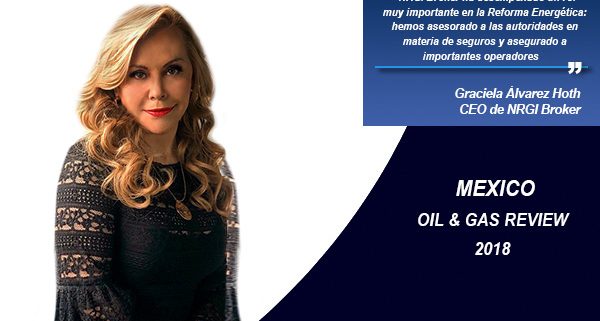
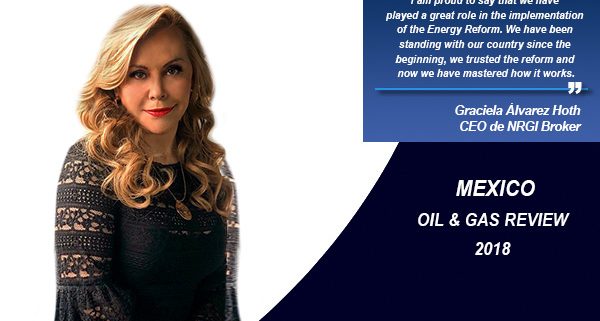
Interview with Graciela Álvarez, CEO of NRGI Broker

Mexico Oil & Gas Review / 18 Julio


Company bio: NRGI Broker specializes in insurance and surety bonds for the Mexican energy sector. It develops custom-made solutions for companies operating in the energy sector, including vessel, construction and engineering and catastrophic risks.


Q: How has NRGI Broker created market opportunities to expand the reach of its services?

A: I am proud to say that we have played a great role in the implementation of the Energy Reform. We have been standing with our country since the beginning, we trusted the reform and now we have mastered how it works. We are a Mexican broker that  has a broad services portfolio and we have consolidated as the best one in the market We have also established “Voces de Energía”, a forum where experts discuss the reform’s environmental, social and fiscal regulations.

Q: How will NRGI Broker benefit its potential clients and partners going forward?

A: In the long term, we see the company as a consolidated reference in the fields of insurance and sureties for the oil and gas industry. We are savvy about the needs of the companies along the entire value chain in hydrocarbons and we are an established adviser for risk management and on financial regulations. We started strong in offshore, ever since activity began in that area, and now we are talking about moving into onshore. The trend is to set new partnerships for storage, pipelines, clean energies and alike. We are investing in putting our brand’s name out there and showcasing that we offer a full range of services few other companies offer.

Q: What are the Top 3 successes of the Energy Reform?

A: I have a vivid memory of observing the Energy Reform’s application when I was acting as an adviser for ASEA in 2014, which gave me the chance to understand how the reform was set in motion. The first success was the implementation itself, which was accomplished according to the same spectrum of norms, rules and opportunities. The second success was the establishment of strong and transparent organisms to guide the implementation that facilitated the cohabitation of all different players in a single environment, which has grown to represent 18 operators. The third is the 72 percent rate of successful allocation of everything that has been tendered in the licensing rounds, demonstrating the genuine interest that local and foreign companies have in Mexico.

Q: How have local and foreign companies adapted to the new regulations and what have been the major hurdles in this process?

A: Everything comes down to an understanding that we need a unified regulatory framework and this cannot be implemented without looking at international standards. The reform’s planning was based on the experiences of seven countries that underwent similar processes, so it is molded to global requirements. Those international players that recently entered the market are used to these types of regulations since they apply to other territories, while many Mexican companies have previously worked with foreign partners that use those standards. For most local companies, application was not an issue. On the contrary, companies operating in the hydrocarbons sector now have the certainty of working in an environment protected by a well-established regulatory framework.

Q: How has NRGI Broker contributed to changing the local mindset and raising awareness about the need for insurance?

A: We advised ASEA when it conducted a three-year study on the best practices and experiences of Australia, Brazil, Canada, Colombia, Norway, the UK and the US that could be applied to the Mexican case. We worked with it every step of the way to establish these rules, from offshore platforms to setting up gas stations, and we developed the administrative dispositions for insurance in the upstream, midstream and downstream sectors. Insurance is required if this industry is to function properly and this mandatory status made things easier for us in terms of application. We are certain about the need to transform the attitude toward insurance and to combine that with our experience, specialization and innovation to offer personalized solutions to our clients.

Q: How will PEMEX’s migration projects make the company more competitive and productive?

A: This is a great strategy for PEMEX to establish investment partnerships that are specialists in how fields work, the reserves included in those fields and the different options to exploit them. This is a long-term investment business that opens the door to new opportunities to turn PEMEX into a more competitive entity. It is a win-win situation. It is important to note that PEMEX gets to keep the land ownership for these migrations; they only allow investment from third parties. One of the company’s future strengths lies in its capitalization and the establishment of partnerships with technology-driven companies. By binding all the parties involved in these type of projects, the companies are forced to bring their A game and deliver on their promises because they would harm themselves if they fell short due to the interdependence ingrained in this framework.

Q: What direction would you like the next administration to follow related to the industry?

A: I hope the next administration understands the implication of keeping the Energy Reform afloat. The reform was meant to contribute to the country and it has been set in motion successfully. The next president should push for new partnerships to continue deepening the reform’s outreach. What is important to understand is that reversing this process would be harmful to the country and it would hurt many companies that have supported and invested in its application.


Para leer la edición 2018, da clic aquí.


Mexico Oil & Gas Review / 18 Julio
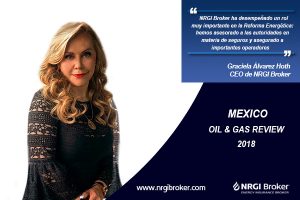


Interview with Graciela Álvarez, CEO of NRGI Broker

Mexico Oil & Gas Review / July 18


Company bio: NRGI Broker specializes in insurance and surety bonds for the Mexican energy sector. It develops custom-made solutions for companies operating in the energy sector, including vessel, construction and engineering and catastrophic risks.


Q: How has NRGI Broker created market opportunities to expand the reach of its services?

A: I am proud to say that we have played a great role in the implementation of the Energy Reform. We have been standing with our country since the beginning, we trusted the reform and now we have mastered how it works. We are a Mexican broker that  has a broad services portfolio and we have consolidated as the best one in the market We have also established “Voces de Energía”, a forum where experts discuss the reform’s environmental, social and fiscal regulations.

Q: How will NRGI Broker benefit its potential clients and partners going forward?

A: In the long term, we see the company as a consolidated reference in the fields of insurance and sureties for the oil and gas industry. We are savvy about the needs of the companies along the entire value chain in hydrocarbons and we are an established adviser for risk management and on financial regulations. We started strong in offshore, ever since activity began in that area, and now we are talking about moving into onshore. The trend is to set new partnerships for storage, pipelines, clean energies and alike. We are investing in putting our brand’s name out there and showcasing that we offer a full range of services few other companies offer.

Q: What are the Top 3 successes of the Energy Reform?

A: I have a vivid memory of observing the Energy Reform’s application when I was acting as an adviser for ASEA in 2014, which gave me the chance to understand how the reform was set in motion. The first success was the implementation itself, which was accomplished according to the same spectrum of norms, rules and opportunities. The second success was the establishment of strong and transparent organisms to guide the implementation that facilitated the cohabitation of all different players in a single environment, which has grown to represent 18 operators. The third is the 72 percent rate of successful allocation of everything that has been tendered in the licensing rounds, demonstrating the genuine interest that local and foreign companies have in Mexico.

Q: How have local and foreign companies adapted to the new regulations and what have been the major hurdles in this process?

A: Everything comes down to an understanding that we need a unified regulatory framework and this cannot be implemented without looking at international standards. The reform’s planning was based on the experiences of seven countries that underwent similar processes, so it is molded to global requirements. Those international players that recently entered the market are used to these types of regulations since they apply to other territories, while many Mexican companies have previously worked with foreign partners that use those standards. For most local companies, application was not an issue. On the contrary, companies operating in the hydrocarbons sector now have the certainty of working in an environment protected by a well-established regulatory framework.

Q: How has NRGI Broker contributed to changing the local mindset and raising awareness about the need for insurance?

A: We advised ASEA when it conducted a three-year study on the best practices and experiences of Australia, Brazil, Canada, Colombia, Norway, the UK and the US that could be applied to the Mexican case. We worked with it every step of the way to establish these rules, from offshore platforms to setting up gas stations, and we developed the administrative dispositions for insurance in the upstream, midstream and downstream sectors. Insurance is required if this industry is to function properly and this mandatory status made things easier for us in terms of application. We are certain about the need to transform the attitude toward insurance and to combine that with our experience, specialization and innovation to offer personalized solutions to our clients.

Q: How will PEMEX’s migration projects make the company more competitive and productive?

A: This is a great strategy for PEMEX to establish investment partnerships that are specialists in how fields work, the reserves included in those fields and the different options to exploit them. This is a long-term investment business that opens the door to new opportunities to turn PEMEX into a more competitive entity. It is a win-win situation. It is important to note that PEMEX gets to keep the land ownership for these migrations; they only allow investment from third parties. One of the company’s future strengths lies in its capitalization and the establishment of partnerships with technology-driven companies. By binding all the parties involved in these type of projects, the companies are forced to bring their A game and deliver on their promises because they would harm themselves if they fell short due to the interdependence ingrained in this framework.

Q: What direction would you like the next administration to follow related to the industry?

A: I hope the next administration understands the implication of keeping the Energy Reform afloat. The reform was meant to contribute to the country and it has been set in motion successfully. The next president should push for new partnerships to continue deepening the reform’s outreach. What is important to understand is that reversing this process would be harmful to the country and it would hurt many companies that have supported and invested in its application.


To read the 2018 edition click here.


Mexico Oil & Gas Review / July 18


exploracion-y-extraccion-de-petroleo

The security policy in the hydrocarbons sector

The safety policy of the hydrocarbon sector focuses on two concepts that respond to the environment that may be impacted by the activities developed with hydrocarbons and their derivatives: industrial safety that refers to the external environment and the relationship of the installation with third parties and operational security, referred to the internal scope and related to the installation’s own processes.

In the ASEA Law, Industrial Safety is defined as the multidisciplinary area responsible for identifying, reducing, evaluating, preventing, mitigating, controlling and managing risks in the sector, with the aim of protecting people and the environment.

Operational safety, is understood as the multidisciplinary area that is responsible for the analysis, evaluation, prevention, mitigation, control of the associated risks of the process, which includes the design, construction, startup, operation, normal stoppages, emergency stoppages and maintenance.

As we can see, industrial safety is a broader concept that involves considering not only the installation but its environment, at least where their activities may have some impact, such as the surrounding population, which may suffer damage to their people and to their assets, or the pollution of the environment.

On the other hand, operational safety focuses on internal processes, which must also be procured, in order to avoid damage to the installation and personnel, as well as preventing an accident from reaching greater proportions and also affect industrial safety.

Risks are an inherent part of the activities of the hydrocarbon sector, therefore as part of its security policy, companies must make the decision between retaining and transferring risks. They will generally retain those that may have minor consequences and whose costs do not affect their assets. In the case of risks that can have serious consequences, it is better to transfer them through an insurance.

The insurances that companies in the hydrocarbon sector must contract to complement their industrial and operational safety policy are: 1) well control (exploration and extraction companies); 2) construction and assembly; 3) civil and environmental liability; 4) property damage; 5) electronic equipment; 6) machinery breakage; 7) Boilers and equipment subject to pressure, among others.

If the activities are carried out with vessels, the insurances to be contracted are: 1) hull and machinery, 2) protection and compensation and, if applicable, 3) the charterer’s civil liability.

Each one of these insurances will cover some aspect that will contribute to complement the policy of industrial and operational safety, with the aim of having safer facilities and reducing to the maximum the possibility of an economic detriment to the companies of the sector.


At NRGI Broker, we are experts in insurance for the hydrocarbon sector. Come to us, we will gladly assist you.


exploracion-y-extraccion-de-petroleo

La política de seguridad en el sector hidrocarburos

La política de seguridad del sector hidrocarburos, se centra en dos conceptos que responden al entorno que pueda verse impactado a partir de las actividades que se desarrollan con hidrocarburos y sus derivados: seguridad industrial que se refiere al ámbito externo y la relación de la instalación con terceros y seguridad operativa, referida al ámbito interno y relacionada con procesos propios de la instalación.

En la Ley de la ASEA, se define seguridad Industrial como el área multidisciplinaria encargada de identificar, reducir, evaluar, prevenir, mitigar, controlar y administrar los riesgos en el sector, con el objetivo de proteger a las personas y el medio ambiente.

Por seguridad operativa, se entiende el área multidisciplinaria que se encarga del análisis, evaluación, prevención, mitigación, control de los riesgos asociados de proceso, que comprende el diseño, construcción, arranque, operación, paros normales, paros de emergencia y mantenimiento.

Como podemos apreciar, la seguridad industrial es un concepto más amplio que implica considerar no sólo la instalación sino su entorno, al menos aquel donde sus actividades puedan llegar a producir algún impacto, como puede ser la población aledaña, que puede sufrir daños en sus personas y en sus bienes, o la contaminación del medio ambiente.

En cambio, la seguridad operativa se centra en los procesos internos, que deben ser igualmente procurados, para evitar daños a la instalación y al personal, así como evitar que algún accidente pueda llegar a adquirir mayores proporciones y afectar también la seguridad industrial.

Los riesgos son una parte inherente a las actividades del sector hidrocarburos, por ello como parte de su política de seguridad, las empresas deben tomar la decisión entre retener y transferir riesgos. Generalmente retendrán aquellos que puedan tener consecuencias menores y cuyos costos no afecten su patrimonio. Para el caso de riesgos que pueden tener graves consecuencias, lo más conveniente es transferirlos a través de seguros.

Los seguros que deben contratar las empresas del sector hidrocarburos para complementar su política de seguridad industrial y seguridad operativa son: 1) control de pozos (empresas de exploración y extracción); 2) construcción y montaje; 3) responsabilidad civil y ambiental; 4) Daños materiales; 5) equipo electrónico; 6) rotura de maquinaria; 7) Calderas y equipos sujetos a presión, entre otros.

Si las actividades se realizan con embarcaciones, los seguros que se deberán contratar son: 1) casco y maquinaria, 2) protección e indemnización y, en su caso 3) responsabilidad civil del fletador.

Cada uno de estos seguros, cubrirá algún aspecto que coadyuvará a complementar la política de seguridad industrial y seguridad operativa, con el objetivo de tener instalaciones más seguras y reducir al máximo la posibilidad de un detrimento económico a las empresas del sector.

En NRGI Broker, somos expertos en seguros para el sector hidrocarburos. Acércate a nosotros, con gusto te atenderemos.


los-puntos-clave-del-midstream-forum-infraestructura-logistica-y-administracion-de-riesgos

Los puntos clave del Midstream Forum: Infraestructura, Logística y Administración de riesgos

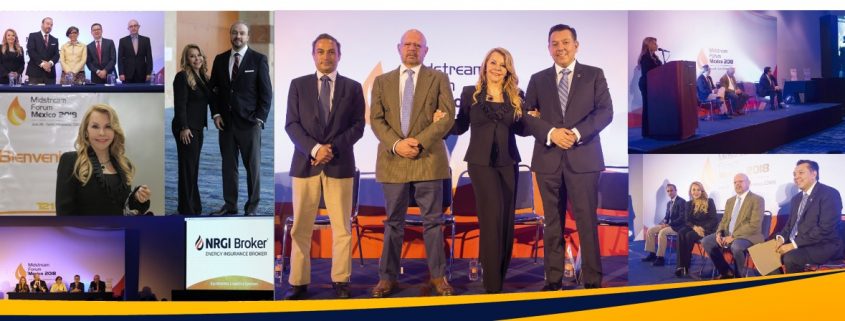
El día de ayer, se llevó a cabo con éxito la segunda edición del Midstream Forum, organizado por Grupo T21 y patrocinado por empresas como NRGI Broker; Kansas City Southern de México; Energéticos Nieto, GATX;  Amspec, entre otros.

El evento fue inaugurado por el Ing. Juan Acra, presidente del Consejo Mexicano de la Energía (COMENER), acompañado de la Lic. Graciela Álvarez Hoth, Directora General de NRGI Broker, Lic. Rosanety Barrios, Coordinadora General de Políticas de Transformación Industrial de la Secretaría de Energía y del Lic. Osiel Cárdenas de Grupo T21.

Durante las mesas de discusión, se debatió acerca de los desafíos y oportunidades en materia de almacenamiento y transporte de hidrocarburos y petrolíferos.

En la mesa sobre “Almacenamiento Mínimo de Petrolíferos”, donde participaron representantes de la Comisión Reguladora de Energía y de diversas empresas, se concluyó que la infraestructura existente es insuficiente para alcanzar los objetivos de la Reforma Energética, por lo que para empezar a ver resultados en materia de suministro energético a precios razonables, es necesario que los proyectos avancen.

En la segunda mesa se abordó el tema sobre “Áreas de oportunidades de Logística”, en el que se destacó que si bien es cierto, la apuesta actual en materia de transporte son los ductos por ser un medio económico y eficiente, actualmente las embarcaciones, los ferrocarriles y los auto-tanques desempeñan un papel fundamental en materia logística, por su disponibilidad y características particulares.

En la última mesa denominada “Safety, Security & Insurance”, participaron el Lic. Alfredo Orellana, Jefe de la Unidad Jurídica de la Agencia de Seguridad, Energía y Ambiente (ASEA), Pablo Carstens de la empresa Ipreset, y Graciela Álvarez Hoth, Directora General de NRGI Broker, donde se abordó el desafío de la seguridad en el sector hidrocarburos, no sólo en lo relativo a la seguridad industrial y operativa, sino también relacionado con el reto que representa el crimen organizado.

En el marco de su ponencia, Alfredo Orellana anunció la inminente publicación de la regulación en materia de seguros para las actividades de transporte, almacenamiento, distribución y expendio de hidrocarburos y petrolíferos, por lo que próximamente estarán definidos los requerimientos en materia de seguros en toda la cadena de valor.

Graciela Álvarez, por su parte, presentó el tema de Administración de Riesgos en el Sector Hidrocarburos, donde destacó que se trata de una metodología que permite identificar y analizar los riesgos de la industria y elegir qué hacer con ellos: retenerlos, lo que significar asumir todos los costos de la pérdida y la reparación de los daños en caso de un siniestro o transferirlos, a través de un programa integral de seguros, con lo que el asegurado obtiene respaldo económico en caso de una eventualidad.

Asimismo, destacó que la regulación en materia de seguros obligatorios, no debe verse como una carga administrativa, sino como un instrumento financiero de protección del patrimonio.

El evento finalizó con conferencias, en las que diversos expertos presentaron las más recientes innovaciones en el sector energético, tales como puntos de arbitraje en el mercado de combustibles; transferencia de custodia en transacciones comerciales y el etanol en México.


los-puntos-clave-del-midstream-forum-infraestructura-logistica-y-administracion-de-riesgos

Los puntos clave del Midstream Forum: Infraestructura, Logística y Administración de riesgos 

El día de ayer, se llevó a cabo con éxito la segunda edición del Midstream Forum, organizado por Grupo T21 y patrocinado por empresas como NRGI Broker; Kansas City Southern de México; Energéticos Nieto, GATX;  Amspec, entre otros.

El evento fue inaugurado por el Ing. Juan Acra, presidente del Consejo Mexicano de la Energía (COMENER), acompañado de la Lic. Graciela Álvarez Hoth, Directora General de NRGI Broker, Lic. Rosanety Barrios, Coordinadora General de Políticas de Transformación Industrial de la Secretaría de Energía y del Lic. Osiel Cárdenas de Grupo T21.

Durante las mesas de discusión, se debatió acerca de los desafíos y oportunidades en materia de almacenamiento y transporte de hidrocarburos y petrolíferos.

En la mesa sobre “Almacenamiento Mínimo de Petrolíferos”, donde participaron representantes de la Comisión Reguladora de Energía y de diversas empresas, se concluyó que la infraestructura existente es insuficiente para alcanzar los objetivos de la Reforma Energética, por lo que para empezar a ver resultados en materia de suministro energético a precios razonables, es necesario que los proyectos avancen.

En la segunda mesa se abordó el tema sobre “Áreas de oportunidades de Logística”, en el que se destacó que si bien es cierto, la apuesta actual en materia de transporte son los ductos por ser un medio económico y eficiente, actualmente las embarcaciones, los ferrocarriles y los auto-tanques desempeñan un papel fundamental en materia logística, por su disponibilidad y características particulares.

En la última mesa denominada “Safety, Security & Insurance”, participaron el Lic. Alfredo Orellana, Jefe de la Unidad Jurídica de la Agencia de Seguridad, Energía y Ambiente (ASEA), Pablo Carstens de la empresa Ipreset, y Graciela Álvarez Hoth, Directora General de NRGI Broker, donde se abordó el desafío de la seguridad en el sector hidrocarburos, no sólo en lo relativo a la seguridad industrial y operativa, sino también relacionado con el reto que representa el crimen organizado.

En el marco de su ponencia, Alfredo Orellana anunció la inminente publicación de la regulación en materia de seguros para las actividades de transporte, almacenamiento, distribución y expendio de hidrocarburos y petrolíferos, por lo que próximamente estarán definidos los requerimientos en materia de seguros en toda la cadena de valor.

Graciela Álvarez, por su parte, presentó el tema de Administración de Riesgos en el Sector Hidrocarburos, donde destacó que se trata de una metodología que permite identificar y analizar los riesgos de la industria y elegir qué hacer con ellos: retenerlos, lo que significar asumir todos los costos de la pérdida y la reparación de los daños en caso de un siniestro o transferirlos, a través de un programa integral de seguros, con lo que el asegurado obtiene respaldo económico en caso de una eventualidad.

Asimismo, destacó que la regulación en materia de seguros obligatorios, no debe verse como una carga administrativa, sino como un instrumento financiero de protección del patrimonio.

El evento finalizó con conferencias, en las que diversos expertos presentaron las más recientes innovaciones en el sector energético, tales como puntos de arbitraje en el mercado de combustibles; transferencia de custodia en transacciones comerciales y el etanol en México.


¿POR QUÉ LOS SEGUROS Y NO OTRAS GARANTÍAS FINANCIERAS EN EL SECTOR HIDROCARBUROS?

Las garantías financieras son instrumentos a través de los cuales los titulares de los contratos  garantizan el cumplimiento de las obligaciones asumidas.

Entre éstas se encuentran los seguros que, en estricto sentido, se definen como un contrato bilateral, a través del cual una de las partes (el asegurado) obtiene, a cambio del pago de  una prima, la protección de una determinada suma económica que la otra parte (la aseguradora) se compromete a pagar en caso de que se presente un hecho no deseado, fortuito, súbito e inesperado, determinado previamente en la póliza de seguro.

La principal característica de los seguros es la de fungir como un respaldo económico ante diversas contingencias, ya sea que recaigan en el mismo asegurado o un tercero afectado, como consecuencia de una acción u omisión del asegurado.

Un claro ejemplo del primer caso es un seguro de gastos médicos mayores, donde en caso de que el asegurado presente un padecimiento considerado como gasto médico mayor, la aseguradora deberá pagar el monto establecido como indemnización.

En el segundo caso, se configura la responsabilidad civil, según la cual aquel que cause un daño a un tercero en su persona o en sus bienes está obligado a repararlo. De manera que si el asegurado causa un daño a otro, la aseguradora deberá indemnizar al afectado.

Los seguros en el sector hidrocarburos fueron regulados a partir de la Reforma Energética. El artículo 6, fracción I, inciso c, de la Ley de la Agencia de Seguridad, Energía y Ambiente (ASEA), se establece la facultad de dicha Agencia, para:

“Regular el requerimiento de garantías o cualquier otro instrumento financiero necesario para que los Regulados cuenten con coberturas financieras contingentes frente a daños o perjuicios que se pudieran generar. Dicha regulación deberá contar con la opinión favorable de la Secretaría de Energía y de la Secretaría de Hacienda y Crédito Público”.

Hasta la fecha únicamente se ha regulado en materia de seguros para las actividades de exploración y extracción de hidrocarburos, tratamiento y refinación de petróleo y procesamiento de gas natural, a través de las Disposiciones Administrativas en materia de Seguros  (DACGS), en donde se establecieron los elementos y características con los que deben contar los seguros de control de pozos y responsabilidad civil-ambiental que deben contratar los regulados.

Ahora bien, es importante preguntar por qué las autoridades mexicanas decidieron requerir seguros sobre otras garantías financieras en el sector hidrocarburos:

  • Son el instrumento financiero más utilizado en el mundo por empresas petroleras. En países como los Estados Unidos de América, Brasil, Colombia, Reino Unido, Australia y Noruega se privilegia la adquisición de seguros para respaldar las operaciones nacionales e internacionales de las empresas.
  • Es muy expedito el proceso de autorización y emisión del seguro, cubre un gran número de riesgos propios del sector hidrocarburos. A través de los seguros adecuados, es posible cubrir desde un accidente personal hasta un descontrol de pozos que provoque un daño catastrófico.
  • No importa la fase operativa o la situación financiera de la empresa contratante del seguro. El seguro estará vigente siempre y cuando se paguen las primas correspondientes.
  • Su costo se reduce a las primas y, por ende, no inmoviliza capital.


En NRGI Broker, somos expertos en seguros para el sector hidrocarburos. Acércate a nosotros, con gusto te atenderemos.