PESO CONTINÚA ESTABLE; CIERRA EL DÓLAR EN $17.20

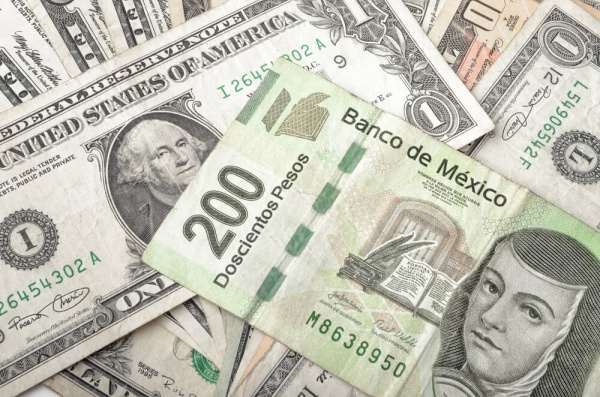
El dólar registró una jornada mixta este lunes toda vez que se deprecia en su valor interbancario, pero en ventanilla gana terreno frente al peso mexicano.

En su valor interbancario, el dólar cerró con una depreciación del 0.05% al vender 16.7425 pesos, de acuerdo con datos del Banco de México (Banxico).

En ventanillas bancarias la moneda estadounidense se ubicó en 17.06 pesos, 16 centavos más respecto al cierre previo, y a la compra operó en 15.96 pesos, según cifras de BBVABancomer y Notimex.

Este lunes se registra un mayor apetito por activos considerados riesgosos, mientras el mercado sigue reaccionado el débil reporte del empleo en Estados Unidos, que levantó expectativas de que la Reserva Federal postergue un alza tasas hasta 2016.

“Los participantes [en el mercado] han ajustado sus expectativas para un primer incremento a la tasa de fondos federales de la Reserva Federal, cayendo la probabilidad de cualquier paso hacia una normalización de la política monetaria antes de terminar el año”,  según un análisis de Banco BASE.

“La modificación de expectativas ocurrió el pasado viernes cuando la nómina no agrícola de septiembre mostró la creación de 142.000 posiciones laborales en Estados Unidos, muy por debajo de las 200,000 posiciones esperadas”, añadió.

Copyright: CNN Expansión


Is China Really Collapsing?

A widely held Western view of China is that its stunning economic success contains the seeds of imminent collapse. This is a kind of anchoring bias, which colors academic and think-tank views of the country, as well as stories in the media. In this analysis, China appears to have an economy unlike others—the normal rules of development haven’t been followed, and behavior is irrational at best, criminal at worst.

There’s no question, of course, that China’s slowdown is both real and important for the global economy. But news events like this year’s stock-market plunge and the yuan’s devaluation versus the dollar reinforce the refrain, among a chorus of China watchers, that the country’s long flirtation with disaster has finally ended, as predicted, in tears. Meanwhile, Chinese officials, worried about political blowback, are said to ignore advice from outside experts on heading off further turmoil and to be paranoid about criticism.

My experience working and living in China for the past three decades suggests that this one-dimensional view is far from reality. Doubts about China’s future regularly ebb and flow. In what follows, I challenge five common assumptions.


1. China has been faking it.

A key tenet of the China-meltdown thesis is that the country has simply not established the basis for a sustainable economy. It is said to lack a competitive, dynamic private-enterprise structure and to have captured most of the value possible from cheap labor and heavy foreign investment already.

Clearly, China lacks some elements of a modern market economy—for example, the legal system falls short of the support for property rights in advanced countries. Nonetheless, as China-economy scholar Nicholas Lardy recently pointed out, the private sector is vibrant and tracing an upward trend line. The share of state – owned enterprises in industrial output continues to drop steadily, from 78% in 1978 to 26% in 2011. Private industry far outstrips the value added in the state sector, and lending to private players is growing rapidly.


In fact, much of China’s development model mirrors that of other industrializing and urbanizing economies in Asia and elsewhere. The high savings rate, initial investments in heavy industries and manufacturing, and efforts to guide and stabilize a rapidly industrializing and urbanizing economy, for example, resemble the policies that Japan, South Korea, and Taiwan followed at a similar stage of their development. This investment-led model can lead to its own problems, as Japan’s experience over the past 20 years indicates. Still, a willingness to intervene pragmatically in the market doesn’t imply backwardness or economic management that’s heedless of its impact on neighboring economies and global partners.

Furthermore, China’s reform initiatives since 2013 are direct responses to the structural changes in the economy. The new policies aim to spur higher-value exports, to target vibrant emerging markets, to open many sectors for private investors, and to promote consumption-led growth rooted in rising middle-class incomes. Today, consumption continues to go up faster than GDP, and investors have recently piled into sectors from water treatment to e-commerce. These reforms are continuing at the same time China is stepping up its anticorruption drive, and the government hasn’t resorted to massive investment spending (as it did in 2008). That shows just how important the reforms are.

2. China’s economy lacks the capacity to innovate.

Think tanks, academics, and journalists alike maintain that China has, at best, a weak capacity to innovate—the lifeblood of a modern economy. They usually argue as well that the educational system stomps out creativity.

My work with multinationals keen on partnering with innovative Chinese companies suggests that there’s no shortage of local players with a strong creative streak. A recent McKinsey Global Institute (MGI) study describes areas where innovation is flourishing here. Process innovations are propelling competitive advantage and growth for many manufacturers. Innovation is at the heart of the success of companies in sectors adapting to fast-changing consumer needs, so digital leaders like Alibaba (e-commerce) and Xiaomi (smartphones) are emerging as top global contenders. Heavy investment in R&D—China ranks number two globally in overall spending—and over a million science and engineering graduates a year are helping to establish important beachheads in science- and engineering-based innovation.

3. China’s environmental degradation is at the point of no return.

To believe this, you need to think that the Chinese are content with a dirty environment and lack the financial muscle to clean things up. O.K., they got things wrong in the first place, but so did most countries moving from an agrarian to an industrial economy.

China is spending heavily on abatement efforts, as well. The nation’s Airborne Pollution Prevention and Control Action Plan, mandating reductions in coal use and emissions, has earmarked an estimaated $277 billion to target regions with the heaviest pollution.That’s just one of several policy efforts to limit coal’s dominance in the economy and to encourage cleaner energy supplies. My interactions with leaders of Chinese cities have shown me that many of them incorporate strict environmental targets into their economic master plans.

4. Unproductive investment and rising debt fuels China’s rapid growth.

To believe this, you would have to think, as many skeptics do, that the Chinese economy is fundamentally driven by overbuilding—too many roads, bridges, and buildings. In fact, as one economist has noted, this is a misperception created by the fact that the country is just very big. An eye-popping statistic is illustrative: in 2013, China consumed 25 times more cement than the U.S. economy did, on average, from 1985 to 2010. But adjusted for per-capita consumption and global construction patterns, China’s use is pretty much in line with that of South Korea and Taiwan during their economic booms.

China’s rising debt, of course, continues to raise alarms. In fact, rather than deleveraging since the onset of the financial crisis, China has seen its total debt quadruple, to $28.2 trillion last year, a recent MGI study found. Nearly half of the debt is directly or indirectly related to real estate (prices have risen by 60% since 2008). Local governments too have borrowed heavily in their rush to finance major infrastructure projects.

While the borrowing does border on recklessness, China’s government has plenty of financial capacity to weather a crisis. According to MGI research, state debt hovers at only 55% of GDP, substantially lower than it is in much of the West. A recent analysis of China’s financial sector shows that even in the worst case—if credit write-offs reached unprecedented levels—only a fairly narrow segment of Chinese financial institutions would endure severe damage. And while growth would surely slow, in all likelihood the overall economy wouldn’t seize up.

Finally, the stock-market slide is less significant than the recent global hysteria suggests. The government holds 60% of the market cap of Chinese companies. Moreover, the stock market represents only a small portion of their capital funding. And remember, it went up by 150% before coming down by 40.

Rumors drive the volatility on China’s stock exchange, often in anticipation of trading by state entities. The upshot is that the direct impact on the real economy will most likely be some reduction in consumer demand from people who have lost money trading in shares.

5. Social inequities and disenfranchised people threaten stability.

On this one, I agree with the bears, but it’s not just China that must worry about the problem. While economic growth has benefited the vast majority of the population, the gap between the countryside and the cities is increasing as urban wealth accelerates. There’s also a widening breach within urban areas—the rich are growing richer.

Urban inequality and a lack of access to education and healthcare are not problems unique to China. People here and in the West may find fruitful opportunities to exchange ideas because the pattern across Western economies is similar. Leaders of the central government have suggested policies to improve income distribution and to create a fair and sustainable social-security system, though implementation remains a matter for localities and varies greatly among them.

In short, China’s growth is slower, but weighing the evidence I have seen, the sky isn’t falling. Adjustment and reform are the hallmarks of a stable and responsive economy—particularly in volatile times.

Copyright: Forbes
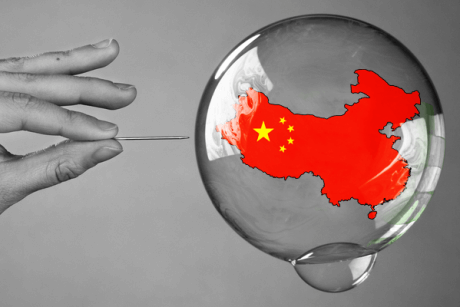
china economy

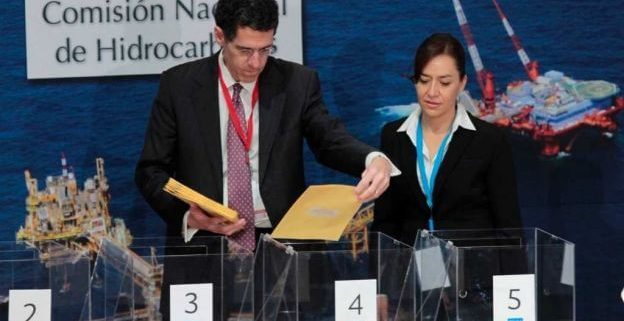
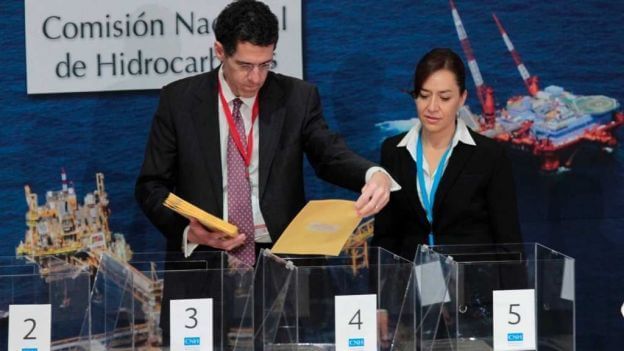
México coloca tres de cinco áreas en 2ª fase de Ronda Uno

Los bloques número tres y cinco se declaran desiertos por la Comisión Nacional de Hidrocarburos; los resultados están en línea con la previsión del órgano regulador.


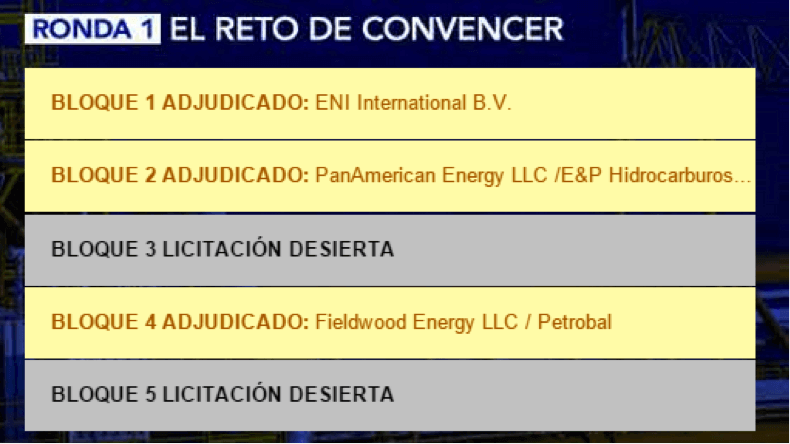
México colocó tres de las cinco áreas contractuales ofrecidas en la segunda fase de la Ronda uno energética en línea con la previsión del comisionado presidente de la Comisión Nacional de Hidrocarburos (CNH), Juan Carlos Zepeda Molina.

La empresa italiana ENI International B.V. ganó el área contractual número uno, que comprende los campos Amoca-Miztón-Tecoalli, con un área de 68 kilómetros cuadrados.

ENI presentó una propuesta de participación del Estado en la utilidad operativa de 83.75%, y un incremento en el programa mínimo de trabajo de 33%. El Gobierno pedía valores de 34.8% y 0%, respectivamente, para este bloque.

Pan American Energy LLC, en consorcio con E&P Hidrocarburos y Servicios ganó el área contractual número dos, que incluye el campo Hokchi de 42 kilómetros cuadrados.

El grupo ofreció un valor mínimo de la participación del Estado en la utilidad operativa de 70%, respecto al 35.9% que solicitaba el Gobierno, y propuso un incremento en el programa mínimo de trabajo de 100%. El Gobierno pedía 0%.

El tercer bloque o área contractual, que incluye el campo Xulum de 58.8 kilómetros cuadrados, se declaró desierto luego que ninguno de los participantes presentara una propuesta económica. El Gobierno pedía un valor mínimo de la participación del Estado en la utilidad operativa de 30.2% y 0% en el incremento en el programa mínimo de trabajo.

El área contractual número tres, integrado por los campos Ichalkil-Pokoch con una superficie de 58 kilómetros, fue ganado por el consorcio formado entre Fieldwood Energy LLC y Petrobal S.A.P.I de C.V.

El consorcio ofreció un valor mínimo de la participación del Estado en la utilidad operativa de 74%, respecto al 30.2% que pedía el Gobierno. El grupo ofreció un incremento mínimo en el programa mínimo de trabajo de 0%, en línea con lo solicitado por el Gobierno.

El área contractual número cinco, integrado por las áreas Misón-Nak con una superficie de 55 kilómetros cuadrados, fue declarado desierto luego de que no recibiera ofertas económicas de los participantes.

El Gobierno pedía un valor mínimo de la participación del Estado en la utilidad operativa de 35.2%, y un incremento mínimo en el programa mínimo de trabajo de 0%.

Sólo nueve de los 14 participantes precalificados se registraron este miércoles para participar en esta segunda fase.

Este día se ofrecieron cinco bloques de extracción de petróleo en aguas someras, los cuales están ubicados frente a las costas de Tabasco y Campeche en el Golfo de México.

A continuación la lista de los participantes que se registraron:

  1. DEA Deutsche Erdoel AG
  2. Statoil E&P México, S.A. de C.V.
  3. Pan American Energy LLC, en consorcio con E&P Hidrocarburos y Servicios, S.A de C.V.
  4. ENI International B.V.
  5. Petronas Carigali International E&P B.V, en consorcio con Galp Energia E&P B.V.
  6. Fieldwood Energy LLC, en consorcio con Petrobal S.A.P.I de C.V.
  7. Talos Energy LLC, en consorcio con Sierra Oil & Gas, S. de R.L. de C.V, Carso Oil & Gas, S.A. de C.V., y Carso Energy, S.A. de C.V.
  8. Lukoil Overseas Netherlands B.V.
  9. CNOOC International Limited.

Copyright: CNN Expansión

Resultados-rONDA-1

Mexico’s Round One, phase two ends

Several international companies bid for in Mexico’s Round One, phase two today (30 September), with three successful bids in the shallow water areas of the Southeast basin, offshore Mexico.


Although similar to Round One phase one, the Mexico’s National Hydrocarbons Commission (CNH) had different expectation for phase, as it came with lower risks. Phase two was much more successful than phase one, with three winning bids, and two blocks that received no bids.The big winners were Eni, and the consortia of Pan American Energy with E&P Hidrocarburos y Servicios, and Fieldwood Energy with Petrobral.

The shallow water areas up for bids include:

  • Block 1: Winning bid is Italy’s Eni International iwth 83% profit share to the state, and a 33% increase in investment. Lukoil came in second. Block 1 located in the Southeast basin. It is 67sq km and includes the three fields: Amoca, Mizton and Tecoalli. The fields contain 2P reserves of 107 MMbbl of light oil, and 69 Bcf of natural gas at 33m water depth.
  • Block 2: The winning bid goes to the consortia Pan American Energy with E&P Hidrocarburos y Servicios with 70% profit share, and 100% increase in investment. The consortia Fieldwood and Petrobal came in second.Block 2 is located in the Southeast basin. It is 40sq km and contains the Hokchi field, with 2P reserves of 61MMbbl of light oil, and 29 Bcf of natural gas at 28m water depth.
  • Block 3: No bids were received. The area has been declared as void.
    Block 3 is located in the Southeast basin. It is 59sq km and contains the Xulum field with 2P reserves of 17 MMbbl of light oil, and 2 Bcf of natural gas, at 102 m water depth.
  • Block 4: The winning bid goes to Fieldwood Energy with Petrobral with 74% profit share 0% increase in investment. No other companies bid for Block 4.Block 4 is in the Southeast basin. It is 58sq km and is comprised of two fields:  Ichalkil and Pokoch, with 2P reserves of 68 MMbbl of light oil, and 92 Bcf of natural gas, in 45m water depth.
  • Block 5: No bids were received for Block 5 in Mexico’s Round One, phase two. The area has been declared void.Block 5 is in the Southeast basin. It is 55sq km and is comprised of two fields: Mision and Nak, with 2P reserves of 44 MMbbl of light oil, and 103 Bcf of natural gas, in 32m water depth.

Companies that competed for the shallow water areas include: Italian giant Eni, Norway’s Statoil E&P Mexico, Russia’s Lukoil Overseas Netherlands, China National Offshore Oil Corp., DEA Deutsch e Erodeal AG.

Consortia include Pan American Energy (PAE) with E&P Hidrocarburos y Servicios; and Petronas Carigali International E&P with Galp Energia E&P; Talos Energy with Sierra Oil & Gas, and Carso Energy; and Fieldwood Energy with Petorbal.

Earlier this month, Mexico’s Secretaría de Hacienda y Crédito Público (SHCP) released the minimum fiscal terms that must be met by companies in order to win development rights in the second phase of Round One.

Mexico’s highly anticipated, but highly disappointing Round One (phase one) was held on 15 July, and only awarded two areas in its historic offering of the country’s upstream opportunities to international co
mpanies for the first time in decades.

The consortia of Sierra Oil Gas, Talos Energy, and Premier Oil, was awarded Area 2 and Area 7, in the 14 shallow water areas off the coast of Mexican cities Veracruz and Tabasco, respectively.

Round Three’s public tender process is expected to be 15 December. Round Four will include areas in the deepwater Gulf of Mexico, with heavy crude areas, and Round Five will consist of nonconventional areas, which are still being analyzed due to current low oil prices.

Copyright: OE Digital

RONDA1-LICITACION-2-CNH


La CNH palomea a 7 socios de Pemex

Se pidió que Ayatsil, Tekel y Utsil, en la Sonda de Campeche, sean agrupados en un solo contrato.

Ya suman siete asignaciones con el aval técnico de la Comisión Nacional de Hidrocarburos (CNH) para que Petróleos Mexicanos las migre a contratos de exploración y extracción con empresas privadas.

En la 13 sesión ordinaria de 2015 de su órgano de gobierno, la CNH dio a la Secretaría de Energía su opinión favorable respecto a la solicitud de la empresa productiva del Estado para asociarse en la explotación de campos.

En esta ocasión se pide que los yacimientos Ayatsil, Tekel y Utsil, en la Sonda de Campeche, sean agrupados, al igual que el campo Cárdenas-Mora e individualmente van los de Ogarrio, Samaria y Rodador, en Tabasco por lo que son cinco contratos.

Con esas evaluaciones de la CNH se tiene una proyección de una producción en promedio para los próximos cinco años de 212 mil 500 barriles de petróleo crudo equivalente diarios.

Para Ayatsil, Tekel y Utsil se estima una producción de 150 mil barriles diarios;; Samaria, 40 mil;; Ogarrio, 10 mil;; Cárdenas-Mora, 8 mil, y Rodador, 4 mil 500 barriles diarios.

Se indicó que las alianzas de Pemex con inversionistas privados van a permitir optimizar las operaciones en los campos y maximizar el valor de los hidrocarburos para el país.

El lunes pasado también dio el visto bueno para los campos Ek-Balam, en Campeche, y Sinán-Bolontikú, en Tabasco, por lo que son siete contratos en total. Todos los yacimientos mencionados le fueron asignados en la Ronda Cero.

La CNH, en todos esos campos consideró viable el apoyo de empresas privadas, ya que Pemex por si solo no los puede desarrollar con eficiencia, ya que en muchos hace falta infraestructura;; además, en las estrategias presentadas por la petrolera supone una producción más acelerada.

En la agrupación Ayatsil-Tekel-Utsil (aceites extrapesados), las asociaciones que pueda lograr Pemex son de importancia, toda vez que se perfilan como un reto tecnológico, al ser yacimientos marinos fracturados, en los que México no tiene experiencia y donde hasta el momento solo se tiene un campo productor en Ayatsil.

El secretario de Energía indicó que el próximo mes ya se lanzarán las primeras bases de licitación de estos farm-outs de Pemex.

Copyright: Milenio

SOCIOS PEMEX

Pemex buscará socios en el 25% de los recursos de Ronda Cero

En el marco del Foro México Upstream, Sergio Guaso, Subdirector de Planeación Estratégica de Pemex dijo que la empresa buscará asociarse para la explotación del 25% de los recursos que le fueron asignados en la ronda cero, lo que equivale a 8,000 millones de barriles de reservas 3P y 8 billones de barriles de petróleo de recursos prospectivos.

Ayer el Jefe de la Unidad de Políticas de Exploración y Extracción de Hidrocarburos de la Secretaria de Energía, Guillermo García Alcocer, se espera que en la próximas semanas Petróleos Mexicanos (Pemex) sume más campos de los que le fueron otorgados en la ronda cero.

En el corto plazo la empresa buscara socios financieros, al mediano y largo plazo buscará socios operativos con esquemas de farmouts. Guaso, calcula que esto llevará por lo menos cinco años.

Los proyectos en los que Pemex buscara socios tienen que ser económicamente relevantes y que no se cuente con los recursos para su desarrollo.

Copyright: Oil & Gas Magazine

Tercera-Licitación-Ronda-1

15 mexicanas van por tercera licitación de Ronda Uno

De acuerdo con información de la Comisión Nacional de Hidrocarburos (CNH), la tercera licitación de la ronda uno es la que más participación de empresas mexicanas tendría.

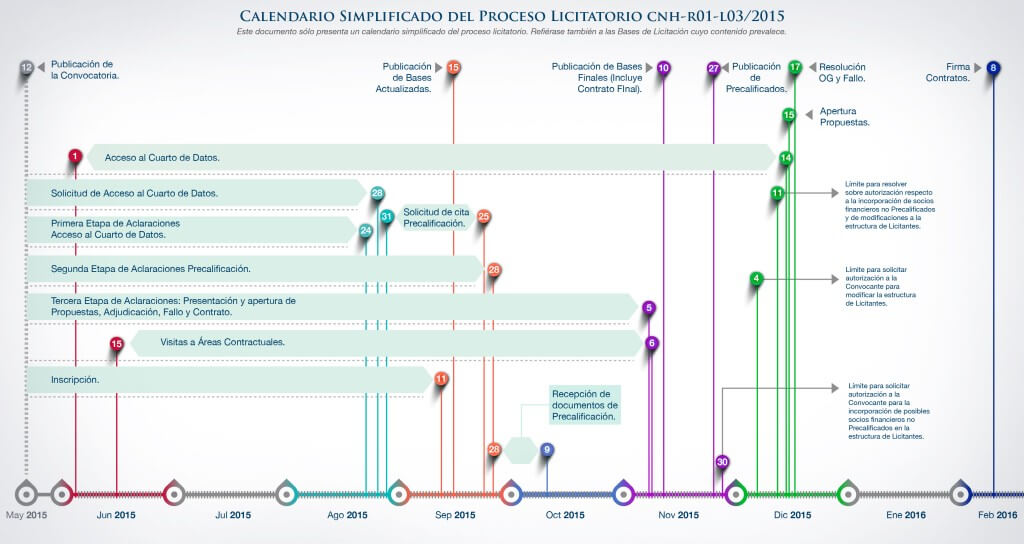
Hasta el momento son 82 empresas las que han mostrado interés para la licitación de 25 contratos de explotación de campos terrestres maduros en los estados de Nuevo León, Tamaulipas y Veracruz.

Hasta el 21 de agosto, 18 empresas han iniciado el proceso de precalificación, de las cuales 15 son mexicanas, una española, una canadiense y una norteamericana. Entre las empresas mexicana destacan Carso Oil & Gas, Petrobal, Grupo R y Diavaz.

La lista de empresas que han iniciado la precalificación son:

  • Diavaz Offshore
  • Carso Oil & Gas
  • Cital Energy Onshore
  • GEO estratos
  • Grupo R
  • Jaguar Exploración y Producción
  • Nuvoil
  • Perfolat de México
  • Petrobal
  • Quimica Apollo
  • Stell Serv
  • Strata Campos Maduros
  • Sun God Energia de México
  • Tubular Technology
  • Sanchez Olium
  • Tecpetrol Internacional
  • Torenco Energy

Copyright: Oil & Gas Magazine

Calendario-Ronda-1-L3

Nueva normatividad de seguros para las petroleras

Operar de forma segura es un costo que asumirán las empresas petroleras que realicen actividades en México.

Los contratos petroleros que se firmarán para la segunda y tercera convocatorias obligan a la adquisición de pólizas para asegurar la cobertura de las actividades petroleras.

En el primer concurso de la Ronda Uno petrolera, las empresas acordaron que los seguros contratados deberán incluir la responsabilidad civil por daños a terceros en sus bienes o personas, incluyendo responsabilidad ambiental.

También, el control de pozos, daños a los materiales generados y al personal.

En la segunda convocatoria, donde se concursan aún 5 contratos petroleros en aguas someras del Golfo de México, se aplicaron los mismos criterios, pero se incluyeron limitantes en los montos.

«Previo al inicio de las actividades de perforación de pozos, el Contratista deberá demostrar que las coberturas adquiridas para los conceptos (de responsabilidad civil y de control de pozos) suman al menos mil millones de dólares de suma asegurada por evento o ocurrencia.

«Los montos mínimos requeridos para los conceptos descritos serán de 700 y 300 millones de dólares respectivamente», señala el modelo de contrato.»

Además, las compañías deberán contar con un contrato para atender posibles fugas de hidrocarburos con sistemas de contención y control de pozos.

En contraste, la tercera convocatoria, que considera 25 contratos para trabajos en tierra, no incluye estos detalles.

Fuente: Reforma

Insurence

New Insurance Regulations for Oil Companies

The cost of operating safely will be assumed by the oil companies working in Mexico.

Contracts that are signed for the second and third calls, require the acquisition of policies to ensure that activities in the petroleum industry are covered.

In the first contest of Petrolium Round One, the companies agreed that the insurance contracts shall include liability for damages to third parties in their property and persons, including environmental responsibility.

Also, in well control, damage to generated materials and staff.

In the second round, where you compete for five oil contracts in the shallow waters of the Gulf of Mexico, the same criteria was applied, but they included limitations on the amounts.

Before starting to drill wells, the contractor shall demonstrate that the coverages acquired for the concepts (liabilities and well control) add up to at least one billion dollars in insured amount per event or occurrence.

The minimum amounts required for the concepts described will be 700 and 300 million dollars respectively”, as designated in the contract model.

«In addition, the company’s contract must include coverages with possible hydrocarbon leaks with containment and well control systems.»

In contrast, the third call, considers 25 contracts for jobs on land and does not include these details.

Copyright : Reforma


Insurence

Mexico to postpone deep water auction, adjust next oil tender terms

Mexico, which has started to open its nationalized oil industry to additional private investment, will postpone auctions for deep-water oil exploration and production contracts and adjust the terms of upcoming tenders after an inaugural oil auction failed to meet the government’s modest expectations.

shutterstock_173495Energy Minister Pedro Joaquin Coldwell told local television the government will change rules that scared off potential bidders earlier this month, when it was able to auction only two of 14 blocks in a pivotal oil and gas tender.

He signaled that the government will relax its requirement that consortia bidding on oil parcels must have one member act as a guarantor and hold shareholder equity of at least $6 billion to protect the state’s interest in the event of a major accident.

«We are revising the issue of the guarantees,» said Joaquin Coldwell in a Tuesday night interview with top Mexican broadcaster Televisa’s cable news channel Foro TV.

He also said the government would tweak rules prohibiting a consortium from selecting a new company to replace a pre-selected operator that pulls out. He said that rule thwarted bids in this month’s auction.

He said the government will also allow companies to make a second bid in auctions if an initial bid fails to meet a government set minimum.

This month’s disappointing auction was the first of a scheduled five-phase auction that will extend into next year for oil regulator CNH.

Joaquin Coldwell, also chairman of the board of state-owned oil company Pemex, said the critical fourth phase covering lucrative deep water acreage in the Gulf of Mexico would be postponed to allow the government and companies more time to pore over details.

«We are conducting a full evaluation in order to launch the deep water call for bids by the end of September and give us more time to perfect the criteria because we shouldn’t have any margin for error on that,» he said.

The oil regulator had previously said the call for bids, followed by the opening of the corresponding data rooms, would be made by the end of this month.

Joaquin Coldwell said the fifth phase, which was to focus on higher-cost shale and other so-called non-conventional oil and gas fields, has been frozen.

«Right now we have suspended it pending a future evaluation,» he said.

The government had previously said that the fifth phase would be trimmed but would still go forward.


Con información de REUTERS