ENI firma primer contrato petrolero en México

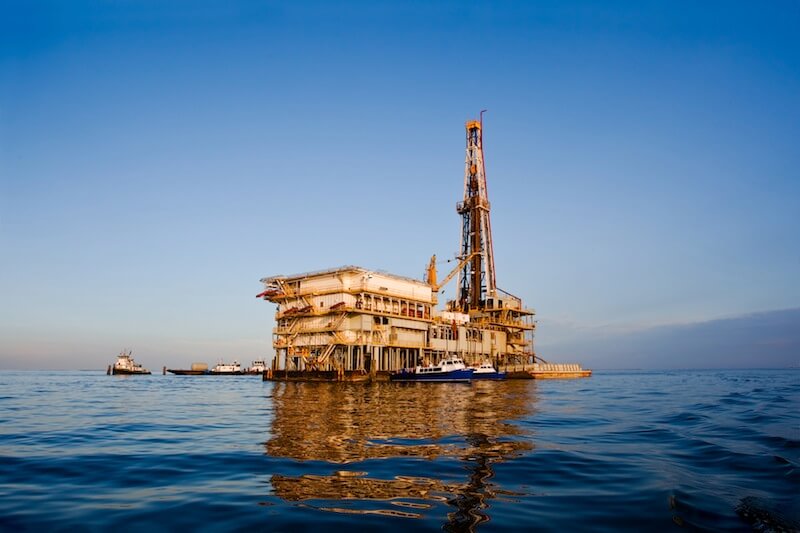
ENI firmó el primer contrato petrolero en México luego de que le fue adjudicado el 30 de septiembre el área contractual con los campos de aguas someras Amoca, Tecoalli y Miztón para la extracción de hidrocarburos.

La empresa italiana ENI firmó el primercontrato petrolero en México luego de que le fue adjudicado el 30 de septiembre el área contractual con los campos de aguas someras Amoca, Tecoalli y Miztón para la extracción de hidrocarburos.

La petrolera que es una de las llamadas “majors” por tener desde exploración hasta venta de derivados petroleros y una producción de 1.6 millones de barriles diarios entregó como respaldo un crédito por 110 millones 483 mil 100 dólares, así como una garantía corporativa de 2 mil 990 millones 520 mil dólares que es el capital contable.

El licitante ganador fue ENI México S. de R.L, mientras que el obligado solidario es Eni International, precisó Martín Álvarez Magaña, director general de licitaciones durante el acto de la firma que suscribieron el representante legal de la italiana, Federico Alizi Rota por parte de la empresa constituida en México, y Massimo Melandri por parte del corporativo.

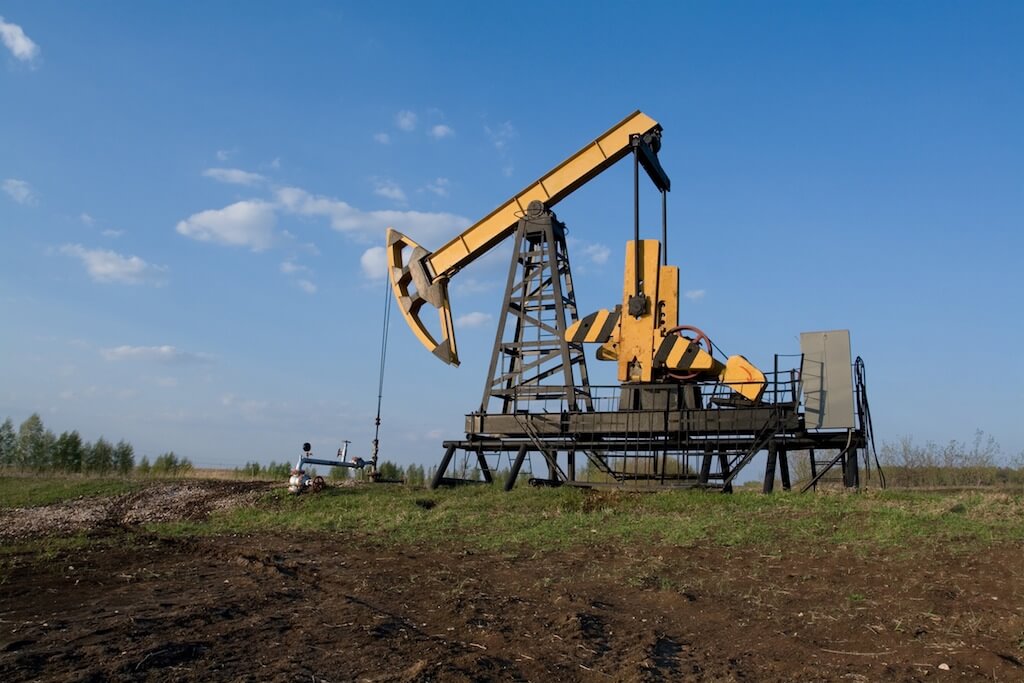
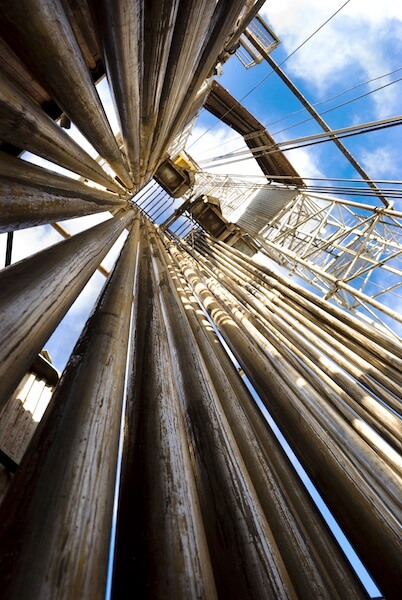
Oilwell on the landscape. Industrial background

ENI firma primer contrato petrolero en México


Copyright: El Financiero

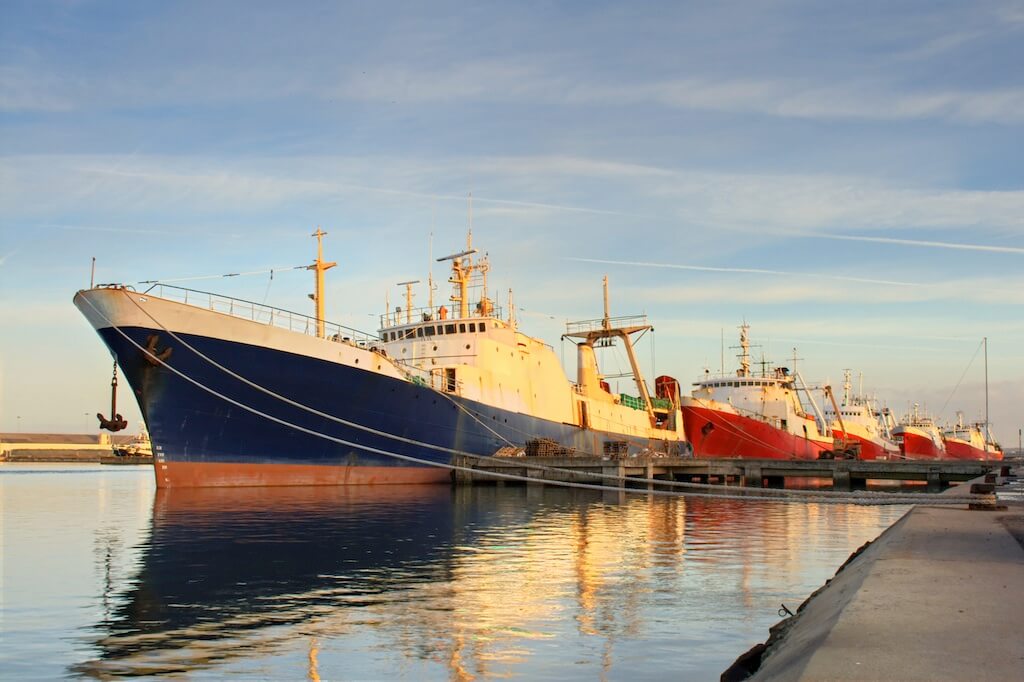
Transporte marítimo se prepara para impuesto por polución tras negociaciones ambientales en París

La industria del transporte marítimo espera ser objeto de un impuesto por carbono, ya que la creciente expectativa por las negociaciones climáticas que comienzan este mes en París haría posible un recorte a sus emisiones de gases de efecto invernadero.

Cualquier tipo de impuesto, ya sea uno basado en el uso de combustible de barcos a diésel o un mecanismo basado en el mercado, se agregará a los crecientes costos de la industria, que transporta un 90 por ciento del comercio mundial.

Un borrador de un texto para París hace escasa mención a la reducción de dióxido de carbono en el combustible de los cargueros. Sin embargo, fuentes de la industria dicen que se espera una forma de gravamen tras la cumbre que se llevará a cabo en la capital francesa del 30 de noviembre al 11 de diciembre.

«Esperamos que tarde o temprano el transporte marítimo tenga una regulación sobre el CO2», dijo John Kornerup Bang, principal asesor sobre cambio climático en el Grupo Maersk, dueño de la mayor compañía de contenedores del mundo.

El estudio más reciente de la Organización Marítima Internacional (OMI) mostró que el transporte marítimo redujo las emisiones de gas invernadero (CO2) a un 2,2 por ciento del total mundial, desde un 2,8 por ciento en los cinco años al 2012.

Según el reporte, las emisiones de CO2 del transporte marítimo crecerán y podrían aumentar en un 50 por ciento para el 2050, dependiendo del ritmo del comercio mundial y qué acciones se tomen.

El mes pasado, la Comisión Europea estableció un plazo de finales del 2016 para que la OMI presente medidas para recortar las emisiones de carbono, que la industria dijo era «poco realista». Algunos dicen que si se implementa un impuesto, las compañías pasarán el costo a sus clientes.

Activistas medioambientales han pedido que se incluyan en el texto del acuerdo de París metas más duras tanto para el transporte marítimo como para la aviación, además de algún tipo de impuesto.

El asesor de Maersk dijo que la industria naviera tuvo que implementar su parte en la reducción de emisiones de carbono pese a condiciones del mercado más complejas.

«Preferimos un impuesto, eso es fácil de administrar. Pero queremos enfatizar en que tiene que ser global, neutral y recompensar a quienes lo hicieron inicialmente», dijo.

Impuesto por polucion transporte maritimo

Copyright: Reuters

OECD Trims Global Growth Forecast on Emerging-Market Slowdown

The OECD trimmed its global economic forecasts for the second time in three months as slower growth in emerging markets spilled over into countries such as Germany and Japan.

World output will expand 2.9 percent in 2015 and 3.3 percent in 2016, down from the 3 percent and 3.6 percent predicted in September, the Organization for Economic Cooperation and Development said in a semi-annual report published Monday.

“Global growth prospects have clouded this year,” the Paris-based organization said. “The outlook for emerging-market economies is a key source of global uncertainty at present.”

With Russia and Brazil in recession and China poised to deliver its weakest expansion in more than two decades, the economies that powered world growth in recent years are now slowing it down. Developed economies are feeling the brunt in the form of reduced demand for both commodities and manufactured goods.

China, Russia

The OECD barely changed its forecasts for Chinese output, pegging growth at 6.8 percent this year and 6.5 percent in 2016. Yet Brazil’s economy is now seen shrinking 3.1 percent this year and 1.2 percent next, compared with contractions of 2.8 percent and 0.7 percent predicted in September.

Russian gross domestic product is on track to drop 4 percent in 2015 and 0.4 percent next year, according to the report. Since the OECD didn’t give an estimate for Russia in September, that compares with a June prediction for a contraction of 3.1 percent in 2015 and expansion of 0.8 percent in 2016.

For emerging markets, “challenges have increased,” the OECD said. Should their situation deteriorate, “growth would also be hit in the euro area, as well as Japan.”

Japanese GDP will grow 0.6 percent this year and 1 percent next, according to the report. While the 2015 forecast is unchanged, the 2016 one has been cut from 1.2 percent.

“The outlook for Japan remains softer than in other advanced economies, despite an anticipated upturn in real wage growth,” the OECD said. “This reflects a larger drag exerted by weak external demand, especially in Asia, and strong fiscal headwinds.”

Refugee Crisis

The euro area’s expansion is now seen at 1.5 percent in 2015 and 1.8 percent in 2016, a reduction by 0.1 percentage point for each year.

In terms of the economy, Europe’s immigration crisis represents a much needed potential boost, the OECD said. It estimates that the influx of refugees may add between 0.1 and 0.2 points to growth in 2016 and 2017 thanks to extra government spending.

“Asylum seekers need not impose an unmanageable economic burden,” the OECD said. “If the refugees who stay are rapidly integrated into European society, they are likely to benefit the host countries.”

The U.S. expansion remains on track, with the OECD predicting growth of 2.4 percent this year and 2.5 percent in 2016. U.K. GDP is seen rising 2.4 percent in both years, little changed from September.

In the U.S., “output remains on a solid growth trajectory, propelled by household demand,” the OECD said. “Monetary policy remains very accommodative, which is consistent with stubbornly below-target inflation, subdued wage pressures and hints of downward pressure on inflation expectations.”

The OECD also offered its first glimpse of 2017, predicting a global expansion of 3.6 percent. It sees growth of 2.4 percent in the U.S., 1.9 percent in the euro area and 6.2 percent in China.


Global Growth

Copyright: Bloomberg

Oil price faces fresh downturn as Russia, Saudi tussle in Europe

A sales push by Saudi Arabia into north Europe’s refineries, a step into rival Russia’s backyard, piles fresh pressure on oil prices already struggling against oversupply.

Stung by Russia’s success in supplanting it in the giant Chinese market, Riyadh has embarked on a charm offensive in Europe, cutting its prices for December by more than it has in any other region to their lowest since 2009 during the financial crisis.

Saudi Arabian barrels rarely venture north of the Mediterranean, into the home turf for Russian, African and North Sea crudes. As a result, the kingdom’s success in luring away buyers of rival Russian Urals crude in Poland and Sweden is having an outsized knock-on impact on the market for a wide range of other crudes in the region.

Refiners averted a price drop from a similar build up of surplus oil in spring, snapping up cheaper crude to feed a surge in gasoline demand.

But this time there is a glut of refined fuel too. The crude

surplus is matched by an overhang in oil products which means refineries will not be able to come to the rescue by absorbing the extra.

«The first half of next year looks like a distinctly dangerous period for oil bulls,» brokers PVM Chief Executive David Hufton said in a note.

«It could be the period when tank tops are reached, leading to a price meltdown.»

Homeless barrels are again collecting in the Atlantic market, this time dragging crudes of all kind into a price war that is making $50 a barrel an increasingly impenetrable barrier for benchmark Brent futures.

«There isn’t any denying that the fundamentals are pretty bearish,» said Citi analyst Chris Main. «You’ve got an overhang of cargoes, and it will weigh on the benchmark.»

Saudi Arabia’s fresh European sales have displaced only a small amount of Urals, a heavy grade that has not faced much threat from the year’s excess that has centred on lighter U.S. shale oil. But they suggest a new front in the battle for market share between the two giant producers.

Saudi oil minister Ali al-Naimi on Sunday said demand for oil worldwide would soon reflect the attractiveness of current prices, noting Asia as key to the growth.

URALS HEADS EAST

Russia’s post-Soviet high of 10.78 million barrels per day (bpd) of oil production helped triple the discount of Urals versus dated Brent in just three months to reach 17-month lows.

And as Iran prepares to ramp up sales when and if Western sanctions are lifted next year, the overhang is only likely to aggravate further. BFO-URL-NWE

Discounted Urals cargoes are now muscling out British Forties crude, the largest of the four North Sea streams that make up the dated Brent benchmark.

At least three of the seven supertanker (VLCC) fixtures booked from the North Sea to Asia in November are loading Russian, rather than the North Sea crudes that typically sail.

«What is amazing is to see Forties is still pretty weak despite all the barrels that are going to the Far East,» Petromatrix analyst Olivier Jakob said. «If we did not have those VLCCs going to Asia, it would be a bloodbath.»

Forties price differentials are close to their lowest in five months, having traded at a discount to the dated Brent benchmark more often in 2015 than at any time in the last 20 years, and differentials for a string of crude oil grades now stand at multi-month lows.

Azeri crude price differentials have also more than halved over the past month to an annual low, while premiums for Nigeria’s Qua Iboe have also lost half their value.

A physical excess of more than 60 million barrels of Nigerian oil, and North Sea output at two-year highs, along with nearly full diesel, gasoil and jet fuel tanks in Europe that have already pushed cargoes into floating storage, will only add to the pressure.

Oil Price

Copyright: Reuters

Futuros del petróleo frenan caída de tres días; WTI ronda los 45 dólares nuevamente

Los contratos del petróleo lograban revertir las pérdidas de la semana anterior cuando cayeron hasta un 4% en medio de las preocupaciones sobre el aumento de las existencias. El crudo Brent de Londres subía 1.2% tras cerrar el viernes en baja de 2%, mientras que el WTI gana 0.63%

Los precios del petróleo subían después de tres días de pérdidas, respaldados por la debilidad del dólar y por Arabia Saudita que pronosticó que los precios bajos estimularán el crecimiento de la demanda de combustible, aunque pesaban los datos débiles de comercio chino.

El contrato del crudo Brent para diciembre en Londres subía 1.03 por ciento a 47.91 dólares, luego de retroceder 1.2 por ciento el viernes.

En tanto, el contrato del crudo WTI para el mismo mes, se recuperaba un 0.63 por ciento, hasta cotizarse en los 44.55 dólares por barril en la Bolsa Mercantil de Nueva York. En la sesión previa, el contrato cayó 2.1 por ciento.

Ambos contratos cerraron la semana previa con una caída del 4.3 por ciento.

El secretario general de la Organización de Países Exportadores de Petróleo (OPEP), Abdullah al-Badri, dijo que espera que el mercado petrolero se vuelva más equilibrado en 2016 en la medida en que la demanda sigue creciendo.

Por su parte, la Agencia Internacional de Energía (AIE) precisó el mes pasado que la demanda global de crudo alcanzará este año un máximo en cinco años de 1,8 millones de barriles por día, pero se prevé que se desacelere en 2016.

La OPEP se reunirá el 4 de diciembre para discutir la estrategia del cartel después de que el año pasado optó por mantener estable su producción frente a precios más bajos y un aumento de la producción de esquisto en Estados Unidos.

Caida Petróleo

Copyright: El Financiero

The largest container lines are bulking up to try to withstand a fresh downturn

Since the financial crisis, the tide of recovery has not lifted all boats equally. But in few industries is that more true than in shipping. Demand for oil tankers has boomed: a combination of weak spot prices and higher futures prices, driven by the assumption that supply and demand for crude will eventually rebalance, has encouraged traders to hire tankers to store oil at sea and cash in on the price gap. Meanwhile, bulk carriers, which carry such things as iron ore and coal, have been hit by massive overcapacity, as Chinese demand for such commodities has collapsed.

Until the start of this year, the container-shipping business—which carries around 60% by value of all seaborne trade in goods—looked more like that for oil tankers. Rising global trade volumes, and firm steel prices that made it worthwhile for owners to scrap old ships, had kept capacity in check, and container-freight rates seemed to be steadying. As recently as August last year, demand for container shipping was so high that BIMCO, an industry association, was warning of a capacity shortage. And at the start of this year Drewry, a shipping consultant, forecast a bumper year: owners of boxships would rake in profits of up to $8 billion in 2015, they thought, helped by low fuel costs.

But since then the industry has been rattled by renewed weakness in freight rates, prompted by a fall in the volume of seaborne trade. The cost of sending a container from Shanghai to Europe, for instance, has almost halved since March, according to the Chinese city’s shipping exchange (see chart). And the absence of the usual pre-Christmas pick-up is worrying both analysts and investors, according to Rahul Kapoor of Drewry. On October 23rd Maersk, the world’s largest container line, told investors to brace themselves for a fall in profits when it announces its third-quarter figures on November 6th.

Some of the shipping lines’ problems are due to factors beyond their control. At a time when weak trade volumes should be prompting them to scrap more old vessels, the steel price has slumped. So, 60% fewer boxships have been scrapped so far this year compared with the same period last year. However, some shipping groups have made a rod for their backs by taking on too much debt. This also makes it hard for them to scrap unprofitable vessels, since their balance-sheets would struggle to cope with the resulting writedowns.

Worse still, critics say, is that shipowners have embarked upon a building boom. Orders for new container ships were 60% higher in the first five months of this year, than in the same period in 2014, according to Alphaliner, a data provider. In June Maersk ordered 11 ships that can each carry up to 20,000 standard-sized containers, in a deal worth $1.8 billion. Next week Hapag-Lloyd, another operator, plans to raise $300m by floating on Frankfurt’s stock exchange, to help pay for six giant new ships, ensuring that it stays in the game.

Hapag-Lloyd has had to delay its IPO a week because demand for the shares has been so weak. And investors have good reasons to be hesitant. All the extra capacity should depress rates further, adding to the industry’s problems. But for those lines that can afford it, ordering big, new ships may be a sensible reaction to falling freight rates. There are still sizeable economies to be gained from increasing the size of vessels. As Hapag-Lloyd’s boss, Rolf Habben-Jansen, recently pointed out, a ship capable of carrying 19,200 containers needs half as much fuel to shift each box by one mile as a vessel with a capacity of 4,900.

As a result, the capacity of the largest container ships afloat has risen from around 14,000 before the financial crisis to just under 20,000 today—and boxships are taking the place of oil supertankers as the giants of the seas (see diagram).

Among the winners from this flight to scale will be the world’s largest three lines—Maersk, Mediterranean Shipping Company (MSC) and CMA CGM. They have the industry’s lowest costs, because they have the biggest ships and the cheapest finance costs. They also have the advantage of being based in Europe: demand to transport goods across the Atlantic has remained strong. Analysts expect the big three to stay profitable over the next few tough quarters, even as their revenues fall.

Maersk and MSC have also formed an alliance, 2M, to save more money by sharing space on their ships on transatlantic and transpacific routes. As the strongest lines get stronger, through fleet renewal and alliance-building, smaller lines that cannot cut their costs quickly enough or obtain cheaper finance to build bigger ships will suffer. China’s two biggest lines, China Shipping Group and Cosco, were losing money before the current downturn started. They have recently swung back into profit, but only thanks to generous state aid to help them scrap old vessels. The government regards it as vital to have a national merchant fleet, so it will not let the two go to the wall. But it plans to merge them to save money, and to stamp out corruption at Cosco which, according to internal documents leaked this week, is another reason for its poor performance.

The hardest hit, however, will be the smallest container lines that do not enjoy state backing. Several smaller Japanese and South Korean operators, in particular, are sailing close to bankruptcy, analysts say. The pressure to cut costs is also hitting container lines’ suppliers; several shipping-services firms in Denmark and container-logistics firms in Britain have gone bust in the past year.

The move towards ever bigger vessels poses a risk to ports which lack the capacity to handle them. International trade is shifting towards big, centralised hubs. And smaller ports, somewhat like smaller airports when the hub-and-spoke model for long-haul flights became dominant, are losing many of their direct connections. This has already happened at Portland on America’s west coast, which is no longer served by any regular container routes.

To avoid this fate, port authorities in some countries are now investing heavily in upgrading their infrastructure, to handle larger vessels. Recent development projects in Liverpool and London have already brought traffic back to those British ports. In a similar vein, Indonesia announced details of a $3.6 billion project to upgrade its container ports earlier this month, to ensure it does not lose routes to Singapore, the nearest big hub.

As falling volumes and weak shipping rates force the industry to consolidate, with fewer, bigger lines sailing ever-larger ships to fewer, bigger ports, the resulting gains in efficiency should mean cheaper transport costs, bringing benefits for consumers in many places. That is, unless the consolidation goes too far, and the surviving lines are able to jack up their rates. The 2M alliance now controls more than 28% of global container-shipping capacity, and almost a third on the Europe-to-Asia route.

Regulators are already worried about the impact on competition: in June last year, the Chinese authorities vetoed plans for a larger alliance, called P3, that would have involved all three of the world’s biggest lines. Cheaper container rates are a boon for firms engaged in international trade, and their customers. But there is a risk that the benefits will not last.
The largest containerCopyright: The Economist

Pemex poised to import first test cargo of WTI in swap with U.S.

Mexican national oil company Pemex is focused on importing U.S. West Texas Intermediate (WTI) crude as part of a historic oil swap with the United States, a top company executive said on Friday.

Pemex said earlier this week it had received a year-long license from the United States to import U.S. light crude in exchange for exports of Mexico’s heavier crude oil.

The swap will mark the first time in decades that Mexico’s aging refineries, designed decades ago to run lighter crudes, will process foreign oil.

It also marks a milestone in loosening a contentious U.S. ban on exporting domestic oil dating back to the 1970s Arab oil embargo.

The license allows Pemex’s commercial arm, P.M.I. Comercio Internacional, to import U.S. light crude to process in its refineries from October, capped at 75,000 barrels per day (bpd).

Jose Manuel Carrera, Pemex’s director of corporate partnerships and new business, said in an interview that he expects the first shipment to arrive before the end of the year and at a volume of between 200,000 and 300,000 barrels.

“The crude we like best, that we’re most enthusiastic about, is WTI,” Carrera said.

The first shipment will be used to test compatibility with Pemex’s domestic refining system, he said, and the tests should conclude by the first quarter of next year but could happen sooner.

“What we’ve already evaluated is that running WTI gives Pemex a major advantage to improve the performance of our refineries,” he said.

Running a lighter crude mix should allow Pemex to produce more higher-value fuels like gasoline and diesel, and less fuel oil, which Mexico no longer uses as the main input to generate electricity.

West Texas Intermediate is a light, sweet blend of crude and the main benchmark for U.S. crude oil prices.

Carrera, who formerly led Pemex’s commercial arm, said he does not anticipate any significant additional investment needed to modify distillation towers in preparation for the lighter crude mix.

Carrera said Pemex has analyzed other crude grades, but declined to name them.

“We’ve evaluated others but our favorite right now is West Texas Intermediate because it has chemical properties that we really like,” he said.

Pemex has previously said that the first refineries to receive the shipments of light U.S. crude will be its Tula and Salamanca plants.

Carrera declined to name any U.S. companies involved in the swap.

Copyright: Premian Shale

Oil at $50 Is ‘Gift to World’ as Abu Dhabi Sees Higher Prices

Oil at $50 a barrel is a “gift to the world” as prices should be low enough to spur economic growth, according to the head of Abu Dhabi’s Department of Economic Development.

Prices will probably be at $60 next year, after hitting bottom at $45, Ali Al Mansoori, the department’s chairman, said in an interview Sunday in the capital of the United Arab Emirates, the fourth-largest oil producer in the Organization of Petroleum Exporting Countries. Benchmark Brent crude has dropped 16 percent this year amid a global oversupply and was trading Monday at $47.98 a barrel at 11:55 a.m. London time.

“It is a gift to the world that oil has dropped to $50,” Al Mansoori said. “Would we like for oil to stay at $50? Absolutely not. We would like oil to go to $70, $80, but beyond that I think it would hurt the economic growth.”

Oil demand growth will climb to a five-year high of 1.8 million barrels a day this year before slowing next year amid a weaker outlook for the world economy, the International Energy Agency forecast in its October market report. The market will probably remain oversupplied through 2016 as Iran exports more crude, should international sanctions be eased, it said.

‘Win-Win’

Oil at $50 to $60 a barrel is a “win-win situation” because it benefits consumers and producers alike, Al Mansoori said. For buyers, “it’s an opportunity for them now to use it as much as possible to set up their policies for economic growth in the next five years because ultimately the commodity is scarce.”

Declining oil prices will mean Abu Dhabi’s gross domestic product growth will be little changed next year, Al Mansoori said. The emirate is doing what it can to expand the economy, but “if we don’t, we take next year as a challenge and turn this challenge into opportunity and turn 2017 with strong growth,” he said.

Major projects in Abu Dhabi will continue. The Midfield Terminal Building at the Abu Dhabi International Airport is still slated to open in 2017, while a branch of the Louvre museum will open next year, Al Mansoori said. In addition, Al Mansoori said he’s meeting with architect Frank Gehry next month in Los Angeles to review the final design for the Guggenheim museum being built in Abu Dhabi, and move ahead with signing the museum’s contract.

OIL PRICES

Stocks end mixed as investors eye Fed rate call

Wall Street, which is riding a four-week winning streak, kicked off a busy week quietly Monday as it awaited a slew of earnings releases, fresh data on the economy and a Federal Reserve meeting on interest rates.

The Standard & Poor’s 500 stock index, which gained 2.1% last week on the heels of a interest rate by the Bank of China and hints of more stimulus ahead from the European Central Bank, closed down 0.2%.

The Dow Jones industrial average ended down 0.1% and the Nasdaq composite inched up less than 0.1%.

This week, traders will digest earnings reports from 169 companies in the S&P 500, according to earnings-tracker Thomson Reuters. The third-quarter earnings picture, so far, has been better than expected.

Seven out of 10 companies have topped profit forecasts, and while earnings are still expected to contract 2.8% this quarter for the first time since 2009, that’s better than the projections of earnings falling more than 4% at the start of the earnings season.

Today’s earnings releases are expected from 10 companies in the S&P 500. Well-known companies such as Xerox (XRX)and Broadcom (BRCM) report.

But the major market-moving earnings reports don’t kick in until Tuesday, when iPhone maker Apple (AAPL), automaker Ford (F), drug makers Merck (MRK) and Pfizer (PFE) and package delivery giant UPS (UPS) report.

Heading into the week, the S&P 500 was up 0.8% for the year but still down 2.6% from its May 21 record close of 2130.82.

economyCopyright: USA Today 

Se invertirán 2 mil mdd en reconocimiento y exploración de nuevos yacimientos

Durante la trigésimo novena sesión extraordinaria, la Comisión Nacional de Hidrocarburos (CNH) informó que en los próximos tres años se invertirán 2 mil millones de dólares en el reconocimiento y exploración de nuevos yacimientos en el Golfo de México.

Durante la sesión se otorgaron autorizaciones para las empresas GX Technology Corporation y a EMGS Sea Bed Loggins de México para realizar actividades de exploración superficial mediante sísmica 2D y 3D en el Golfo de México.

Juan Carlos Zepeda, comisionado presidente del organismo regulador señalo que los permisos otorgados dentro de las Autorizaciones de Reconocimiento y Exploración Superficial (ARES) podrán duplicar la cantidad de información que se tiene en materia geológica en el Golfo de México.

El mayo interés de las empresas se encuentra en el área conocido como “Cinturón Plegado Perdido” ubicado en la parte norte del país, frente a las costas de Veracruz y Tamaulipas.

Hasta el momento se han aprobado 24 proyectos de los 34 presentados para realizar actividades de reconocimiento.

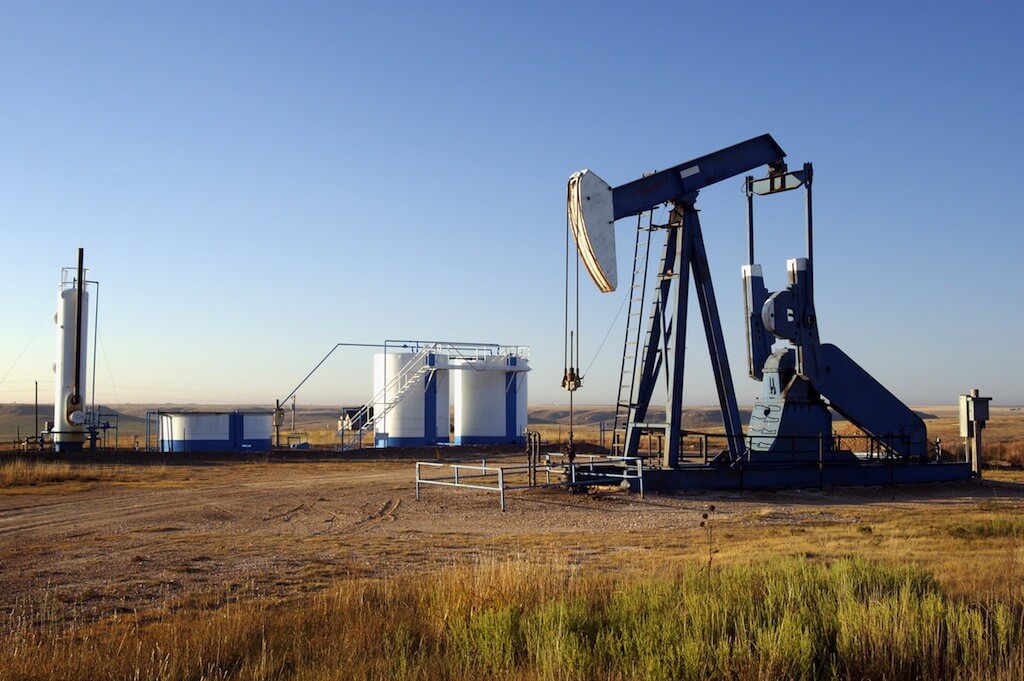
Oil well and storage tanks in the Texas Panhandle.

Oil well and storage tanks in the Texas Panhandle.

Copyright: Oil & Gas Magazine