
Mercado competitivo en gas natural para el 2018: Sener
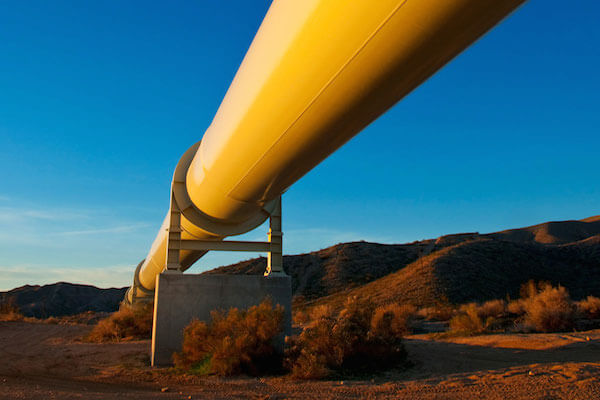
/en NewsEl titular de la Secretaría de Energía (Sener), Pedro Joaquín Coldwell, afirmó que con la eliminación de la fórmula del precio de venta de primera mano en las zonas norte y el centro del país, para 2018 México tendrá un mercado competitivo en gas natural.
En la publicación de la Política Pública para la Implementación del Mercado de Gas Natural, el funcionario federal aseguró que esto tiene el propósito de establecer el precio de acuerdo con la libre oferta y demanda del energético.
Señaló que con la maduración del mercado de gas natural se podrán celebrar contratos de suministro spot y de largo plazo, para posteriormente detonar nuevos instrumentos financieros.
Fuente: El Economista
Exxon to Buy Gas Explorer InterOil for Up to $3.6 Billion
/en NewsExxon Mobil Corp. agreed to buy natural gas explorer InterOil Corp. for as much as $3.6 billion to acquire discoveries in Papua New Guinea that will feed the buyer’s existing gas-export plant.
Exxon will use its own stock to pay between $45 and $71.87 per share of InterOil, depending on how much gas InterOil’s Elk-Antelope field holds, Irving, Texas-based Exxon said in a statement on Thursday. With the range of potential payouts valuing the agreement at $2.5 billion to $3.6 billion, it represents Exxon’s biggest acquisition in almost four years.
The world’s largest energy producer by market value also agreed to pay a $60 million breakup fee on behalf of InterOil, which backed out of an earlier deal to sell itself to Oil Search Ltd. and Total SA for $2.2 billion.
Exxon said it plans to chill, liquefy and export the gas from the Elk-Antelope field in its PNG LNG complex on the coast of the South Pacific nation. Exxon’s statement made no mention of InterOil’s original plan to build a separate LNG facility known as Papua LNG from scratch. Exxon’s PNG LNG plant cost $19 billion to build and began exporting the fuel in 2014.
“Exxon Mobil will work with co-venturers and the government to evaluate processing of gas from the Elk-Antelope field by expanding the PNG LNG project,” the company said. “This would take advantage of synergies offered by expansion of an existing project to realize time and cost reductions that would benefit the PNG Treasury, the government’s holding in Oil Search, other shareholders and landowners.”
Copyright: Rig Zone
Carlos Slim participará en Ronda 2 con Grupo Carso
/en NewsGrupo Carso, conglomerado de Carlos Slim, ve oportunidades de negocio en los campos petroleros que se licitarán en la segunda ronda en aguas someras que organiza la Secretaría de Energía con la Comisión Nacional de Hidrocarburos (CNH).
En conferencia con analistas, Arturo Spínola, director de finanzas y administración en Grupo Condumex y Carso Infraestructura y Construcción (CICSA), destacó que proyectan que las subastas serán importantes para apuntalar el negocio energético.
“Vamos a continuar participando en el sector de petróleo y gas, quiero decir, la segunda ronda que es la que viene para el próximo año. Estamos buscando en México negocios con el fin de mantener y hacer crecer la cartera de CICSA”, destacó el directivo.
Esta semana la Secretaría de Energía anunció que serán 15 bloques los licitados en contratos de producción compartida para la exploración y extracción de hidrocarburos en aguas someras del Golfo de México como parte de la Ronda 2.1, que tendrá su apertura y fallo el 22 de marzo de 2017.
Se espera que este concurso genere inversiones por 11 mil 250 millones de dólares, dado que en cada una de las áreas se espera una inversión de 750 millones de dólares.
CICSA presentó ingresos por ocho mil 933 millones de pesos en el primer semestre de 2016, un aumento de 9.4 por ciento comparado con igual periodo del año pasado; esto principalmente por mejores resultados en instalación de ductos, donde las ventas subieron 51.2 por ciento.
Fuente: El Financiero
Drafts of Bidding Terms and Production Sharing Contracts for Round 2 Phase 1 –Shallow Waters, were published by CNH
/en NewsOn July 20, 2016, the Mexican National Hydrocarbons Commission (CNH) published the drafts of the Bidding Terms and Production Sharing Contracts (PSC) for Round 2, Phase 1, for the Exploration and Extraction of Hydrocarbons in Shallow Waters. Below is a summary of the most important terms and conditions of the drafts of the bidding terms and the PSC.
Shallow Water Blocks
The CNH will bid 15 shallow water blocks, 4 of which are located in the Tampico-Misantla oil province, 1 in Veracruz and 10 in Cuencas del Sureste oil province.
Bidding Terms
-
Interested oil companies may participate in the bid of the 15 blocks, as individual bidders or in consortium.
-
Interested parties and bidders should not be in contact with any official from the CNH or the government that is in any manner related to the Round 2 bids, as bidding terms and contracts should not be subject to negotiation. However, any interested party should be able to make comments related to the bidding terms and contracts through the CNH’s webpage.
-
All stages of the bidding process will take place in Spanish, unless there is a specific provision that states the contrary.
-
Bidding and contract terms, excluding prequalification requirements, might be subject to change at any point in time before their final publication.
-
The bidding process will occur in the following stages: i) publication of bidding terms, ii) access to data rooms, iii) registration, iv) clarifications to the bidding terms, iv) prequalification, v) filing of proposals, vi) awarding of contracts and vii) execution of contracts.
-
The following payments will apply:
Registry fee – $750,000 MXP.
To have access to the data rooms – Information worth at least $8,000,000 MXP.
-
Bidding day is set for March 22, 2017. The chart below illustrates the timeline for the bidding process:
-
To prequalify for the bidding process companies have to demonstrate, among others, the following:
-
Legal origin of funds.
-
Organization Chart
-
Information regarding companies that have control of the company.
-
In case of SPVs, their corporate and business structure must be detailed, indicating who has significant control or influence. Also Tax Returns and Audited Financial Statements of those that incorporated the SPV, corresponding to the last 2 years, should be filed.
-
Some of the requirements will be waived for those that successfully prequalified to Round 1, Phases 1, 2 and 4, as long as they are still the same members of the successfully prequalified bidder in the past phases.
-
Technical requirements are as follows:
Experience as an operator in projects from 2011 to 2015 through (i) the participation in at least three projects of exploration and/or extraction of hydrocarbons, or (ii) capital investments in exploration and/or extraction projects that together amount at least USD $1 billion. . It is not required that the interested company participated as an operator in these projects.
2.Experience as (i) an operator in at least one project of exploration and/or extraction of hydrocarbons in shallow waters and/or deep water or (ii) having participated as partner in at least two projects of exploration and/or extraction of hydrocarbons in shallow waters and/or deep waters in the last 5 years.
3.Experience in industrial and environmental, health and safety programs during the last five years in exploration and/or extraction projects in shallow waters and/or deep wat
-
As for the financial requirements, the operator shall demonstrate economic capacity, meaning the contractor owns assets of at least USD $10 billion and have an investment credit rating or has shareholder’s equity of at least USD $1 billion. If the operator does not meet the above mentioned financial criteria on a stand-alone basis, the operator could participate in a Consortium demonstrating a shareholder’s equity of USD 600,000,000, as long as the other members of the Consortium demonstrate an aggregate shareholders’ equity of USD 400,000,000.
-
Bidders will be able to participate as an individual bidder and/ or as part of one or more consortiums, however, the one bidder cannot participate in more than four consortiums. Proposals are limited to one per contractual area. There are no restrictions for any company to partner with major oil companies, international oil companies or national oil companies, including Pemex.
-
The weighted average of the offer or biding factor to determine the winner will be calculated considering the value of the Participation of the State in the Operating Profit, and the additional investment factor related to the minimum work program, according to the formula provided in the bidding terms.
-
The additional investment factor is related to the additional investment commitment during the exploration period. The variable corresponding to the investment factor could be 1.5 in case of making an additional investment commitment of working units equivalent to two exploratory wells, 1 in case of committing to working units equivalent to 1 exploratory well and 0 if no additional investment commitment is made.
-
Minimum values to be accepted will be determined by Hacienda before the CNH publishes the final version of the bidding terms and contracts, and at that point Hacienda will also define when such values will be public.
-
A USD $500,000 letter of credit should be submitted as bid bond for each offer.
-
Contracts will be awarded on March 24, 2017 and should be executed within 90 days after they are awarded.
Production Sharing Contracts for the Exploration and Extraction of Hydrocarbons in Shallow Waters
-
Production Sharing Contracts will be applicable. Contractors will perform Oil and Gas activities under the PSC, within the contractual area, at their own cost and risk, in exchange of a consideration from the State.
-
The term of the Contracts will be 30 years. The term may be extended for 2 more periods of 5 years each.
-
Contracts include an initial transition phase of up to 120 days. In such period the Contractors must document the status and integrity of the fields and equipment and initiate a social impact and environmental study to establish the base line.
-
Contracts include an initial exploration period of up to 4 years. In such period
-
Contractors will be obliged to finish the minimum work program. The exploration period may be extended for an additional period of 2 years (conditions apply). This additional period could be extended if for causes non attributable to the contractor he is not able to finish the corresponding activities.
-
Contractors will have to file an exploration plan for approval within 120 following the execution date of the contract. CNH will have 120 days to approve it. If the plan is not filed within the established term, a late fee USD 10,000 per day will apply The exploration plan may be adjusted subject to CNH’s approval.
-
Contractors shall file a performance guarantee to cover their obligations related to the minimum work program. The amount of said guarantee will be the result of multiplying the reference value of the work unit by 75% of the work units corresponding to the minimum work program and its increase, or by the number of working units corresponding to the increase of the minimum work program not performed in the initial exploration period and the additional commitment for the additional exploration period.
-
Contractors will have to inform the CNH in case of a discovery within the subsequent 30 days the discovery is confirmed. Once that the Contractors notify the CNH, they will have 60 days to file the appraisal plan.
-
The appraisal plan will have duration of up to 12 months, that could be extended for another 12 months when technical or commercial conditions require it, subject to CNH previous approval.
-
The appraisal plan in case of a nonassociated Natural Gas discovery will have last of up to 24 months that could be extended for 12 additional months when technical or commercial conditions require it, subject to CNH previous approval.
-
Within 60 days after the ending of any appraisal period, contractors will have to inform if the discovery is a “commercial discovery”.
-
Within 1 year after the confirmation of a commercial discovery contractors will have to file the corresponding development plan which shall be approved within 120 days Provisions related to the relinquishment of areas and unifications are included. These provisions will not be understood as a decrease in the Contractor’s obligations to comply with work commitments for the exploration period or its obligations regarding relinquishment activities and other activities set down in the Contract.
-
Contractors will have to keep an Operating Account where transactions related to the contract should be recorded. Additionally, contractors will have the obligation to file budgets of the costs to be incurred during the implementation of each work program and shall comply with the requirements set forth in the PSC.
-
Items included or excluded in the cost recovery and the applicable procedure are properly described in annex 4.
-
Costs resulting from the exploration and production activities will be considered as recoverable costs as long as they comply with the applicable legislation and the guidelines established by Hacienda.
Among the non-eligible and hence, non-recoverable costs established in the PSC, are the following: i)those not included in the budgets and work programs approved by the CNH or those in excess of the costs that were established in the budget elevate it in more than 5% or elevate the budget contemplated for the activity pursuant to the account catalogue over 10%, ii) financial costs, iii)donations, iv)costs for servitudes, rights of way and lease or acquisition of land, v) overhead expenses and vi) arbitration and dispute resolution costs, among others.
Overhead expenses related to services received or activities carried out outside the Mexican territory will be recoverable up to a 1.5% of the authorized budget.
-
The volume of hydrocarbons will be measured at the measurement point which may be inside or outside the blocks. Simultaneous to the filing of the development plan, contractors will have to propose the procedures to store, measure and monitor the quality of the hydrocarbons.
-
Assets generated or acquired by the contractors to carry out the exploration and extraction activities should be transferred to the Government when the contract is terminated. Movable assets, lease assets or assets owned by subcontractors are exempted from the transfer to the extent the transactions were not carried out with related parties.
-
Contractors will be able to commercialize the production by themselves or through third parties.
-
Government take will include the i) Contractual quota for exploration phase, ii) royalties and iii) the percentage of the operating profit that will be adjusted according to an R-factor included in the Contracts.
-
The amounts corresponding to royalties will be determined pursuant to the formulas and values established in the Hydrocarbon Revenue Law (HRL) and will depend on the type of hydrocarbon.
-
The PSC includes a sliding scale system based on IRR (before tax) with an initial benchmark of 25% that starts decreasing the Contractor share until the IRR reaches a benchmark of 40%, leaving a final Contractor share to 25% of the bid value. For computing the IRR, the PSC allows the Contractor to recognize four times its costs linked to the minimum work program and to the increase of the minimum work program.
-
The consideration for the contractor will include i) cost recovery and ii) remaining percentage of the operating profit.
-
The percentage of cost recovery will be 60%. However, if in the contractual area only non-associated natural gas discoveries are made, the percentage will be 80%.In addition, for the determination of the recoverable costs, the eligible costs established in the minimum work program and its increase will be recognized at an additional 25% value.
-
The Contracts include provisions to determine the value of hydrocarbons similar to the ones included in prior rounds.
-
Decommissioning provisions are included. Contractors will have to incorporate an abandonment fund once the development plan is approved. The contractor shall deposit ¼ of the annual amount at the end of each quarter.
-
Local content obligations are included: 15% during the exploration period; 17% during appraisal period and for the development period the percentage will start at 26% and will increase yearly until it reaches 35% in 2025.
-
Contractors shall have insurance policies that cover civil liability, well control and damage to the materials generated or acquired during the exploration and production activities.
Administrative and contractual rescission clauses are included in the Contracts as well as provision related to dispute resolution mechanisms under ICC rules as in prior rounds.
Copyright: Rondas Mexico
Mejor precio del petróleo impulsa 25% EBITDA de Alpek en 2T16
/en NewsLa firma petroquímica Alpek presentó un flujo operativo (EBITDA, por sus siglas en inglés) de tres mil 751 millones de pesos al segundo trimestre de 2016, un aumento de 25 por ciento comparado con lo registrado en igual periodo del año pasado.
En su reporte enviado a la Bolsa Mexicana de Valores (BMV) la empresa indicó que la mejora en el precio del petróleo fue lo que impulsó el valor de los inventarios, lo cual se refleja en una mejor posición del flujo operativo.
Los ingresos de la compañía en el periodo abril a junio de este año fue de 22 mil 341 millones de pesos, un aumento de 4.0 por ciento comparado con igual lapso de 2015, cuando fueron 21 mil 399 millones.
La utilidad neta mayoritaria de la empresa fue de 867 millones de pesos, una baja de 32 por ciento comparado con el segundo trimestre del año pasado, debido a la depreciación del peso frente al dólar.

Fuente: El Financiero
Exxon’s $2.5 Billion Bid for PNG’s InterOil Tops Oil Search
/en NewsExxon Mobil Corp. is doubling down on Papua New Guinea, topping a rival offer for InterOil Corp., a gas explorer focused on the Southeast Asian nation.
The energy giant’s offer values InterOil at $2.5 billion, including debt, beating an earlier bid from Oil Search Ltd. and Total SA. Exxon already runs Papua New Guinea’s only liquefied natural gas terminal and buying InterOil, which has gas fields and a stake in a second gas export project in the country, would give it a new source of the fuel for its exports. Oil Search and Total have three days to decide whether to counter Exxon’s offer.
“This was widely expected by the market and looks at first glance to be in line with our estimates that Exxon’s bid would be 10 percent higher than the original Oil Search bid,” said Neil Beveridge, an analyst at Sanford C. Bernstein in Hong Kong. “The key question now is whether we see a counter-bid from Total and Oil Search.»
InterOil said Exxon is offering it a fixed price of $45 per share, and values the company at $2.5 billion, including $188 billion in net debt. As part of Oil Search’s $2.2 billion bid with Total in May, it offered 8.05 shares for each of InterOil’s, valuing InterOil’s share at $40.25.
The bid from Exxon also includes a higher initial so-called contingent-value right, offering $7.07 per share for each trillion cubic feet of likely gas reserves above 6.2 trillion found in InterOil’s Elk-Antelope fields, capped at 10 trillion cubic feet. Oil Search offered an additional $6.05 per share for each trillion cubic feet more than 6.2 trillion, with no cap.
Oil Search said in a statement it’s talking with Total about its options and that it’s entitled to a $60 million break-up fee, with 20 percent going to Total, if the deal doesn’t go through after InterOil changed its recommendation.
“InterOil has advised that it intends to make a change in its recommendation and enter into an Arrangement Agreement with ExxonMobil,” Oil Search said in a statement.
Exxon is targeting gas fields that hold enough reserves to supply the U.K. for three years. The company already operates the existing $19 billion PNG LNG gas-liquefaction plant in Papua New Guinea. InterOil and its partners have planned the nation’s second export project, Papua LNG. Oil Search is a shareholder in both ventures and has encouraged a tie-up to lower development costs.
Lower Cost
“ExxonMobil has submitted an offer to acquire InterOil Corporation, which we believe represents a superior proposal,” Exxon said in a statement.
Oil Search rose as much as 4.2% to A$7.27 in Sydney before trading at A$7.22 at 3:43 p.m. local time.
Papua New Guinea has lower costs than rival LNG sources, making it a more-attractive place to invest in an oversupplied market for the seaborne fuel. A deal for InterOil could speed up a boom in fuel sales from the nation, which began exporting LNG in 2014.
InterOil’s gas fields are closer to the coastal site of its proposed LNG plant and the pipeline that would feed it cuts through a less densely populated region than Exxon’s, which pipes its supply down from the country’s highlands, according to a presentation published on InterOil’s website.
Project Partners
“PNG’s lower costs are largely driven by the downstream. The cost of constructing the LNG facility is lower because labor is cheaper and site preparation is easier,” Matt Howell, a Perth, Australia-based research analyst for energy consultant Wood Mackenzie Ltd., said by e-mail. “In the case of Elk-Antelope, the fields are also nearer to the LNG facilities and the conditions in that area are a lot kinder, which lowers midstream and upstream costs.”
Oil Search is already a partner in both Exxon’s PNG LNG venture as well as Papua LNG. The Oil Search deal may save the country’s two projects as much as $3 billion and speed up development if they cooperate, according to Managing Director Peter Botten. After buying InterOil, Oil Search planned to sell 60 percent of the assets to Total.
InterOil’s appraisal of the fields found 10.2 trillion cubic feet of likely reserves at the end of 2015. Oil Search released results Friday of a separate analysis of those fields that estimated likely reserves at 6.4 trillion cubic feet. Oil Search said it would do a different analysis if it were to purchase InterOil that would include gas condensate volumes and another appraisal well that could unlock an additional 1 trillion to 2 trillion cubic feet of gas.
Exxon has pursued InterOil’s assets in the past. In May 2013, the energy explorer entered into exclusive talks to acquire a stake in InterOil’s Papua New Guinea discoveries, estimated at the time to hold the equivalent of 9 trillion cubic feet of recoverable gas. The talks collapsed later that year for undisclosed reasons.
Copyright: Bloomberg
Ronda Uno genera 16 flamantes petroleras
/en NewsA un año de la celebración de la primera licitación petrolera en la historia de México, producto de la Reforma Energética, existen ya 16 petroleras diferentes a Pemex con operaciones en el país, de las cuales al menos nueve ya comenzaron a producir petróleo, mientras que las restantes ya entregaron su plan de trabajo para comenzar a perforar, de acuerdo con datos de la subsecretaria de Hidrocarburos, Lourdes Melgar y la Comisión Nacional de Hidrocarburos (CNH).
A la fecha la CNH ha celebrado tres convocatorias de licitación (Rondas 1.1, 1.2 y 1.3) en las que subastaron 44 áreas, de las cuales 30 fueron asignadas y en 24 casos ya se firmaron los contratos.
“Hay 30 contratos adjudicados, 24 de los cuales han sido suscritos. Ahora hay 16 nuevos operadores (debido a que varias petroleras obtuvieron más de un contrato), cuando hace un año únicamente teníamos a Pemex como operador y hay contratos que ya están produciendo crudo, ya que en el caso de la segunda y tercera licitación había reservas certificadas 2P y en la 1.3 había campos en producción”, aseguró en entrevista con El Financiero la funcionaria.
Adicionalmente a la fecha nueve petroleras que participaron en la Ronda 1.3 -que incluía campos en producción-, comenzaron a generar sus primeros barriles, con lo que ya aportan regalías al Estado.
Se trata de las petroleras Canamex Energy, Consorcio Manufacturero Mexicano, Consorcio Petrolero 5M del Golfo, Diavaz, Dunas Exploración y Producción, Grupo Mareógrafo, Renaissance Oil, Lifting de México y Strata.
Luis Miguel Labardini, del despacho Marcos y Asociados destacó que a un año de la primer licitación petrolera en México, estamos frente al nacimiento de una nueva industria.
“Hay varias compañías que ya están produciendo crudo aparte, por su cuenta, sin Pemex y esto es un paso histórico, estas compañías producen y pagan en promedio más del 70 por ciento de sus ingresoscomo regalías al Fondo Mexicano del Petróleo y eso es un gran avance para reconocer el valor que tiene el hecho de que haya muchos operadores en lugar de uno solo, que era Pemex”, dijo Labardini.
En tanto Gonzalo Monroy, fundador de la consultora energética GMEC, consideró que en el ámbito petrolero, pasó algo muy positivo, porque se pusieron las bases para diversificar los participantes.
“Hoy hay 24 nuevas empresas petroleras, además de Pemex, se verá un nuevo aprendizajes y formas de hacer las cosas, Pemex no podría haber hecho estas inversiones que hará hoy el sector privado”, aseveró.
Ambos expertos destacaron la transparencia del proceso.
2.1 y 2.2 TRAERÁN CRUDO PRONTO
Las licitaciones de la Ronda 2.1 y 2.2, que serán anunciadas en breve, incluirán bloques de extracción y exploración en aguas someras y campos terrestres, en los que la expectativa es que su producción se registre en los dos o tres primeros años.
“El enfoque es que estas dos convocatorias están diseñadas para poder producir petróleo relativamente rápido, para empresas con experiencia y áreas geológicas en los que veamos barriles de petróleo en los próximo dos o tres años”, señaló Melgar.
Detalló que en la Ronda 2.1 se licitarán 15 bloques de exploración en aguas someras y para la 2.2 serán 12 bloques en campos terrestres.
Melgar agregó que aprovecharán el aprendizaje de la primera Ronda para tratar de reducir los tiempos de implementación y los costos burocráticos de algunos procesos con miras a tener mejores resultados.
Fuente: El Financiero
Safety Investment Remains Resilient Despite Downturn
/en NewsOil and gas companies are continuing to invest in safety research despite the current oil price downturn, DNV GL representatives told Rigzone during a recent trip to the firm’s Spadeadam testing and research facility in Cumbria, England.
“Business is tough in the oil and gas sector but committed customers are still investing in safety improvement. They’re still conducting research into major hazards,” said Gary Tomlin, DNV GL UK’s vice president of safety and risk.
Naturally, the level of this investment was slightly hampered by the drop in crude prices, but investment has started to increase over the last couple of months.
“We saw a hiccup and to be honest, it’s inevitable. When the oil price drops from $110 a barrel to $27, you’re kidding yourself if you’re not going to see a hiccup,” said Hari Vamadevan, DNV GL – Oil & Gas’ regional manager for the UK and West Africa.
“We’ve seen a pickup I would say over the last couple of months … oil recovery to $50 has helped a little bit, I think there’s positive cash flows for some companies, but many companies haven’t stopped [investing],” he added.
Investment in this type of research is expected to rise even further over the not too distant future, as the oil price achieves an anticipated rise and oil and gas firms gain more access to expendable income.
From an industry perspective we think … we’ll see an upturn 2017-2018,” said Tomlin. “I think that we’ve plateaued. We are a cyclical oil and gas industry … I think we’ve hit the low point, but we do need to be aware that we still need to control costs,” said Vamadevan. “I think companies will become profitable at $50 and $60 per barrel, and as the price rises I think there will be more investment. So I am hopeful that we will see more activity going forward,” he added.
Oil, Gas Safety Testing ‘Critically Important’
Oil and gas major hazards testing and research was described as critically important by Tomlin, who outlined the significance of Spadeadam for the hydrocarbon sector.
“It’s a unique facility worldwide. There are other facilities like this, but none that do the breadth of the work we do, so it’s something we’re incredibly proud of. The work we do here is of critical importance,” said Tomlin.
DNV GL Spadeadam Testing and Research is designed to carry out full-scale hazardous trials and simulate real-world environments. Situated in 120 acres (50 hectares) of Ministry of Defence land in the north of England, it offers the opportunity to test equipment, components, products, techniques and processes, and to provide data to validate computer models.
aff at Spadeadam have recreated a number of major accidents at their facility – ranging from the Piper Alpha platform explosion to the Buncefield oil storage terminal fire – to find out exactly what went wrong and help prevent future incidents in the oil and gas industry.
“We’re undertaking research here that helps … [oil and gas companies] understand hazards that they manage in their facilities, so that they can take measures to limit the risk to their people and their infrastructure,” said Tomlin. “We get people to experience large scale fires and explosions so that they can see and feel the power of these events. They can’t get that anywhere else in the world.”
Most safety lessons in the oil and gas sector come from real world events, said Vamadevan, who highlighted how experiences of this nature can be more useful than theoretical work.
“If you … felt a jet fire, you experience what happens in an explosion, it means you understand it much better than reading in a textbook, seeing a colour contour on a map or seeing a percentage,” Vamadevan told Rigzone.
Copyright: Rig Zone
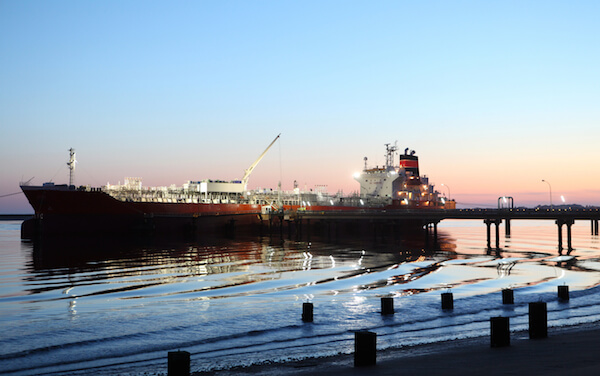
La industria naviera está en terapia intensiva
/en NewsEl incumplimiento de pagos, además del ajuste y cancelación de contratos por parte de Petróleos Mexicanos (Pemex), ha colocado al transporte marítimo mexicano en una situación crítica, lo que ha ocasionado caídas de ingresos de hasta 50% y despidos de hasta 40% en las plantillas de personal de las empresas navieras que aglutina la Cámara Mexicana de la Industria del Transporte Marítimo (Cameintram), de acuerdo con Armando Rodríguez, director del organismo privado.
Pemex sostiene que ejecuta su último tramo de pagos pendientes a proveedores, dentro de los que se encuentra buen número de agremiados de la Cameintram, pero “los pagos se están dando a cuentagotas, según lo que se me reporta. Se les está pagando a algunos y no todo lo que se les debe”, reveló a El Economista el directivo gremial, quien lidera negociaciones para lograr condiciones fiscales que le permitan a la industria lidiar con la crisis.
Asolada por el desplome en los precios del crudo, la empresa estatal concluyó el año pasado con adeudos atrasados a proveedores cercanos a los 150,000 millones de pesos, monto que se ha ido reduciendo paulatinamente luego de sucesivos programas de pago —en los que se privilegió a las pymes—, pero según cifras de la propia estatal hasta la semana pasada, aún se adeuda alrededor de 50,000 millones de pesos.
Además de la falta de pagos, la Cameintram lamentó la falta de planeación y compromiso por parte de la estatal, pues, acusó, ésta no honró su palabra cuando a principios del año pasado prometió prolongar los contratos de servicios marítimos a cambio de obtener reducciones en tarifas. Todo lo contrario: de junio del 2015 a enero de este año, la Dirección Corporativa de Procura y Abastecimiento (DCPA) de Pemex “informó a los navieros de la reducción del número de contratos y por lo tanto la continuidad de los contratos ofrecida por la DCPA en el 2015 no se llevó a cabo; además, un gran número de facturas no se cubrió”, denunció Rodríguez García.
Desde principios del 2015, Pemex también había extendido los periodos de pago de facturas de 20 hasta 90 y 180 días, hecho nunca antes visto en la historia de la Cámara, y que inició con la descapitalización de los proveedores.
En adición a lo anterior, en junio pasado Pemex solicitó a las navieras un descuento aún más drástico en sus tarifas y comenzó la cancelación de contratos y suspensión de los mismos, lo que en palabras del representante de la Iniciativa Privada tiene a la industria en un estado de “terapia intensiva”. “Yo en lo personal estoy muy preocupado (…) Esperemos que esta ola nos deje salir, porque sí la veo muy difícil”, externó.
Satélites petroleros
La Cameintram representa a 90% de la industria naviera nacional y como cámara se conforma en más de 90% de empresas vinculadas al sector petrolero —fundamentalmente Pemex—, por lo que la condición de la empresa productiva del Estado es, hasta que no exista una industria petrolera mexicana con diferentes participantes, su principal indicador de sobrevivencia.
Y el panorama no es alentador para los proveedores de la petrolera, pues la empresa ejecuta para este año un recorte presupuestal de 100,000 millones de pesos, que se reflejará en la reducción de alrededor de 100,000 barriles diarios de petróleo en la plataforma productiva de este año.
Estimaciones de la industria indican que más de 80 de las 138 embarcaciones de los miembros de la Cameintram se encuentran en la actualidad sin contrato (más de 40 prestaban servicios directamente a Pemex), lo que significa que alrededor de 65% de la flota nacional está en paro y hayan disminuido hasta 50% los ingresos de las navieras. Se habla de un riesgo para inversiones de más de 1,200 millones de dólares.
“Nos han reportado casos de despidos de hasta 40% en las plantillas de personal de las empresas”, lamentó Armando Rodríguez, quien, pese a todo, sostiene que su gremio no pide un “rescate”, pues es evidente que la realidad del mercado petrolero cambió radicalmente, pero demanda más flexibilidad en su trato fiscal y con el pago de derechos ante las autoridades portuarias, pues, en un escenario como éste, “a todos nos toca poner y estamos conscientes de que debemos reinventarnos, pero junto con Pemex”.
—¿Qué es lo que piden?
Se le pidió a la Secretaría de Hacienda que se otorguen beneficios fiscales: básicamente se solicita un tratamiento de acumulación del ingreso hasta el momento en el que sean cobrados los servicios, no cuando éstos sean prestados o cuando se emita la factura, que entendemos es el criterio que se tiene con otros sectores, como el de la construcción. Porque nosotros facturamos todo el 2015 y tuvimos que enterarlo en marzo pasado. Tuvimos que pagar 35% del impuesto de la renta, sin haber un solo peso de ingresos. También buscamos una reunión con el coordinador de Puertos y Marina Mercante de la SCT para que las embarcaciones que están paradas no paguen al puerto como si el barco estuviera atracado, operando, porque se quieren cobrar derechos como si estuvieran comercialmente activos.
—¿Existe la expectativa de que Pemex siga incumpliendo?
Lo que pasa es que es lo que vemos. Lo que nosotros queremos es, en caso de que siga esta situación, darle a la industria marítima estas alternativas. Si el actual entorno no sigue, pues obviamente no operarían estas condiciones. No se trataría de un régimen especial para el sector marítimo.
Fuente: El Economista
NRGI Broker
Somos el enlace entre los riesgos que enfrentan las industrias del sector energético con las soluciones para administrarlos y respaldarlos mediante esquemas confiables de garantías financieras.
Contáctanos
Prolongación Paseo de la Reforma 1015 Torre A Piso 21. Col. Desarrollo Santa Fe, Contadero, C.P. 01219 CDMX, México
Tel: +52 (55) 9177 2100
Horario de Atención
Lunes – Viernes: 7:30-18:00