



Pemex Cancels West Pegasus Drilling Contract
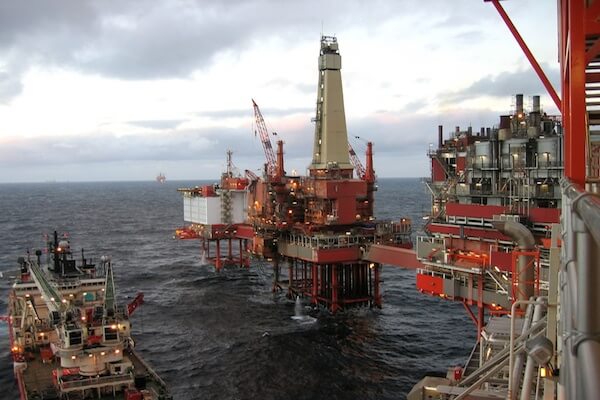
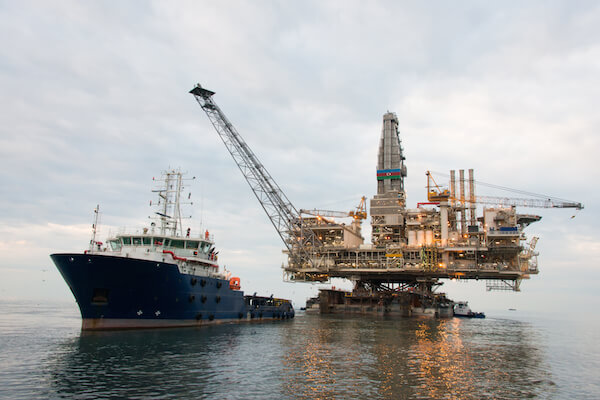
/en NewsSeadrill Limited has received a notice of termination from Pemex Exploracion y Servicios for the West Pegasus (UDW semisub) drilling contract, effective Aug. 16. Seadrill has disputed the grounds for termination and is reviewing its legal options.
During the second quarter of 2015 Seadrill signed a provisional commitment for a two year extension to the contract with Pemex for the West Pegasus. In conjunction with the extension, the day rate for the remaining term of the initial contract was reduced. The extension of the contract was finalized during the first quarter of 2016.
As part of this agreement, Seadrill and Seamex Limited, Seadrill’s 50 percent owned joint venture with Fintech, agreed to reduce the day rate on five jack-ups for a period of 365 days. The agreement to reduce the day rates of the existing contracts was contingent upon final confirmation of the two year extension of the West Pegasus by Pemex management.
In the event of termination, Seadrill and Seamex are entitled to recover the day rate concessions as well as the demobilization for the West Pegasus. In addition, Seadrill has stated that it will seek reimbursement of certain costs incurred in anticipation of the extension.
Copyright: Rig Zone
EXXON MOBIL, CHEVRON Y HESS, juntas para explorar aguas profundas de México.
/en NewsLas tres estadounidenses quieren participar en la licitación de las 10 áreas de exploración en el Golfo.
Exxon Mobil, Chevron y Hess acordaron participar juntas en la búsqueda de crudo en aguas profundas de México en la cuarta fase de la Ronda 1 (Ronda 1.4), reportó el jueves Bloomberg, citando a una fuente con conocimiento del tema.
Las tres firmas estadounidenses planean participar juntas en la licitación de licencias de las 10 áreas de exploración en el Golfo de México, que se ofrecerán en diciembre como parte de la apertura petrolera, dijo la fuente a Bloomberg.
No fue posible contactar a las compañías para que realizaran comentarios.
Las empresas precalificadas se darán a conocer el 24 de agosto, de acuerdo con el calendario de la Ronda 1.4. Entre el 14 y el 18 de noviembre será el lapso para solicitar la conformación de licitantes.
El 5 de diciembre será la presentación y apertura de propuestas y el 7 de diciembre será la resolución y el fallo.
Fuente: Expansión
‘Well-Timed’ OPEC Talk Forces Oil Bears Into Record Reversal
/en NewsOPEC has done it again.
Talk of a potential deal to freeze output helped push oil close to $50 a barrel and prompted money managers to cut bets on falling prices by the most ever. West Texas Intermediate, the U.S. benchmark, went from a bear to a bull market in less than three weeks.
OPEC is on course to agree to a production freeze because its biggest members are pumping flat-out, said Chakib Khelil, the group’s former president. Saudi Energy Minister Khalid Al-Falih said that the talks may lead to action to stabilize the market.
«This is all courtesy of some very well-timed comments from the Saudi oil minister,» said John Kilduff, partner at Again Capital LLC, a New York hedge fund focused on energy. «They’ve been successful over the last year in jawboning the market, and this is the latest example.»
Hedge funds trimmed their short position in WTI by 56,907 futures and options during the week ended Aug. 16, the most in data going back to 2006, according to the Commodity Futures Trading Commission. Futures rose 8.9 percent to $46.58 a barrel in the report week and closed at $48.52 a barrel on Aug. 19. WTI is up more than 20 percent from its Aug. 2 low, meeting the common definition of a bull market.
«This was a very short market so we were bound to get some covering,» said Stephen Schork, president of the Schork Group Inc., a consulting company in Villanova, Pennsylvania. «You probably won’t hear a lot from OPEC with prices up here, but if we get down to where we were a few weeks ago we can expect to hear more.»
Informal Talks
The Organization of Petroleum Exporting Countries plans to hold informal talks to discuss the market at the International Energy Forum next month in Algiers. Russian Energy Minister Alexander Novak said that the nation was open to discussing a freeze.
Talks to implement a production freeze collapsed in April when Saudi Arabia said it wouldn’t take part without Iranian participation. Iran was restoring exports after sanctions over its nuclear program were lifted in January.
Saudi Arabia, Iran, Iraq and non-member Russia are producing at, or close to, maximum capacity, Khelil said in a Bloomberg Television interview on Aug. 17. Saudi Arabia told OPEC that its production rose to an all-time high of 10.67 million barrels a day in July, according to a report from the group.
Ample Stockpiles
Declining crude and gasoline stockpiles in the U.S. also bolstered the market last week. Crude supplies dropped by 2.51 million barrels as of Aug. 12, Energy Information Administration data show. Gasoline inventories slipped 2.72 million barrels during the period. Stockpiles of both crude and gasoline remain at the highest seasonal levels in decades even after the declines.
«There’s a high level of uncertainty right now, so fairly small news can move the market a lot,» said Michael Lynch, president of Strategic Energy & Economic Research in Winchester, Massachusetts. «It still remains the case that we have a huge surplus of supply and aren’t going to see it disappear anytime soon.»
Money managers’ short position in WTI dropped to 163,232 futures and options. Longs, or bets on rising prices, increased 0.1 percent, while net longs advanced 56 percent, the most since July 2010.
In other markets, net-bearish bets on gasoline climbed 54 percent to 1,970 contracts. Gasoline futures rose 5.7 percent in the report week. Net-long wagers on U.S. ultra low sulfur diesel increased more than fivefold to 10,835 contracts. Futures advanced 9.8 percent.
Copyright: Rig Zone
Mexico Said to Begin Quietly Hedging 2017 Oil Price in June
/en NewsMexico started quietly buying contracts to lock in 2017 oil prices when futures were near their peak in June, signaling the start of what has in prior years been the world’s largest sovereign petroleum hedge, according to people familiar with the deal.
The Latin American country bought put options, which give it the right to sell crude at a predetermined price, in June and July, earlier than the usual period of late August to late September, said the people, who asked not to be identified because the process is private.
Brent crude, the global benchmark, peaked at nearly $53 a barrel in early June. Since then, prices have declined about $10 a barrel as the outlook for the global economy soured and OPEC countries boosted production. The people didn’t say how much Mexico was able to hedge before prices fell back.
In response to a list of e-mailed questions, the Mexican Finance Ministry’s press office declined to comment on the status or progress of Mexico’s oil hedge negotiations.
The Latin American country has spent an average of almost $1 billion a year over the past decade buying put options through deals with banks that in the past have included Goldman Sachs Group Inc., Citigroup Inc., JPMorgan Chase & Co., Morgan Stanley, BNP Paribas SA, Barclays Plc and HSBC Holdings Plc, according to government documents. Mexico’s annual hedge is the largest undertaken by a national government and often roils the market.
Mexico and its bankers try to keep the hedge under wraps as long as possible, to avoid others front-running the trade and making the insurance more expensive. In the past two years, however, some details of the hedge emerged because of new regulations introduced in the U.S. with the Dodd-Frank Act.
Dodd-Frank
The rules forced U.S. banks to report some details of the deal through public swap data repositories. But this year not a single deal bearing the marks of the Mexican hedge has emerged, and two of the people familiar with the program said Mexico and its bankers were using non-U.S. branches of the banks to bypass the reporting rules.
The move to hedge 2017 oil prices comes as Mexico stands to take in about $3 billion from this year’s hedge, which was put on from June to August 2015, if prices remain around current levels. That follows last year’s record payout of $6.4 billion.
Despite Mexico’s hedging success — it received $5 billion in 2009 after oil prices plunged — few other commodity-rich countries have followed suit. Ecuador hedged oil sales in 1993, but losses triggered a political storm and the nation never tried again. More recently, oil importers Morocco, Jamaica and Uruguay have bought protection against rising energy prices.
Copyright: Rig Zone
Ven varias alianzas en transporte y el almacenamiento
/en NewsPemex debe por ley abrir sus instalaciones de transporte y almacenamiento, un proceso en camino, en el que Guillermo Bilbao, director general de PA Consulting, identificó ya tres oportunidades donde la estatal necesitará de un socio cuanto antes.
La primera es la zona de Burgos donde a pesar de que transportar gas por pipa es hasta cinco veces más caro que mediante un ducto, la petrolera lo sigue haciendo así, reveló el director de la consultora británica dedicada a temas de seguridad y energía.
Esto si se considera el panorama financiero de Pemex, pues Burgos es una de las áreas de mayor producción de gas asociado por lo que podría ser uno de los principales sitios para una alianza en este sector de la cadena, conocida como mid-stream, o aguas medias.
“La pipa es muy cara, entonces aquellos transportes que en la zona de Burgos que hoy se llevan por pipa se puedan sustituir por una nueva instalación, algún otro ducto es una oportunidad bastante interesante. Hoy las finanzas de Pemex, quizás no sean las mejores de su historia, poder asociarse con alguien para poder sustituir esas pipas podría tener mucho sentido económico”, indicó.
Una segunda oportunidad son las terminales de almacenamiento y reparto de la zona sur del país que incluso en los últimos meses han sufrido desabasto por temas ajenos a Pemex y relacionados con el conflicto magisterial.
“En la zona del Sur ya hay instalaciones que tienen una amortización más que cumplida y renovarlas es algo que en efecto sería muy interesante en términos económicos”, resaltó el especialista de PA Consulting.
La terminal de Dos Bocas a donde podría llegar mucho del producto extraído por privados ganadores de las rondas petrolera -incluso de la Ronda 1.4 donde participarán las “grandes empresas”-, es quizá la mayor oportunidad de inversión por su tamaño y lo que se requerirá hacer en exportaciones e importaciones.
“En aguas profundas por supuesto va a ser falta colaboración en transporte, pero la terminal marítima de Dos Bocas, probablemente hayan nuevas opciones para mejorar. Es una instalación inmensa que tiene mucha oportunidad”, dijo.
La expectativa es que antes de que termine este mes se anuncie la forma en la que se abrirá la infraestructura de Pemex para uso privado, algo que se prometió desde el año pasado, indicó un empresario que no quiso ser citado.
El precio de cuánto deberán pagar los privados por usar las terminales es lo que está deteniendo está operación, agregó la fuente.
José Antonio González Anaya, director general de Pemex, advirtió recientemente al respecto que debe ser el valor justo para Pemex. “Tiene que haber un precio justo porque esa infraestructura le pertenece a la empresa y si alguien más la quiere utilizar va a pagar un precio justo que determinarán las diferentes instancias que se crearon alrededor de la reforma”, dijo.
Fuente: El Financiero
Oil extends rally to 5-week high, gains 10% in three days
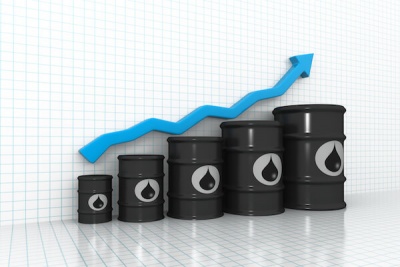
/en NewsOil prices hit five-week highs on Monday, gaining about 10 per cent in a three-day rally as speculation intensified over potential producer action to support prices amid a crude glut.
Data from market intelligence firm Genscape estimating a draw of more than 350,000 barrels at the Cushing, Oklahoma delivery point for US crude futures last week added to the bullish sentiment, said traders who saw the data.
Brent crude rose $1.08, or 2.3 per cent, to $48.05 a barrel by 11:07 a.m. EDT (1507 GMT), after rising to $48.10 earlier, its highest since July 7. Brent has gained about 10 per cent cumulatively in the past three sessions, its most in such a stretch since May. Since the start of August, it is up 12 per cent.
US West Texas Intermediate (WTI) crude gained $1.06, or 2.4 per cent, to $45.55, after rallying earlier to $45.61, a peak since July 21. WTI has gained nearly 10 per cent on the month.
Members of the Organization of the Petroleum Exporting Countries are to meet on the sidelines of the International Energy Forum, which groups producers and consumers, in Algeria from Sept. 26-28.
Russian Energy Minister Alexander Novak bolstered hopes on Monday that oil producing nations could take action to stabilise prices, telling a Saudi newspaper that his country was consulting with Saudi Arabia and other producers to achieve market stability.
«With Russia joining the chorus, an array of bullish oil ETFs saw a sizeable influx of capital that lifted crude values by more than $5 a barrel off recent lows,» said Jim Ritterbusch of Chicago-based oil markets consultancy Ritterbusch & Associates.
«While we see very little possibility of an actualization of curtailed OPEC output, there will likely be enough chatter during the next five to six weeks to deter selling in allowing WTI to gravitate at around the $45 area, at least through the second half of this month,» he added.
But other analysts were sceptical that the rally would continue.
«In our view a renewed price correction cannot be ruled out if market participants start focusing on the supply side again, for the latest drilling activity figures in the US cast doubts that the oversupply is really being eroded,» Commerzbank analyst Carsten Fritsch said in a note.
There are also doubts that Saudi Arabia and other major OPEC members such as Iran will put aside a market share battle in order to prop up prices.
On the demand side, the world’s three biggest economies – the United States, China and Japan – all published downbeat economic data between Friday and Monday that could signal an erosion soon in oil demand.
Copyright: Emirates 24/7
Crudo cotiza en máximo de 43 dólares
/en NewsEl crudo West Texas Intermediate (WTI), de referencia en Estados Unidos, abrió los mercados este lunes con un descenso del 1,39% al cotizarse en 41,02 dólares por barril.
Por su parte, el barril del crudo Brent, que se comercializa en Europa, abrió con una cotización de 43,42 dólares, 11 centavos menos que la jornada anterior cuando cerró en 43,53 dólares.
En tanto, la canasta de la Organización de Países Exportadores de Petróleo (Opep) se cotizó el viernes en 38,97 dólares, lo que representó una pérdida de 82 centavos de dólar respecto al cierre del jueves 28 de julio, cuando se ubicó en 40,49
El informe semanal del Departamento de Energía de Estados Unidos (DOE, por sus siglas en inglés), reveló que los inventarios subieron inesperadamente cuando los sondeos preveían un comportamiento a la baja.
De este modo los inventarios aumentaron en 1,67 millones de barriles, mientras que los analistas estimaban un descenso de 2,02 millones de barriles.
Pese a que la valoración del petróleo en el mercado internacional logró un repunte en mayo, que lo llevó a 50 dólares por barril, su cotización ha descendido los últimos meses hasta promediar los 45 dólares, todo dentro de la coyuntura mundial por la caída de los precios del oro negro, que comenzó a mediados de 2014.
El declive de los precios, de acuerdo con informes de la Opep, se debe al aumento de los inventarios internacionales del petróleo, así como a la estrategia de Estados Unidos de aumentar de forma desmesurada su producción de crudo de esquisto.

Fuente: Radio Mundial
Mexico’s Pemex must take Minimum 45 pct Stake in Deep Water Venture
/en NewsMexico’s oil regulator on Wednesday said state-owned oil company Pemex must take a minimum 45 percent stake in its first-ever proposed joint venture with would-be private partners to develop oil reserves in the Gulf of Mexico’s deep waters.
Global oil majors are widely expected to bid in the December auction to help develop the Trion light oil field in the Perdido Fold Belt just south of Mexico’s maritime border with the United States.
Companies such as Royal Dutch Shell and Exxon Mobil operate lucrative developments in nearby U.S. waters while Mexico has yet to achieve commercial production on its side of oil-rich Perdido due to a lack of technical expertise to tap such fields.
The call for bids to partner with cash-strapped Pemex on Trion follows the constitutional energy reform enacted in 2013 which promised to reverse a decade-long slump in crude production by luring new players to explore for and produce oil.
The regulator said the Trion joint venture will be bid out in the form of a license contract, which is similar to a concession, and will include two operators, one of which must have between a 30 to 45 percent stake in the project.
Interested bidders have until Sept. 15 to pre-qualify for the auction by meeting both financial and technical minimum requirements, while the final version of the contract and bid terms will be published on Sept. 30.
The license contract to partner with Pemex on the project will be awarded on Dec. 5. Mexico will also auction 10 separate deep water fields, including four that surround Trion, in December.
Under the terms of the energy reform, Pemex can partner with companies in exploration and production projects, but rather than being allowed to pick its partners, they will instead be selected by an auction run by the oil regulator, known as the National Hydrocarbons Commission.
The partnership will allow Pemex to share the investment needed to successfully develop the field, the company’s first major deep water oil project.
The Trion field holds some 480 million barrels and will require about $11 billion worth of investment.
The field covers about 483 square miles (1,250 square km) and is located under more than 8,202 feet (2,500 meters) of water.
Copyright: Rig Zone
Autoridades cambian bases de la Fase 4 de la Ronda Uno
/en NewsLos modelos de contrato y las bases de licitación de la cuarta fase de la Ronda Uno para la exploración y extracción de hidrocarburos en aguas profundas fueron modificadas, anunciaron las autoridades gubernamentales y regulatorias.
Las modificaciones se realizaron sobre el documento dado a conocer el 16 de mayo pasado.
Precisaron que causales de rescisión administrativa se modifican para iniciar el procedimiento al contratista y no a las empresas participantes miembros del consorcio o de la asociación en participación, de acuerdo con un comunicado conjunto de las secretarías de Energía y de Hacienda, así como la Comisión Nacional de Hidrocarburos (CNH) divulgado el viernes.
Lo anterior, sin modificar los periodos de cura ni las agravantes, además se ajusta la definición de accidente grave conforme a las mejores prácticas de la industria.
Además, se hace explícita la posibilidad para que el contratista tenga la opción de sustituir a la empresa participante que haya incumplido para la mayoría de las causales de la rescisión contractual.
También aclara que el contratista deberá pagar a la nación daños directos e inmediatos, además de que la CNH emitirá la constancia de cumplimiento al contratista en un plazo no mayor a 60 días posteriores a que concluyan los compromisos de trabajo para cada periodo de exploración.
Además, alínea el contrato al proyecto de lineamientos de la CNH que regularán las cesiones que impliquen los cambios de control de operación o corporativo y de gestión cuando impacten sólo al contratista y no a cada una de las empresas participantes miembro del consorcio o asociación en participación.
Las autoridades establecen disposiciones para ampliar el plazo de los Períodos de Exploración Inicial y Primero Adicional, con el objeto de permitir la conclusión de actividades en proceso de ejecución.
También se fija el monto de la pena convencional en caso de retraso en la presentación del Plan de Exploración, y se amplía la duración de dicha etapa (de 90 a 120 días) y se detallan los requisitos que deberá cumplir el contratista respecto a la Evaluación de Impacto Social.
Paralelamente se ajustan las obligaciones adicionales, incluyendo la relativa a comunicar a la CNH sobre procedimientos judiciales o administrativos en los que esté involucrado –ahora de manera semestral–, distintos a los iniciados ante juzgados federales.
Fuente: Expansión CNN
NRGI Broker
Somos el enlace entre los riesgos que enfrentan las industrias del sector energético con las soluciones para administrarlos y respaldarlos mediante esquemas confiables de garantías financieras.
Contáctanos
Prolongación Paseo de la Reforma 1015 Torre A Piso 21. Col. Desarrollo Santa Fe, Contadero, C.P. 01219 CDMX, México
Tel: +52 (55) 9177 2100
Horario de Atención
Lunes – Viernes: 7:30-18:00