Por primera vez en décadas, no se publicó el decreto con los precios del gas licuado de petróleo (LP) del país, y las 360 empresas que distribuyen este combustible a siete de cada 10 hogares mexicanos tienen libertad de fijar sus precios para competir en el mercado.
Por lo pronto, consideraron las principales asociaciones de gaseros en el país, el precio mantendrá un nivel inercial similar al que se observó al cierre del 2016: 11.5 pesos por kilogramo en promedio nacional, aunque comenzará a elevarse en regiones como el sureste y noreste del país, regiones que se encuentran más distantes del ducto troncal que recorre el centro del país y de las terminales portuarias que abastecen al Pacífico y al Golfo.
Con esta liberación, el Ejecutivo Federal pierde facultades para determinar precios máximos, pero para evitar abusos por parte de empresarios, la Comisión Federal de Competencia Económica aseguró que llevará a cabo monitoreos de competencia efectiva y enviará recomendaciones a la Comisión Reguladora de Energía para diseñar esquemas de mercado o incluso multará a quienes incurran en prácticas anticompetitivas.
Los permisionarios de gas LP ascienden a más de 4,682 tras la obligación de que todos los participantes en cada una de las ocho actividades en que quedó dividida esta industria obtuvieran un permiso tras la aprobación de la reforma.
Las actividades que implican infraestructura de expendio de este hidrocarburo son las que concentran el mayor número de permisos, con 23% otorgados para la distribución y nada menos que 2,942, o 62% de los permisos para plantas de expendio al público.
https://v2.nrgibroker.com/wp-content/uploads/2017/01/3-ENero_gas-lp1-e1483395383614.jpg267400adminhttps://v2.nrgibroker.com/wp-content/uploads/2025/12/logo-nrgi.svgadmin2017-01-02 16:22:272018-01-20 01:06:04Arranca libre mercado de gas LP
Mexico is bracing for a series of protests as the opposition threatens a “peaceful revolution,” after the government of President Enrique Pena Nieto announced plans to raise gasoline prices by the most in two decades.
Gasoline will soar as much as 20 percent in January as the nation moves away from subsidies that have burnt a hole in public coffers, the Finance Ministry led by Jose Antonio Meade announced this week.
The price slam, or “gasolinazo” in Spanish, is going to hit hard, with Mexicans tying with South Africans to spend more of their annual income on fuel than residents of 59 other countries tracked by Bloomberg. The hike may also taint Pena Nieto’s flagship energy reform passed in 2013, emboldening opposition leaders such as Andres Manuel Lopez Obrador to strike out against the overhaul that opened the industry to foreign investment for the first time in almost eight decades.
«This is very grave, because it will give a bad name to the energy reform, even though it isn’t the fault of the reform,» said Alejandro Schtulmann, president of Mexico City-based political-risk advisory firm Empra. «Lopez Obrador could empower his rhetoric by saying he’ll make changes to the energy reform.»
Pena Nieto had said the overhaul would help lower energy prices by increasing competition. Now, the hashtag #ReformaEnergetica has become a trending topic on twitter, with many people saying they’d hoard fuel from gas stations that are already suffering shortages in several states. Illegal gasoline sales have cropped up in 10 states amid the scarcity, Reforma newspaper reports. Protests are scheduled for Jan. 1 in Mexico City and Guadalajara and have already taken place in Tamaulipas state.
Jesus Zambrano, a lawmaker with the Democratic Revolution Party, called for a «peaceful revolution,» including boycotts at gas stations. Even Concamin, a leading industrial trade group, raised concern about cost pressures.
Pena Nieto already suffers from the lowest popularity of any Mexican president in two decades amid rising violence and corruption scandals. That’s hurt his Institutional Revolutionary Party’s chances in the 2018 presidential race as well as this year’s gubernatorial elections.
«The president hoped that the reforms would be his legacy,» Carlos Loret de Mola, a leading Televisa newscaster, wrote on his Twitter account. «With the gasolinazo, he has buried» the reforms.
https://v2.nrgibroker.com/wp-content/uploads/2016/10/11-Octubreshutterstock_3813802511-e1476146847690.jpg267400adminhttps://v2.nrgibroker.com/wp-content/uploads/2025/12/logo-nrgi.svgadmin2017-01-02 16:10:322017-01-02 16:10:32‘Gasolinazo’ Infuriates Mexico and Taints Flagship Energy Reform
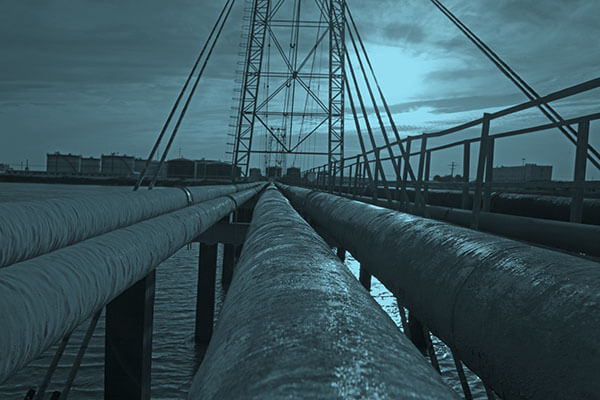
El subsecretario de Energía a nivel federal, Leonardo Beltrán, informó que el Plan de Negocios de Pemex 2017-2021, incluye una inversión no menor a 700 millones de pesos para la construcción delgran gasoducto que correrá de Puerto Progreso (Yucatán) a Cancún.
De acuerdo con el portal de noticias El Economista, el funcionario dijo que de hecho el proyecto del gasoducto está considerado como una obra que deberá realizarse entre el 2017 y el 2018 y que todos los proyectos de Pemex contenidos en el Plan de Negocios no están sujetos a los recortes presupuestales, sino que están fincados en su propia rentabilidad y retorno de inversión.
El gasoducto, no sólo implica la obra como tal, sino que detonará oportunidades de negocios aledañas, tanto para el sector de la construcción, como para los servicios especializados, ingenieriles, de transporte y almacenaje que se derivarán de esta obra.
El Plan de Negocios presentado hace unas semanas por Pemex consigna en el apartado de Logística un total de 13 grandes proyectos, incluido el gasoducto de Puerto Progreso a Cancún, que será operado bajo el esquema de socio operador con contribución de activos existentes.
El subsecretario dijo que la reforma energética abrió la posibilidad de nuevos esquemas de negocios con participación de la iniciativa privada en transporte, almacenamiento y suministro de hidrocarburos, por lo que elgasoducto entre Puerto Progreso y Cancúnestá en la mira de actores privados que irían en asociación con Pemex para operarlo.
Proyecto de Gas Natural
Ya anteriormente, en Cancún, se desechó un proyecto de gasoducto que iba a operar la empresa Gas Natural Industrial SA de CV.
El proyecto consistía en un sistema para transporte de gas natural, con el objeto de dar suministro a la zona comercial y de servicios en el centro y zonas habitacionales del noroeste de la ciudad. La Secretaría de Medio Ambiente y Recursos Naturales otorgó los permisos federales para la instalación de 3,600 metros lineales (3.6 km) de tubería en acero al carbón, así como 30.49 kilómetros detubería en polietileno de alta densidadque iba a operar a una presión normal de 21 kg/cm2 para tuberías en acero y 7 kg/cm2 para tuberías en polietileno.
El proyecto concitó el rechazo no sólo de sectores de la sociedad civil, sino de las propias autoridades municipales de Cancún,las cuales terminaron por negarles los permisos de construcción, lo cual a la postre terminó por descarrilar el proyecto.
Empresarios concesionarios de transporte urbano aseguran que un gasoducto permitiría abatir los costos de operación de la flotilla de autobuses en Cancún, dando margen a bajar o al menos dejar de incrementar el costo del pasaje en la ciudad.
Santiago Carrillo, director general de Autocar, una de las dos empresas concesionarias de transporte de pasajeros en Cancún, dijo que existe una gran expectativa por la construcción del gasoducto, debido a quesólo entonces tendría caso invertir en tecnología automotriz a gas, la cual les permitiría reducir hasta en 50% el costo diario de combustible.
https://v2.nrgibroker.com/wp-content/uploads/2016/10/11-Octubre_shutterstock_3726307001-e1476145988588.jpg267400adminhttps://v2.nrgibroker.com/wp-content/uploads/2025/12/logo-nrgi.svgadmin2017-01-02 16:02:392018-01-20 01:06:05¿Sabías que planean construir un gasoducto de Progreso a Cancún?
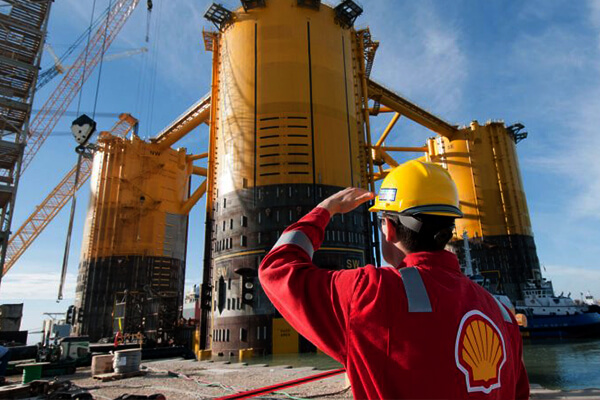
Houston based Shell Midstream Partners has acquired minority stakes in three pipelines located in The Gulf of Mexico from BP for an undisclosed sum.
The acquisition is said to be a move to consolidate its corridor pipeline strategy in the region for Shell Midstream.
The company has acquired 10% stake in the Proteus Oil Pipeline Company, 10% in the Endymion Oil Pipeline Company and 1% in Cleopatra Gas Gathering Company.
Shell Midstream Partners CEO John Hollowell said: «Our sponsor, Shell Pipeline Company is currently building the Mattox pipeline to serve the recently sanctioned Appomattox platform.
“Proteus and Endymion will connect the Mattox pipeline to onshore markets, creating a new corridor line, which will transport all of Appomattox’s volumes once it comes online toward the end of the decade.”
Proteus, a 71-mile crude oil pipeline of 425,000 bpd capacity, gives access to the Mississippi Canyon area of the Gulf of Mexico from the Thunder Horse and Thunder Hawk platform to the Proteus SP 89E Platform.
Hollowell added: «Proteus also connects to the Thunder Horse platform which is a key development field for BP and ExxonMobil. In addition to Thunder Horse, Proteus is also currently connected to the Noble Energy, Inc. operated Thunder Hawk platform.”
Endymion, an 89-mile crude oil pipeline of 425,000 bpd capacity, also gives access to the Mississippi Canyon area of the Gulf of Mexico. With access to multiple markets, Endymion is connected to LOOP Clovelly storage.
A 115-mile gas gathering pipeline in Southern Green Canyo, Cleopatra is connected to the Holstein, Atlantis, Neptune, Shenzi and Mad Dog platforms. It has access to Atwater Valley, Lund and Walker Ridge areas in the Gulf of Mexico.
Howell concluded: “This acquisition will deepen our footprint in the Eastern Gulf of Mexico, an active area with a number of discoveries currently under appraisal.»
Shell Midstream revealed that the collective acquisition sum was equivalent to nearly 7.7 times its forecasted annual average adjusted EBITDA attributable to the purchased stakes during 2017 and 2018.
The amount was financed through borrowings under its revolving credit facilities and the acquisition is likely to be instantly accretive to shareholders, said the energy and petrochemicals consortium.
Shell Midstream Partners’ board of directors of its general partner have approved the acquisition terms.
https://v2.nrgibroker.com/wp-content/uploads/2017/01/3-enero_engineer-in-red-uniform-with-yellow-hard-hat-by-marsb-platform-construction1-e1483393990350.jpeg267400adminhttps://v2.nrgibroker.com/wp-content/uploads/2025/12/logo-nrgi.svgadmin2017-01-02 15:56:502017-01-02 15:56:50Shell Midstream Partners buys stake in three Gulf of Mexico pipelines
Las cotizaciones del petróleo aumentaron fuertemente la mañana de este lunes en la apertura de Nueva York, luego que los inversores mostraran su satisfacción por el acuerdo alcanzado por la Organización de Países Exportadores de Petróleo (OPEP) con terceras naciones para acentuar una dismininución de la oferta ya decidida por el cártel.
Hacia las 14:00 GMT, el precio del barril de «light sweet crude» (WTI), referencia del crudo en Estados Unidos, ganaba 1.99 dólares, hasta los 53.49 dólares, en el contrato para entrega en enero, en el New York Mercantile Exchange (Nymex).
https://v2.nrgibroker.com/wp-content/uploads/2016/09/27-Septiembre_economia1-e1474954298966.jpg267400adminhttps://v2.nrgibroker.com/wp-content/uploads/2025/12/logo-nrgi.svgadmin2016-12-12 17:52:042018-01-20 01:06:13Petróleo abre la semana en fuerte alza en Nueva York
Global spending on oil and gas exploration in 2017 could fall below this year’s $40 billion, but lower costs mean profitability will increase, consultancy Wood Mackenzie said in a report on Friday.
Faced with a 30-month-long oil price downturn, oil companies including Exxon Mobil and Royal Dutch Shell have slashed spending budgets in recent years, with exploration bearing the brunt.
According to Wood Mackenzie, the share of exploration in overall oil and gas production investment will dip to a new low of 8 percent in 2017.
«Overall investment will at best match 2016 year’s spend of around $40 billion, and may yet fall further,» said Andrew Latham, vice president of exploration at Wood Mackenzie. That compared with a 2014 peak of $95 billion.
Lower costs of drilling rigs, simpler wells designs and cheaper seismic imaging mean well counts may nevertheless hold up close to 2016 numbers while returns improve.
«After a decade in the doldrums, the majors’ returns from conventional exploration improved to nearly 10 percent in 2015. The rest of the industry is heading in the same direction. Fewer, better wells promise a brighter future for explorers,» Latham said.
The rate of discoveries is not expected to fall next year and to average around 25 million barrels of oil equivalent per well.
The world’s top oil companies have struggled to replace natural decline in production through exploration in recent years and will have to rely more on acquiring fields and smaller companies in the future, Latham said.
https://v2.nrgibroker.com/wp-content/uploads/2016/12/13-Diciembre_shutterstock_112535648-e1481586151253.jpg267400adminhttps://v2.nrgibroker.com/wp-content/uploads/2025/12/logo-nrgi.svgadmin2016-12-12 17:44:422016-12-12 17:44:42WoodMac: Oil Exploration Spending May Drop Further Next Year
U.S. President-elect Donald Trump will pick U.S. Representative Cathy McMorris Rodgers, a climate-change skeptic and an advocate for expanded oil and gas development, to run the Interior Department, a Trump aide said on Friday.
The appointment could mean easier access for industry to more than a quarter of America’s territory, ranging from national parks to tribal lands stretching from the Arctic to the Gulf of Mexico, where energy companies have been eager to drill and mine.
The pick, criticized by environmental groups, dovetails neatly with the Republican president-elect’s promises to bolster the U.S. energy industry by shrinking the powers of the federal government.
It follows Trump’s nomination this week of an another climate change skeptic and critic of federal regulations, Oklahoma Attorney General Scott Pruitt, to run the Environmental Protection Agency.
The official on Trump’s transition team, speaking on condition of anonymity, told Reuters that Trump would nominate McMorris Rodgers to head the Interior Department, which is charged with the management and conservation of federally owned land and administers programs relating to Native American tribes.
McMorris Rodgers, a congresswoman from Washington state and the fourth most senior member of the House leadership, voted for the Native American Energy Act. Democratic President Barack Obama vetoed the bill, which would have made it easier to drill on tribal territories, in 2015.
On her website, she also touts her support of the recent repeal of the decades old ban on oil exports, and for a bill to reject the EPA’s Waters of the United States Act as some of her key achievements on energy and environment.
She has consistently opposed Obama’s measures to fight climate change, and once argued that former Vice President Al Gore, a longtime advocate for steps to combat global warming, deserved an «F» in science and an «A» in creative writing.
The League of Conservation Voters, which publishes a score card ranking the environmental record of each member of Congress, gave McMorris Rodgers a zero in its most recent ratings. It was among several environmental groups that criticized her likely nomination.
«Donald Trump just posted a massive ‘for sale’ sign on our public lands,» the LCV said in a statement.
Eric Washburn, an energy lobbyist and former advisor to Senate Democrats Harry Reid and Tom Daschle, said McMorris Rodgers had the experience to do a good job balancing the interests of energy development and conservation.
«She certainly knows all these interests and hopefully will be able to chart a course for the agency that allows for conservation and development to proceed hand in hand,» he said.
Efforts to reach McMorris Rodgers were not immediately successful.
Trump’s Deregulation Drive
McMorris Rodgers has been a member of the House/Senate energy conference committee, working to pass bipartisan energy legislation that included provisions to boost hydropower and update forest policy. In her role as interior secretary, she would oversee more than 70,000 employees.
Trump, a real estate magnate who takes office on Jan. 20, is in the midst of building his administration and is holding scores of interviews at his office in New York.
On Thursday he announced Pruitt as his pick for the EPA, cheering the oil industry but enraging environmental groups and Democratic lawmakers who vowed to fight the appointment.
As the top prosecutor for Oklahoma, a major oil and gas producing state, Pruitt has sued the EPA repeatedly, and is part of a coordinated effort by several states to block Obama’s Clean Power Plan to limit carbon dioxide emissions.
Trump vowed during his campaign to undo Obama’s climate change measures and pull the country out of a global accord to curb warming agreed in Paris last year, saying they put American businesses at a competitive disadvantage.
Since the election, however, Trump has confused observers by saying he will keep an «open mind» about the Paris deal, and also meeting with Gore to discuss the issue.
https://v2.nrgibroker.com/wp-content/uploads/2016/12/6-Diciembre_shutterstock_88554997-e1516996148509.jpg251400adminhttps://v2.nrgibroker.com/wp-content/uploads/2025/12/logo-nrgi.svgadmin2016-12-12 17:04:382016-12-12 17:04:38Oil Drilling Advocate To Be Trump Pick For Interior Dept.
For the three titans of Latin American oil — Pemex, PDVSA and Petrobras — last week’s OPEC-driven price rally won’t be enough to halt a slow descent from the ranks of international crude heavyweights.
Even as news of the cartel’s 1.2 million-barrel-a-day output cut spurred the steepest three-day oil gain in 15 months, the biggest Latin American producers remain hobbled by financial, political, technical and structural problems. Mexico and Brazil have been turning to outside investors to help boost output, with Mexico on Monday offering up stakes for the first time to drill in its deep waters.
Oil prices are an especially pressing issue for the behemoths responsible for large chunks of their local and national economies, all while supplying one of every 13 barrels of crude produced around the globe every day. Unlike North American explorers who were free to fire workers and abandon costly, high-risk projects as crude collapsed, the Latin companies operate under close bureaucratic controls that hinder their ability to respond to market forces, said Thomas McNulty of Navigant Consulting Inc.
“Higher prices are always a good thing but these are state-owned quasi-companies that have tremendous social obligations to their countries and little freedom to take rational cost-cutting steps,” said McNulty, director of Navigant’s valuations and financial risk management practice. “U.S. companies have to pay taxes, sure, but they don’t have to build schools.”
Petroleo Brasileiro SA said it isn’t changing its business plan in response to OPEC’s production agreement. Mexico’s Energy Ministry said it won’t change its auction plans because of OPEC. Petroleos de Venezuela SA, as the Venezuelan state-oil company is formally known, didn’t respond to requests for comment.
Brent Surge
Brent crude, the international benchmark, surged as much as 15 percent in the three trading sessions following a Nov. 30 meeting at which the Organization of Petroleum Exporting Countries agreed to individual production cuts for the first time in eight years. The three-day rally was the largest since August 2015. Brent dipped to a 12-year low around $27 a barrel as recently as January; since then, the price has doubled to more than $54.
“Higher prices are positive for these companies to varying degrees,” said Lucas Aristizabal, a senior director at credit-rating company Fitch Inc. For Petroleos Mexicanos and PDVSA, the benefits are diminished by staggering debt loads that eat up cash that could otherwise go toward drilling to sustain production and replenish spent reserves, he said.
“Pemex needs much higher prices than this under the current taxation scheme to become cash-flow neutral while investing enough to replenish reserves,” Aristizabal said.
Mexican Oil
Once the world’s third-largest oil producer, Mexico now pumps less than the U.S. state of Texas, thanks to dwindling output from the once-gargantuan Cantarell field and lack of investment in new drilling technology. Aristizabal estimated the Mexican company, whose nearly $100 billion in debt is more than twice that of Exxon Mobil Corp., needs crude to fetch $80 a barrel to $100 a barrel to escape it downward spiral.
Mexico’s deep-water oil auction is designed to attract international oil giants to develop offshore production. It’s a crucial test of foreign investment, with Mexican oil output forecast to fall below 2 million barrels a day next year, the lowest level since 1980.
Pemex CEO Jose Antonio Gonzalez Anaya praised the OPEC agreement and price rise as “a breath of fresh air.
“It’s a good development for the energy market and for Pemex,” he said in a Dec. 1 interview on Bloomberg Television.
PDVSA Payments
PDVSA, facing $6.4 billion in debts coming due next year, won’t get much relief from its liquidity crisis, despite the nascent crude rally, Aristizabal said. Company Chairman Eulogio Del Pino said the cut may push oil prices to $70 in six months. Added cash is important as the producer uses a 30-day grace period to pay interest due on a 2035 bond. Venezuelan President Nicolas Maduro has blamed the U.S. Treasury and Citigroup Inc. for the delayed payment.
Venezuela is one of only two cartel members in the Western Hemisphere, and PDVSA will be required to cut some output. That means abandoning some of the potential upside from the price increase, Aristizabal said.
Petrobras, which has been enmeshed in Brazil’s biggest corruption scandal, is in a better position to take advantage of rising prices than it was in 2011 when crude surged past $100 a barrel. The previous Brazilian administration of Dilma Rousseff pressured the state-controlled company to keep domestic gasoline and diesel prices below international levels in an effort to contain inflation, costing an estimated $35 billion in fuel subsidies in the middle of a commodities boom.
Fuel Sales
The Rio de Janeiro-based producer has been selling fuel at a premium for the past two years, partially recovering the losses from import subsidies. In October, the company set a policy of monthly revisions to guarantee prices remain above import costs. Petrobras reiterated its commitment to keep fuel prices above international parity in an e-mailed response to questions.
Rising prices will also guarantee the viability of deep-water fields that are estimated to hold billions of barrels of oil. Chief Executive Officer Pedro Parente has said the company’s break-even cost is around $40 a barrel. Petrobras has been in talks with potential bidders, including Total SA, for joint ventures to get oil from the so-called pre-salt areas offshore.
Brazil’s energy ministry has said it has no authority to set production limits for Petrobras and other companies producing in Latin America’s largest economy, offering the potential for it to capitalize with more output as OPEC members scale back.
https://v2.nrgibroker.com/wp-content/uploads/2016/07/shutterstock_3955459451-e1469472028660.jpg267400adminhttps://v2.nrgibroker.com/wp-content/uploads/2025/12/logo-nrgi.svgadmin2016-12-05 18:18:342016-12-05 18:53:27Crippled Latin Oil Giants Get No Miracle Cure in Post-OPEC Rally
The U.S. Army Corps of Engineers denied Energy Transfer Partners LP a permit to build a section of the $3.8 billion Dakota Access Pipeline in North Dakota after weeks of opposition from Native Americans, environmentalists and other groups.
“There’s more work to do” in exploring alternative routes, Jo-Ellen Darcy, the corps’ assistant secretary for civil works, said in a statement Sunday, rejecting the company’s request for a permit to route the line under Lake Oahe. The move punts a decision to the administration of President-elect Donald Trump. He expressed support for Dakota Access as recently as Dec. 1.
Protests against the crude-oil pipeline have resulted in hundreds of arrests and drawn support from celebrities. The standoff is emblematic of a broader effort by environmentalists to stall oil and gas pipelines, which they say aren’t needed and hurt the nation’s progress in reducing its reliance on fossil fuels. Protesters who have camped for months in North Dakota had been told the area would be closed on Monday and they would have to move to designated protest zones.
Energy Transfer Partners and Sunoco Logistics Partners LP called the move “a purely political action” in a statement Sunday, adding that they are fully committed to bringing the project to completion.
“This is nothing new from this administration, since over the last four months, the administration has demonstrated by its action and inaction that it intended to delay a decision in this matter until President Obama is out of office,” the companies said in the statement.
Energy Transfer Partners slid as much as 3.7 percent to $33.12 in New York on Monday. The stock was down 3.6 percent to $33.16 at 9:35 a.m. local time. Parent company Energy Transfer Equity LP fell as much as 1.8 percent to $16.18 while Sunoco Logistics declined as much as 3.4 percent to $22.40.
The setback may be temporary. While the decision by President Barack Obama’s administration prevents the pipeline’s completion for now, analysts and Republican leaders have said Energy Transfer will probably receive the approval it seeks after Trump takes office in January.
Trump Administration
“The Obama administration’s refusal to issue an easement for the Dakota Access Pipeline violates the rule of law and fails to resolve the issue,” North Dakota Senator John Hoeven, a Republican, said in an e-mail. “Instead, it passes the decision off to the next administration, which has already indicated it will approve the easement, and in the meantime perpetuates a difficult situation for North Dakotans.”
Hoeven called for the protesters to immediately vacate the site.
The Trump administration can probably overturn the Corps’ decision and issue the required easement soon after taking power, Elvira Scotto, an analyst at RBC Capital Markets, said in a note Sunday night.
Dakota Access has been central to the intensifying debate over the need for new pipelines in the U.S. It has become a rallying point for the anti-fossil fuel movement and has drawn intense opposition from Native Americans who say it’ll damage culturally significant sites.
“We wholeheartedly support the decision of the administration,” Dave Archambault II, tribal chairman of the Standing Rock Sioux Tribe, said in a statement on Sunday. “In a system that has continuously been stacked against us from every angle, it took tremendous courage.”
The pipeline could help cut costs for drillers in North Dakota’s Bakken shale region that have turned to more costly rail shipments when existing pipes filled up. Dakota Access, with a capacity of about 470,000 barrels a day, would ship about half of the current Bakken crude production and enable producers to access Midwest and Gulf Coast markets.
The permit would be for the final section of the pipeline, which spans four states. The project was originally slated to be operational at the end of this year.
“The thoughtful approach established by the Army today ensures that there will be an in-depth evaluation of alternative routes for the pipeline and a closer look at potential impacts,” Interior Secretary Sally Jewell said in an e-mail.
Energy Transfer owns the project with Phillips 66 and Sunoco Logistics. Marathon Petroleum Corp. and Enbridge Energy Partners LP announced a venture in August that would also take a minority stake in the pipeline.
https://v2.nrgibroker.com/wp-content/uploads/2016/08/shutterstock_2714709291-e1471900183401.jpg267400adminhttps://v2.nrgibroker.com/wp-content/uploads/2025/12/logo-nrgi.svgadmin2016-12-05 18:09:512016-12-05 18:56:41Dakota Access Oil Pipeline in New Setback as Permit Denied
Oil advanced as Iraq said it pledged to cooperate with OPEC to reach an agreement this week that’s acceptable to all members.
Futures rose as much as 2.7 percent in New York after earlier declining. Iraq’s Oil Minister Jabbar al-Luaibi said Monday he’s “optimistic” a deal will be reached at OPEC’s summit in Vienna on Wednesday.
Saudi Arabia previously said that the producer group doesn’t necessarily need to curb oil output, after pulling out of a scheduled meeting with non-members including Russia.
“The market is going to be like a yo-yo reacting to headlines surrounding the Nov. 30 Vienna meeting,” Bart Melek, the head of global commodity strategy at TD Securities in Toronto, said by telephone. Statements out of Iraq lead to the assumption that it is likely a deal to cut output will be reached, he says.
The Organization of Petroleum Exporting Countries is heading into the last stretch of negotiations before its November 30 meeting to adopt a supply deal that was first floated in September. Oil prices whipsawed last week as various OPEC members and Russia tried to position themselves ahead of a final accord to reduce production. Ministers from Algeria and Venezuela headed to Moscow on Monday to get the biggest non-OPEC producer on board.
West Texas Intermediate for January delivery rose $1.02 to $47.08 a barrel at 10:08 a.m. on the New York Mercantile Exchange. Total volume traded Monday was 31 percent higher than the 100-day average.
Brent for January settlement advanced $1.01, or 2.1 percent, to $48.25 a barrel on the London-based ICE Futures Europe exchange. The global benchmark traded at a $1.17 premium to WTI.
Saudi Stance
While Saudi Arabia has pushed to reverse OPEC’s pump-at-will policy, Energy Minister Khalid Al-Falih said Sunday the oil market would recover in 2017 even without cuts as consumption grows in countries such as the U.S., according to Saudi newspaper Asharq al-Awsat.
Russia has so far resisted requests to join a cut, offering instead to freeze production at current levels. Energy Minister Alexander Novak has insisted that OPEC reach an internal consensus on output curbs before Russia considers joining an accord. Algerian Energy Minister Noureddine Boutarfa presented a proposal Saturday to Iranian Oil Minister Bijan Namdar Zanganeh for an OPEC cut of 1.1 million barrels a day, according to an Iranian oil ministry official.
“The past weeks’ back and forth of diplomacy reveals how small the common denominator is,” Norbert Ruecker, head of commodity research at Julius Baer Group Ltd. in Zurich, said by e-mail. “Chances for a deal are high but we remain skeptical that it has teeth and see no lasting impact on prices.”
Oil-market news:
Iran’s Persian Gulf Petrochemical Industries Co. is in talks with Asian companies to raise as much as 1 billion euros ($1.1 billion) for an expansion including a methanol project intended to serve China and other Asian customers.
Shale drillers have added 158 rigs since May, according to Baker Hughes Inc. At the same time, companies such as Chesapeake Energy Corp. and EOG Resources Inc. have boosted efficiency by cramming more sand into wells, aiming to extend their reach miles further.
https://v2.nrgibroker.com/wp-content/uploads/2016/08/shutterstock_1105006611-e1471286076524.jpg267400adminhttps://v2.nrgibroker.com/wp-content/uploads/2025/12/logo-nrgi.svgadmin2016-11-28 16:23:082016-12-05 19:42:06Oil Rises as Iraq Pledges to Cooperate With OPEC on Output Deal


 Fuente: El Economista