Trump Promises Business Leaders Major Border Tax, Rule Cuts

President Donald Trump told business leaders Monday he would impose a «very major» border tax on companies that move jobs outside the U.S. and said he would cut regulations by 75 percent.

A breakfast meeting with corporate executives at the White House kicked off the first working day of a president who made the promise of greater economic opportunity for American workers a centerpiece of his campaign. Trump plans to continue the theme Monday by signing executive orders on trade and labor issues, and will meet in the afternoon with labor leaders and U.S. workers, an administration official said.

The meeting, with an advisory panel on manufacturing led by Dow Chemical Co. Chief Executive Officer Andrew Liveris, welcomed some of the nation’s most prominent corporate leaders to the White House. During the transition, Trump at times used his new power as a cudgel against companies that provoked his ire with plans to move jobs overseas or with prices for weapons systems he considered excessive.

The president effusively praised the business leaders as «great people,» yet put them on notice that he was serious about the warnings about moving production overseas that he had issued during his campaign.

“If you go to another country” and cut U.S. jobs “we are going to be imposing a very major border tax” on that product, he told the executives.

Eye on Automakers

Among those in the room was Mark Fields, president and CEO of Ford Motor Co., which canceled plans to build a $1.6 billion plant in Mexico after Trump criticized the company during the campaign for plans to move small-car production from the U.S. to Mexico. Ford announced its plan to scrap the Mexico plant hours after Trump posted a tweet threatening to punish automaker General Motors Co. for building a factory in Mexico, though Ford said at the time its decision was unrelated.

No executive from General Motors was included in the breakfast meeting.

Trump mostly projected an optimistic tone Monday. “What we want to do is bring manufacturing back,” he said, highlighting tax-cut plans he said would rev up economic growth.

«We are going to be cutting taxes massively for both the middle class and for companies, and that’s massive,» Trump said.

He suggested that a roll-back of business regulations would be a particular focus of his economic plan, saying his observation has been that «regulation wins» over tax cuts as the more important factor in promoting growth.

Other business leaders at the morning meeting with Trump included Michael Dell, chairman and CEO of Dell Inc.; Jeff Fettig, chairman and CEO of Whirlpool Corp.; Alex Gorsky, chairman and CEO of Johnson & Johnson; Marillyn Hewson, chairman and CEO of Lockheed Martin Corp.; and Klaus Kleinfeld, chairman and CEO of Arconic Inc.

Also participating were Mario Longhi, president and CEO of United States Steel Corp.; Elon Musk, chairman and CEO of Tesla Motors Inc.; Kevin Plank, CEO and founder of Under Armour Inc.; Mark Sutton, chairman and CEO of International Paper Co.; and Wendell Weeks, chairman and CEO of Corning Inc.

BRITISH ECONOMY


Copyright: Bloomberg.
El decálogo de Peña para las negociaciones con Trump

El presidente Enrique Peña Nieto anunció este lunes 10 objetivos con los cuales guiará las negociaciones con el nuevo gobierno del presidente de Estados Unidos, Donald Trump.

Peña Nieto expresó durante el evento ‘Posicionamiento en materia de política exterior’ que buscará un diálogo sin confrontación pero sin sumisión.

“Sí vamos a una negociación y para que sea exitosa debemos tener los principios que nos guiarán y los objetivos que perseguiremos”, dijo.

Estos son los 10 objetivos que planteó Peña Nieto:

1.- Estados Unidos debe asumir el compromiso de respetar los derechos de los migrantes mexicanos.

2.- Que cualquier proceso de repatriación de migrantes indocumentados que realice Estados Unidos sea ordenada. 

3.- El desarrollo del hemisferio occidental debe ser responsabilidad compartida. 

4.- Asegurar el libre flujo de remesas de los connacionales.

5.- El gobierno de Estados Unidos debe asumir el compromiso de trabajar conjuntamente con México para detener el flujo de armas de forma ilícita.

6.- Los intercambios comerciales de los tres países deben estar exentos de cualquier arancel o cuota, como ha ocurrido desde 2008. Se buscará incrementar las exportaciones a Estados Unidos y Canadá sobre una base de sana competencia y el desarrollo de sectores de mayor valor agregado.

7.- Al modernizar el marco comercial de América del Norte los gobiernos deben incluir nuevos sectores como el de telecomunicaciones, energía y comercio electrónico.

8.- Cualquier nuevo acuerdo comercial debe traducirse en mejores salarios para los trabajadores mexicanos.

9.- Proteger el flujo de inversiones hacia México y asegurarse que el país siga siendo atractivo para las inversiones. «Vamos a defender las inversiones nacionales y de cualquier otro país que haya confiado en México». 

10.- Trabajaremos por una frontera que nos una y que no nos divida.

«México no cree en los muros, nuestro país cree en los puentes».

La Secretaría de Relaciones Exteriores informó el jueves que el titular de la dependencia, Luis Videgaray, y el secretario de Economía, Ildefonso Guajardo, se reunirán en Washington con miembros confirmados del gabinete de Donald Trump el 25 y 26 de enero para hablar sobre las relaciones bilaterales.

Mientras que Donald Trump sostendrá una reunión el 31 de enero con Enrique Peña Nieto.

Copyright: El Financiero

13 Companies prequalified for Mexico’s oil industry Round 2.1

As of January 16, 13 companies have initiated the prequalification process for Round 2.1, the shallow water exploration and extraction contract auction process that Mexico’s National Hydrocarbons Commission (CNH) intends to award in June 19 of this year. According to CNH’s website, the companies are:

  • US: Chevron, Conoco Philips, Hunt Overseas Oil Company, Noble Energy.

  • UK: BP, Premier Oil Exploration and Production, Shell (UK-Netherlands)

  • México: Citla Energy E&P, Sierra O&G.

  • Germany: Dea Deutsche Erdoel AG.

  • Italy: ENI.

  • Norway: Statoil.

The auction, originally planned for March 22, was postponed until June after CNH received formal requests from four interested companies. The R02-L01 process will tender 15 shallow water fields in the Gulf of Mexico, in the areas of Tampico-Misantla, Veracruz and the Southeastern Basin. The fields have an average 592 km2 area and 1,587 million boe in prospective resources. The first oil and gas production from these fields is expected to be delivered in 2020. A total of 23 companies have expressed interest in the process. The final companies that will participate in the auction will be announced by CNH on March 1.

Enero NRGI_Broker_fianzas_sector_energetico-mexico-e1485213169858


Copyright: Oil and gas mexico

Buscadores de petróleo apuntan a México

Los buscadores estadounidenses de petróleo están cruzando la frontera para tratar de aprovechar la reciente liberalización del mercado mexicano de hidrocarburos en una apuesta a que el derrumbe del peso y otros problemas económicos no descarrilarán el negocio.

Riverstone Holdings LLC, una firma neoyorquina de private equity que es uno de los mayores inversionistas del mundo en energía, ha prometido inyectar más de mil millones de dólares en proyectos en México en los dos últimos años. Su portafolio incluye el financiamiento de un par de empresas formadas específicamente para aprovechar la privatización de los hidrocarburos: la exploradora de petróleo Sierra Oil & Gas y Avant Energy, que construirá y operará ductos y refinerías.

“Estamos decididos a ser actores importantes”, dijo Alfredo Marti, director gerente de Riverstone quien forma parte del equipo dedicado a México. “Decidimos que era una apertura muy real y genuina con activos de alta calidad”, enfatizó.

Sin embargo, los mercados mexicanos han estado caracterizados por la volatilidad desde la elección de Donald Trump a la Presidencia de EU, lo que refleja riesgos que pocos anticipaban hace un año.

Los inversionistas de energía también enfrentan un riesgo político si crece la oposición al Gobierno del presidente Enrique Peña Nieto. La desregulación del sector energético fue la piedra angular de su agenda económica, pero los recortes a los subsidios a la gasolina han provocado manifestaciones callejeras. Algunos observadores advierten que el proceso privatizador se podría detener si el PRI pierde las elecciones del próximo año.

Los opositores políticos de Peña Nieto “no pueden paralizar el proceso, pero lo pueden obstaculizar y desacelerar”, dijo Steven Otillar, socio de Houston de la firma de abogados Akin Gump Strauss Hauer & Feld LLP, que ha participado en acuerdos de energía en México durante dos décadas.

Pedro Joaquín Coldwell, secretario de Energía de México, catalogó la privatización como un éxito. “Hemos logrado demostrar a nivel internacional que México posee un sistema de subastas para contratos de petróleo caracterizado por estándares altos de transparencia y reglas iguales para todos”, manifestó en una entrevista.

Fuente: Vanguardia

Iran’s Oil, Gas Revenues To Hit $41B In 2016/17

Iran’s crude oil and condensate revenues are expected to reach US$41 billion in the country’s current fiscal year ending on 20 March 2017, Oil Minister Bijan Zanganeh said on Monday.

Zanganeh described the current oil market conditions as ‘satisfactory’, Iranian media reported. For the first nine months of the current Iranian fiscal year, oil revenues reached US$24.7 billion, the minister noted.

Since Western sanctions against Iran were lifted a year ago, Tehran has been quickly ramping up crude oil production, aiming to reach pre-sanction levels. The right to reach pre-sanction levels was the Islamic Republic’s main bargaining chip while pleading for an exemption from the OPEC producers’ supply-cut deal.

Iran was given a leeway not to cut, while Saudi Arabia and its main Gulf Arab allies agreed to shoulder most of the production cuts. Iran’s production was set at 3.797 million bpd as per the deal, below Tehran’s ask for being allowed to reach 4 million bpd, but above Saudi Arabia’s insistence on Iran capping at 3.7 million bpd.

A day after the production deal was sealed, Iran’s oil ministry’s news serviceShana quoted minister Zanganeh as saying that Iran expected to add US$10 billion to its oil income as of this year.

Increased oil production and exports are expected to take Iran out of the recession that it was in in 2015/16 and lead to 6.6 percent growth in real GDP in 2016/17, the International Monetary Fund (IMF) said in an end-of-mission statement last month.

Since the lifting of the sanctions, Iran has been eager not only to increase production to previous levels, but also to lure international oil companies back to developing the country’s vast oil and gas fields.

Earlier this month, the National Iranian Oil Company issued a list of 29 companies that have qualified for bidding in oil and gas tenders of whom only one is a U.S. player: Schlumberger. The biggest European producers including Shell, Eni, Total, and OMV, have all qualified, but BP has pulled out from the race because of worry that relations between Iran and the U.S. will get heated once Donald Trump takes office, according to the Financial Times.

Copyright: Oil Price

What’s Next for Mexico’s Energy Sector?

Mexico’s recent deepwater bidding round marked a major milestone for the country in its transformation of its energy sector. However, more work is needed to prepare Mexico and its state energy firm, Petroleos Mexicanos (PEMEX), for competition in the global oil market.

The success of Mexico’s Round 1.4 deepwater bidding compared with other Round 1 bids shows that major international oil companies were waiting for the right properties and fields to be bid out, Juan Francisco Torres Landa R., partner with the Mexico City office of law firm Hogan Lovells, told Rigzone. The award of fields to key global industry players in the deepwater round, and PEMEX’s farm-out agreement with BHP Billiton, would not have been possible a few years ago.

Both PEMEX and Mexican government officials deemed the deepwater auction process and results as a major success. However, government officials from 2013 to 2015 expressed a “naïve optimism” regarding the production and reserve replacement and short and mid-term impact of upstream reform. It wasn’t until last year that officials realized that the upstream auctions will have little effect on production and fiscal revenues during this decade, Adrian Lajous, a fellow with Columbia University’s SIPA Center on Global Energy Policy, stated in a Jan. 9 research paper on Mexico’s deepwater auctions.

“The compounding impact of low oil prices and falling oil production on public finance and particularly on the financial position of PEMEX has forced the oil industry to limit debt and drastically cut expenditures,” Lajous said. “The mid-term consequences of these constraints should not be underestimated.”

Despite president-elect Donald Trump’s controversial comments on building a wall along the U.S.-Mexico border and tough talk on immigration, Mexico still wants the United States investing in its energy sector, Antonio Garza, U.S. ambassador to Mexico during the George W. Bush Administration and now Counsel in the Mexico City office of the White & Case LLP, told Rigzone.

“The U.S. energy sector is too dynamic,” Garza said. “There is far too much strategic expertise and know-how not to want them involved. I think the response of Mexican leadership, the Mexican private sector and the Mexican people would [be that] the U.S. energy sector is best-in-class – of course, they’re welcome. Of course, we want them to participate.”

However, companies looking to invest in Mexico face some tough economic headwinds. Companies buying long are still preserving cash, Garza explained. From the standpoint of energy, it’s just going to take time to see where the energy sector and economy is over the year and early 2018.

“They’re still very cautious about major capital expenditures and to the extent that they’re going to be doing much with their capital expenditures, I think it’s going to be in domestic plays or plays where they’re already somewhat vested or have been active before.”

Still, U.S. energy companies are the best positioned proximate to this market.

What Could Be Next for Mexico’s Energy Sector

The outlook for Mexico’s energy sector could be impacted by the 2018 president elections and its regulatory regime.

It’s too early to tell what the outcome of Mexico’s 2018 presidential elections will be. But the mood in Mexico is that a left-wing presidency is more likely than ever, Duncan Wood, director of the Woodrow Wilson International Center for Scholars, told Rigzone. This shift is due to corruption scandals that have tarnished the image of current Mexican President Enrique Pena Nieto. Energy reform has also been unpopular in Mexico. Wood said he expected energy reform to become even more unpopular with the liberalization of gasoline prices in 2017, which would cause gas prices to rise.

Leftist candidate Andres Manuel Lopez Obrador has consistently opposed energy reform, Wood stated. Manuel believes in taking a more nationalistic approach to the energy sector.

“At the same time, he’s a pragmatist and actually understands the basics of the national economy and the need to attract investment,” Wood added.

Whoever succeeds Pena Nieto is also unlikely to have the votes in Congress to repeal the constitutional reform. But the new president could slow energy reform momentum by simply cancelling future bidding rounds, and taking steps to create a business climate less friendly for investment. Cancelling existing contracts would be difficult and costly for the Mexican government, as investors are protected by international and bilateral treaties, Wood said.

“It also would destroy confidence among investors,” Wood said. “I don’t see anybody taking that risk.”

Currently, the oil and gas industry and the government are both trying to ensure that Round 2 of bidding for exploration and production opportunities will be a bigger success and move forward in 2017. Given that the timing and sequencing of the Round 1 auctions has been severely affected by global oil industry conditions, Lajous argues that the Mexican government could have had better results by conducting a more rigorous selection of assets and a slower paced calendar could have offered better results under these circumstances.

“The institutional stress under which policy makers operated allowed little time to evaluate and more fully understand the results of each auction and pose alternative contractual options in the following ones,” Lajous stated. “The argument that they had no other options is mistaken.”

One issue that Mexico needs to address is its regulatory capacity, Wood said. Wood believes that the Mexican government should focus not only on expanding the workforce of the nation’s energy regulatory agencies, but investing in regulatory processes as well. This investment will ensure that permitting takes less time, shortening the amount of time to first oil.

“This is to ensure agility and to make investors happy with the way their contracts are being applied,” Wood said. “If not, they’ll tell those stories to other investors, and other investors won’t come, and Mexico becomes less competitive.”

PEMEX Faces Further Challenges in Evolving for Competition

Mexico’s state energy firm PEMEX is on the right track long-term, but will continue to face challenges in 2017. PEMEX’s biggest challenge is its business culture, which still tends to think like a government agency rather than an oil company, Wood explained.

“What the government should have done was show that PEMEX is actually healthier and stronger at the beginning of the reform process,” Wood said. “But time has run out for the government to show that.”

PEMEX has dealt with international companies before, but it wasn’t really competing with those companies under the previous regulatory environment. Landa believes that PEMEX will need to significantly reduce its workforce if it wants to meet the margins that public companies will impose and new framework for the oil and gas industry.

“It’s a good idea to make sure that PEMEX is not a politically-driven company, but one where economic efficiency is a major driving force,” Landa said.

How long will it take for PEMEX to complete its evolution hinges on a number of factors? The current CEO has made good changes; but the president who will follow Pena Nieto will likely want to bring in a new PEMEX CEO, Wood said. If the current CEO remains, the meaningful changes within PEMEX will continue to impact its bottom line over the next five years. But if somebody comes in with a different plan, that could delay everything.

Wood predicts that PEMEX’s production will fall below 2 million barrels per day (MMbpd) over the next 12 to 18 months because of Mexico’s aging oil and gas fields. Optimistically, Mexico’s production will climb above 2 MMbpd in 2020. Wood thinks that production up 2 MMbpd is too ambitious, but between 2.5 MMbpd and 3 MMbpd.

shutterstock_346100930

Copyright: Rig Zone

Statoil to Drill Around 30 Exploration Wells in 2017

Statoil ASA announced Wednesday that it plans to drill around 30 exploration wells in 2017, an increase of around 30 percent compared to last year.

In 2016, Statoil completed a total of 23 exploration wells as operator and partner – 14 of them on the Norwegian Continental Shelf. More than half of the wells in this year’s campaign will be drilled on the NCS, with Statoil expecting between 16 to 18 NCS exploration wells to be completed in 2017.

In Norway, a 5 to 7 well exploration campaign in the Barents Sea is said to be at the core of the activity plan. In The Norwegian Sea and the North Sea, the ambition is to prove near field volumes to prolong the productive lifetime of existing infrastructure and determine the growth potential, Statoil said.

“Taking advantage of our own improvements and changed market conditions, we have been able to get more wells, more acreage and more seismic data for our exploration investments in later years,” Tim Dodson, executive vice president for exploration in Statoil, said.

“This allows us to firm up a strong drilling program for 2017, totalling around 30 exploration wells as operator and partner. The upcoming well program is balanced between proven, well known basins and new frontier opportunities,” he added.

Internationally, Statoil’s 2017 exploration drilling activity will comprise growth opportunities in basins where Statoil is already established with discoveries and producing fields, as well as new frontier opportunities, the company said in a statement.

Partner operated wells are planned to be spudded in established basins like the US Gulf of Mexico and in in new frontier areas like Indonesia and Suriname. Statoil is also partnering in onshore exploration drilling planned in Russia and Turkey.

“The 2017 exploration plans demonstrate our long term commitment to the NCS, while we continue to position the company for global opportunities. If everything goes to plan, we will this year have exploration drilling activity in 11 countries on five continents,” Dodson said.


Arrendamiento a Casco desnudo

Copyright: Rigzone


Will Natural Gas Go On another Run in 2017?

From the multi-year slump of $1.611/MMBtu hit on 04 March 2016, to the highs of $3.902/MMBtu reached on December 28, 2016, natural gas prices have come a long way. Natural gas is 2016’s best performer among major commodities.

However, the big question is – Will the rally continue and what should be the strategy of the natural gas traders in 2017?

Until about November, the underground storage in the lower 48 states consistently stayed above the 5-year maximum levels, indicating a supply glut.

However, in December, the weather turned colder than normal, leading to a large drawdown in gas stocks. In the last six weeks of 2016, the U.S. working gas stocks in underground storage declined by 687 billion cubic feet, the largest seasonal decline since 2013, said John Kemp of Reuters.

In their Natural Gas Weekly Update released on December 22, 2016, the EIA said that in the first three weeks of December the U.S. natural gas consumption averaged 92 billion cubic feet per day (Bcf/d), 21 percent higher than the previous year and 17 percent higher than the five-year average (2011-2015), according to data from PointLogic.

As temperatures fell in December the consumption of natural gas increased from 80 Bcf/d in the first week of December to 98 Bcf/d between December 8-21.

The EIA report said: “Triple-digit consumption days are generally rare in December. However, from December 15–21, natural gas consumption has averaged 103 Bcf/d and topped 100 Bcf during 4 out of 6 days”.

Latest weather report stems the rally

A week ago, the weather reports were forecasting extremely below-normal temperatures in parts of the Northwest and solidly below-normal temperatures in at least half of the country, however, the weather did a ‘U’ turn of sorts and the latest reports are forecasting higher-than-normal temperatures.

As a result, natural gas prices fell about 11.4 percent on January 3, 2017. Prices are now down close to 16.5 percent since touching the high on December 28, 2016.

So, is this the end of the rally or is this a buying opportunity?

Rig count on the rise

Along with the weather, the natural gas production is also a key factor in determining gas prices. In 2016, gas drilling rigs are up from a low of 81 in August to 132 at the end of the year. Along with it, the increase in oil-well drilling and the U.S. President elect’s supportive policy can also give a boost to natural gas production.

Hence, production in 2017 is likely to surprise on the upside compared to the previous year if prices remain supportive. The EIA forecasts natural gas marketed production to reach 79.94 Bcf/d) in 2017, an increase of 2.46 Bcf/d over 2016 and 1.166 Bcf/d above the 2015 level.

On the other hand, consumption is expected to rise to 75.96 Bcf/d in 2017, an increase of 0.74 Bcf/d over 2016 and 1.31 Bcf/d over 2015 levels.

Price forecast for 2017

The EIA expects natural gas prices to average $3.27/MMBtu in 2017 compared to the average of $2.49/MMBtu in 2016.

The World Bank and IMF, on the other hand, forecast natural gas to average $3/MMBtu in 2017.

The natural gas futures are rising within the uptrending channel. Two attempts to breakout of the channel have been unsuccessful; hence, we don’t see a sharp spike in prices in the near-term and expect the intraday highs of $3.90/MMBtu to be a major hurdle to cross.

Nonetheless, a drop to $2.8/MMBtu levels is a good opportunity to accumulate long positions for a target of $3.8/MMBtu. Traders should wait for dips to accumulate long positions, rather than buying the breakouts.

However, a lot will depend on the policy announcements from the President-elect Donald Trump, which will decide the trajectory of natural gas prices in 2017.

 NRGI-broker-news-grupo-carso-wins-gas-pipeline-contract

By Rakesh Upadhyay for Oilprice.com

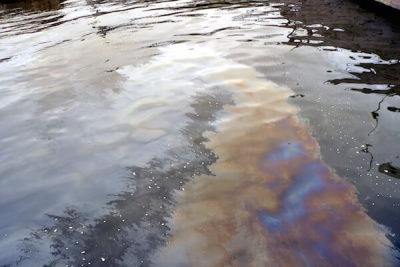
Reportan a Profepa incidentes de Hidrocarburos, pero le competen a ASEA

La Procuraduría Federal de Protección al Ambiente (PROFEPA) recibió durante el 2016, el reporte de mil 961 emergencias ambientales asociadas con sustancias químicas, de las cuales apenas 139 de los casos correspondieron a su estricta competencia y atribución legal.

Del total de emergencias,  mil 822 llamados se trataron de eventos relacionados directamente con el sector hidrocarburos, cuyo seguimiento y atención corres a cargo de la Agencia Nacional de Seguridad Industrial y de Protección al Medio Ambiente del Sector Hidrocarburos (ASEA).

De acuerdo al Centro de Orientación para la Atención de Emergencias Ambientales (COATEA) de la PROFEPA, alrededor del 86% de dichos incidentes correspondieron a derrames por tomas clandestinas ocurridos durante el transporte de las sustancias químicas por ductos.

De las 139 emergencias competencia de la PROFEPA, aproximadamente el 97% fueron terrestres, mientras que el restante 3% fueron marítimas. Con base en el tipo de evento, alrededor del 39% fueron derrames, seguidos de fugas e incendios, con aproximadamente el 22% cada uno, explosiones (15%) y otros (0.6%).

Por su ubicación, estas ocurrieron casi en un igual porcentaje (alrededor del 33%), en plantas, en transporte y en otras instalaciones no industriales. De las ocurridas en transporte, aproximadamente el 71% se presentaron en las carreteras del país, seguidas por las ocurridas en ductos (alrededor del 12%), las marítimas (8%), las ferroviarias (1.1%) y en otro tipo de transporte (0.2%)

De las emergencias atendidas por la PROFEPA durante 2016, alrededor del 44% presentaron afectaciones al suelo. De estas, en el momento del reporte de la emergencia, en el 47%, fue posible determinar el área de suelo afectada siendo esta aproximadamente de 1.35 ha.


Copyright: Oil and Gas Magazine

Adjudicaciones de la Ronda 1 permitirán vencer declinación petrolera

El sector hidrocarburos de México marcó el año 2016 un hito histórico con la licitación de contratos para la producción de aguas profundas, además de cerrar con broche de oro la Ronda 1, con la cual el país podrá revertir la declinación petrolera y aumentar su producción un 17.5 por ciento en 10 años.

De acuerdo con el socio líder de Energía y Recursos Naturales de KPMG, Rubén Cruz, en la actualidad se pierde alrededor de 3.8 por ciento de la producción anual, lo que representa que para la próxima década se haya reducido 38 por ciento, sin embargo, la expectativa es que con las actividades en aguas profundas se pueda recuperar el 43 por ciento.

“Se van a generar 900 mil barriles diarios de crudo si son exitosas de exploración en aguas profundas, lo que representa el 43 por ciento de la producción actual de Petróleos Mexicanos” (de dos millones 164 mil barriles diarios al mes de noviembre), afirmó el especialista en entrevista con Notimex.

Rubén Cruz destacó que esto significa un incremento de 5.0 por ciento en la producción petrolera de México, pero con las rondas anteriores se esperaba que genere producción adicional por 12.5 por ciento, por lo que en 10 años la producción nacional será un 17.5 por ciento más a la actual.

“Por primera vez se licitó contratos de producción en aguas profundas, eso rompió un hito en México muy importante, porque si bien ha sido uno de los principales países productores de petróleo en el mundo, se había quedado rezagado porque habían limitado sus actividades en aguas someras y tierra adentro”, resaltó.

De acuerdo con cifras de la Secretaría de Energía (Sener) y la Comisión Nacional de Hidrocarburos (CNH), estas adjudicaciones podrían detonar inversiones superiores a los 41 mil millones de dólares, durante la vigencia de los contratos, incluyendo la asociación entre Pemex y la empresa australiana BHP Billiton en el campo Trión.

En el caso de Trión, esto representa para la compañía una inyección de recursos frescos por 561.6 millones de dólares, mientras que el Fondo Mexicano del Petróleo recibirá 62.4 millones de dólares, además de no estar obligado a invertir recursos en el desarrollo del proyecto hasta que estos asciendan a mil 974 millones de dólares.

En 2017 México va por más

Para este año que comienza, el gobierno mexicano alista las siguientes licitaciones pertenecientes a la Ronda 2, de las cuales la presentación de propuestas de la licitación 2.1 relacionada a aguas someras se dará el 19 de junio de 2017; la 2.2 de campos terrestres el 14 de julio y la 2.3 se prevé para el 12 de julio.

En noviembre pasado, el titular de la Sener, Pedro Joaquín Coldwell, señaló que se asignará el primer semestre de 2017 a concluir las tres licitaciones que tiene en marcha y previó que antes de que acabe el sexenio se podrán hacer tres licitaciones más; una hacia el otoño de 2017, otra en el otoño de 2018 y una al final en el invierno de ese mismo año.

«Estamos considerando más campos de aguas profundas, aguas someras, bloques terrestres y la primera licitación de no convencionales», dijo en su momento el secretario de Energía.

A su vez, el director de Exploración de Pemex Exploración y Producción, José Antonio Escalera Alcocer, indicó a Notimex que la empresa seguirá participando en las licitaciones que vienen, por lo que están revisando las ofertas del Estado en estos procesos, para ver si complementan su portafolio y le agregan valor.

“Primero lo que tenemos que ver es que vamos a participar siempre y cuando estas oportunidades complementen nuestro portafolio por la parte exploratoria”, agregó el funcionario.

Invierte-tu-dinero-en-la-Bolsa-Mexicana-de-Valores


Copyright: 20 minutos.com