Mexico signed seven deepwater exploration and production contracts with private oil

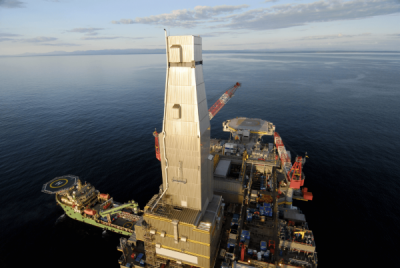
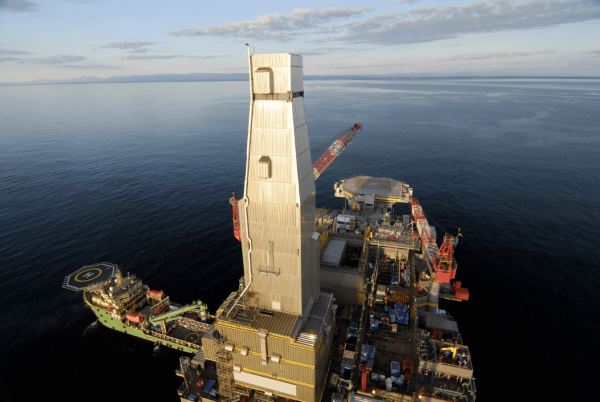
Mexico’s National Hydrocarbons Commission (CNH) presided over the signing of seven deepwater exploration and production contracts on Friday, bringing an end to the country’s historic Round One series of oil auctions.

The contracts were for blocks located in the Gulf of Mexico: three in the Perdido Fold Belt, a 40,000 sq.-kilometer (15,450 sq.-mile) area located in the northwestern part of the Gulf; and four in the Saline Basin, situated in the southern part of the Gulf.

The blocks were all awarded in early December.

The seven contracts are in addition to one signed last week by Mexican state oil company Petroleos Mexicanos (Pemex), American oil supermajor Chevron Corp. and Japan’s Impex that marked the first time Pemex had formed a consortium to compete for a block under a 2013 energy-sector overhaul ending the company’s nearly eight-decade monopoly.

Each of the contracts has a 35-year life span, but they can be extended for additional periods of 10 years and then five years.

In the Perdido Fold Belt, a unit of China National Offshore Oil Corporation signed contracts for Block 1 and Block 4, while a consortium made up of the local unit of France’s Total and the United States’ Exxon Mobil Exploration signed one for Block 2.

In the Saline Basin, a consortium made up of Norway’s Statoil, the United Kingdom’s BP Exploration and Total’s local unit signed contracts for Block 1 and Block 3.

A consortium made up of a unit of Malaysia’s Petronas, PC Carigali Mexico Operations; and Mexico’s Sierra Offshore Exploration signed a contract for Block 4, while a consortium made up of US energy company Murphy Oil’s local unit, the UK’s Ophir Energy, PC Carigali and Sierra Offshore inked another for Block 5.

Mexico’s energy sector, which has suffered a steady decline in crude output for more than a decade, will receive a major boost from oil production giants as a result of the Round One auctions, Energy Secretary Pedro Joaquin Coldwell said.

The companies that signed the contracts “are fully qualified and have the capital and experience to undertake projects of these dimensions (in which) there is no room for experimentation or error,” Coldwell said.

The seven blocks encompass a total area of 17,000 sq. kilometers and contain prospective hydrocarbon reserves estimated at 2 billion barrels of crude oil equivalent.


 

Enero NRGI_Broker_fianzas_sector_energetico-mexico-e1485213169858

Petroleumworld

03-13-2017

Crudo aprovecha debilidad del dólar

El petróleo subió el viernes gracias al debilitamiento del dólar y cerró una semana de vacilaciones atribuidas a temores por el futuro de la oferta.

El barril de light sweet crude (WTI), para entrega en abril, ganó 72 centavos a 53.33 dólares en el mercado de Nueva York.

En la plaza de Londres, el precio del Brent del mar del Norte subió 82 centavos a 55.90 dólares.

Tim Evans, analista de Citi, dijo que los intercambios de la jornada tendieron a un “prudente reequilibrio” luego de la fuerte caída de más de un dólar del jueves.

El crudo fue golpeado en la sesión previa por el pesimismo sobre el cumplimiento de los compromisos de reducir la producción que habían iniciado la Organización de Países Exportadores de Petróleo (OPEP) y Rusia.

En el balance semanal, el crudo acumuló una leve baja pero se mantiene desde fines del 2016 en un rango de precio de más de 50 dólares.

En ese contexto “el debilitamiento del dólar (..) ayudó a sostener el mercado”, indicó Evans.

El billete verde, cuya fortaleza pesa sobre los precios petroleros debido a que se fijan en esa moneda, perdió terreno este viernes por tomas de beneficios y porque la presidenta de la Reserva Federal, Janet Yellen, consideró posible que las tasas de interés estadounidenses suban este mes, lo cual, en teoría, vigorizaría al dólar.

Mezcla mexicana, en 45.43 dólares

En este cierre de semana, el crudo mexicano de exportación registró un incremento de 24 centavos, en comparación con la sesión pasada, al venderse en 45.43 dólares por barril, informó Petróleos Mexicanos.

Banco Base indicó que el petróleo finalizó la semana con pérdidas debido a que el aumento en la producción de inventarios de petróleo en Estados Unidos ha contrarrestado el esfuerzo de la OPEP de eliminar la sobreoferta mundial.

En lo que va del año, la producción de crudo en Estados Unidos aumentó en 2.99% (262,000 barriles diarios). A pesar de que el alza en la producción se encuentra muy por debajo al recorte que miembros de la OPEP realizan durante el año, las preocupaciones sobre el desequilibrio en los fundamentales aumentan.


información de AFP y Notimex / El Economista

Mar 5, 2017 |18:39

Mexico ETF Begins to Rebound Follow Trump Punishment

After being punished last year on speculation that now President Donald Trump could win the 2016 presidential election, the iShares MSCI Mexico Capped ETF (NYSEArca: EWW) is rebounding in earnest this year.

EWW, the largest Mexico ETF trading in the U.S., is higher by more than 9% year-to-date and has surged almost 7% over the past month.

With the peso also sliding in the wake of Trump’s win, the Mexico’s central bank could move forward with more rate hikes to stem the currency’s slide.

Although Mexico’s central bank said the first rate hike earlier this year was not the start of a new tightening cycle, the central bank surprised global investors last month when it boosted borrowing costs by 50 basis points to 4.75%, which is good for the country’s highest interest rate since 2009.

However, some investors believe Mexican stocks still offer value, particularly for investors willing to be patient with EWW.

“The central bank will hold its first $1 billion auction of non-deliverable forward contracts on Monday, offering a way for businesses with expenses in dollars but revenue in local currency to hedge against further declines in the peso. Fitch Ratings has said companies including America Movil SAB and TV Azteca SAB are among the most vulnerable to a weaker peso as their overseas debt gets more expensive in local-currency terms,” reports Isabella Cota for Bloomberg.

Investors who believe the Mexican peso may continue to depreciate but anticipate the markets will improve can look to currency-hedged ETF strategies to diminish the currency risks. For instance, the Deutsche X-trackers MSCI Mexico Hedged Equity Fund (NYSEArca: DBMX) and the recently launched iShares Currency Hedged MSCI Mexico (NYSEArca: HEWW) provide exposure to the Mexico’s market without the added currency risk of a depreciating peso currency.

The peso is an important part of the Mexico investment thesis because exports account for over a third of GDP in Latin America’s second-largest economy. So are oil prices because Mexico is one of the largest non-OPEC producers in Latin America.

The peso is “trading near the average price of the past 200 days — a technical indicator that, when breached, may indicate more gains. Trading volume is lower than average ahead of the auction, according to traders,” reports Bloomberg.


11 Octubre_shutterstock_377851117

Tom Lydon / ETF TRENDS

March 6, 2017 at 10:29 am


Hoy, convocatoria para segunda asociación de Pemex

Luego de las firmas de los contratos tanto de licencia con el Estado como de operación conjunta con su primer socio para desarrollo de un campo en Trión, Petróleos Mexicanos (Pemex) lanzará este lunes la convocatoria de su segundo farmout para llevar a cabo actividades de exploración y extracción en el área Ayín-Xulum mediante un contrato de producción compartida en aguas someras mexicanas.

Durante la aprobación de la migración de estas dos asignaciones a contratos el órgano de gobierno de la Comisión Nacional de Hidrocarburos (CNH) detalló que en estos campos, ubicados en la Sonda de Campeche, la asociación permitirá aumentar 2.8 veces las inversiones, al pasar del escenario sin socio de 831 millones de dólares a 2,335 millones de dólares para la extracción de 51,000 barriles (2.5% de la producción actual) en el pico de producción de los campos en el 2026. En estos campos sólo se ubica el pozo exploratorio Batsil y el plan de migración contempla la perforación de nueve pozos más en estas áreas que no han tenido producción.

Dado que ya existe una perforación en el área, que, según la dirección de Pemex Exploración y Producción (PEP), tiene un costo de alrededor de 100 millones de dólares, habrá un acarreo para el potencial socio de Pemex.

Si se realiza el mismo proceso de adjudicación que tuvo el campo Trión, la segunda licitación para encontrarle socio a Pemex en Ayín-Xulum se llevará a cabo el 15 de junio a la par del evento de adjudicación y fallo de los 15 contratos de producción compartida también en aguas someras.

Firma De Contratos

Asimismo, se concretará la firma del resto de los contratos de licencia de la cuarta licitación de la Ronda Uno -ya que la semana pasada se firmó el del bloque 3 Norte de Cinturón Plegado Perdido con el consorcio entre Pemex, Chevron e Inpex-, por lo que también este lunes la CNH instruirá que se lleven a cabo los de las áreas 1, 2 y 4 del Cinturón Plegado Perdido, adjudicadas a China Offshore Oil Corporation, al consorcio entre la francesa Total y la estadounidense Exxon Mobil y, nuevamente, a la estatal China Offshore, respectivamente.

El regulador también aprobará las firmas en las áreas ubicadas en la Cuenca Salina del Golfo, donde los bloques 1 y 3 fueron adjudicados al consorcio integrado por la noruega Statoil, la británica BP y la francesa Total; el bloque 4 quedó en manos del consorcio entre la malaya PC Carigali y la mexicana Sierra Offshore, y el bloque 5 será operado por otro consorcio, en el que participan PC Carigali y Sierra, junto con la estadounidense Murphy Energy y la británica Ophir.

El proceso de farmout 
para encontrarle socios a Pemex

 Después de que Pemex realiza la migración del modelo de asignación de alguno de sus campos a un contrato de extracción del nuevo régimen, solicita a la CNH que conduzca una licitación similar a la de las Rondas para encontrarle socio. El regulador publica la convocatoria, contrato y bases de licitación entre el Estado y la potencial sociedad, mientas que Pemex publica a su vez sus condiciones y el acuerdo de operación conjunta. El potencial socio oferta regalías mínimas porcentuales para el Estado junto con otros criterios de adjudicación, como bonos a la firma y asume las condiciones y la proporción de participación en el contrato que el gobierno y Pemex ofrezcan.


pemex-1024x679


Karol García / El Economista

 Mar 5, 2017 |23:26

BHP inks oil deal with Pemex Mexico

BHP Billiton has signed a contract with Pemex Exploration & Production Mexico to finish work on the Trion discovery in the deepwater Gulf of Mexico.

BHP secured a 60 per cent interest in the resource in December last year with Pemex retaining the remaining 40 per cent stake.

Trion has an estimated recoverable resource of 45Mmboe and, after full appraisal, is set to become one of the top 10 fields discovered in the Gulf of Mexico in the last 10 years.

The new agreement includes the delivery of a Minimum Work Program, which consists of drilling one appraisal well, one exploration well and the acquiring additional seismic data.

The signing ceremony was held at the Official Residence of the president in Mexico City on Saturday, attended by Mexican president Enrique Peña Nieto, BHP CEO Andrew Mackenzie, and Pemex director general José Antonio González Anaya.

Mackenzie said the agreement was an historic moment for Mexico and the start of a new partnership between Pemex and BHP.

“It is an honour to be the first foreign company to partner with the people of Mexico in developing their significant petroleum resources for mutual benefit,” Mackenzie said.

Peña Nieto said the partnership with BHP will bring greater development for the country.

BHP president operations petroleum said the agreement aligned with the company’s plans to conduct oil exploration and development of deep water oil resources.

‘‘We have a long history as a top operator in the Gulf of Mexico and we are excited to bring our operational expertise to the partnership with Pemex,” Pastor said.

Sharon Masige / Oil&Gas Australian mining

March 6, 2017

Mexico’s Pemex Jan crude output drops 10.6 pct from a year ago

Mexican national oil company Pemex produced 10.6 percent less crude oil in January than in the same month last year, the company said.

January crude output averaged 2.02 million barrels per day (bpd), down from 2.26 million bpd during the same month in 2016, according to company data released on Friday.

Meanwhile, crude oil exports were down 3 percent in January compared to the year-ago period.

Shipments for the month averaged nearly 1.09 million bpd, compared to 1.12 million bpd exported in January 2016.

About half of Mexico’s crude exports currently go to the United States.

The Mexican government is in the midst of implementing a sweeping energy reform finalized in 2014 that ended the decades-long production monopoly enjoyed by Pemex, formally known as Petroleos Mexicanos.

The reform also paved the way for first-ever oil auctions open to private and foreign producers, four of which were concluded last year. While a range of oil companies won the blocks on offer, significant streams of new output are not expected for at least several years.

Mexico’s oil regulator, the administrator of the auctions, is expected to oversee three auctions covering a mix of shallow water and onshore fields, in addition to a deep water auction over the course of this year.

Mexican crude output has declined over the past dozen years from a peak of 3.4 million barrels per day in 2014.

The government expects crude production to average 1.94 million bpd this year, and between 1.9 million to 2.0 million bpd in 2018.

mexico-economia

Reuters (Reporting by David Alire Garcia; Editing by David Gregorio) / Hellenic Shipping News

Mexican Shallow Water E&P: On The Road Again?

Too much fanfare and accompanied by voluminous industry coverage, Mexico recently concluded Round 1.4, the country’s first ever deepwater licensing round. However, Mexico’s shallow waters may yet have a future too: Bay of Campeche reserves remain considerable and indeed, the country’s third shallow water bid round is ongoing. It is therefore worth reviewing the current state of shallow water E&P in Mexico.

Veering Off Course

Mexican offshore oil is currently produced entirely from shallow water fields, as has always been the case. The key sources of Mexican offshore oil have been several large field complexes such as Cantarell and Ku-Maloob-Zaap. As these fields and others came online, the country’s offshore oil output grew with a robust CAGR of 6.6% from 1980 to 2004, reaching a peak of 2.83m bpd in 2004. As the graph implies, four complexes accounted for 93% of this production. Decline set in thereafter at ageing fields (production at Cantarell began at the Akal field in 1979). Pemex – the sole operator of Mexican offshore fields prior to 2014 – tried to halt production decline, but with little success, given budget and technical constraints. Thus by 2013, offshore oil production at the four key field complexes had fallen to 1.31m bpd, accounting for 69% of Mexico’s offshore oil production of 1.90m bpd.


Getting Back On Track

This situation prompted President Peña Nieto’s government to initiate energy sector reforms in 2013, opening up the country’s upstream sector to foreign companies for the first time since 1938. Pemex was granted 83% of Mexican 2P reserves in “Round Zero” in 2014. The first shallow water round, Round 1.1, followed in December 2014. Only two of 14 blocks were awarded though, reportedly due to unfavourable fiscal terms inhibiting bidding by oil companies. The authorities then improved terms before launching Round 1.2 (shallow water), Round 1.3 (onshore) and Round 1.4 in 2015. Round 1.2 was better received than 1.1: as per the inset, 60% of blocks were awarded (75% of the km2 area on offer). One of the round’s victors, Eni, has already been granted permission to drill four appraisal wells on Block 1.

Turning Things Around?

In light of these positives, there are high hopes for Round 2.1, a shallow water round launched in July 2016. Indeed, 10 out of the 15 Round 2.1 blocks are in the prolific Sureste Basin, home to the Cantarell complex. Eight of these ten areas are unexplored, so there is sizeable upside potential, and have been mapped with 3D seismic, so operators could begin drilling promptly. Moreover, the surface area of the blocks in Round 2.1 are twice that of Round 1.1. It should also be noted that according to a 2016 IEA study, Mexico’s shallow waters still account for 29% of the country’s remaining technically recoverable oil resources. Finally, with rates for a high spec jack-up in the GoM assessed at about $85-90,000/day in January 2017, down 45% on three years ago, some oil companies might be tempted to make a move on a round that could offer a relatively low cost means to grow oil reserves and production.

So arguably, Mexican shallow water E&P is on the road again. There are potential hazards of course, such as oil price volatility or Mexico’s relationship with the US. But it is not implausible to think that Mexican shallow water oil production might speed up again in the coming years.

NRGI_Broker_contratos_energeticos_requisitos

Clarkson Research Services Limited /Hellenic Shipping News

27/02/2017

Proposed border tax could harm U.S.-Mexico energy trade: official

A border tax floated by aides to U.S. President Donald Trump is «not a good idea» for bilateral energy trade, a senior Mexican official said on Wednesday, also confirming that Mexico’s second-ever deepwater oil auction would happen this year.

A 20 percent border tax on Mexican imports to the United States has been pitched by the Trump administration as one way to force Mexico to pay for a new border wall, a top campaign promise.

Separately, a so-called border adjustment tax has been proposed by the new administration and its Republican allies in Congress that in theory would tax imports but not exports.

Both proposed taxes face opposition from U.S. oil refiners and automakers, among other sectors, warning they would raise consumer prices.

«We don’t see this kind of a tax as a good idea,» said Aldo Flores, Mexico’s deputy energy minister for hydrocarbons.

«Our position continues to be that free trade and the free flow of these goods has benefited both countries, strengthening the energy security of both,» he said.

Relations between the United States and Mexico are especially tense as Trump has threatened to upend nearly a quarter century of free trade, deport millions of illegal immigrants and build his signature border wall while getting Mexico to pay it, something the Mexican government has said it will not do.

For decades, the two neighbors have nurtured a robust cross-border energy trade, with crude oil produced by state company Pemex sold to U.S. refiners, while American producers sell natural gas and fuels like gasoline and diesel to Mexican buyers.

Last year, the total value of U.S. energy exports to Mexico totaled $20.2 billion, while Mexico exported mostly crude oil worth $8.7 billion to the United States, in a reversal of the historic balance of energy trade between the two countries, according to U.S. Energy Information Administration data.

Similarly, Mexico’s crude shipments could be pressured if the United States approves the new Trump-backed permit for TransCanada’s (TRP.TO) proposed Keystone XL pipeline and the project brings new supplies of Canadian heavy crude to U.S. refineries.

«Supposing that (the pipeline) is completed, that changes the competitive playing field for Mexican crude,» said Flores, adding that producers of oil in Mexico would have to be more creative in how they market their output.


DEEPWATER AUCTION

Mexican and Canadian heavy crudes have competed for years for buyers among U.S. Gulf coast refineries.

While Mexico’s oil regulator is planning three new oil auctions later this year, covering shallow water and onshore fields, a new deepwater auction is also planned.

«It will be toward the end of the year,» said Flores, who also sits on the Pemex board and took over as deputy energy minister in August.

He declined to specify where the deepwater blocks would be located.

Flores added that a first-ever auction of shale oil and gas blocks would «probably» be scheduled, noting that necessary regulations would be published before the end of the year.

Last year, Mexico concluded four first-ever oil auctions, part of a landmark energy opening finalized in 2014 that ended Pemex’s decades-long monopoly, including a December deepwater auction that awarded 10 blocks to a wide range of international oil majors.

While Mexican crude output has declined over the past dozen years from a peak of 3.4 million barrels per day, Flores said he expected output to total 1.9 million to 2.0 million bpd in 2018, similar to a forecast of 1.94 million bpd for this year.


3 Octubre_shutterstock_331572071


David Alire Garcia and Adriana Barrera / Reuters

Wed Feb 15, 2017 | 8:09pm EST

Mexico, NAFTA and energy on the same side

When it comes to NAFTA and energy, there is no doubt that Mexico gets the better end of the deal with a series of special carve outs for its national industry. The result has been an unbalanced, incongruous relationship between the United States, Mexico and Canada. In other words, when it comes to energy, NAFTA is anything but free trade .

Take the following examples from chapter six of NAFTA, addressing energy trade:

An American company is permitted to open a power plant in Mexico to generate power for Texas, but, according to the provisions carved out for Mexico’s nationalized energy industry, the power plant would have to sell all of its excess power to Mexico’s Federal Electricity Commission (CFE) at the rate negotiated by CFE. ( Annex 602.3(5) ) If a cogeneration plant is built in Mexico with the express purpose of providing power for a Canadian company’s factory in Mexico, then, according to NAFTA, it must sell any excess power to CFE. ( Annex 602.3(5)(b) ) In both cases, the American and Canadian operations face a disadvantage in price negotiations because they are required to sell excess power to CFE only.

When it comes to oil and gas exploration, NAFTA includes a provision requiring the three countries to maintain incentives to encourage companies to find new energy reserves. ( Article 608.1 ) However, in the special provisions, Mexico is exempted from incentivizing – or even permitting – private exploration and development. This special provision makes clear that “the Mexican State reserves to itself” all E&P, nuclear power, foreign trade, transportation, storage, distribution and electrical supply within its own borders. ( Annex 602.3(1) ). In the U.S. and Canada, free trade in energy exploration must be promoted. In Mexico, the government can do what it chooses .

Mexico is allowed to “restrict the granting of import and export licenses for the sole purpose of reserving foreign trade” in a variety of energy goods including (but not limited to): aviation fuel, gasoline, shale and tar sands, diesel oil, most forms of commercial gasses and kerosene. ( Annex 603.6 ). The U.S. and Canada must keep import and export licenses open.

These carve outs meant to favor Mexico’s national energy industries have not been kind to Mexico’s economy, energy supply or business development. Mexico has insisted one form or another of nationalized energy for almost a century . Basic tenants of capitalism explain that a closed, national energy regime prohibits competition, leading to misalignment of resources and prices. Absent a truly robust and well-managed system in Mexico, this is what happened.

In 2014, historically low levels of oil production, higher energy consumption and depleted oil reserves led Mexico amend its constitution to open Mexico’s state energy industries to foreign investment. These changes permitted the Mexican government to auction off certain oil and gas leases to foreign, private companies for development and to allow foreign companies to participate in owning pipelines, refineries, petrochemical plants and even electricity generation. Mexico also committed to bringing gasoline and natural gas prices in line with market prices rather than setting them artificially.

Although the process has not always been smooth – Mexico is experiencing gasoline shortages and spikes in gasoline prices, in part, as a result of these efforts – the overall trend towards liberalization in Mexico’s energy industry is promising. Many companies have bid for offshore leases to produce oil and gas in the Gulf of Mexico and the opportunities to invest in Mexican energy businesses are growing.

Since the Mexican state is no longer the only legal investor, owner, producer, buyer and seller of energy and energy products in Mexico, there is now a potential to renegotiate chapter six of NAFTA and eliminate the special provisions and carve outs for Mexico. This would not only help improve Mexico’s energy situation, but improve trade relations amongst the three North American trade partners.

Grupo México proyecta invertir en energía

Grupo México proyecta invertir en energía

Story by Ellen R. Wald, Ph.D. is a historian and scholar of the energy industry / Petroleumworld

02 17 2017

El barril de petróleo tipo Brent se cotiza en 56.25 dólares, al inicio de la sesión

El barril de petróleo tipo Brent del Mar del Norte para entregas en abril se cotizaba en 56.25 dólares al inicio de la sesión de hoy (08:00 GMT) en el mercado electrónico Intercontinental Petroleum Exchange (ICE).

El Brent perdía 37 centavos de dólar (0.65 por ciento) respecto al cierre previo, de 56.62 dólares por barril. En tanto, el crudo estadounidense West Texas Intermediate (WTI) para entregas en marzo, también a las 08:00 GMT, caía 40 centavos de dólar (0.74 por ciento) y se cotizaba en 53.46 dólares por barril. 

Por su parte, la canasta de la Organización de Países Exportadores de Petróleo (OPEP) se cotizó el viernes en 53.23 dólares, lo que representó una ganancia de 47 centavos de dólar (0.89 por ciento) respecto al cierre previo, informó  el cártel.

Copyright: El Sol de México