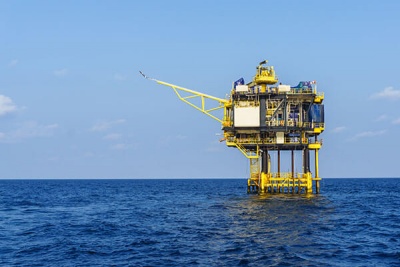
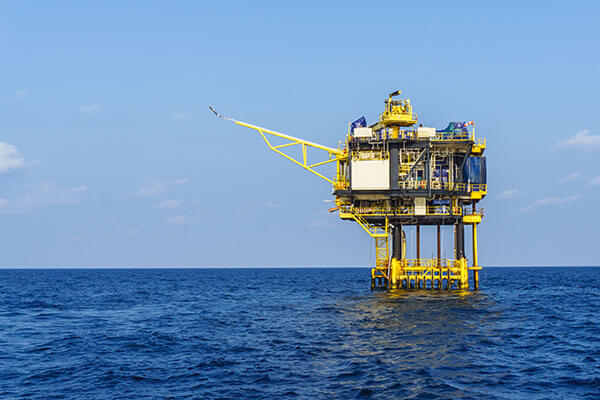
“La empresa petrolera Murphy Oil estima invertir alrededor de 20 millones de dólares para perforar el pozo petrolero que ganaron en la pasada licitación de campos de hidrocarburos Ronda Uno, el cual prevén trabajar en 2018.
“Hemos comprado nuevas pruebas sísmicas que nos dan señales positivas sobre la capacidad del campo (petrolero). Esto es lo que vamos a invertir (20 millones de dólares), pues este campo está en un consorcio”, dijo ante analistas Roger Jenkins, presidente y CEO de la compañía.
La estadounidense ganó campos petroleros en aguas profundas durante la licitación 1.4 de Pemex.
“El bloque es muy grande, más de 100 bloques normales del Golfo de México. Estamos muy felices con las imágenes que tenemos, con las perspectivas que tenemos. Fue el bloque más disputado en la venta y estamos buscando perforar el pozo a finales de 2018”, destacó el directivo.
El pasado diciembre, justo cuando se anunciaron los ganadores de la Ronda 1.4, Adam Michael, representante de Murphy Oil, Ophir Energy, PC Carigali y Sierra Exploration (ganadores del quinto campo en la Cuenca Salina), dijo que estaban muy felices por el resultado, pues a pesar de que esperaban ganar más campos, “salimos satisfechos del proceso”.
Sobre otros negocios, Roger Jenkins dijo que en Eagle Ford, Estados Unidos, la producción del primer trimestre de 2017 fue en promedio de 46 mil barriles diarios de gas shale.
“Hemos sido capaces de cumplir con nuestra primera guía de producción con un menor número de pozos en operación, ya que nuestra base de pozos superó las expectativas”, refirió Jenkins.
La petrolera estadounidense Murphy Oil, con sede en Arkansas, es una firma de exploración y producción. Produce petróleo y gas natural en los Estados Unidos, Canadá y Malasia y tiene más de mil 200 empleados en todo el mundo.”
https://v2.nrgibroker.com/wp-content/uploads/2016/11/15-Noviembre_shutterstock_3951309311-e1479165648131.jpg267400adminhttps://v2.nrgibroker.com/wp-content/uploads/2025/12/logo-nrgi.svgadmin2017-05-15 12:42:292018-01-20 01:05:22Murphy Oil se alista para perforar pozo en México en 2018
“Exxon Mobil Corp. and Petrobras have held talks on a strategic partnership that could involve multiple assets in Brazil and overseas in different segments of the industry, similar to the $2.2 billion deal signed with Total SA in December, said people familiar with the conversations.
Such a deal could give Exxon access to oil fields and infrastructure in Brazil while state-controlled Petroleo Brasileiro SA could gain from Exxon’s expertise in production, refining and distribution, the people said. The company clarified in a statement Tuesday that there is no ongoing negotiation aiming at a strategic alliance with Exxon.
“Petrobras stresses, however, that it’s constantly in touch with companies in the oil and gas sector to evaluate opportunities and share experience,” the company said in the statement.
International oil companies are taking a closer look after Brazil eased nationalist regulations and opened the market to more competition. Carla Lacerda, Exxon’s country chief, said earlier this month that the U.S.-based oil giant sees great opportunities in Brazil. Last week, Petrobras Chief Executive Officer Pedro Parente met in Houston with both Lacerda and BP Plc’s head of Latin America, Felipe Arbelaez, the people said, asking not to be named because the discussions were private.
Arbelaez confirmed that he and Parente had talked in “a number of meetings.” He said that with the policy changes being undertaken by Brazil’s government, “all companies are reviewing their Brazil strategy.”
Lauren Kerr, an Exxon spokeswoman, declined to comment. “As a matter of practice we don’t comment on rumors or speculation,” she said.
In December, France-based Total agreed to buy stakes in Brazilian oil fields and energy infrastructure in a $2.2 billion deal that is expanding its presence in Latin America’s largest economy.
Total’s Deal
That agreement included stakes in the Iara and Lapa offshore prospects, and gives Petrobras the option to buy into a field in the Gulf of Mexico, the Rio de Janeiro-based company said at the time. Total also acquired 50 percent of two thermoelectric plants in the Bahia area and the right to use a regasification unit in the city. It may study more purchases from Petrobras, Total Chief Executive Officer Patrick Pouyanne said when the deal was announced.
Other European oil producers have also moved to grab a share of the deep-water discoveries that are driving Brazil’s production growth. Statoil ASA bought Petrobras’s stake in the Carcara find last year in a $2.5 billion deal, and Royal Dutch Shell Plc expanded in the pre-salt region through its acquisition of BG Group Ltd.
In recent months Michel Temer’s government has removed Petrobras’ exclusivity to operate in the pre-salt, and eased buy-in-Brazil requirements for platforms and equipment. Only one pre-salt field, the giant Libra discovery, has been auctioned in this decade, and under terms that guaranteed Petroleo Brasileiro SA, as it is formally known, control of operations.
While single wells in the pre-salt region can produce more than 40,000 barrels a day, among the most productive in the world, Exxon previously had a rare case of exploration failure in at a concession it abandoned in 2012.
«We are here to say we are going to try again,» Lacerda said at an event in Houston last week. «Exxon Mobil sees great opportunities in Brazil.»
9 de mayo de 2017 12:43 GMT-5 9 de mayo de 2017 23:01 GMT-5
https://v2.nrgibroker.com/wp-content/uploads/2016/08/Exxon-1-e1471902162629.jpg267400adminhttps://v2.nrgibroker.com/wp-content/uploads/2025/12/logo-nrgi.svgadmin2017-05-15 12:29:332017-05-15 12:29:33Exxon, Petrobras Said to Have Discussed Strategic Partnership
Reporting by David Alire Garcia; Editing by Andrew Hay
«May 5 Mexican national oil company Pemex said on Friday that March crude exports fell to a record low of just above 1 million barrels per day (bpd), while oil output for the month also dipped.
Pemex’s March crude shipments averaged 1.001 million bpd, the lowest level of monthly exports going back to at least 1990 when records began. March exports were down nearly 6 percent compared with the same month last year.
Meanwhile, crude production during the month fell 9 percent to average 2.018 million bpd.
Pemex’s oil output hit a peak of 3.38 million bpd in 2004, but since then has steadily declined.
A four-year-old energy overhaul that ended Pemex’s decades-long monopoly on production led to the first-ever competitive oil auctions and joint venture partnerships, but fresh output streams from new entrants in the market are not expected for several years.
On Wednesday, despite lower oil production, Pemex reported its first quarterly profit in five years on higher sales and rising prices, gaining some $4.7 billion during the January-March period.»
https://v2.nrgibroker.com/wp-content/uploads/2017/02/economy-esp-21-feb-e1487651295872.jpg266400adminhttps://v2.nrgibroker.com/wp-content/uploads/2025/12/logo-nrgi.svgadmin2017-05-08 21:57:352017-05-08 21:57:35Mexico’s Pemex says March crude oil exports hit record low
«Petroleos Mexicanos plans to develop most of the 120 oilfields the government granted the state-owned company, returning «only a very low percentage,» according to the company’s chief executive officer.
The production regions were given to Pemex, as the company is known, when Mexico’s oil industry opened to private competition in 2014. Pemex had three years to invest in the fields or return them to the regulator to be auctioned in future bidding rounds.
As the three-year deadline nears, Pemex is likely to maintain the majority of these fields, Jose Antonio Gonzalez Anaya, the company’s CEO, said in a Bloomberg Television interview from Houston.
«We are trying to make progress to make sure we meet the regulator’s requirements, especially the ones where we know there is oil and where there is production,» he said. «I think we will develop the fields that have been assigned to us.»
Appointed as Pemex’s CEO last year, Gonzalez Anaya’s impact on the company’s ailing financial standing has been immediate. After four years of losses, Pemex yesterday reported first-quarter earnings of 87.9 billion pesos ($4.6 billion).
«The last time we posted a profit the price of oil was $100 per barrel. To post a profitable result when the price of oil is around $40 is important,» Gonzalez Anaya said. «This is no small achievement.»
Production Growth
Pemex, which has seen oil output fall every year since 2004, hopes production will stabilize this year and possibly increase as soon as 2018, he said. In addition to joint ventures planned in onshore, shallow and deep waters fields, Pemex is also looking to «cluster small allocations and small fields so that we can migrate them together,» he said.
The company is counting on a recently implemented oil price hedge — independent of the Mexican government’s hedging program — to give Pemex «some degree of certainty to our investment and to our planning,» Gonzalez Anaya said. Pemex, which hadn’t hedged independently from the government in 11 years, will likely use the tool again next year, he said.
Pemex will also seek additional hydrogen unit joint ventures at its refineries, similar to the partnership signed with Air Liquide SA in February at the Tula refinery, he said.
“This model will be replicated for other refineries, and I think things will run much better,” Gonzalez Anaya said of the additional partnerships planned for refineries.»
https://v2.nrgibroker.com/wp-content/uploads/2016/06/shutterstock_1601526051-e1465842068653.jpg267400adminhttps://v2.nrgibroker.com/wp-content/uploads/2025/12/logo-nrgi.svgadmin2017-05-08 21:30:282017-05-08 21:32:02Pemex Likely to Return Very Small Amount of Fields to State: CEO
“Oil rose from its lowest close in a month amid estimates that U.S. crude inventories continue to shrink, although refined products are growing more plentiful.
Futures gained as much as 0.9 percent in New York after dropping 1 percent Monday. U.S. crude stockpiles are forecast to have decreased for a fourth week from a record last month, according to a Bloomberg survey before a report from the Energy Information Administration on Wednesday. Meanwhile, U.S. gasoline and distillate inventories probably climbed last week. The industry-funded American Petroleum Institute will release its supply data on Tuesday.
Oil has fallen the past two weeks on concerns increasing U.S. crude production will offset efforts by the Organization of Petroleum Exporting Countries and its allies to eliminate a global supply glut. While Fereidun Fesharaki, the head of industry consultant FGE, says OPEC is certain to extend output cuts when its ministers meet later in May, industry data showed American rigs targeting crude climbed to the highest level in two years.
“Everyone is waiting for the oil-inventory drawdowns materializing as a result of the OPEC and non-OPEC cuts,” said Giovanni Staunovo, an analyst at UBS Group AG in Zurich.
West Texas Intermediate for June delivery increased 38 cents to $49.22 a barrel on the New York Mercantile Exchange at 12:15 p.m. London time. Futures fell 49 cents to $48.84 on Monday, the lowest settlement since March 28. Total volume traded was about 16 percent above the 100-day average.
U.S. Fuels
Brent for July settlement rose 54 cents to $52.06 a barrel on the London-based ICE Futures Europe exchange. The contract dropped 53 cents to settle at $51.52 a barrel on Monday. The global benchmark crude traded at a $2.52 premium to July WTI.
Supplies of gasoline probably rose 1 million barrels to 242 million and inventories of distillate fuel, a category that includes diesel and heating oil, surged 1.5 million barrels to 152.4 million last week, according to a Bloomberg survey of eight analysts. Nationwide crude stockpiles are forecast to have dropped by 3.25 million to 525.5 million barrels in the week ended April 28.»
https://v2.nrgibroker.com/wp-content/uploads/2016/10/11-Octubre_shutterstock_3936926201-e1476147259441.jpg267400adminhttps://v2.nrgibroker.com/wp-content/uploads/2025/12/logo-nrgi.svgadmin2017-05-02 16:19:312017-05-02 16:19:31Oil Rises From One-Month Low Before U.S. Crude Inventory Data
“Petróleos Mexicanos (Pemex) buscará socios mediante dos procesos de farmout este año en campos maduros de Tabasco, luego de que la Comisión Nacional de Hidrocarburos (CNH) aprobara este viernes los términos de las licitaciones en los campos de extracción en tierra Cárdenas-Mora y Ogarrio, de crudo ligero, donde la estatal petrolera no será operador y tendrá una participación de 50% en cada proyecto.
Los ganadores de los contratos de licencia, que tendrán vigencia de 25 años prorrogables por dos periodos de cinco años cada uno, serán anunciados el 4 de octubre.
La convocatoria de estos dos nuevos procesos de farmout será publicada hoy martes, en el Diario Oficial de la Federación y posteriormente el regulador publicará las bases de licitación, modelos de contratos y acuerdos de operación conjunta entre los potenciales socios. El primero de los bloques en concurso se compone de dos campos maduros: Cárdenas y Mora, que se ubican a 62 kilómetros de Villahermosa, Tabasco. Su desarrollo comenzó en 1982 y en la actualidad tienen una producción conjunta de 6,250 barriles de petróleo por día y 20.7 millones de pies cúbicos diarios de gas.
El primer campo, Cárdenas, comprende un área estimada de 104 kilómetros cuadrados, mientras que Mora tiene una superficie de 64 kilómetros cuadrados. En conjunto cuentan con reservas totales 3P del orden de 94 millones de barriles de petróleo crudo equivalente al 1 de enero del 2016, con calidad de crudo ligero de 39 grados API.
El campo Ogarrio se ubica en el municipio de Huimanguillo, Tabasco, a 65 kilómetros de Coatzacoalcos, Veracruz. Su desarrollo comenzó en 1964 y hasta la fecha Pemex ha reportado la perforación de 530 pozos tanto exploratorios como productivos en su interior. Cubre un área estimada de 153 kilómetros cuadrados y reservas 3P de 54 millones de barriles de petróleo crudo equivalente, principalmente de crudo ligero de 37 grados API.
Ogarrio produce 6,560 barriles diarios de petróleo y 25.08 millones de pies cúbicos por día de gas, de acuerdo a datos de la CNH a febrero. De acuerdo con expertos de la CNH, estos bloques presentan condiciones idóneas para la implementación de técnicas de recuperación mejorada, por lo cual el socio de la estatal podría tener el perfil de especialización en estas actividades.
Reconocen costos a Pemex en Ayín-Batsil
La apertura de propuestas y designación de ganadores de estos campos terrestres se llevará a cabo junto con el farmout del área contractual en aguas someras Ayín-Batsil, que tendrá un contrato de producción compartida para el cual la CNH aprobó para Pemex una recuperación de costos ya sobre la utilidad compartida cuando los campos comiencen a producir, que ascenderá a 249 millones 909,457 pesos, ya que a diferencia de los contratos de licencia, no bastará el monto de acarreo previsto en el acuerdo de operación conjunta.”
“OPEC is certain to extend cuts in oil output when its ministers meet later in May and will need to keep limiting production until as late as the end of 2018, a veteran market analyst said.
The reaction of global crude inventories to the cuts will determine how long the Organization of Petroleum Exporting Countries and allied producers stick with their policy of pumping less oil to counter a global glut, said Fereidun Fesharaki, the head of industry consultant FGE. Oil may drop to as low as $40 a barrel if U.S. stockpiles increase, he said Monday at the Middle East Petroleum and Gas Conference in Dubai.
“The probability that OPEC will agree to extend its cuts is at 100 percent,” said Fesharaki, a former adviser in the late 1970’s to the Iranian Prime Minister. “And the cuts will have to be extended even beyond this year, to the middle or even to the end of next year.”
OPEC and 11 other producers including Russia agreed in December to pare production by 1.8 million barrels a day during the first half of this year. They’re seeking to eliminate an oversupply that depressed prices to less than half of their 2014 high, when benchmark Brent crude sold at $115 a barrel. Brent jumped 52 percent last year for the first annual gain after three consecutive decreases and was trading at $51.65 a barrel, down 40 cents, at 5:18 p.m. in Dubai.
The oil market needs more time to start using up stored inventories, which are on the verge of declining, Harold Hamm, chief executive officer of Oklahoma-based Continental Resources Inc., said at the same conference. U.S. oil output is poised to expand this year by at least 400,000 barrels a day, most of it from the Permian Basin, to a level of about 9.4 million barrels a day, he said.
OPEC plans to decide on May 25 at a meeting in Vienna whether to extend its production limits. There’s a consensus that the group will extend the cuts into the second half, Saudi Arabian Minister of Energy and Industry Khalid Al-Falih said last week.”
https://v2.nrgibroker.com/wp-content/uploads/2016/07/shutterstock_3964837481-e1469471474100.jpg266400adminhttps://v2.nrgibroker.com/wp-content/uploads/2025/12/logo-nrgi.svgadmin2017-05-02 15:57:192017-05-02 15:57:19OPEC May Need to Extend Production Cuts to End of Next Year
«En promedio nacional, el volumen de petróleo contenido todavía en los yacimientos es de 76.2% en comparación con el volumen original, mientras que queda 83.2% del gas original que no ha sido extraído. De ahí que en México existe todavía la posibilidad de producir 11,000 millones de barriles de petróleo crudo equivalente mediante técnicas de recuperación mejorada. Esto es más del doble de las reservas probadas actuales, que son de poco más de 9,000 millones de barriles.
A nivel global, sólo entre 10 y 25% de los hidrocarburos contenidos en los yacimientos es extraído utilizando las fuerzas primarias (la presión natural que con las perforaciones desplaza la materia impulsándola a salir). Para que el resto de los hidrocarburos logren llegar a la superficie, se requiere de técnicas mecánicas, como presión o calentamiento, o inyección de químicos en forma líquida o gaseosa, denominadas técnicas de recuperación secundaria o mejorada.
De acuerdo con los análisis de quien fuera comisionado de la Comisión Nacional de Hidrocarburos (CNH), Édgar Rangel, el investigador más respetado en el tema en nuestro país, QEPD, el factor de recuperación en México se estima en 15% mediante fuerzas primarias.
Certificación de reservas
Pablo Zárate, director del centro de análisis Pulso Energético de la Asociación Mexicana de Empresas de Hidrocarburos (Amexhi), explicó a El Economista que para potenciar la recuperación secundaria (EOR, por su sigla en inglés, mediante presión adicional) o recuperación incentivada IOR (en inglés, mediante inyección de químicos) se requiere de la decisión integral de llegar a esta etapa desde el arranque de los planes de exploración y desarrollo.
“Lo más importante en este tema es que efectivamente la recuperación mejorada puede añadir reservas que incrementan el valor de los activos de una empresa o de un territorio”, explicó.
Aunque en cada caso, la aplicación de técnicas de EOR y IOR para la producción comercial de hidrocarburos depende de la factibilidad económica para que el costo del barril no se eleve por encima del precio internacional.
Por tanto, la CNH podría incluir en el futuro la obligación de incluir estos planes dentro de los que deben presentar los contratistas desde que toman posesión de los yacimientos en los contratos de las rondas de licitación, por ejemplo.
Además, flexibilidad en los esquemas de asociación por etapas, que permitan añadir socios especializados en la exploración, que dejen el consorcio en la etapa del desarrollo, para que luego se integren los especialistas en recuperación mejorada al final de la etapa productiva, puede ser una forma de hacer factible la aplicación de estas tecnologías.
Cantarell
Según la investigación del 2005 liderada por Edgar Rangel, Cantarell había producido, hasta aquel entonces, poco más de 13,000 millones de barriles de petróleo crudo equivalente. Al actualizar la información hasta el 2016, Cantarell ya ha producido 14,500 millones de barriles de petróleo y 9,000 millones de pies cúbicos de gas.
Pero, de acuerdo con cifras la CNH, Cantarell contuvo originalmente 38,800 millones de barriles de petróleo y otros 18,000 millones de pies cúbicos de gas. Es decir, más de la mitad de los recursos de Cantarell siguen bajo tierra, a pesar de que el gigante ha sido protagonista de notorios esfuerzos por recuperar los recursos y mantener la presión del yacimiento, mucho más allá de lo que la presión natural del yacimiento hubiese permitido, como detalló Grecia Ramírez en su más reciente artículo publicado por Pulso Energético.
Cinco puntos para impulsar la recuperación mejorada:
Acceso a los yacimientos: Para las compañías es básico conocer la forma en que pueden acceder a los yacimientos, definir la aplicación de tecnologías y planear la explotación del campo de forma integral.
Aprovechamiento conjunto de infraestructura: El acceso a estos ductos, baterías de separación y medidores, entre otra infraestructura, es esencial para las empresas que buscan elevar el factor de recuperación de hidrocarburos en los campos.
Términos fiscales correctos: En el desarrollo de los yacimientos, el Estado puede considerar la aplicación de incentivos fiscales que hagan económicamente viables los proyectos.
Transición simplificada: En el mundo, distintas empresas arrancan el desarrollo de un proyecto y, cuando llegan al límite de su interés para explotarlo porque requieren nueva tecnología, suelen transferir los derechos a otra compañía.
Tiempos regulatorios apropiados: La presentación de documentos como los planes de evaluación y de desarrollo ocurre en muchos casos al mismo tiempo en periodos de tiempo complicados de cumplir para las empresas que toman la operación de campos que ya están en desarrollo.»
«Shipments of crude to the U.S. from Mexico fell to a new low last week, extending a trend that go back to when the Energy Information Administration began compiling preliminary weekly import data in June 2010.
Imports totaled 290,000 barrels a day in the week ended April 14, a 43 percent weekly drop that may have been triggered by weather-related closings at Mexico’s key export ports this month. But the shipments have been sinking for years. The 52-week average through April 14 was 561,000 barrels a day, down from about 630,000 a year earlier.
“The latest import levels are continuing a long trend,” Court Smith, director of research with shipbrokers MJLF & Associates, said by instant message from Stamford, Connecticut. “This is because of a combination of recent rise in refinery rates and historically declining production in Mexico.”
Production in Mexico has declined for 12 years in a row and this year will be less than 2 million barrels a day, the lowest level since 1980, according to Petroleos Mexicanos, the state producer, hurting sales of the benchmark Maya heavy crude.
«Pemex’s six refineries are also using more of the crude, lessening the need for exports. They processed 930,400 barrels a day in February, the most since June of last year, according to Mexico’s Energy Information Agency. The company expects to raise rates further to boost gasoline supply in the near term.
Refiners on the U.S. Gulf Coast, which are the primary users of Mexican crude, have been turning north for supplies, said Andy Lipow, president of Lipow Oil Associates, a Houston-based consulting company. Canadian imports averaged 3.16 million barrels a day over the 52 weeks through April 14, up from about 3.02 million a year earlier.
“Canadian crudes are making more headway into the U.S judging from the full pipes coming down from Canada,” Lipow said by phone Friday. “We do expect to see more heavy crude from Canada when projects like Suncor Energy Inc.’s Fort Hills mine come online toward end of the year.”
Mexico has increasingly turned to Europe and Asia to make up for the U.S. demand shortfall. While overall Mexican crude exports fell in the first half of April, sales to Spain have increased since February, according to estimates from vessel-tracking and U.S. bills of lading data compiled by Bloomberg oil-market specialist Bert Gilbert. Exports to India, South Korea, Japan and China also grew in February, Mexico customs data compiled by Bloomberg show.
“While U.S. Gulf refineries were in maintenance, heavy crude oil producers have had to send their shipments to other regions, such as Asia, where heavy crude has recently strengthened thanks to the OPEC cut,” said Ixchel Castro, an analyst at Wood Mackenzie in Mexico City. “Greater shipments of Maya to Asia allows Pemex to achieve better margins for its exports.”
Mexico crude imports may pick up as gasoline demand rises for summer and refinery maintenance ends, Castro said in an emailed response to questions.
“This is the season where we would normally expect more heavy crude imports for U.S. Gulf Coast coking plants,” she said.
Pemex didn’t respond to requests for comment.»
21 de abril de 2017 16:05 GMT-5 updated 22 de abril de 2017 6:00 GMT-5
https://v2.nrgibroker.com/wp-content/uploads/2016/08/shutterstock_3019641-e1470078110327.jpg267400adminhttps://v2.nrgibroker.com/wp-content/uploads/2025/12/logo-nrgi.svgadmin2017-04-24 14:00:512017-04-24 21:41:47Mexico Seeks New Home for Its Oil as Gulf Coast Turns to Canada
Reporting by Adriana Barrera, Additional reporting by Alexandra Editing by Dave Graham and and Peter Cooney
«Mexican state-run oil company Pemex plans a second deepwater «farm-out» joint venture in the Maximino and Nobilis areas in the Gulf of Mexico where super light crude has been found near the U.S. border, two people familiar with the matter said.
Speaking this week, the people said Pemex [PEMX.UL] would likely seek approval in June from the National Hydrocarbons Commission, or CNH, the industry regulator, to launch a tender for partners with the aim of announcing a winner in December.
«Maximino-Nobilis may be assigned in December and we hope the CNH will announce it in June,» said one of the sources. The people spoke on condition of anonymity because the plans are not yet public.
A Pemex spokesman said the firm was looking for a partner to develop Maximino and Nobilis, and that the proposal would be submitted for approval by the board in the next few days. The CNH would then need to decide on the time frame, he added.
The farm-outs are a central pillar of the government’s efforts to lure investment to Mexico since Congress opened up the country’s long-closed oil and gas industry to private investment in a legislative drive between 2013 and 2014.
Under the farm-outs, Pemex cannot choose which company would help it develop each project. The ultimate decision lies with the CNH following a round of competitive bids.
The process allows Pemex to share the risks and rewards of expensive deepwater oil development projects.
Australian mining and energy company BHP Billiton (BHP.AX) in December won the right to partner with Pemex in the first deepwater farm-out for the Trion light oil field, less than 50 miles (80 km) from the U.S.-Mexico maritime border.
A separate, shallow water farm-out auction for the Ayin-Batsil field is due to take place in October.
Pemex has sunk two wells in Maximino at a depth of 3,000 meters (9,840 feet), discovering super light crude.
In September 2016, Pemex said it had found super light crude in its Nobilis-1 well, also at some 3,000 meters.
Both areas lie in the Perdido fold belt, like Trion.»
https://v2.nrgibroker.com/wp-content/uploads/2016/08/shutterstock_198050741-e1472495688140.jpg267400adminhttps://v2.nrgibroker.com/wp-content/uploads/2025/12/logo-nrgi.svgadmin2017-04-24 13:18:302017-04-24 21:51:20Exclusive: Mexico plans second deepwater oil tie-up in Maximino, Nobilis areas – sources