
Oil Companies at Last See Path to Profits After Painful Spell

Source: NYT/ By STANLEY REED / AUG. 1, 2017

ABERDEEN, Scotland — This port city built of granite on the North Sea has taken a battering in recent years. Plunging oil prices hit the petroleum industry, which dominates the economy. Tens of thousands of jobs were slashed. Projects worth billions of dollars were sent back to the drawing board.

Oil executives here now speak with a relief similar to survivors of a fierce storm.

“I feel good about the North Sea, to tell you the truth,” Mark J. Thomas, North Sea regional president for the oil giant BP, said in an interview at the company’s offices near Aberdeen’s airport. “It is remarkably different than where we were even just a few years ago.”

The brighter mood masks what had been a difficult path for the energy sector around the world.

When oil prices fell, the industry scrambled to adjust. It initially relied on tried-and-true tactics: cutting jobs and investment. But then companies realized they had to go further, starting a far-reaching reworking of their businesses to embrace new technologies and construction methods to stretch each dollar just a little more.

The result has been drastically lower operating costs and higher cash flows. Learning to live in a weaker oil price environment gives them upside if prices firm up. This shift was borne out in recent days as major oil companies, including Chevron, Exxon Mobil, Royal Dutch Shell and Total, reported much healthier results.

On Tuesday, BP was the latest to publish its earnings, reporting a $144 million profit for the 2nd quarter compared with a $1.4 billion loss in the period a year earlier.

Companies now reckon that current price levels will most likely persist, and that the $100 oil of a few years ago was “a great aberration,” Daniel Yergin, the oil historian, said in an interview. Indeed, BP’s chief executive, Robert Dudley, said on Tuesday he was planning on the basis that oil prices would remain around their current levels for the next five years.

“Nobody is standing around, waiting for prices to go up substantially,” said Mr. Yergin, vice chairman of the research firm IHS Markit. “The industry is in the middle of re-engineering its processes and its technologies to be a $50 industry, not a $100 industry.”

Many companies have moved to simplify the construction of rigs and platforms, big-ticket items that cut into profit.

11 Octubre_shutterstock_377851117In an era of higher oil prices, companies loaded up oil exploration sites with expensive custom-made extras. But they are moving forward now with stripped-down projects featuring standardized designs aimed at cutting costs.

BP, for example, sent a $20 billion Gulf of Mexico project called Mad Dog Phase 2 back for a rework. Instead of a giant specially built platform nicknamed Big Dog, the engineers used a smaller apparatus resembling one they were using on another field and reduced the number of wells by a third. When Mad Dog received the green light last year, the price tag had been cut to $9 billion.

Innovations by suppliers are also reducing costs. Aker Solutions, a Norwegian company that supplies the industry with undersea equipment like pipes and processing centers, is working on powering much of this underwater gear with electricity instead of traditional hydraulic fluid, a shift that could cut the costs of undersea projects by 30 percent.

Companies are also looking to data and technology to help extract more oil from the ground, and relying more on video conferences and streaming rather than sending staff members offshore.

The industrywide reassessment is readily apparent in the North Sea, a sprawling area dotted with hundreds of oil fields.

The area, whose fields were discovered half a century ago, has been a crucial contributor to the global energy supply. But output has declined sharply from its peak in the late 1990s, and the costs of extracting oil in the region rose steadily. When prices fell from above $100 in early 2014 to less than $30 just months later, the North Sea was among the most exposed of the world’s oil-producing areas.

“It is difficult when prices are really high, because you are really scrambling,” said Greta Lydecker, Chevron’s managing director for exploration and production in the region. “You are almost getting to a point where you are chasing things, and that is not a good place to be.”

When the price of oil dropped, the poor financial performance of many North Sea fields became impossible to ignore. Then, the cuts came.

Major investments were put on the back burner or scrapped entirely. That, in turn, sent rates plummeting for activities and services like drilling. Between 2014 and 2016, about a quarter of Britain’s oil-related jobs disappeared, according to the trade body Oil & Gas UK; in all, 120,000 people lost work.

More still needed to be done.

Companies began embracing data analysis not just to locate pockets of oil and gas deep beneath the sea floor, but also to improve production efficiency. When a problem crops up in an oil field, for instance, BP engineers can now pull up data on any of the company’s vast network of wells around the world to find solutions that have worked in the past.

“Before, what we would have had to do is scrabble through piles of papers and reports,” said Dave Lynch, BP’s vice president for reservoir development in the North Sea.

The company also began using that data to shut down some wells to gain more production from others, or to fine-tune the volumes of natural gas it injected into its fields to maintain pressure and pump oil to the surface. Mr. Lynch estimates that computer modeling has helped BP boost overall production by 3 to 5 percent in the region.

Operators are using technology to save on staff costs, as well. BP and Chevron are gingerly experimenting with taking some employees from offshore production platforms and having them do their jobs remotely on the mainland, a change that would cut the hefty costs of flying them on helicopters and providing them with food and other necessities.

They have also built centers in key parts of the world, including Aberdeen, that are linked by video to installations that are sometimes far at sea. Initially, staff members were skeptical and workers said they were effectively being spied on. In one case, staff members on a BP platform covered a camera with a sock.

“That’s all gone now,” Mr. Lynch of BP said. “Now, they realize the support they get from the onshore is really important.”

The scramble to slash expenses has already produced results.

It used to cost $97 a barrel in 2015 for big energy companies to break even, after accounting for expenses, investments and shareholder dividends, according to Biraj Borkhataria, an analyst at RBC Capital Markets in London. That figure is now around $55, a drastic cut, albeit one that still leaves costs higher than world oil prices. Major companies are well insulated from day-to-day moves in oil prices, not just by hedging against prices but also because they sell a wide variety of other energy products.

Despite the progress, plenty of challenges remain.

In the short term, traditional oil companies must face off against the shale energy industry in the United States. Not only is shale plentiful, but operators have also lowered costs by improving drilling routines and finding other economies of scale.

And in the longer term, cleaner energy sources like wind and solar are becoming more competitive with oil and natural gas.

But in the North Sea, the change has nevertheless been marked.

“We haven’t been in a profitable position for years,” Mr. Thomas of BP said. The company’s North Sea operations are “heading towards profitability,” he said, “for the first time in a long time.”

American, Canadian, And Mexican Oil & Natural Gas Industries Commit To Energy Trade Alliance Under NAFTA

Oil and Gas Online | News | August 2, 2017

«The American Petroleum Institute (API), Canadian Association of Petroleum Producers (CAPP) and the Mexican Association of Hydrocarbon Companies (AMEXHI) today outlined their shared policy positions on further strengthening the competitiveness of the North American energy industry under the North American Free Trade Agreement (NAFTA). In a joint paper, the three organizations, who collectively represent more than 750 international oil and gas companies in the U.S., Canada, and Mexico, highlighted their support for market-oriented policies and opportunities for commercial growth and job creation.»

«“The natural gas and oil industry across North America is united in our support for NAFTA and the significant consumer, economic and security benefits it generates,” said API President and CEO Jack Gerard. “As the energy flows between our countries continue to grow, it’s important to highlight the critical role NAFTA has played in facilitating cross-border trade and investment in energy. The positions we put forward today reinforce our commitment to the energy trade alliance under NAFTA, which supports jobs and manufacturing in energy, helps to make energy more affordable, and enhances our energy security.”»

«“It is imperative to maintain fully reciprocal market access for Canadian oil and natural gas between Canada and the U.S., as well as enhance trade with Mexico,” said CAPP President and CEO Tim McMillan. “Since NAFTA’s inception in 1994 our three nations’ economies have become interconnected and integrated. The logic in supporting a free trade zone is more compelling today than ever before which is reflected in our joint position to strengthen our deep trade relationship for all three countries.”»

«“After Mexico’s Energy Reform, NAFTA itself enabled much of the investment attraction, infrastructure development and a more intensive commercial exchange,” said AMEXHI President Alberto de la Fuente. “The synergy between NAFTA and the Energy Reform in Mexico is essential to attract investments, develop integrated value chains and increase North America’s economic competitiveness.”»

«The joint paper outlines the North American oil and natural gas industry’s positions on specific policy areas of NAFTA, including the preservation of tariff reduction and elimination in the trade of energy products, market access, a modernized system of certificates of origin, regulatory cooperation, and fully liberalized trade across North America. It also highlights the support for preserving provisions for strong investment protections and Investor-State Dispute Settlement (ISDS), including rules that restrict expropriation of investments and that provide for prompt, adequate and effective compensation when expropriation does occur.»

«The joint position paper is available on API’s website here. To learn more about the benefits of North American energy integration, click here.»

«API, CAPP, and AMEXHI work on behalf of our international oil and gas member companies to enhance the opportunities for oil and natural gas production and manufacturing and improve the competitiveness of the industry in North America and in the worldwide economy. The three organizations combined represent over 750 international oil and gas member companies, and support opportunities for economic growth and job creation under NAFTA.»
Flag_of_the_North_American_Free_Trade_Agreement_(standard_version).svg-2

SOURCE: The American Petroleum Institute (API)

Oil and Gas Online | News | August 2, 2017

3 nuevas licitaciones, listas antes de fin de año

El Financiero – Sergio Meana – 26 julio 2017

«El Cenegas lanzará los concursos para asignar capacidad de los ductos que llegan de EU, que ya se había llevado a cabo el 10 de julio, otra para asignar contratos de operación mantenimiento y la tercera para regularizar derechos de vía.»

«Con nuevas licitaciones, una para asignar capacidad en ductos transfronterizos, otra para dar servicios de operación y mantenimiento y una tercera que buscará regularizar todos los derechos de vía, serán lanzadas por el Centro Nacional de Control de Gas (Cenagas) antes de que termine el año —dos serán en agosto— adelantó el director general del organismo David Madero.»

shutterstock_110500661

«Una de las licitaciones que será el próximo 10 de agosto servirá para adjudicar a empresas privadas la capacidad de los ductos de internación (los tubos que llegan de EU a la frontera) de la Comisión Federal de Electricidad (CFE), indicó en entrevista.»

«Por adjudicación se debe entender que una privada interesada en traer gas al país podrá “rentar” esta capacidad de tubos a la eléctrica nacional por un periodo de un año y una forma de entenderlo es ver los gasoductos como una carretera en la que pueden circular 100 coches, en la que la CFE utiliza el espacio de 60 automóviles, por lo que los otros 40 podrán ser de privados.»

“Son tubos localizados en el sur de Texas y es capacidad en ductos que no está siendo utilizada y que podrán rentar empresas dedicadas a la comercialización de ductos o los propios industriales”, explicó el funcionario.»

«Esta subasta ya se había realizado el pasado 10 de julio pero será repetida porque las bases fueron publicadas el 3 de julio por lo que los interesados solo tuvieron siete días para organizar sus propuestas.

Madero reconoció que sí se dio poco tiempo, pues las empresas estaban aún arreglando los términos comerciales y fiscales.»

“Hubo solamente siete días para que la gente pudiera tomar nota, las compañías no lograron llegar con propuestas pero la CFE dejo la capacidad para que se vuelva a subastar el 10 de agosto.»

“He estado tratando de entender a nivel de los comercializadores y lo que veo es que están encontrando los clientes, firmando los contratos con los clientes y terminando sus tramites antes las autoridades fiscales para poder ser importadores de molécula”, dijo el director.»


«MENOS CARGA PARA PEMEX»

«Una segunda subasta es la que se realizará el 9 de agosto para asignar cuatro contratos de operación y mantenimiento en casi mil 800 kilómetros de ductos a empresas privadas. Se trata de un servicio que hoy le da Pemex al Cenagas.»

“Estamos saliendo el 9 de agosto con una licitación pública nacional en la cual estamos buscando asignar cuatro áreas de nuestros propios ductos del SNG (Sistema Nacional de Gasoductos) y del SNH (Sistema Naco-Hermosillo), cada una de estas áreas es de unos 450 kilómetros de longitud o sea que juntos son mil 800 kilómetros en total.»

“Es un contrato que hemos estado ya levantando estudios de mercado, hemos platicado ya con muchísimas empresas, hay mucho interés por trabajar con nosotros dándonos servicio de operación y mantenimiento y esto nos va a reducir nuestros costos operativos e ir entrando con relaciones de largo plazo”, señaló.»


«DERECHOS DE VÍA»

«El Cenagas este mismo año organizará una tercera licitación para regular todo lo relacionado con los derechos de vía de los casi 9 mil kilómetros de ductos con los que cuenta el país, de los cuales solo la tercera parte (en lo que se refiere a derechos) los administra el organismo.»

“En la segunda mitad del año vamos a buscar una licitación del estado en el que se encuentran todos los derechos de vía”, adelantó Madero.

El Financiero – Sergio Meana – 26 julio 2017


Mexico’s first publicly listed oil company set for August debut

Business Insaider – Reuters-  Sheky Espejo- July 26, 2017  

«Vista Oil & Gas, with backing from private equity firm Riverstone Capital, will launch an initial public offering (IPO) on Mexico’s stock exchange on Aug. 11, according to three sources with knowledge of the deal and a document seen by Reuters.»

«The IPO would mark the entry into Mexico’s stock exchange of the country’s first publicly traded oil company, four years after a landmark constitutional oil reform ended the decades-long monopoly enjoyed by national oil company Petroleos Mexicanos, better known as Pemex.»

«A Vista spokesperson did not immediately return a phone call requesting comment.»

«Riverstone is also a major investor in privately held Sierra Oil & Gas, launched in 2014, the first Mexican oil company formed since the reform.

«The Vista debut, the first special purpose acquisition vehicle (SPAC) in Mexico, plans to raise at least $500 million by offering 50 million Series A «units» valued at about $10 per unit, according to the prospectus.»

«SPACs are publicly traded buyout companies that raise funds through an IPO with the goal of later completing acquisitions. They are commonly used in non-conventional oil and gas projects in the United States.»

«A two-week investor roadshow for Vista kicked off on Monday in New York, and will move on to Toronto, London and Boston, according to the document.»

«The Vista management team includes former executives of Argentina’s national oil company YPF including that company’s ex-CEO Miguel Galuccio.»

«The company’s acquisition targets range from Mexico, Brazil, Colombia and Argentina.»

«Energy infrastructure company IEnova, a unit of U.S. firm Sempra Energy, has traded on the Mexican stock exchange since 2103, but is not involved in exploration or production activities.»

«Mexican conglomerates Alfa and Grupo Bal are also both listed and have oil and gas units, but investors can not directly invest in those units. (Reporting by Sheky Espejo; Writing by David Alire Garcia; Editing by David Gregorio).»

Business Insaider – Reuters-  Sheky Espejo- July 26, 2017  


Mexico conducts first open season on natural gas pipeline capacity

Daily Energy Insider –  Debra Flax – July 26, 2017 

«Continuing the country’s ongoing energy reforms, Mexico’s National Center for Natural Gas Control (Centro National de Control del Gas Natural—CENAGAS) recently conducted Mexico’s first natural gas grid capacity open season to auction pipeline capacity rights, according to the U.S. Energy Information Administration.»

«CENAGAS manages Mexico’s Integrated National Natural Gas Transportation and Storage System (Sistema de Transporte y Almacenamiento Nacional Integrado de Gas Natural—SISTRANGAS), which currently has a pipeline length of 6,256 miles with a total transportation capacity of 6.3 billion cubic feet per day (Bcf/d).»

shutterstock_218342815

«Created in 2014, CENAGAS is the decentralized public organization that assigns capacity rights for pipelines previously owned, operated, and largely used by PEMEX, Mexico’s national energy company. As PEMEX had been the monopoly controller over all of the country’s pipeline assets, Mexico’s energy reforms chose to dismantle the PEMEX monopoly, transitioning the energy sector to a more open market.»

«In order to smoothly transition to the new market structure, two open seasons were scheduled, “Round 0” and “Round 1”. The Round 0 phase occurred in October of 2016, where 1.1 Bcf/d was reserved for Mexico’s Federal Electricity Commission (Comisión Federal de Electricidad–CFE) and 1.4 Bcf/d was reserved for PEMEX. Another 1.6 Bcf/d of capacity was reserved for Mexico’s independent power producers, which hold long term contracts to sell power to the CFE. They are not subject to any short-term capacity auctions. Due to this, only 2.2 Bcf/d of the 6.3 Bcf/d capacity was up for auction for the Round 1 auction.»

«Round 1 auctions were held in May 2017. While 24 local and international companies vied for 3.6 Bcf/d, CENAGAS allocated the 2.2 Bcf/d to PEMEX (receiving 59 percent), ENGIE Mexico and ArcelorMittal (each receiving 7 percent), Shell Trading Mexico (receiving 6 percent), and Group Alpha (receiving 5 percent). ENGIE Mexico, Shell Trading Mexico, and Groupo Alpha are all natural gas allocations and services, while ArcelorMittal is one of the largest steel manufacturers in the world.»

«The remaining 15 percent of capacity went to 19 other companies, many of which are in the natural gas retailing and marketing business. Overall, the interested companies were drawn to the injection points supplying U.S. natural gas to Mexican pipelines.»

«Companies awarded capacity began taking over state-owned operators on July 1 for one-year contracts.»

«CENAGAS held another auction for five cross-border pipelines assigned to the Federal Electricity Commission on July 10. However, no final bids were submitted and the auction was declared void. On August 10, CENAGAS expects to hold another auction for capacity on the five cross-border pipelines.»

Daily Energy Insider –  Debra Flax – July 26, 2017 

Significant oil discovery made with Zama-1 well offshore Mexico

«Talos Energy, together with its joint venture partners Sierra Oil and Gas and Premier Oil, have announced a world-class oil discovery with the Zama-1 exploration well offshore Mexico. Talos holds a 35% participation interest, with Sierra and Premier holding 40% and 25% participation interests, respectively. The Zama-1 well is the first offshore exploration well drilled by the private sector in Mexico’s history.»

«Preliminary analysis indicates:

  • Initial gross original oil in place estimates for the Zama-1 well are in excess of 1 billion bbl, which could extend into a neighboring block;

  • A contiguous gross oil-bearing interval of more than 335 m (1,100 ft), with up to 200 m (650 ft) of net oil-bearing reservoir in Upper Miocene sandstones with no water contact; and

  • Initial tests of hydrocarbon samples recovered to the surface contain light oil, with API gravities between 28° and 30° and some associated gas.»

«The well spudded on 21 May 2017 utilizing the Ensco 8503, a moored floating rig. Located in 166 m (546 ft) of water and approximately 60 km (37 miles) offshore Dos Bocas, it has reached an initial shallow target depth of 3,383 m (11,100 ft). The operator, Talos, is currently setting a liner to protect the discovered reservoirs, prior to drilling deeper exploratory objectives to a total vertical depth of approximately 4,200 m (14,000 ft).»

«“This is both a historic and significant discovery, and we could not be more proud of the highly skilled personnel from Mexico and the US who have been working together in a safe and efficient manner to make it a reality,” said Tim Duncan, Talos President and CEO. “We believe this discovery represents exactly what the energy reforms intended to deliver: new capital, new participants, and a spirit of ingenuity that leads to local jobs and government revenues for Mexico. We are eager to begin appraising this discovery and drilling more unique opportunities. The future is bright for offshore Mexico for years to come.”»

«Tony Durrant, Premier Chief Executive, added: “We are delighted to be announcing this significant new oil discovery offshore Mexico. We have encountered a very substantial oil-bearing interval, which indicates over 1 billion barrels of oil in place, a commercial standalone development which adds materially to Premier’s portfolio of assets worldwide. It is particularly pleasing that our strategy of focusing our exploration portfolio on high impact opportunities in proven but under-drilled basins has led to this world-class discovery with our first well in Mexico. The oil discovered in the Zama-1 well is an extremely important event for Premier, the joint venture and for Mexico, and we look forward to working with the government and our partners to realize the full potential of this exciting discovery.”»

«During 2015, Talos and its consortium partners executed two production-sharing contracts (PSCs) with Mexico’s upstream regulator, the National Hydrocarbons Commission, for Block 2 and Block 7. The PSCs were awarded to the consortium during the first tender of Mexico’s oil and natural gas fields in more than 80 years. Block 2 and Block 7 are located in the Sureste Basin, a prolific proven hydrocarbon province in the shallow waters off the coast of Mexico’s Veracruz and Tabasco states, respectively. Block 2 and Block 7 contain approximately 162,904 gross acres with numerous high-impact prospects in well-established and emerging plays.»

Mexico auctions two-thirds of blocks in shallow water oil tender

From Reuters / Reporting by Adriana Barrera; Editing by Bill Trott, Leslie Adler and David Gregorio

«Mexico on Monday auctioned two-thirds of the shallow water oil and gas blocks up for grabs in the latest round of its energy market opening, surpassing the cautious estimates officials made last week.»

«Italy’s Eni, Colombia’s Ecopetrol and Capricorn Energy, a unit of Edinburgh-based Cairn Energy, were among the companies at the forefront of the bidding for 15 blocks in the southern Gulf of Mexico.»

«Ten of the 15 blocks were taken up in the auction.»

«»This is a great result,» Juan Carlos Zepeda, head of the oil industry regulator known as the CNH, told a news conference.»

«Eni took one of the blocks by itself and two in consortium with other companies. One comprised Capricorn and Mexican oil firm Citla Energy, the other was with Citla alone.»

«Citla also partnered with Capricorn to win another block, edging out Eni in a tie-breaker after a hotly contested bid for the ninth block in which both made the maximum possible offer.

«Russia’s Lukoil also took a block, as did a tie-up between France’s Total SA and Royal Dutch Shell Plc.»

«The potential output from the blocks auctioned could total 170,000 barrels per day of crude equivalent, and investments could eventually reach $8.2 billion, Energy Minister Pedro Joaquin Coldwell said.»

«The auction was the latest step in Mexico’s bid to attract more private investment to the industry after Congress changed the constitution in late 2013 to end the 75-year production and exploration monopoly of state oil company Pemex.»


«Pemex won two blocks in Monday’s bidding: one in consortium with Germany’s Deutsche Erdoel AG, and another with Ecopetrol. The Colombian company also won a block with PC Carigali, a unit of Malaysian oil firm Petronas.»

«Spain’s Repsol combined with the company Sierra Perote to win another block in the southern Gulf of Mexico. Top government officials said before the auction they were hopeful Mexico would assign at least one-third to 40 percent of the blocks in the shallow water round.»

«The auction was the fifth since the energy reform, including one deep water and two previous shallow water tenders. The previous ones yielded 39 contracts with forecast investment over their lifespan of $48.8 billion, according to the government.»

«Mexico hopes opening the energy sector will help reverse years of declining crude output. Total crude production in Mexico has fallen to 2.01 million barrels per day from a peak of 3.38 million in 2004.»

¿Por qué las petroleras volvieron a mirar a México?

Jude Webber | Financial Times / 23.07.2017 Última actualización 05:00 AM

«El proceso de subasta de bienes anteriormente en posesión de Pemex se ha convertido en un frenesí en el que múltiples trasnacionales buscan ganarse el derecho de extraer petróleo en territorio mexicano.»

shutterstock_266679740

«El sector petrolero mexicano se acaba de volver exótico.»

«Desde el presidente del club de fútbol español Real Madrid hasta el magnate de las telecomunicaciones Carlos Slim, y compañías llamadas Jaguar Exploration y Sun God Resources, los nuevos compradores se acumulan en la industria del país que durante décadas había sido el territorio indiscutible del grupo petrolero estatal, Pemex

«Este mes se realizó una subasta de yacimientos petrolíferos particularmente dramática, con una competencia tan intensa que fueron necesarias multimillonarias bonificaciones en efectivo para decidir ocho ofertas empatadas, a veces provocando sobresaltos de la audiencia debido a su tamaño.»

«Las ofertas se produjeron poco después de un descubrimiento que confirmó que México cuenta con activos de clase mundial; un consorcio que incluye a Talos Energy de EU, Sierra Oil & Gas de México y Premier Oil del Reino Unido anunció el quinto mayor hallazgo de petróleo del mundo en los últimos cinco años, con hasta 2,000 millones de barriles de petróleo. El grupo ha estado explorando uno de los únicos dos bloques adjudicados en la primera licitación de México, en julio de 2015.»

«La petrolera italiana Eni también actualizó un descubrimiento en su bloque Amoca a una cantidad potencial de mil millones de barriles.»

«El interés en el crudo mexicano ha ido creciendo desde que una histórica reforma en 2014 abrió un sector que se cerró en 1938 cuando se expropiaron los activos de compañías estadounidenses y británicas y se creó Pemex, la importante compañía petrolera estatal.»

«Pero el estado de las finanzas de la compañía se derrumbó después de que el gobierno la desangró; dependía de los ingresos del petróleo para una tercera parte de sus ingresos. Arruinada por la corrupción y afectada por la caída de los precios del petróleo, su caída aceleró enormemente la necesidad de reformar el sector para atraer nuevas inversiones, dado que la producción había estado disminuyendo durante una década.»

«Durante los dos últimos años, el gobierno mexicano ha estado subastando activos que pertenecieron a Pemex, tanto bloques de exploración inexplorados mar adentro como campos desarrollados en tierra que la compañía carecía de los recursos o la experiencia necesarios para desarrollar.»

«El proceso de subasta — diseñado en 2014 cuando el petróleo tenía un precio de 100 dólares por barril, pero lanzado después del colapso de los precios — inicialmente fracasó, con la adjudicación de sólo dos de los 14 primeros bloques.»

«Pero, a pesar de los bajos precios, ha ido ganando fuerza con un número creciente de compañías que hacen cada vez mayores ofertas.»

«México, que suministraba un cuarto de la producción mundial de petróleo en 1921, “está de vuelta en el mapa, sin duda”, dice Pablo Medina, analista de Wood Mackenzie, una consultoría de petróleo.»

«Todas las grandes compañías mundiales — ExxonMobil, Chevron, Total, BP, Shell, Statoil y BHP Billiton — se han sentido atraídas por la promesa en aguas profundas.»

Jude Webber | Financial Times / 23.07.2017 Última actualización 05:00 AM

Billion-Barrel Mexico Find Could Spur Rush on Next Oil Auctions

From Bloomberg / By Adam Williams, Amy Stillman, and Giacomo Tognini / 12 de julio de 2017  

3 Octubre_shutterstock_316027709«A billion-barrel crude discovery in Mexico could be just the lure the country needs to boost investment from oil majors as it lacks the wherewithal to reverse years of sagging output.»
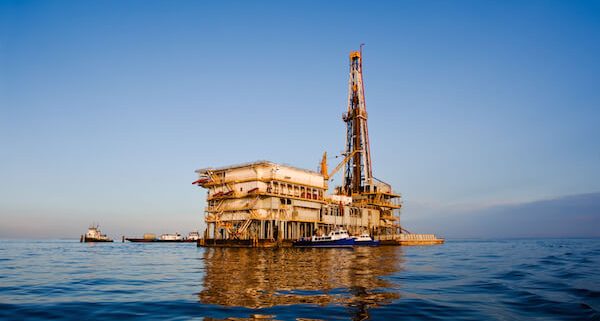
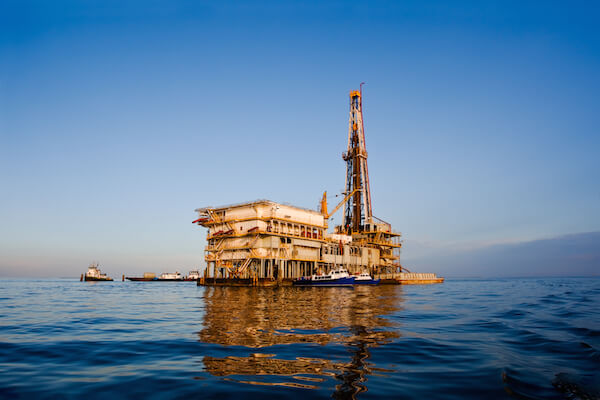
«At a time when global oil prices were cratering, and drillers were nervously cutting exploration funds, Mexico’s earliest auctions drew spotty interest. Since then, however, European drillers led by Italy’s Eni SpA have increasingly become involved. The find in Mexico’s shallow waters could drive added interest — and higher bids — in future auctions as the government seeks to boost production that’s fallen by a third in the past decade.»

«On Wednesday, Premier Oil Plc, Sierra Oil & Gas and Talos Energy LLC announced the first Mexican discovery by explorers other than state-owned Pemex in 80 years, a reservoir with an estimated 1.4 billion to 2 billion barrels. With new auctions set for the end of the year, the find promises to rev up interest in Mexico’s energy riches moving forward, said Pablo Medina, an analyst at the consulting firm Wood Mackenzie Ltd.»

“Future bids will likely be more aggressive,” Medina said in a telephone interview. “This obviously increases the attention people will pay. The area contiguous to this block is going to go up in value, no question.”

«About a fifth of Mexico’s public budget relies on oil revenue, with production averaging 2.15 million barrels a day last year, the lowest level in more than three decades. That drop in output, combined with lower oil prices, forced the government to cut spending, causing growth in the $1.1 trillion economy to decelerate to the slowest pace since 2013.»

«Oil has hovered near $45 a barrel in New York, less than half the $100-plus it reached in 2014, as global supplies remain stubbornly high. The West Texas Intermediate benchmark closed at $45.49 on Wednesday.»

Mexico’s Gain

«The Mexican government will receive a 68.99 percent profit share from every barrel produced in the block, and as much as 80 percent when considering taxes and fees over the life of the project, Sierra said in a statement. “It is of great importance for Mexico,” Mexico Oil Commissioner Juan Carlos Zepeda wrote in an emailed statement.»

«President Enrique Pena Nieto embarked on an ambitious reform of the energy sector in 2013, aiming to revive flagging output at a time when oil prices were in the triple digits. The reforms, which didn’t kick in until after oil prices had fallen, involved amending the constitution to allow foreign investors into the country’s oil industry for the first time since it was nationalized in 1938.»

«The first auctions came in 2015, with outside investors invited to bid on fields that were previously only accessible to Pemex. Eni was one of the first oil majors to win a bid in Mexico and has stood out in the race by winning several contracts.»

«Since then, some of the world’s largest oil companies, including Exxon Mobil Corp., Chevron Corp., and BP Plc, signed contracts in the country. European majors Repsol SA, Royal Dutch Shell Plc, and Total SA also won leases earlier this year in shallow-water fields.»

Less Risk

«The find has “de-risked a little bit some of these shallow-water opportunities” in Mexico as it confirms that other explorers have the potential to find assets that Pemex either overlooked or couldn’t develop, said Jeremy Martin, vice president of energy and sustainability at the Institute of the Americas, speaking over the phone from La Jolla, California.»

“There are a host of companies on the U.S. side of the Gulf that may now consider participating in upcoming auctions because this is a way of showing them that the process works, and can lead to a discovery,” Martin said.

«The next auctions, in deep water and for shale blocks, will likely come at the end of this year or the start of 2018.»

«The new find will “certainly create more buzz” around the next auctions, said John Padilla, Managing Director of energy consulting firm IPD Latin America in an emailed response to questions.»

Dos Bocas

«The shallow field holding the find is located 37 miles (60 kilometers) offshore from the Mexican port of Dos Bocas in 546 feet (166 meters) of water and contains light oil, Premier Oil said in a statement. The discovery comes just two years after the three companies jointly won the exploration license.»

«In an interview on Wednesday, Premier CEO Tony Durrant listed the potential of the site at 1 billion to 1.5 billion barrels. Sierra said the primary target reservoir contains 1.4 billion to 2 billion barrels, and could extend into a neighboring block.»

«Mexico “took a really difficult decision for them politically after 40 years of 100 percent Pemex-ownership,” Durrant said. The opening up of the country’s industry “caught them at absolutely the worst time because of the collapse in oil prices. But to be fair to them, they persevered and they have now got very strong industry interest.”»

From Bloomberg / By Adam Williams, Amy Stillman, and Giacomo Tognini / 12 de julio de 2017  

Mexico Delays Oil Auction, Allows Investors To Assess Recent Finds

From OilPrice.com / By Tsvetana Paraskova – Jul 17, 2017, 3:00 PM CDT

«Mexico’s next offshore oil auction will be held in January next year instead of in December 2017 as initially planned, in order to give bidders more time to assess all new data in view of the recent huge finds in the Mexican part of the Gulf of Mexico, the head of Mexico’s oil regulator told Bloomberg in an interview published on Monday.»

«Last week, UK-based Premier Oil, along with its partners Talos Energy and the Mexico City-based Sierra Oil & Gas, said that they struck oil in excess of 1 billion barrelsin the shallow waters in the southern Gulf of Mexico.»

«The very same day, Italy’s Eni—which had drilled a successful exploration well in Mexico’s shallow water, discovering much more oil than was anticipated—said that thanks to the results of a new offshore well, the major is raising its estimate of resources in place at Amoca to 1 billion barrels of oil equivalent, “paving the way for the implementation of an accelerated development plan.”»

«Following these results, Eni will submit an accelerated and phased development plan in 2017 targeting an early production phase with a plateau ranging from 30,000 to 50,000 bopd with the start of operations planned for early 2019, the Italian group said.»

“There was already interest to come, explore and work in the Gulf of Mexico before these finds, but now to have discoveries in such a short time, interest of international entrants to have activity in Mexico has renewed,” Juan Carlos Zepeda, head of Mexico’s National Hydrocarbons Commission that oversees the industry, said in an interview with Bloomberg.

“International and national interest is awakening,” the official noted, adding that Mexico would announce the areas up for grabs at the next auction “in a few days”. 

«Oil majors are snatching up offshore blocks in Mexico, with the latest auction exceeding expectations. Mexico is planning to hold four more oil and gas block tenders by November 2018 as part of efforts to ensure the sustainability of its energy industry and make better use of its hydrocarbon reserves.»

shutterstock_19805074

From OilPrice.com / By Tsvetana Paraskova – Jul 17, 2017, 3:00 PM CDT