Mexico, Canada play hardball on trade deal over steel tariffs

Washington Examiner / Sean Higgins / October 26


Juan Carlos Baker, Mexico’s deputy commerce minister, said Friday that his government may not sign the final text of the United States-Mexico-Canada Agreement on trade if the U.S. does not agree to provide exemptions to its tariffs on steel and aluminum.

The Trump administration is balking at that demand, however, as its counter-proposal, a quota system, is getting the cold shoulder from both Mexico and Canada, which is also seeking an exemption from the tariffs.

“We believe we need to solve that issue before the signing takes place,” Baker told reporters in Ottawa. The signing has been tentatively set for the end of November.

It was the toughest threat yet from one of the negotiators over the deal that would replace the North American Free Trade Agreement. Mexico and Canada have lobbied the U.S. to lift exemptions to the tariffs, 25 percent for steel and 10 percent for aluminum, arguing that now that the talks for the USMCA deal are complete, there’s no need to maintain those tariffs.

The U.S. however has resisted providing the exemptions, fearing that doing so would allow China, the main target of the tariffs, to harm the U.S. steel industry.

«The president is reviewing the steel and aluminum tariffs,” said Kelly Craft, U.S. ambassador to Canada, Friday at a forum hosted by the Ontario Chamber of Commerce. «That is not something that is against Canada … It’s just protecting North America from other countries that will be passing raw materials through, and also to protect our steel industry at home.»

The White House initially carved out exceptions for Canada and Mexico to its steel and aluminum tariffs , then revoked them in June as a way to pressure both countries during the talks to replace the North American Free Trade Agreement.

The U.S. has proposed replacing the tariffs with a quota system, similar to what it did for South Korea regarding steel, when in August it allowed a quota of 70 percent of average steel exports to the United States in the years 2015 to 2017. Neither Canada nor Mexico are expressing interest on that, according to an administration official who requested anonymity to discuss ongoing talks. As a consequence, there isn’t much talk going on between the countries to resolve the tariff issue, the official said.

A Canadian government official, speaking anonymously, told the CBC earlier this week, that a quota proposal was a concession that Canada would make. Officials see no reason why they cannot return to status quo on metal imports from before the NAFTA talks. “There is no need for those tariffs to be in place,» Canadian Ambassador David MacNaughton said Friday in Ottawa.

Backers of the administration’s policies say a quota is still the best compromise for all sides. «From a U.S. industry perspective, tariffs are similarly effective to quotas if done right,» said Michael Stumo, chief executive officer of the business-labor Coalition for a Prosperous America. «From Canada’s perspective, they should want quotas rather than tariffs because with a quota, their industry gets the money, but with a tariff, the U.S. government gets the money.»

Critics charge that the systems lead to cronyism. «They empower foreign governments to pick winners and losers by deciding which steel or aluminum companies are allocated part of each country’s quota to export to the United States,» said Bryan Riley, trade policy analyst for the National Taxpayers Union. «That’s one reason quotas may be harder to get rid of than tariffs — they can create a political constituency in foreign countries in support of the quotas.»

Hugo Perezcano Diaz, deputy director of the international law research program at Canada’s Centre for International Governance Innovation and a former NAFTA negotiator, speculates that the quota talk may be leading to an alternate solution, a closed three-country market. «Canada has already adopted a safeguard against imports of steel products from the rest of the world, including Mexico,» he said. «If Mexico were to do something similar and the three countries close the North American market, the U.S. may feel sufficiently protected to eliminate the tariffs.»


Washington Examiner / Sean Higgins / October 26


Unfinished business: Putting the final touches on the USMCA

The Hill /  David L. Goldwyn / October 29


The proposed US Mexico Canada Agreement (USMCA) makes important, but incomplete, progress in securing an integrated North American energy market.

In terms of progress, the agreement preserves zero tariffs for trade in oil, gas and petroleum products across North America. It effectively locks in Mexico’s historic energy reforms by ensuring that Mexico cannot reinstate restrictions on US investment in the oil and gas sector. A “ratchet” clause ensures that if Mexico decides to further liberalize the sector, then that higher floor becomes the new USMCA commitment.

While Investor-state dispute settlement (ISDS) mechanisms are weaker, they remain in force for certain “covered sectors,” including oil and gas investments in Mexico and power generation and pipeline investments where the investor has a contract with the government.

These are all positive steps for North American energy security. Mexico and Canada provide the United States with the heavy grades of oil not produced domestically, helping US refineries produce gasoline at the lowest possible cost. Thanks to this relationship,  the United States is an efficient net exporter of petroleum products.

However, while this progress is laudable, it remains incomplete.

In the rush to conclude the agreement, effective protection for power generation investments like new wind and solar plants, refining and natural gas infrastructure, and power transmission lines were left out, perhaps inadvertently. Contracts for these investments are with state owned enterprises (SOEs) like Mexico’s CFE and PEMEX, which do not now fall within the definition of “federal government” because they are not disposing of assets but signing a contract for service. These essential investments, in the gas and refined product infrastructure which carry US products to and through Mexico, transmission lines which carry US electricity south, and investments in power generation are not permitted to bring ISDS claims to enforce their rights.

This is an oversight, and a protection these investments should enjoy. Rather, the proposed agreement creates an uneven playing field as investors who do have a contract with the Federal government, say for exploration, are entitled to bring an ISDS claim for any of their businesses, while those who do not have such contract do not. The problem can be easily fixed by expanding the definition of federal government to include these wholly owned SOEs.

These (for now) unprotected investments are critical to North American energy security. They secure US exports of electricity and natural gas and assure the continued reliability of the North American electricity system. They are the lifelines which carry US exports to Mexico – currently our number one customer for natural gas and petroleum products.

Protecting investments in Mexico’s electricity sector improves US national security by supporting Mexico’s prosperity through a more resilient power system.

Finally, if US power sector investments in Mexico are not protected and thus potentially hindered or lost, China is certain to fill the gap.

Chinese investment in all forms of power generation, transmission, and distribution is rapidly accelerating throughout Latin America. According to a recent Atlantic Council report, cumulative flows of Chinese foreign direct investment in Latin America have reached $110 billion, with $25 billion in oil and gas investment, and $13 billion in electricity, utilities and alternative energy. China’s State Grid has invested $7 billion in Brazil, through a combination of greenfield investments and acquisitions.

If the Mexican government is willing to offer these investments protections (and they are), and create a level playing field for American companies investing in our closest neighbor, the US should not object.

Fortunately, there is still time to correct the definition of eligible claimants as both sides ready the agreement for ratification.  With these modest steps, the United States, Mexico and Canada can improve the resilience of North America’s energy system, and the US can simultaneously advance its economic and national security interests.

David L. Goldwyn is president of Goldwyn Global Strategies, an international energy advisory consultancy and serves as chairman of the Atlantic Council Global Energy Center Energy Advisory Group. He served as the U.S. State Department’s special envoy and coordinator for international energy affairs from 2009 to 2011; he previously served as assistant secretary of energy for international affairs and as national security deputy to U.S. Ambassador to the United Nations Bill Richardson. He is a member of the U.S. National Petroleum Council and the Council on Foreign Relations.


The Hill /  David L. Goldwyn / October 29


implicaciones-de-la-ley-federal-de-responsabilidad-ambiental-para-el-sector-hidrocarburos

Implicaciones de la Ley Federal de Responsabilidad Ambiental para el Sector Hidrocarburos

La “Ley Federal de Responsabilidad Ambiental” (LFRA)  regula, como su nombre lo indica, la responsabilidad ambiental que se constituye de los daños ocasionados al ambiente, así como la reparación y compensación de los mismos cuando sea exigible a través de los procedimientos pertinentes.

Este ordenamiento define en su artículo segundo al “ Daño al ambiente” como la pérdida, cambio, deterioro, menoscabo, afectación o modificación adversos y mensurables de los hábitats, ecosistemas, los elementos y recursos naturales, así como de sus condiciones químicas, físicas o biológicas; las relaciones de interacción que se dan entre éstos y los servicios ambientales que proporcionan. Es sumamente importante considerar que no se considerará que existe Daño ambiental  cuando:

  • Sean expresamente manifestados por el responsable y explícitamente identificados, delimitados en su alcance, evaluados, mitigados y compensados mediante condicionantes, y autorizados por la Secretaría (a través de la evaluación del impacto ambiental o su informe preventivo, la autorización de cambio de uso de suelo forestal o algún otro tipo de autorización análoga expedida por la Secretaría).
  • No rebasen los límites previstos por las disposiciones que en su caso prevean las Leyes ambientales o las normas oficiales mexicanas.

De esta forma, si llegarán a existir dichos menoscabos o deterioros citados en el artículo segundo de la Ley, no se le podrá imputar Responsabilidad ambiental alguna al promovente de un proyecto del sector hidrocarburos, siempre y cuando estos hayan sido previamente manifestados mediante el procedimiento de evaluación de impacto ambiental correspondiente.

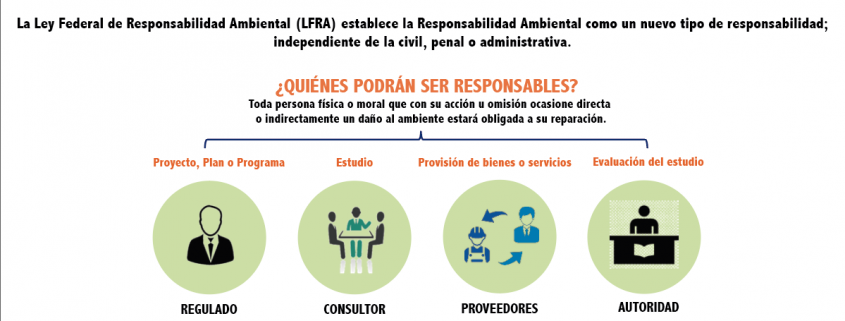
En este tenor, los responsables de daño ambiental podrán ser los siguientes, conforme al CAPÍTULO SEGUNDO de la LFRA:

  • Las personas morales por medio de sus representantes, administradores, gerentes, directores, empleados y quienes ejerzan dominio funcional de sus operaciones, cuando sean omisos o actúen en el ejercicio de sus funciones. Las personas que se valgan de un tercero, lo determinen o contraten para realizar la conducta causante del daño serán solidariamente responsables, salvo en el caso de que se trate de la prestación de servicios de confinamiento de residuos peligrosos realizada por empresas autorizadas por la Secretaría.
  • La persona física o moral que omita impedirlos, si ésta tenía el deber jurídico de evitarlos.
  • Dos o más personas, y no fuese posible la determinación precisa del daño aportado por cada responsable, todas serán responsables solidariamente de la reparación o compensación que resultare.

Esta relativamente nueva legislación, diferencía la Responsabilidad Ambiental en dos rubros generales: La objetiva, reservada específicamente a actos y omisiones relacionados con materiales o residuos peligrosos, uso u operación de embarcaciones en arrecifes de coral, actividades consideradas como Altamente Riesgosas y los supuestos establecidos en el artículo 1913 del Código Civil Federal. Por su parte, la subjetiva se refiere a los demás actos u omisiones ilícitos con las excepciones y supuestos previstos en la Ley en comento.

Los responsables que ocasionen de manera directa o indirecta daños al ambiente estarán obligados a la reparación de los daños, o bien, cuando la reparación no sea posible a la compensación ambiental que proceda conforme a lo establecido en esta Ley, en el entendido de que, en caso de que el daño sea ocasionado por un acto u omisión ilícitos dolosos, la persona responsable estará obligada a pagar además una sanción económica.

Ahora bien, no podemos perder de vista que la LFRA forma parte integral de la legislación ambiental mexicana, por lo que deben considerarse las demás normas de esta índole como parte complementaria de las exigencias y obligaciones ambientales que pueden emerger.

Bajo tal tesitura, los artículos sesenta y ocho, sesenta y nueve, y setenta de la Ley General para la Prevención y Gestión Integral de los Residuos (LGPGIR) establecen que los titulares de concesiones y los asignatarios con derecho para realizar actividades de Exploración y Extracción de Hidrocarburos, serán responsables solidarios en caso de que se ocasione cualquier tipo de Daño ambiental, es decir, a los propietarios o poseedores de terrenos concesionados para el manejo de hidrocarburos se les extenderá la obligación de tomar las medidas y realizar las acciones pertinentes para subsanar de la forma adecuada los menoscabos ocasionados por un responsable objetivo o subjetivo, de conformidad a lo previsto por la Ley Federal de Responsabilidad Ambiental.

Lo anterior se traduce de manera precisa en la Tesis Aislada I.18o.A.77 A, publicada en la Gaceta del Semanario Judicial de la Federación en el mes de Julio de 2018; mediante la cual el Décimo Octavo Tribunal Colegiado en materia Administrativa del Primer Circuito realiza la siguiente interpretación:

RESPONSABILIDAD AMBIENTAL DERIVADA DEL DERRAME DE HIDROCARBUROS POR TOMAS CLANDESTINAS. A PETRÓLEOS MEXICANOS PUEDE ATRIBUÍRSELE, ADEMÁS DE UNA OBJETIVA, LA SOLIDARIA ESPECIAL QUE ESTABLECE LA LEY GENERAL PARA LA PREVENCIÓN Y GESTIÓN INTEGRAL DE LOS RESIDUOS.

En términos de LFRA (artículos 12, fracción I y 25) y de la Ley General para la Prevención y Gestión Integral de los Residuos (artículos 68 y 69), corresponde a Pemex el carácter de responsable objetivo frente a los derrames y daño ocasionado por tomas clandestinas de hidrocarburos, en tanto tiene un deber de cuidado por y frente al riesgo creado por las actividades de transporte y almacenamiento de aquéllos. Adicionalmente, (…) puede atribuírsele una responsabilidad solidaria(…) en los casos en que el derrame se presente dentro de un área o terreno aprovechado por Pemex. Esta forma de responsabilidad únicamente implica la remediación del sitio, y no así otras sanciones –por ejemplo, económicas– que sí son aplicables al responsable subjetivo u objetivo. Esto es, la responsabilidad establecida en este último precepto se genera indirectamente, por el hecho de ser propietario o poseedor de los terrenos concesionados para el manejo de hidrocarburos y, por esa razón, éste tiene la responsabilidad de restablecer las áreas contaminadas, con independencia de la forma en cómo se generó la contaminación (…)”

Para terminar, debemos recalcar la importancia del correcto Estudio de Línea Base y el Estudio de Impacto Ambiental oportuno, ya que estos documentos otorgarán los primeros indicadores al momento de realizar cualquier modificación al ambiente, recordando que no se considera Daño ambiental siempre y cuando los menoscabos, pérdidas, afectaciones, modificaciones o deterioros sean expresamente manifestados, identificados, delimitados, evaluados, mitigados y compensados mediante la autorización correspondiente.

Con más de 20 años de experiencia, cobertura internacional y fuerte compromiso con la sustentabilidad, la innovación y la calidad de nuestros servicios en el sector hidrocarburos, energía, turismo, desarrollo urbano,  infraestructura, medio ambiente y minería; hemos conformado un catálogo de productos y servicios con valor agregado que resuelva en forma sistémica las necesidades de nuestros clientes y grupos de interés, en materia de planeación, manejo, gestión ambiental y desarrollo sostenible, incluyendo la elaboración de EVIS y la EIA. Para ello, ponemos a su disposición la red más amplia y especializada de expertos a nivel nacional e internacional, ofreciendo una plataforma integral en la materia, trazando las alternativas y estrategias necesarias para el correcto desarrollo de Proyectos Sustentables en México, entre ellos.

Para mayor información y cualquier duda o necesidad derivada de la información presentada en el presente boletín, estamos a su disposición a través de:

Energy Insurance Broker, Agente de Seguros y de Fianzas, S.A.P.I. de C.V.

Graciela Álvarez Hoth

CEO NRGI Broker

Teléfono: (55) 9177 2100

E-mail: graciela.alvarez@nrgibroker.com


Consultores en Gestión Política y Planificación Ambiental, S.C.

David Julio Zárate Lomelí

Director General

Teléfono: (998) 6 88 08 75

E-mail: dzarate@gppa.com.mx

www.gppa.com.mx


Empresarios, patrones e industriales dicen NO a cancelación del NAIM

Obras Web / Redacción Obras / 29 Octubre


Además la IATA advirtió que la decisión retrasará entre cinco y 10 años el desarrollo de la industria aérea mexicana. La Amcham exige certeza jurídica a la inversión y Estado de Derecho.

CIUDAD DE MÉXICO — La cúpula de empresarios, industriales y patrones de México se han mostrado en desacuerdo con la decisión de cancelar la construcción del Nuevo Aeropuerto Internacional de México (NAIM) en Texcoco y han expresado su preocupación sobre el impacto de esta acción en la economía y las finanzas del país.

Este lunes, Juan Pablo Castañón, presidente del Consejo Coordinador Empresarial (CCE), indicó que los empresarios expresan su rechazo a la decisión de cancelar la obra del Nuevo Aeropuerto Internacional de México (NAIM) en Texcoco, así como al método utilizado parta tomarla.

Un mensaje de incertidumbre: CCE

En conferencia señaló que la decisión del presidente electo, Andrés Manuel López Obrador, de cancelar la obra e iniciar los estudios para construir dos pistas en la actual Base Militar de Santa Lucia, envía un mensaje grave de incertidumbre a mercados internacionales, inversionistas y ciudadanos.

Ello, al incumplir compromisos del Estado mexicano y quebrar el marco jurídico vigente, toda vez que se ha mantenido una consulta ciudadana organizada por fuera del marco legal y sin garantías de imparcialidad, neutralidad, y representatividad.

Lo cual, añadió el representante del sector empresarial en el país, no puede ser fundamento para revertir una decisión de Estado, ya que representa un alto grado de complejidad técnica, misma que ya había sido estudiada durante más de 20 años.

Ya desde el domingo, al darse a conocer los resultados de la consulta ciudadana sobre el NAIM realizada del 25 al 28 de octubre, Castañón reconoció a los ciudadanos que expresaron su opinión en la consulta, no obstante, reiteró su rechazo al carácter vinculante que pudiera tener el ejercicio para el próximo gobierno federal.

Responsabiliza Coparmex a AMLO

Ese mismo día, también en rueda de prensa, Gustavo de Hoyos, presidente de la Confederación Patronal de la República Mexicana (Coparmex), dijo que su organización desconocía los resultados de la consulta sobre el NAIM, porque el ejercicio carece de valor legal y que responsabilizaba a López Obrador de cualquier consecuencia negativa en las finanzas públicas y en el sector empresarial en caso de la cancelación del proyecto en Texcoco.

Llama Concamin a continuar en Texcoco

Este lunes también la Confederación de Cámaras Industriales de los Estados Unidos Mexicanos (Concamin), expresó su desacuerdo con la cancelación de la construcción.

El líder de los industriales, Francisco Cervantes Díaz, hizo un llamado al próximo gobierno federal para que se continúe con la obra para enfrentar insuficiencias y soportar un mayor crecimiento de nuestro país.

«No podemos aceptar el resultado; porque existe un principio de derecho que establece que los cambios no pueden ser retroactivos, especialmente cuando se han invertido ya más de 100,000 millones de pesos. ¿Qué caso tiene tirarlos?», mencionó.

En un comunicado, el líder de los industriales de México expresó su preocupación por la estabilidad y el crecimiento del país y aseguró que no es una necedad, ni la defensa de interés individual, sino el resultado del análisis de los abundantes argumentos y datos técnicos que se han puesto sobre la mesa a lo largo de los últimos meses.

La Amcham exige certeza jurídica

En un comunicado, la American Chamber of Commerce of México (AmCham) se mostró preocupada por la «afectación al Estado de Derecho y la falta legalidad en que incurren el proceso de cosulta ciudadana y la decisión de cancelar el NAICM en Texcoco».

Manifestó que el uso de mecanismos de consulta no regulados para tomar decisiones de Estado vulnera la certeza jurídica de las inversiones nacionales y extranjeras y que el ejercicio de opinión ciudadana realizado del 25 al 28 de octubre pasados no es un instrumento legal en los términos de la Ley Federal de Consulta Popular ni cuenta con la representatividad necesaria.

La organización dijo que confiaba en «que el nuevo gobierno asuma su mandato con la mayor responsabilidad, con una visión de Estado y de largo plazo, que promueva el desarrollo social y económico de México».

Un desastre para la aviación y para México, dice la IATA

En tanto, la Asociación Internacional de Transporte Aéreo (IATA, por sus siglas en inglés), aseguró que es una mala noticia para la aviación y para México la cancelación del NAIM, ya que retrasará entre cinco y 10 años el desarrollo de la industria aérea mexicana.

Alexander de Juniac, consejero delegado del organismo, dijo que de acuerdo a estudios que elaboraron, la cancelación provocará una baja en el volumen de pasajeros de 20 millones por año a 2035, una pérdida de 200,000 trabajos y 20,000 millones de dólares menos en el Producto Interno Bruto (PIB).

«Es una mala noticia. Es muy, muy malo para la aviación y para México. El país necesita incrementar la capacidad aeroportuaria; el aeropuerto actual está congestionado y se necesita uno nuevo, y cancelarlo retrasaría todo de cinco a 10 años. Sería un desastre», afirmó.


Obras Web / Redacción Obras / 29 Octubre


El T-MEC regula normas de eficiencia energética

Opportimes / Redacción Opportimes / 29 Octubre


El Tratado entre México, Estados Unidos y Canadá (T-MEC) incluye un Anexo sectorial de normas de eficiencia energética.

Por lo tanto, el anexo aplica a la elaboración, adopción y aplicación de reglamentos técnicos que estén relacionados a normas y reglamentos técnicos y procedimientos de evaluación de la conformidad sobre eficiencia energética.

El T-MEC promueve la cooperación regulatoria en materia de Normas de Eficiencia Energética a fin de facilitar el comercio entre los tres países.

Además, impulsa la cooperación entre las partes mediante el uso de foros bilaterales y trilaterales y busca armonizar, en la medida de lo posible, los procedimientos de prueba establecidos por los productos sujetos al cumplimiento de normas de Eficiencia Energética.

Energía en el T-MEC

Por otra parte, las disciplinas en el Capítulo de Energía, responden a las nuevas condiciones y realidad del sector de energía en la región y de México, y garantiza la soberanía de México sobre los recursos energéticos.

También el Capítulo promueve la cooperación en aras a fomentar la integración de un mercado energético regional, la entrada de nuevos participantes y flujos de inversión en el sector.

El T-MEC reafirma el valor supremo de la Constitución de México y de las leyes que de ella emanan en materia de hidrocarburos, incluyendo que el Estado Mexicano tiene la propiedad directa, imprescriptible e inalienable sobre los hidrocarburos en el subsuelo.

A la vez, México extenderá a los socios del T-MEC el trato comprometido en los otros tratados comerciales que ha suscrito.

En general, el T-MEC, compuesto por 34 capítulos y 12 cartas paralelas, conserva la mayoría de los capítulos del Tratado de Libre Comercio de América del Norte (TLCAN), realizando cambios notables en las disposiciones de acceso al mercado para autos y productos agrícolas, y en normas como la inversión, la contratación pública y los derechos de propiedad intelectual.

Adicionalmente, aborda nuevos aspectos, como el comercio digital, las empresas estatales y la manipulación cambiaria.


Opportimes / Redacción Opportimes / 29 Octubre


admnistración-de-riesgos

La Administración de Riesgos en el sector hidrocarburos

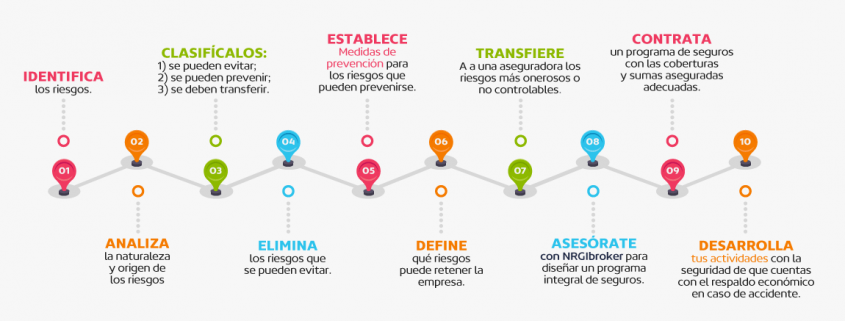
La Reforma Energética trajo consigo la posibilidad de que las empresas privadas participen en toda la cadena de valor de los hidrocarburos, lo que implica a su vez, una mayor exposición al riesgo. De ahí la importancia que tiene que las empresas adopten el enfoque de la administración de riesgos en el desarrollo de sus proyectos, para evitar que se produzcan eventos súbitos e indeseados que puedan provocar daños y perjuicios a terceros en sus instalaciones, activos o al bien que nos pertenece a todos, me refiero al medio ambiente y en caso de que suceda el incidente o accidente, los responsables cuenten con las garantías financieras que les permitan tener los recursos necesarios para asumir las responsabilidades y reparar los daños, ese respaldo es posible a través de un  programa de seguros.

Todos estamos expuestos a sufrir un accidente, los riesgos son latentes en todas las actividades de la vida y especialmente en una industria calificada de alto riesgo, como es la de los hidrocarburos.

La diferencia está en la forma en que nos relacionamos con ellos. Si bien, las medidas de prevención y la utilización de los estándares y mejores prácticas internacionales de seguridad industrial y protección del medio ambiente pueden disminuir la frecuencia, son muchos los factores que inciden para que se presente un siniestro y algunos de ellos no se pueden prever, como es el caso de un desastre natural como son los huracanes o terremotos solo por citar algunos.

Con el adecuado programa integral de seguros, las empresas que realizan actividades con hidrocarburos y petrolíferos pueden contar con diversos beneficios:

  • Cumplen con sus responsabilidades legales en caso de causar daños o perjuicios a terceros que muchas veces llegan a ser mayores que el daño directo a los equipos o instalaciones.
  • Disponen del respaldo económico que les da la solvencia de las instituciones de seguros, por los riesgos a los que está expuesta la organización o actividad que llevan a cabo, porque los seguros cubren la mayor parte de riesgos del sector hidrocarburos desde la etapa de la exploración, la extracción, la construcción y hasta la operación de las terminales de almacenamiento y los ductos.
  • Protegen el patrimonio del asegurado, ya que en caso de un siniestro, la aseguradora no solo responderá por los daños ocasionados, sino que hace posible que las empresas puedan volver a trabajar sin sufrir un quebranto.
  • Los seguros no inmovilizan capital, pues basta con el pago de la prima para obtener certeza de su vigencia y sus beneficios.

En síntesis los seguros son un aliado estratégico para la operación exitosa de su negocio, que en el mundo entero han probado su eficacia.

En NRGI Broker®, somos expertos en seguros. Acércate a nosotros, con gusto te atenderemos.


Comment: Investors keep a watchful eye on Mexico’s new leftist leader

International Investment / Jonathan Clare / October 22


Jonathan Clare recalls the strikingly different Mexico of the 1990s, and looks at the country’s prospects today under a new, left-wing, administration.

The Mexico of today is very different from the country I first experienced in the late 1990s. Back then I was based in Mexico City – the local population was still reeling from a banking crisis and severe recession.

Talking to locals in the fashionable coffee shops you would hear of the steady exodus of the middle class from the sprawling metropolis. There was a sense of gloom that the Institutional Revolutionary Party’s long stranglehold on Mexican politics would never end. Investor confidence was pretty low and lawlessness was a constant worry.

The bleak financial news and security risks preyed on people’s minds, but there were some notable compensations, principally the idyllic beaches and a world-class cuisine. Today, high-levels of crime continue to scar the nation, but the country has undergone an economic transformation – and one that has not been confined to the urban and industrial centres in Mexico City and Monterrey, where gleaming office blocks dominate the skyscape.

Since the PRI lost power in 2000, successive governments have worked hard to forge trading relationships with some 44 countries, as far afield as Israel and Japan. The previous perception of a tourism-and agriculture-based economy no longer holds. The country has diversified to include a variety of sectors from chemical, telecommunications and automotive, to energy to name just a few.


Taking the lead
Mexico is recognised as the leading emerging market in Latin America, while top Mexican companies are significant players across the Americas, Europe and Asia through a wave of mergers and acquisitions over the last decade. Increasingly, they are helping to drive growth in these markets. CEOs of top local conglomerates I speak to enthuse about the opportunities they have forged by connecting and partnering with research and development centres and companies in the UK, Germany and Switzerland.

Some question whether the recent economic progress, albeit sluggish of late, can be maintained following the election victory in July of the leftist Andres Manuel Lopez Obrador (popularly known as AMLO, an acronym of his initials). His key campaign theme was curbing corruption, which remains a national scourge. More broadly, though, Mexicans are still trying to gauge what his leadership will mean for the country, in particular its impact on foreign investors in the energy sector.

AMLO has sought to salve business fears over the direction he will take by insisting there will be no nationalisation and promising fiscal discipline. But over time he will come under pressure from his support base of those “left behind” by the country’s revival to introduce populist measures. He has already pledged to double pensions when he officially takes office on 1 December.

Indeed, the business community remains nervous about possible attempts to reverse previous administrations’ reforms, many of which have helped Mexico to make some important advances, not least within the telecommunications and energy sectors. However, his critics’ concerns should be tempered by AMLO’s record in office. As mayor of Mexico City in the early 2000s, he proved to be an effective operator, and one would hope that his penchant for organising disruptive political protests during national election campaigns is now a thing of the past.

Fortunately for AMLO, his tenure begins amid some positive developments. The protracted and thorny re-negotiation of NAFTA has been completed. The parties prudently agreed the successor United States-Mexico-Canada Agreement (USMCA) in advance of the new administration being sworn in at the end of year. And the strong economic outlook in the US can only benefit Mexico, as it will continue to be one of Washington’s most important regional trading partners for the foreseeable future.

The trade war between China and the US may also reap dividends for AMLO’s term as US companies look to their immediate neighbour to fill any supply chain gaps. According to the OECD, the Mexican economy is set to maintain its growth rate of over 2% in 2018. The same is forecast to hold in 2019.


The benefit of the doubt
In Mexico City and Monterrey it’s business as usual: traffic madness, buoyant trade, and deals still getting done. Looking ahead, there is no doubt there will be a shift in the new government’s approach to ensure the needs of AMLO’s support base are met, but there is likely to be a strong dose of pragmatism and deal-making when addressing the various challenges ahead. In all probability, AMLO will balance the needs of his constituency with keeping the political elite and business community onside.

Critically, the international investment community, for now at least, appears to have given the president-elect the benefit of the doubt, despite all the background noise and fears over the reversal of reforms. Building a consensus is the key going forward, and AMLO will be well advised to maintain close relations with foreign investors, and local business leaders in general, however much his supporters might protest.

The sentiment on the street is that he has shown enough to be trusted to move the economy in the right direction. Nearly twenty years on, in the trendy coffee shops, restaurants and bars of the capital’s upscale districts of Polanco and Roma there is little talk of escaping the city – quite the reverse in fact.


International Investment / Jonathan Clare / October 22


A 14-year-long oil spill in the Gulf of Mexico could become one of the worst in U.S. history

Tampa Bay Times / Darryl Fears / October 22


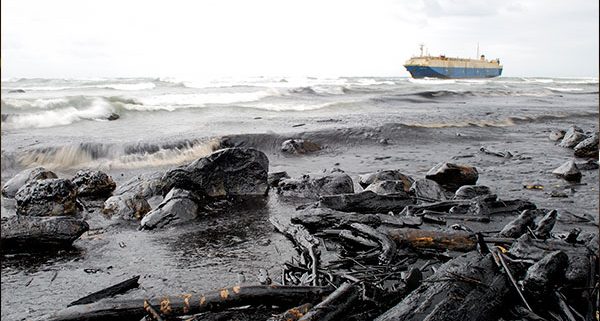
NEW ORLEANS — An oil spill that has been quietly leaking millions of barrels into the Gulf of Mexico has gone unplugged for so long that it now verges on becoming one of the worst offshore disasters in U.S. history.

Between 300 and 700 barrels of oil per day have been spewing from a site 12 miles off the Louisiana coast since 2004, when an oil-production platform owned by Taylor Energy sank in a mudslide triggered by Hurricane Ivan. Many of the wells have not been capped, and federal officials estimate that the spill could continue through this century. With no fix in sight, the Taylor offshore spill is threatening to overtake BP’s Deepwater Horizon disaster as the largest ever.

As oil continues to spoil the Gulf, the Trump administration is proposing the largest expansion of leases for the oil and gas industry, with the potential to open nearly the entire outer continental shelf to offshore drilling. That includes the Atlantic coast, where drilling hasn’t happened in more than a century and where hurricanes hit with double the regularity of the Gulf.

Expansion plans come despite fears that the offshore oil industry is poorly regulated and that the planet needs to decrease fossil fuels to combat climate change, as well as the knowledge that 14 years after Ivan took down Taylor’s platform, the broken wells are releasing so much oil that researchers needed respirators to study the damage.

«I don’t think people know that we have this ocean in the United States that’s filled with industry,» said Scott Eustis, an ecologist for the Gulf Restoration Network, as his six-seat plane circled the spill site on a flyover last summer. On the horizon, a forest of oil platforms rose up from the Gulf’s waters, and all that is left of the doomed Taylor platform are rainbow-colored oil slicks that are often visible for miles. He cannot imagine similar development in the Atlantic, where the majority of coastal state governors, lawmakers, attorneys general and residents have aligned against the administration’s proposal.

The Taylor Energy spill is largely unknown outside Louisiana because of the company’s effort to keep it secret in the hopes of protecting its reputation and proprietary information about its operations, according to a lawsuit that eventually forced the company to reveal its cleanup plan. The spill was hidden for six years before environmental watchdog groups stumbled on oil slicks while monitoring the BP Deepwater Horizon disaster a few miles north of the Taylor site in 2010.

The Interior Department is fighting an effort by Taylor Energy to walk away from the disaster. The company sued Interior in federal court, seeking the return of about $450 million left in a trust it established with the government to fund its work to recover part of the wreckage and locate wells buried under 100 feet of muck.

Taylor Energy declined to comment. The company has argued that there’s no evidence to prove any of the wells are leaking. Last month, the Justice Department submitted an independent analysis showing that the spill was much larger than the one-to-55 barrels per day that the U.S. Coast Guard National Response Center (NRC) claimed, using data supplied by the oil company.

The author of the analysis, Oscar Garcia-Pineda, a geoscience consultant who specializes in remote sensing of oil spills, said there were several instances when the NRC reported low estimates on the same days he was finding heavy layers of oil in the field.

«There is abundant evidence that supports the fact that these reports from NRC are incorrect,» Garcia-Pineda wrote. Later he said: «My conclusion is that NRC reports are not reliable.»

In an era of climate change and warmer open waters, the storms are becoming more frequent and violent. Starting with Ivan in 2004, several hurricanes battered or destroyed more than 150 platforms in just four years.

On average, 330,000 gallons of crude are spilled each year in Louisiana from offshore platforms and onshore oil tanks, according to a state agency that monitors them.

The Gulf is one of the richest and most productive oil and gas regions in the world, expected to yield more than 600 million barrels this year alone, nearly 20 percent of the total U.S. oil production. Another 40 billion barrels rest underground, waiting to be recovered, government analysts say.

About 2,000 platforms stand in the waters off the Bayou State. Nearly 2,000 others are off the coasts of its neighbors, Texas and Mississippi. On top of that are nearly 50,000 miles of active and inactive pipelines carrying oil and minerals to the shore.

And the costs are high.

For every 1,000 wells in state and federal waters, there’s an average of 20 uncontrolled releases of oil – or blowouts – every year. A fire erupts offshore every three days, on average, and hundreds of workers are injured annually.

BP has paid or set aside $66 billion for fines, legal settlements and cleanup of the 168 million-gallon spill – a sum that the oil giant could, painfully, afford. But many companies with Gulf leases and drilling operations are small, financially at-risk and hard-pressed to pay for an accident approaching that scale.

One of them was Taylor Energy.

– – –

Taylor Energy was a giant in New Orleans.

Owned by Patrick Taylor, a magnate and philanthropist who launched an ambitious college scholarship program for low-income students, it was once the only individually owned company to explore for and produce oil in the Gulf of Mexico, according to his namesake foundation.

Taylor made what was arguably his most ambitious transaction in 1995, when he took over an oil-production platform once operated by BP. Standing in more than 450 feet of water, it was about 40 stories tall. Its legs were pile-driven into the muddy ocean floor and funnels were attached to 28 drilled oil wells.

At its peak, the oil company helped make Taylor and his wife, Phyllis, the richest couple in the Big Easy.

That investment was obliterated on Sept. 15, 2004, when Hurricane Ivan unleashed 145 mph winds and waves that topped 70 feet as it roared into the Gulf. Deep underwater, the Category 4 storm shook loose tons of mud and buckled the platform.

The avalanche sank the colossal structure and knocked it «170 meters down slope of its original location,» researcher Sarah Josephine Harrison wrote in a postmortem of the incident.

More than 620 barrels of crude oil stacked on its deck came tumbling down with it. The sleeves that conducted oil from its wells were mangled and ripped away. A mixture of steel and leaking oil was buried in 150 feet of mud.

Less than two months after the storm, Patrick F. Taylor died of a heart infection at 67, leaving a fortune for philanthropy and a massive cleanup bill.

Taylor Energy reported the spill to the Coast Guard, which monitored the site for more than half a decade without making the public fully aware of the mess it was seeing. Four years after the leak started, in July 2008, the Coast Guard informed the company that the spill had been deemed «a continuous, unsecured crude oil discharge» that posed «a significant threat to the environment,» according to a lawsuit between Taylor Energy and its insurer.

Taylor Energy made a deal with federal officials to establish a $666 million trust to stop the spill.

It would be a delicate, risky operation. Taylor and the contractors it hired were asked to somehow locate wells in a nearly impenetrable grave of mud and debris, then cap them. Failing that, it could create a device to contain the leak.

But they were forbidden from boring or drilling through the muck for fear that they would strike a pipe or well, risking the kind of catastrophe on the scale of the BP disaster a few miles south. That precaution slowed the pace of the salvage operation.

«We had no idea that any of that was going on,» said Marylee Orr, executive director of the Louisiana Environmental Action Network.

Taylor Energy spent a fortune to pluck the deck of the platform from the ocean and plug about a third of the wells. It built a kind of shield to keep the crude from rising.

But no matter what it did, the oil kept leaking.

– – –

In 2010, six years after the oil leak started, scientists studying the BP spill realized something was amiss with the oil slicks they were seeing.

«We were flying to monitor the BP disaster and we kept seeing these slicks, but they were nowhere near the BP spill,» said Cynthia Sarthou, executive director of the Gulf Restoration Network, which monitors the water from boats and planes.

Satellite images confirmed the oddity.

«It was there all the time, longer than the BP spill,» said John Amos, founder and president of Sky Truth, a nonprofit organization that tracks pollution.

Under the Oil Pollution Act, companies are obligated to report hazardous spills to the NRC, which maintains a database of chemical pollution.

No law compels the companies or the federal government to raise public awareness, but the Clean Water Act clearly calls for citizen involvement.

Environmentalists took Taylor Energy to court.

In their lawsuit, the conservationists called the agreement between Taylor Energy and the federal government a secret deal «that was inconsistent with national policy.»

That policy, they argued, was made clear in the Clean Water Act, which mandates «public participation in the . . . enforcement of any regulation.» Citizen participation, the act says, «shall be provided for, encouraged and assisted.»

Taylor Energy and the Coast Guard – which is part of a Unified Command of federal agencies that includes the Interior Department, National Oceanic and Atmospheric Administration and the Environmental Protection Agency – did not live up to the policy. In fact, the public wasn’t made aware of the spill even after a private firm tested fish in the area and submitted an assessment to Taylor Energy in 2009 that said «there is an acceptable risk to humans if fish from the . . . area are consumed.»

«Taylor has failed to provide the public with information regarding the pace and extent of the oil leaks and Taylor’s efforts to control the leaks,» the lawsuit said.

It would take another three years before the government revealed an even deeper truth. Taylor Energy had been playing down the severity of the spill. An Associated Press investigation in 2015 determined that it was about 20 times worse than the company had reported.

Taylor Energy had argued that the leak was two gallons per day; the Coast Guard finally said it was 84 gallons or more, and was almost certainly coming from any of 16 wells.

«There’s a fine for not reporting, but none for underreporting,» Amos said. «If it’s only three gallons a day, who cares, that’s a trivial problem.»

– – –

Nearly a decade after the oil platform went down, the government determined that the actual level of oil leaking into the Gulf was between one and 55 barrels per day. Now, the new estimate dwarfs that: up to 700 barrels per day. Each barrel contains 42 gallons.

Despite that finding, NOAA is still in the early stages of a resource assessment of marine life that could explain the impact of the Taylor Energy spill, and is more than three years behind a deadline to issue a biological determination of the BP spill’s impact on marine life.

In July, Earthjustice, a nonprofit legal organization that represents conservation groups, sued NOAA for failing to produce a timely study.

Like Eustis, Amos said Atlantic coast residents should be wary. But in that region, where beaches and tourism enrich nearly every state, distrust over offshore leasing and drilling is bipartisan.

Governors, state lawmakers and attorneys general lashed out at the administration’s proposal. New Jersey passed a law that forbids oil and infrastructure in state waters three miles from shore, crippling any effort to run pipelines from platforms to the shore. Other states passed similar laws.

In the Carolinas, where Hurricane Florence’s winds topped 150 mph and produced a monster 83-foot wave as it neared landfall, governors who represent both political parties implored Interior Secretary Ryan Zinke to rethink the plan.

Meanwhile, in the Gulf, Taylor Energy was down to a single employee – its president, William Pecue.

At a 2016 public forum in Baton Rouge, Pecue made the case for allowing the company to walk away from its obligation to clean up the mess. Taylor Energy had been sold to a joint venture of South Korean companies in 2008, the same year it started the $666 million trust. A third of the money had been spent on cleanup, and only a third of the leaking wells had been fixed. But Pecue wanted to recover $450 million, arguing the spill could not be contained.

«I can affirmatively say that we do believe this was an act of God under the legal definition,» Pecue said. In other words, Taylor Energy had no control over the hurricane.

But Ivan was no freak storm.

It was one of more than 600 that have been tracked in the Gulf since records were kept in the mid-1800s, according to NOAA.

Fourteen years after the Taylor spill, and 10 years after the Deepwater Horizon disaster, the federal government still doesn’t know the spills’ full impact on marine life. And there is no economic analysis showing the value of the oil flowing into the sea and potential royalties lost to taxpayers. Activists also want an analysis to determine if oil is ruining marshland and making its way to beaches.

«Even though oil did not reach a lot of these beaches [during the BP spill], the fact that the public heard about it, it killed the beach economy for quite some time,» Sarthou said. «You don’t want to go to a beach with tar balls or oil washing up.»

At the time, Sarthou was unaware that Garcia-Pineda was conducting a study in the Gulf that would show the spill was far worse than imagined – up to 10 times worse than what the federal government was reporting.

As the saga in the Gulf plays out, wary officials on the Atlantic coast are anxiously watching President Donald Trump’s proposal to offer federal offshore leases.

It would take at least a decade for Atlantic drilling to start. The industry would first want to conduct seismic testing to determine the amount of oil and gas in the ground. Depending on the results, companies would bid for the leases. Interior has yet to approve seismic testing, which some studies say harms marine life, including large mammals such as dolphins and whales.

Oil and gas representatives say energy development off that coast could provide South Carolina with $2.7 billion in annual economic growth, 35,000 jobs and potentially lower heating costs for residents struggling to pay their bills.

During a federal informational hearing in South Carolina to explain the Trump administration’s plan in February, Mark Harmon, the director of a state unit of the American Petroleum Institute, stressed that point. «Ultimately, it means the potential for jobs and reinvestment in the community,» he said.

Once the oil industry gains a foothold in a region, it’s game over, said Chris Eaton, an Earthjustice attorney.

«A major part of the economy starts to change» as jobs with pay approaching $100,000 transform a tourism market to oil. «If it gets going, that train isn’t going to stop,» he said. «Let’s talk about what’s happening in the Gulf before we move into the Atlantic.»


Tampa Bay Times / Darryl Fears / October 22
 

Pese a T-MEC, México debe diversificar mercados: Comce

El Economista/ Patricia Romo / 23 Octubre


El país debe aprovechar también otros acuerdos comerciales, como el TPP 11: Diez Morodo.

Guadalajara, Jal. Pese a haber alcanzado un nuevo acuerdo comercial con Estados Unidos y Canadá (T-MEC), México debe apostar por la diversificación de mercados y aprovechar otros tratados trasnacionales para “no permanecer rezagados en momentos de crecimiento económico”, afirmó el presidente del Consejo Mexicano de Comercio Exterior (Comce), Valentín Diez Morodo.

“No hay que concentrarse en un solo mercado, hay que diversificarse; no puedes estar a expensas, por muy poderoso que sea, como en el caso nuestro con Nafta, no puedes estar en exclusiva”, destacó el también presidente del capítulo México de la Alianza del Pacífico, durante su participación en la XVI México Cumbre de Negocios.

Diez Morodo destacó que, sólo en la Alianza del Pacífico, Colombia, Chile, México y Perú ya consiguieron eliminar todas las barreras arancelarias, mientras que hay 55 países asociados que intentan formar parte del organismo.

“No se trata de afectar a nadie sino que queremos repartir el pastel mejor entre más gente”, sostuvo Diez Morodo al insistir en la necesidad de que México aproveche mejor otros acuerdos comerciales como el TPP 11 y el tratado de libre comercio con la Unión Europea.

Durante el pánel México en el escenario global, Ian Goldin, profesor de la Universidad de Oxford, afirmó que, pese a las políticas proteccionistas de algunos países, no existe en la actualidad un proceso de “desglobalización”; por el contrario, indicó, nunca ha habido un mejor momento para la globalización.

“Esto no se debe a Estados Unidos ni al Reino Unido sino al resto del mundo y, en particular, a Asia que ahora representa 70% del crecimiento global”, sostuvo Goldin, quien advirtió que “los mayores riesgos que cualquiera enfrenta vienen de la reducción de la operación global”.

El experto enfatizó que el crecimiento económico en la actualidad está en Asia y en los mercados emergentes, incluido México. “Es donde debe estar el enfoque; es donde está el crecimiento del mercado, son los estabilizadores de la economía global, porque los mercados emergentes están creciendo al doble de las economías avanzadas. México está ahí, aunque su primera novia sea Estados Unidos, pero debe haber una diversificación y una reorientación”.

En tanto, John Rennie Short, profesor de Geografía y Política Pública de la Universidad de Maryland, Estados Unidos, coincidió en la apuesta de la diversificación de mercados ya que, dijo, Europa se convertirá en un mercado que duplicará el tamaño de Estados Unidos “y lo mismo aplica para América Latina y otros mercados emergentes”.


El Economista/ Patricia Romo / 23 Octubre


Empresas de hidrocarburos respaldan autonomía de reguladores

El Financiero / Leticia Hernández / 22 Octubre


Tanto Coparmex como la Amexhi consideran que la propuesta de Delgado para sectorizar a la CNH impacta de manera negativa en los órganos reguladores.

La Confederación Patronal de la República Mexicana (Coparmex), considera que sectorizar a órganos reguladores como la Comisión Nacional de Hidrocarburos (CNH) y la Comisión Reguladora de Energía (CRE) y volverlos parte de la Secretaría de Energía, significaría un retroceso en la ruta hacia un mercado energético competitivo, al facilitar el regreso a los monopolios estatales.

“Un secretario de Energía que sea al mismo tiempo el presidente del consejo de administración de Pemex y CFE, y a su vez instruya de manera directa a los órganos reguladores, no será una buena señal para los demás participantes del mercado energético”, señaló el organismo empresarial al hacer un llamado al Congreso de la Unión a modificar la iniciativa que propone la sectorización de los órganos reguladores en materia de energía, toda vez que de aprobarse como se presentó, significaría un grave retroceso en el Modelo Energético que el país requiere para detonar todo su potencial.

“Es fundamental entender que México es un jugador clave en el mercado global en materia de energía y competimos con otros países para atraer las inversiones, por lo que debemos contar con reglas claras y órganos reguladores con la capacidad y fortaleza suficiente para garantizarla. México no puede darse el lujo de que se pierda la confianza en el árbitro del sector energético, ello pondría en duda la posibilidad de nuevas inversiones privadas, tanto nacionales como extranjeras en el sector”, advierte el comunicado de prensa.

Reglas claras han permitido comprometer inversiones por poco más de 150 mil millones de dólares, a mediano y largo plazo mediante concursos realizados a través de tres rondas en el sector energético y el actual marco regulatorio que brinda autonomía a la CRE y a la CNH “garantiza la transparencia en los procesos con los regulados, tales como son las audiencias públicas y un blindaje institucional durante los procesos de licitación, que son referentes internacionales hoy en día”, reconoce el llamado sindicato patronal.

Por su parte, Francisco Cervantes, presidente de la Confederación Nacional de Cámaras Industriales (Concamin), señaló que la autonomía de estos organismos debe cuidarse.

“En estas instituciones que son autónomas, debemos de cuidarlas porque siempre todo lo dependiente, trae línea, debemos de cuidarlas porque para nosotras son muy importantes como reguladoras, se ha luchado mucho por alcanzar este tema y no queremos que se eche para atrás”.

Estudios Internacionales sobre los reguladores energéticos en México, como el de la OCDE (2016), señalan la necesidad de continuar con el fortalecimiento de los órganos reguladores en materia de coordinación, autonomía y gobernanza.

Por su parte, para la Asociación Mexicana de Empresas de Hidrocarburos (Amexhi), la iniciativa presentada por el diputado Mario Delgado de sectorizar a la CNH y CRE impacta negativamente en la autonomía de los órganos reguladores coordinados en materia energética.

“La autonomía de la que gozan les permite tomar decisiones técnicas y fungir como árbitros independientes de la industria, lo que favorece un mejor aprovechamiento de los hidrocarburos y el desarrollo exitoso de proyectos en el país”, expuso en comunicado.

“Estas condiciones fueron esenciales en la decisión de muchos de nuestros afiliados de hacer compromisos de inversión de largo plazo en nuestro país, y es también un garante de la transparencia de cara a la sociedad”, agregó.

En este espacio, la Amexhi subrayó que aunque hay áreas de oportunidad para simplificar y mejorar los procedimientos administrativos, la autonomía y transparencia de los órganos reguladores han sido elementos centrales.

Al igual que la CNH, la Amexhi reafirmó su compromiso de mantener el diálogo con los actores relevantes del sector.

El Financiero / Leticia Hernández / 22 Octubre