firma

Obligaciones de los armadores de embarcaciones en materia de seguros, cuando se desempeñan como contratistas y proveedores del sector de hidrocarburos

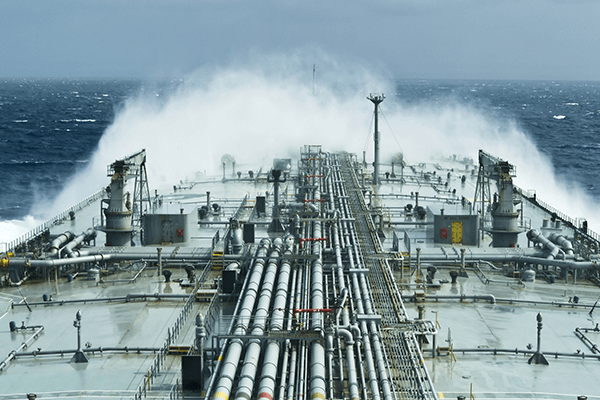
Las Disposiciones Administrativas en materia de seguros para las actividades de Exploración y Extracción (DACGS), publicadas el 23 de junio de 2016, dedican su artículo 29 a establecer los montos mínimos de aseguramiento de las embarcaciones que sean utilizadas en las actividades de exploración y extracción de hidrocarburos.


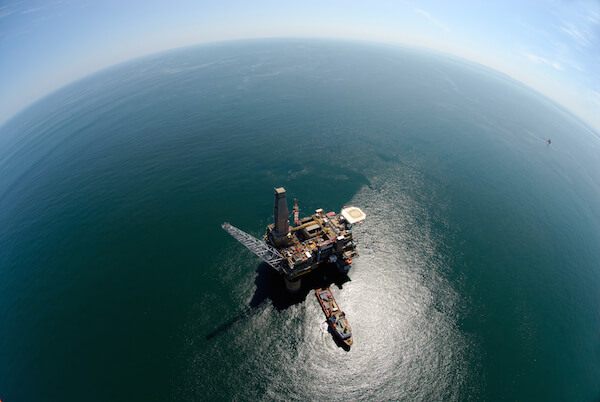
Los montos van desde los USD 1´000,000,000.00 (Mil millones de dólares) para los FPSO (Floating, Production, Storage and Offloading) o FSO (Floating, Storage and Offloading); USD 300´000,000 (Trescientos millones de dólares)para plataformas móviles y jack-up; USD 100´000,000 (Cien millones de dólares) para abastecedores y similares y USD 10,000,000.00 (Diez millones de dólares) para chalanes y remolcadores.  


Es una obligación de los operadores del Sector Hidrocarburos presentar a la ASEA las pólizas de seguros de las embarcaciones que sean utilizadas en sus operaciones.


Al respecto, es importante considerar diversos aspectos: ¿Los operadores petroleros contarán con embarcaciones o contratarán sus servicios para las actividades que requieran?; si contratan los servicios de un armador ¿Quiénes deberán presentar las pólizas de seguro? Y por último, en caso de un accidente ¿quién es el responsable, el operador petrolero o el armador?


Por lo general, los operadores del Sector Hidrocarburos, buscarán los servicios de los armadores, para que les provean de las embarcaciones que requieran, por lo tanto, seguramente las pólizas de seguro que se presenten ante ASEA estarán a nombre de los armadores.


Las DACGS establecen que quienes deben dar cumplimiento a sus disposiciones son los operadores del contrato, por lo que son los responsables de contratar los seguros indicados. No obstante, dicha responsabilidad se extiende a contratistas, subcontratistas y proveedores, de conformidad con lo que señala el artículo 24 de las DACGS:

Artículo 24. Los Regulados deberán requerir que sus contratistas, subcontratistas, proveedores o prestadores de servicios mantengan pólizas de seguro vigentes que contengan las coberturas y montos necesarios y suficientes para amparar la responsabilidad por los daños que pudieran generar con motivo de las obras, servicios y/o actividades que realicen.


Por lo anterior, los contratistas, subcontratistas, proveedores y prestadores de servicio deben contar con la asesoría de un experto en administración de riesgos y seguros, que identifique su exposición al riesgo y determine el programa integral de seguros a su medida.


En caso de empresas extranjeras que cuenten con coberturas mundiales de seguros, se deberán adaptar sus programas de seguro a fin de que cumplan con la normatividad nacional.


En NRGI Broker somos expertos en seguros para el Sector Hidrocarburos. Acércate a nosotros, con gusto te atenderemos.

 

firma

Ferrocarril

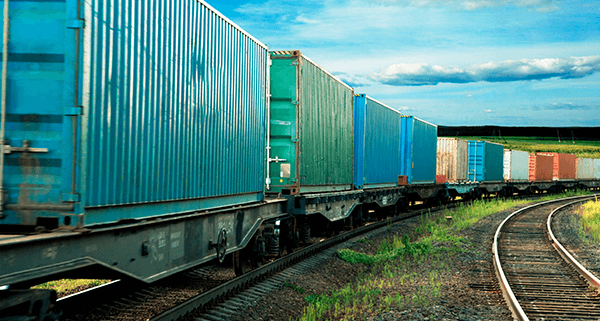
Grupo Mexico sees growth in oil-by-rail, terminals: CFO

From Reuters / By Noe Torres and Marianna Parraga / August 8, 2017.

«Mexico’s mining and infrastructure firm Grupo Mexico expects to expand its oil-by-rail business by building at least three terminals in Mexico, including one exclusively for U.S. refiner Valero Energy, its chief financial officer told Reuters on Tuesday.»

«Grupo Mexico has been in talks with importers of refined products into Mexico, said Xavier Garcia de Quevedo. Fuel purchases from the United States are a growing business as the Latin American country’s demand for imported products keeps increasing.»

«Earlier this month Valero announced that it had signed a long-term agreement with the company to transport fuels by rail from Veracruz to inland terminals in Mexico.»

«»Our interest is to build and operate the terminals, to offer rail services and (access to) the terminals,» Garcia de Quevedo said.»

«He mentioned Torreon, Chihuahua, Mazatlan, Manzanillo and Guadalajara as potential locations for the new terminals.»

«Grupo Mexico, which operates rail lines in Texas and Florida and has a drilling company called Pemsa that has worked for state-run oil company Pemex, is also considering participating in coming oil auctions in Mexico, especially in shallow water areas.»

«Garcia de Quevedo said the company expects to increase about 40 percent its metal melting capacity in Peru, after the government changed an environmental rule for these activities.»

«Grupo Mexico plans to start production at Los Chancas mining project in Peru, with expected capacity of 90,000 tonnes of copper, in late 2021, he said.»

«Garcia de Quevedo was interviewed at the Reuters Latin America Investment Summit.»

Ferrocarril

Ferrocarril

From Reuters / By Noe Torres and Marianna Parraga / August 8, 2017.

TLCAN

Pymes y sector energético, pilares en modernización de TLCAN

TLCAN«Ildefonso Guajardo, secretario de Economía, dijo que entre las prioridades de México para la modernización del Tratado de Libre Comercio de América del Norte (TLCAN), está la competitividad, que permita fortalecer las cadenas de valor.»
«En el noticiario de Juan Francisco Rocha se informó que ello, aseguró el funcionario federal, garantizará que los beneficios sean para los miembros de esta integración.»

«Expuso que el segundo gran pilar es avanzar hacia un comercio regional inclusivo y responsable, donde están todos los temas dentro de la renegociación y que tiene que ver con un piso parejo para los actores de la economía y de la sociedad mexicana.»

«Señaló que hace 22 años, el acuerdo no incluía un capítulo para cómo integrar a las Pequeñas y Medianas Empresas (Pymes), dentro del proceso, además de que no había un tema de emprendimiento, ni laboral, ni ambiental.»

«Guajardo Villarreal aseguró que el tercer pilar, tiene que ver con la economía del siglo XXI donde contemple el comercio electrónico, las telecomunicaciones y la incorporación del sector energético.»

«El cuarto punto, dijo, está relacionado con la certidumbre a la inversión, ya que gran parte del valor de los tratados no solo es eliminar aranceles y abrir áreas del libre comercio, sino dar certidumbre a todos los inversionistas.»

«Finalmente, aseguró que México no aceptará una regresión hacia el comercio administrado a aranceles que limiten o contengan el libre comercio, lo cual se verá reflejado en los principios de arranque de la negociación de todas las partes involucradas.»

RadioFormula.mx / 13 de Agosto, 2017 

Perforación

Mexico continues to advance offshore E&P activity

Offshore Magazine / Houston, 08/11/2017 / Bruce Beaubouef

«The development of Mexico’s offshore oil and gas resources is continuing to ramp up, buoyed by the country’s energy reforms, and despite the prolonged market downturn.»

«Several promising new finds have been made in Mexico’s shallow-water regions. In mid-July, Eni announced that its Amoca-3 well in Campeche Bay has proven multiple significant oil intervals in the Orca and Cinco Presidentes formations.»

«The well was drilled in 25 m (82 ft) of water to a TD of 4,330 m (14,206 ft) in Contractual Area 1, 200 km (124 mi) west of Ciudad Del Carmen, 1.5 km (0.9 mi) southwest of Amoca-1 and 3 km (1.8 mi) northwest of Amoca-2.»

«It intersected 410 m (1,345 ft) of net oil pay, 25-27° API, in several high-quality Pliocene reservoir sandstones; 300 m (984 ft) of the pay were in the deeper Cinco Presidentes sequence, in various Pliocene-age clusters.»

«During the production test, 45 m (147 ft) of the Cinco Presidentes reservoir were opened to production with the well flowing 6,000 b/d of 25° API crude. The Amoca-3 well has since been suspended but will be re-entered later for production purposes.»

«Following the results of this latest well, Eni has lifted its estimate of the Amoca field’s in-place reserves to 1 Bboe. Across Area 1 the total estimated resource base is presently 1.3 Bbbl of oil in place, 90% being oil, with further upside.»

«The company plans to submit an accelerated and phased development plan later this year targeting an early production phase with a plateau in the range of 30,000-50,000 b/d, with operations set to start in early 2019.»

«Exploration of Area 1 continues with the first appraisal well on the Miztón discovery, to be followed by other wells either appraising further finds or exploring undrilled prospects.»

«CEO Claudio Descalzi said: “The Amoca field…represents an optimal opportunity for a phased development approach with a low breakeven. It is an ideal project in this low oil price environment.”»

«Descalzi added that “Eni’s objective is to become the first international company to establish operating production in Mexico, which would be the first tangible success of the country’s ‘Reforma energetica’ campaign.”»

«But the biggest news – which also came in mid-July – was when Talos Energy reported that its first exploration well offshore Mexico has discovered potentially large oil volumes in the Zama prospect. Results indicate in-place oil in the range of 1.4-2 Bbbl, above pre-drill estimates, and the structure could extend into a neighboring block. Tests of hydrocarbon samples recovered to the surface revealed light oil, with API gravities between 28° and 30° and some associated gas.»

«The ENSCO 8503 semisubmersible drilling rig spudded the Zama-1 well in block 7 in the Sureste basin on May 21 in 546 ft (166 m) of water, 37 mi (60 km) from the Port of Dos Bocas.»

«Initial analysis suggests the well intersected a contiguous gross oil-bearing interval of more than 1,100 ft (335 m), with 558-656 ft (170-200 m) of net oil pay in Upper Miocene sandstones, and no water contact.»

«At present, the well has reached an initial shallow TVD of around 11,100 ft (3,383 m). A liner is being set to protect the discovered reservoirs, prior to drilling deeper exploratory objectives to a TVD of roughly 14,000 ft (4,200 m).»

«There are no plans for immediate well testing, and further evaluation will be needed to calibrate the well with reprocessed seismic in order to determine future plans and optimal follow up locations for delineation drilling.»

«Talos Energy is in partnership with Sierra Oil and Gas and Premier Oil in blocks 2 and 7, respectively offshore the Veracruz and Tabasco states.»

«The dramatic results of the Zama-1 well led CNH to delay its next deepwater auction by a month, to give international bidders more time to evaluate recent major crude discoveries that highlight the potential value of the assets. The commission has now set Jan. 31 as the date for the next round of auctions for deepwater oil and gas tenders in the Gulf of Mexico.»

«The round 2.4 auctions will offer 30 areas, of which 10 are in the Cordilleras Mexicanas deepwater basin, 10 others in the Salina basin, nine in the Perdido Fold Belt off the US-Mexico maritime border, and one more in the Yucatan platform.»

«The Cordilleras Mexicanas deepwater basin is home to national oil company PEMEX’s Lakach natural gas project, and is located east of the Gulf Coast port of Veracruz. Cordilleras Mexicanas is viewed by the oil and gas industry as having extensive untapped potential. The auction will be the first time the basin has been made available to international oil majors, which for decades have profitably developed other fields in nearby US waters.»

«Mexico’s first deepwater oil auction last December included blocks from the Perdido Fold Belt straddling the US-Mexico maritime border, and the Salina basin further to the south.»

Perforación

«BOEM to offer 76 million acres in Lease Sale 249»

«The Bureau of Ocean Energy Management (BOEM) says it will offer 75.9 million acres offshore Texas, Louisiana, Mississippi, Alabama, and Florida for oil and gas exploration and development in Lease Sale 249.»

«The region-wide lease sale scheduled for Aug. 16, 2017, will include all available unleased areas in federal waters of the Gulf of Mexico and provide a reduced royalty rate for shallow-water leases to encourage exploration and production under current market conditions.»

«Lease Sale 249 will include about 14,220 unleased blocks, located from 3 to 231 mi (5 to 372 km) offshore, in the Gulf’s Western, Central and Eastern planning areas in water depths ranging from 9 to more than 11,115 ft (3 to 3,400 m).»

«Excluded from the lease sale are blocks subject to the Congressional moratorium established by the Gulf of Mexico Energy Security Act of 2006; blocks that are adjacent to or beyond the US Exclusive Economic Zone in the area known as the northern portion of the Eastern Gap; and whole blocks and partial blocks within the current boundary of the Flower Garden Banks National Marine Sanctuary.»

«Scheduled to be livestreamed from New Orleans, this will be the first offshore sale under the national Outer Continental Shelf Oil and Gas Leasing Program for 2017-2022. Under this program, 10 region-wide lease sales are scheduled for the Gulf. Two lease sales will be held each year and include all available blocks in the combined Western, Central, and Eastern Gulf of Mexico planning areas.»

Offshore Magazine / Houston, 08/11/2017 / Bruce Beaubouef

Pemex espera alcanzar procesamiento crudo de 1.0-1.1 mln bpd hacia fin 2017 tras mantenimiento refinerías

Reuters / CIUDAD DE MÉXICO / 11 Agosto

«La estatal mexicana Pemex espera estabilizar su procesamiento de crudo en 1.0-1.1 millones de barriles por día (bpd) un su sistema local de refinación a fin del año, tras ejecutar mantenimiento en varias refinerías, dijo el viernes el director general de Pemex Transformación Industrial, Carlos Murrieta.»

«El funcionario precisó que se harán trabajos mayores en las refinerías ubicadas en Minatitlán (estado Veracruz) y en Madero (Tamaulipas), así como uno menor en Tula (Hidalgo) y otro que se está llevando a cabo en Cadereyta (Nuevo León).»

«»Queremos presionar para que en noviembre, a más tardar principios de diciembre, podamos tener el sistema completo», dijo Murrieta en una entrevista en el Reuters Latin American Investment Summit respecto a las seis refinerías de la empresa en el país, que tienen una capacidad de 1.63 millones de bpd y están procesando entre 800,000 y 900,000 bpd.»

«Por otra parte, dijo que la refinería en Salina Cruz, que reinició operaciones a fin de julio tras una larga parada luego de un incendio, procesará unos 220,000 bpd la próxima semana y que está produciendo ya unos 50,000 bpd de productos terminados.»

«El ejecutivo dijo que espera que pronto se reactive la exportación de crudo pesado Maya desde la terminal en Salina Cruz, en el estado Oaxaca, que está en el Pacífico. Estas exportaciones estaban saliendo por otras terminales.»

Refineria

Reuters / CIUDAD DE MÉXICO / 11 Agosto

La protección de las personas en el mar

Las personas pueden sufrir percances mientras viajan a bordo de una embarcación: lesiones, enfermedad o muerte, causados o no, por los mismos riesgos de la navegación.

En una embarcación se encuentran a bordo los tripulantes y pasajeros, los cuales están expuestos a presentar los síntomas de alguna enfermedad, a sufrir alguna lesión o incluso a que se produzca la muerte en el transcurso de la navegación.

Uno de los ejemplos más emblemáticos de los daños que pueden sufrir las personas en una embarcación es el del Titanic, donde centenares de personas, entre pasajeros y tripulación, perdieron la vida a causa de la catástrofe ocurrida.

webEn barcos que no son de pasajeros, también hay registro de las afectaciones que pueden existir para las personas a bordo en caso de siniestro. En 1983, el petrolero español Castillo del Beliver naufragó frente al Cabo de Nueva Esperanza, en Sudáfrica; además del derrame de 250,000 toneladas de crudo, tres de sus tripulantes murieron. Otro caso similar fue el abordaje del petrolero Nassia con un carguero, que dejó un saldo de 36 personas muertas[1].

En el momento del siniestro, se deben tomar todas las medidas necesarias para proteger la vida, la salud y la integridad tanto de los tripulantes como de los pasajeros, lo cual implicará diversos gastos para proveerles de atención médica, primeros auxilios y el regreso a tierra firme, si fuera necesario.

El seguro de protección e indemnización (P&I), con el que deben contar las embarcaciones cubre los gastos médicos a las personas afectadas o, en su caso la indemnización por los daños o lesiones que pudieran sufrir.

Si fue algún tripulante quien sufrió el daño, también se pagarán los gastos que implique enviar a un sustituto.

La Ley de Navegación y Comercio Marítimos, en su artículo 175, establece que el propietario de la embarcación es el responsable de todos los daños causados a terceros que le sean imputables por la explotación de la embarcación o por su carga. Por eso, se establece la obligación de contar con un seguro de P&I.

En el ámbito internacional, la responsabilidad se rige con base en el Convenio sobre Limitación de la Responsabilidad Nacida de Reclamaciones de Derecho Marítimo y, en su caso, por el Convenio Internacional sobre Responsabilidad por Daños Causados por la Contaminación de las Aguas del Mar por Hidrocarburos.

En NRGI Broker, somos expertos en seguros de Protección e Indemnización. Acércate a nosotros, con gusto te atenderemos.
[1] http://www.20minutos.es/noticia/728547/0/vertidos/petroleo/claves/

Oil Companies at Last See Path to Profits After Painful Spell

Source: NYT/ By STANLEY REED / AUG. 1, 2017

ABERDEEN, Scotland — This port city built of granite on the North Sea has taken a battering in recent years. Plunging oil prices hit the petroleum industry, which dominates the economy. Tens of thousands of jobs were slashed. Projects worth billions of dollars were sent back to the drawing board.

Oil executives here now speak with a relief similar to survivors of a fierce storm.

“I feel good about the North Sea, to tell you the truth,” Mark J. Thomas, North Sea regional president for the oil giant BP, said in an interview at the company’s offices near Aberdeen’s airport. “It is remarkably different than where we were even just a few years ago.”

The brighter mood masks what had been a difficult path for the energy sector around the world.

When oil prices fell, the industry scrambled to adjust. It initially relied on tried-and-true tactics: cutting jobs and investment. But then companies realized they had to go further, starting a far-reaching reworking of their businesses to embrace new technologies and construction methods to stretch each dollar just a little more.

The result has been drastically lower operating costs and higher cash flows. Learning to live in a weaker oil price environment gives them upside if prices firm up. This shift was borne out in recent days as major oil companies, including Chevron, Exxon Mobil, Royal Dutch Shell and Total, reported much healthier results.

On Tuesday, BP was the latest to publish its earnings, reporting a $144 million profit for the 2nd quarter compared with a $1.4 billion loss in the period a year earlier.

Companies now reckon that current price levels will most likely persist, and that the $100 oil of a few years ago was “a great aberration,” Daniel Yergin, the oil historian, said in an interview. Indeed, BP’s chief executive, Robert Dudley, said on Tuesday he was planning on the basis that oil prices would remain around their current levels for the next five years.

“Nobody is standing around, waiting for prices to go up substantially,” said Mr. Yergin, vice chairman of the research firm IHS Markit. “The industry is in the middle of re-engineering its processes and its technologies to be a $50 industry, not a $100 industry.”

Many companies have moved to simplify the construction of rigs and platforms, big-ticket items that cut into profit.

11 Octubre_shutterstock_377851117In an era of higher oil prices, companies loaded up oil exploration sites with expensive custom-made extras. But they are moving forward now with stripped-down projects featuring standardized designs aimed at cutting costs.

BP, for example, sent a $20 billion Gulf of Mexico project called Mad Dog Phase 2 back for a rework. Instead of a giant specially built platform nicknamed Big Dog, the engineers used a smaller apparatus resembling one they were using on another field and reduced the number of wells by a third. When Mad Dog received the green light last year, the price tag had been cut to $9 billion.

Innovations by suppliers are also reducing costs. Aker Solutions, a Norwegian company that supplies the industry with undersea equipment like pipes and processing centers, is working on powering much of this underwater gear with electricity instead of traditional hydraulic fluid, a shift that could cut the costs of undersea projects by 30 percent.

Companies are also looking to data and technology to help extract more oil from the ground, and relying more on video conferences and streaming rather than sending staff members offshore.

The industrywide reassessment is readily apparent in the North Sea, a sprawling area dotted with hundreds of oil fields.

The area, whose fields were discovered half a century ago, has been a crucial contributor to the global energy supply. But output has declined sharply from its peak in the late 1990s, and the costs of extracting oil in the region rose steadily. When prices fell from above $100 in early 2014 to less than $30 just months later, the North Sea was among the most exposed of the world’s oil-producing areas.

“It is difficult when prices are really high, because you are really scrambling,” said Greta Lydecker, Chevron’s managing director for exploration and production in the region. “You are almost getting to a point where you are chasing things, and that is not a good place to be.”

When the price of oil dropped, the poor financial performance of many North Sea fields became impossible to ignore. Then, the cuts came.

Major investments were put on the back burner or scrapped entirely. That, in turn, sent rates plummeting for activities and services like drilling. Between 2014 and 2016, about a quarter of Britain’s oil-related jobs disappeared, according to the trade body Oil & Gas UK; in all, 120,000 people lost work.

More still needed to be done.

Companies began embracing data analysis not just to locate pockets of oil and gas deep beneath the sea floor, but also to improve production efficiency. When a problem crops up in an oil field, for instance, BP engineers can now pull up data on any of the company’s vast network of wells around the world to find solutions that have worked in the past.

“Before, what we would have had to do is scrabble through piles of papers and reports,” said Dave Lynch, BP’s vice president for reservoir development in the North Sea.

The company also began using that data to shut down some wells to gain more production from others, or to fine-tune the volumes of natural gas it injected into its fields to maintain pressure and pump oil to the surface. Mr. Lynch estimates that computer modeling has helped BP boost overall production by 3 to 5 percent in the region.

Operators are using technology to save on staff costs, as well. BP and Chevron are gingerly experimenting with taking some employees from offshore production platforms and having them do their jobs remotely on the mainland, a change that would cut the hefty costs of flying them on helicopters and providing them with food and other necessities.

They have also built centers in key parts of the world, including Aberdeen, that are linked by video to installations that are sometimes far at sea. Initially, staff members were skeptical and workers said they were effectively being spied on. In one case, staff members on a BP platform covered a camera with a sock.

“That’s all gone now,” Mr. Lynch of BP said. “Now, they realize the support they get from the onshore is really important.”

The scramble to slash expenses has already produced results.

It used to cost $97 a barrel in 2015 for big energy companies to break even, after accounting for expenses, investments and shareholder dividends, according to Biraj Borkhataria, an analyst at RBC Capital Markets in London. That figure is now around $55, a drastic cut, albeit one that still leaves costs higher than world oil prices. Major companies are well insulated from day-to-day moves in oil prices, not just by hedging against prices but also because they sell a wide variety of other energy products.

Despite the progress, plenty of challenges remain.

In the short term, traditional oil companies must face off against the shale energy industry in the United States. Not only is shale plentiful, but operators have also lowered costs by improving drilling routines and finding other economies of scale.

And in the longer term, cleaner energy sources like wind and solar are becoming more competitive with oil and natural gas.

But in the North Sea, the change has nevertheless been marked.

“We haven’t been in a profitable position for years,” Mr. Thomas of BP said. The company’s North Sea operations are “heading towards profitability,” he said, “for the first time in a long time.”

BP duplica ventas de combustible en gasolineras

El Financiero / Sergio Meana / 06 agosto 2017 22:57

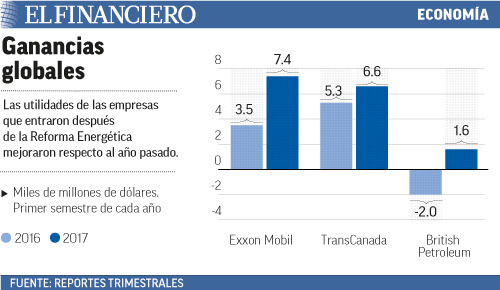
«BP, Exxon y TransCanada destacaron en sus reportes del segundo trimestre del año, ganancias y ventas que se duplicaron por el nuevo negocio mexicano, como los pasos a seguir en nuevas oportunidades a partir de la reforma energética.»

«En cuanto a ventas, BP fue la empresa que detalló los beneficios conseguidos al estar presentes en el país.»

«Robert Dudley, CEO de la empresa de origen británico, aseguró que en México las estaciones de servicio que compraron venden el doble que antes de que fueran abanderadas con las siglas de esta marca británica.»

«“En México fuimos la primera compañía internacional en entrar al nuevo mercado de venta directa de combustible desde la desregulación, y quisiera decir que los volúmenes a lo largo de nuestras tiendas se han más que duplicado desde los primeros meses que empezamos a comercializar”, detalló Dudley.»

«Exxon
informó a inversionistas sobre el negocio de refinados en México, aunque no detallaron sobre las oportunidades en el sector de exploración y producción de crudo de donde obtienen sus mayores ingresos a nivel mundial.»

«Jeffrey Woodbury, vicepresidente de Relación con Inversionistas de la petrolera de EU, dijo que el país representa una ‘locación fantástica’ por toda la refinación en la Costa del Golfo.»

«“Estamos complacidos con el ambiente de negocios en México y como se está moviendo. Es un mercado muy atractivo para nuestras refinerías de la Costa del Golfo. Ciertamente ésta es una buena salida para estos productos”.»

«Aporta a TransCanada»

«TransCanada detalló que su EBITDA creció en 66 millones de dólares por los nuevos ingresos de sus locaciones en Topolobampo y Mazatlán.»
«Donald R. Marchand, director financiero de la firma, señaló que continúan en la búsqueda de mayores oportunidades en el mercado mexicano a partir de un paquete de 19 mil millones de dólares para Norteamérica. «

Fuente: el financiero

El Financiero / Sergio Meana / 06 agosto 2017 22:57


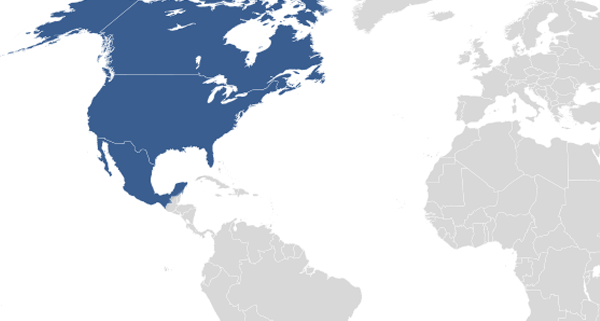
American, Canadian, And Mexican Oil & Natural Gas Industries Commit To Energy Trade Alliance Under NAFTA

Oil and Gas Online | News | August 2, 2017

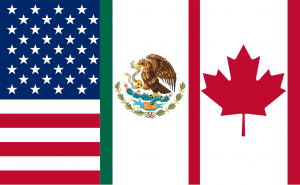
«The American Petroleum Institute (API), Canadian Association of Petroleum Producers (CAPP) and the Mexican Association of Hydrocarbon Companies (AMEXHI) today outlined their shared policy positions on further strengthening the competitiveness of the North American energy industry under the North American Free Trade Agreement (NAFTA). In a joint paper, the three organizations, who collectively represent more than 750 international oil and gas companies in the U.S., Canada, and Mexico, highlighted their support for market-oriented policies and opportunities for commercial growth and job creation.»

«“The natural gas and oil industry across North America is united in our support for NAFTA and the significant consumer, economic and security benefits it generates,” said API President and CEO Jack Gerard. “As the energy flows between our countries continue to grow, it’s important to highlight the critical role NAFTA has played in facilitating cross-border trade and investment in energy. The positions we put forward today reinforce our commitment to the energy trade alliance under NAFTA, which supports jobs and manufacturing in energy, helps to make energy more affordable, and enhances our energy security.”»

«“It is imperative to maintain fully reciprocal market access for Canadian oil and natural gas between Canada and the U.S., as well as enhance trade with Mexico,” said CAPP President and CEO Tim McMillan. “Since NAFTA’s inception in 1994 our three nations’ economies have become interconnected and integrated. The logic in supporting a free trade zone is more compelling today than ever before which is reflected in our joint position to strengthen our deep trade relationship for all three countries.”»

«“After Mexico’s Energy Reform, NAFTA itself enabled much of the investment attraction, infrastructure development and a more intensive commercial exchange,” said AMEXHI President Alberto de la Fuente. “The synergy between NAFTA and the Energy Reform in Mexico is essential to attract investments, develop integrated value chains and increase North America’s economic competitiveness.”»

«The joint paper outlines the North American oil and natural gas industry’s positions on specific policy areas of NAFTA, including the preservation of tariff reduction and elimination in the trade of energy products, market access, a modernized system of certificates of origin, regulatory cooperation, and fully liberalized trade across North America. It also highlights the support for preserving provisions for strong investment protections and Investor-State Dispute Settlement (ISDS), including rules that restrict expropriation of investments and that provide for prompt, adequate and effective compensation when expropriation does occur.»

«The joint position paper is available on API’s website here. To learn more about the benefits of North American energy integration, click here.»

«API, CAPP, and AMEXHI work on behalf of our international oil and gas member companies to enhance the opportunities for oil and natural gas production and manufacturing and improve the competitiveness of the industry in North America and in the worldwide economy. The three organizations combined represent over 750 international oil and gas member companies, and support opportunities for economic growth and job creation under NAFTA.»

Flag_of_the_North_American_Free_Trade_Agreement_(standard_version).svg-2

SOURCE: The American Petroleum Institute (API)

Oil and Gas Online | News | August 2, 2017

Vastos depósitos de petróleo frente a las costas de Tamaulipas

El Sol de Tampico / Alfredo Márquez Sábado / 5 de agosto de 2017

«Frente a las costas de Tamaulipas existen vastos depósitos de petróleo, que de acuerdo con los investigadores que llevan a cabo los estudios y exploraciones de esa área, las reservas que ahí existen se consideran mayores a las de la llamada sonda de Campeche, lo que puede significar una recuperación en el mediano plazo para la economía de la región y el país.»

«Sobre este tema habló el ingeniero César Núñez de Cáceres, quien tiene amplia experiencia en el sector naviero y la industria marítima, al ser entrevistado durante la mañana del viernes en el aeropuerto de Tampico, y dijo que en diálogo que sostuvo con el capitán de un barco de investigación que utiliza la sismografía para determinar las áreas en donde hay petróleo, le informaron que frente a las costas de Tamaulipas existe, y no sólo por lo que se ha dado a conocer ahora después de la Reforma en la que se han encontrado lotes que ya fueron asignados, grandes cantidades de petróleo.»

«Es por eso que la actividad de las plataformas de investigación y perforación es grande frente a las costas de Tamaulipas, y esto es algo que se había estado esperando desde hace muchos años dijo el entrevistado, que indicó ahora que está la privatización del sector energético, es un hecho que se está dando y ahí existen compañías grandes de nivel mundial que están operando frente a las costas mexicanas.»

«Esto habla económicamente de una recuperación en el mediano plazo, lo que afirmó, porque este tipo de inversiones abarcan no sólo empresas petroleras, sino renglones como la hotelería, alimentos, los abastecedores de todas esas industrias y “se prevé que en el futuro próximo tendremos una recuperación económica no tan sólo en el estado sino en todo el país”, dijo.»

“Trabajamos para una empresa que se llama NAVALEC nosotros nos dedicamos a la instalación, preparación de equipo electrónico en embarcaciones, de hecho representamos a empresas extranjeras de diferentes partes del mundos y en este momento tenemos un proyecto en Salina Cruz en donde se están fabricando 5 patrullas oceánicas para la Armada de México, ahí mismo en la Secretaría de Marina tienen proyectos muy grandes para construcción de remolcadores para abastecimiento para Pemex.»

«Es ahí la importancia de lo que viene, porque hasta Pemex se está preparando y afortunadamente no se privatizó todo como todo mundo pensamos, porque la ley no lo permite, pero ese porcentaje que sí pasó a manos privadas es grande, y la Secretaría de Marina está haciendo inversiones muy grandes para patrullar las costas y con ella estamos trabajando.»

shutterstock_19901770

El Sol de Tampico / Alfredo Márquez Sábado / 5 de agosto de 2017