Los avances de la Reforma Energética en 2016

El avance más importante que se produjo en el marco de la Reforma Energética, durante el año 2016, fue la incorporación de nuevos participantes en la cadena de valor de los Hidrocarburos y Petrolíferos derivado de: 1) las tres rondas de licitaciones llevadas a cabo durante este año, donde  más de veinte empresas están realizando los trabajos iniciales de exploración y/o extracción en aguas someras, profundas y terrestres; 2) la libre importación del gas LP, gasolina y diésel, además de la comercialización de cualquier marca en las estaciones de servicio y 3) el otorgamiento de una mayor cantidad de permisos a particulares para llevar a cabo las actividades de Transporte, Almacenamiento, Distribución y Expendio, los cuales ascienden a más de 19,000. De esta manera, se marca una tendencia de expansión en toda la industria de los Hidrocarburos y Petrolíferos.

Lo anterior significa un escenario caracterizado por la multiplicidad de participantes, lo cual trae consigo una mayor probabilidad de ocurrencia de siniestros, considerando que el Sector Hidrocarburos es, por sí mismo, un sector de alto riesgo, por los daños y perjuicios que se pueden causar a terceros en sus personas y en sus bienes, así como al medio ambiente como por ejemplo, el descontrol de pozos, derrames durante el transporte en embarcaciones, durante la construcción y operación de los ductos, o las colisiones de las pipas que causan incendios y explosiones, entre otros.

Las autoridades encargadas de garantizar que las actividades del Sector Hidrocarburos se desarrollen con base en las mejores prácticas y estándares, tienen la atribución para emitir regulación en materia de instrumentos financieros de transferencia del riesgo. Un avance al respecto, se dio el 23 de junio de 2016 con la publicación, en el Diario Oficial de la Federación,  de las Disposiciones Administrativas de Carácter General que establecen las reglas para el requerimiento mínimo de seguros a los Regulados que lleven a cabo obras y actividades de exploración y extracción de hidrocarburos, tratamiento y refinación de petróleo y procesamiento de gas natural, en las que se establece la obligación a los regulados de contar con seguros de responsabilidad civil y ambiental, así como de control de pozos, los cuales lejos de verse como una carga administrativa y económica, son un respaldo para proteger su patrimonio y la continuidad de sus operaciones.

En este contexto, es importante destacar que si bien la Reforma Energética presenta oportunidades, también implica riesgos, lo cual no debe ser un factor desalentador, pues cuando éstos están bien identificados y administrados a través de un esquema integral de aseguramiento, contribuyen a la operación exitosa de una empresa.

En NRGI Broker somos expertos en seguros para las empresas que participan como operadores del Sector Hidrocarburos de la Reforma Energética, acércate a nosotros.


Comuníquese con nosotros, estamos para ayudarle:
info@nrgibroker.com
(55) 9177.2100

Petróleo abre la semana en fuerte alza en Nueva York

Las cotizaciones del petróleo aumentaron fuertemente la mañana de este lunes en la apertura de Nueva York, luego que los inversores mostraran su satisfacción por el acuerdo alcanzado por la Organización de Países Exportadores de Petróleo (OPEP) con terceras naciones para acentuar una dismininución de la oferta ya decidida por el cártel.

Hacia las 14:00 GMT, el precio del barril de «light sweet crude» (WTI), referencia del crudo en Estados Unidos, ganaba 1.99 dólares, hasta los 53.49 dólares, en el contrato para entrega en enero, en el New York Mercantile Exchange (Nymex).

Financial GrowthFuente: El Economista

WoodMac: Oil Exploration Spending May Drop Further Next Year

Global spending on oil and gas exploration in 2017 could fall below this year’s $40 billion, but lower costs mean profitability will increase, consultancy Wood Mackenzie said in a report on Friday.

Faced with a 30-month-long oil price downturn, oil companies including Exxon Mobil and Royal Dutch Shell have slashed spending budgets in recent years, with exploration bearing the brunt.

According to Wood Mackenzie, the share of exploration in overall oil and gas production investment will dip to a new low of 8 percent in 2017.

«Overall investment will at best match 2016 year’s spend of around $40 billion, and may yet fall further,» said Andrew Latham, vice president of exploration at Wood Mackenzie. That compared with a 2014 peak of $95 billion.

Lower costs of drilling rigs, simpler wells designs and cheaper seismic imaging mean well counts may nevertheless hold up close to 2016 numbers while returns improve.

«After a decade in the doldrums, the majors’ returns from conventional exploration improved to nearly 10 percent in 2015. The rest of the industry is heading in the same direction. Fewer, better wells promise a brighter future for explorers,» Latham said.

The rate of discoveries is not expected to fall next year and to average around 25 million barrels of oil equivalent per well.

The world’s top oil companies have struggled to replace natural decline in production through exploration in recent years and will have to rely more on acquiring fields and smaller companies in the future, Latham said.

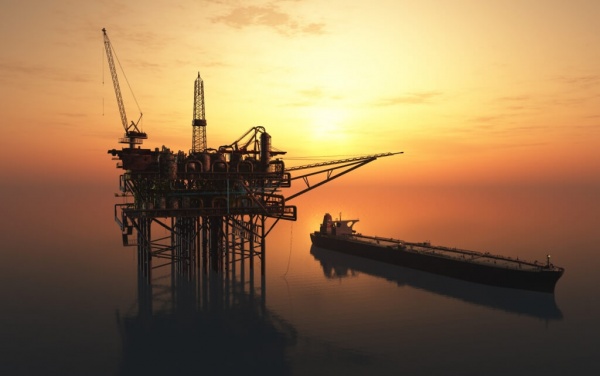
shutterstock_112535648

Copyright: Rig Zone

OPEP y países fuera del grupo participan con reducciones

La Organización de Países Exportadores de Petróleo (OPEP) y otros países productores de petróleo fuera del grupo, incluyendo Rusia y México, alcanzaron el sábado su primer acuerdo global desde el 2001 para recortar en conjunto el bombeo de crudo y aliviar el exceso de oferta que ha mantenido bajos los precios del barril durante dos años.

El acuerdo se selló después de casi un año de discusiones dentro de la OPEP y de desconfianza sobre la disposición de Rusia para atenerse al pacto. Ahora, la atención del mercado de centrará en el cumplimiento del trato.

No miembros también participan

Los productores fuera de la OPEP accedieron a recortar su producción en un total de 558,000 bpd, por debajo del objetivo inicial de 600,000 barriles de petróleo por día (bpd), pero aún así es la mayor contribución que han hecho hasta ahora. El total se suma a los 1.2 millones de bpd que los países del cartel petrolero ya habían acordado sacar del mercado.

El ministro de Energía de Rusia, Alexander Novak, dijo que su país recortará la producción de crudo desde los niveles de octubre de este año, de 11.24 millones de bpd. Al 31 de marzo del 2017, la reducción de suministros de Moscú totalizaría 200,000 bpd y finalmente llegará a 300,000 bpd.

“El acuerdo acelerará la estabilización del mercado, reducirá la volatilidad y atraerá nuevas inversiones”, auguró.

Fuentes de la Secretaría de Energía de México dijeron que el país contribuirá con un recorte de 100,000 bpd, que se hace teniendo en cuenta el declive natural de su producción.

En tanto, el líder de la OPEP de Arabia Saudita, sostuvo que podría reducir su bombeo por debajo del umbral de 10 millones de bpd. El ministro de Energía del reino, Khalid al Falih, declaró que su país está dispuesto a negociar una extensión del pacto global, que entra en vigor el 1 de enero, luego de los primeros seis meses.

“Este acuerdo se consolida y nos prepara para una cooperación de largo plazo”, dijo Falih a periodistas después de la reunión, evento que describió como “histórico”.

Arabia Saudita disminuirá el bombeo en 486,000 bpd, pero Falih añadió el sábado que Riad podría colaborar con recortes más profundos.

Los precios del petróleo , que llegaron a establecerse cerca de los 140 dólares por barril, registraron un importante retroceso en sus cotizaciones.

Desde hace más de un año, la sobreoferta del energético llevo a los precios del aceite a niveles no vistos en mucho tiempo.

De acuerdo con la OPEP y los países no miembros del cartel, con la reducción en producción mundial de crudo se espera que los precios del energético se recuperen, aunque no llegarán a los niveles de más de 100 dólares por unidad.


Fuente: El Economista

Oil Drilling Advocate To Be Trump Pick For Interior Dept.

U.S. President-elect Donald Trump will pick U.S. Representative Cathy McMorris Rodgers, a climate-change skeptic and an advocate for expanded oil and gas development, to run the Interior Department, a Trump aide said on Friday.

The appointment could mean easier access for industry to more than a quarter of America’s territory, ranging from national parks to tribal lands stretching from the Arctic to the Gulf of Mexico, where energy companies have been eager to drill and mine.

The pick, criticized by environmental groups, dovetails neatly with the Republican president-elect’s promises to bolster the U.S. energy industry by shrinking the powers of the federal government.

It follows Trump’s nomination this week of an another climate change skeptic and critic of federal regulations, Oklahoma Attorney General Scott Pruitt, to run the Environmental Protection Agency.

The official on Trump’s transition team, speaking on condition of anonymity, told Reuters that Trump would nominate McMorris Rodgers to head the Interior Department, which is charged with the management and conservation of federally owned land and administers programs relating to Native American tribes.

McMorris Rodgers, a congresswoman from Washington state and the fourth most senior member of the House leadership, voted for the Native American Energy Act. Democratic President Barack Obama vetoed the bill, which would have made it easier to drill on tribal territories, in 2015.

On her website, she also touts her support of the recent repeal of the decades old ban on oil exports, and for a bill to reject the EPA’s Waters of the United States Act as some of her key achievements on energy and environment.

She has consistently opposed Obama’s measures to fight climate change, and once argued that former Vice President Al Gore, a longtime advocate for steps to combat global warming, deserved an «F» in science and an «A» in creative writing.

The League of Conservation Voters, which publishes a score card ranking the environmental record of each member of Congress, gave McMorris Rodgers a zero in its most recent ratings. It was among several environmental groups that criticized her likely nomination.

«Donald Trump just posted a massive ‘for sale’ sign on our public lands,» the LCV said in a statement.

Eric Washburn, an energy lobbyist and former advisor to Senate Democrats Harry Reid and Tom Daschle, said McMorris Rodgers had the experience to do a good job balancing the interests of energy development and conservation.

«She certainly knows all these interests and hopefully will be able to chart a course for the agency that allows for conservation and development to proceed hand in hand,» he said.

Efforts to reach McMorris Rodgers were not immediately successful.

Trump’s Deregulation Drive

McMorris Rodgers has been a member of the House/Senate energy conference committee, working to pass bipartisan energy legislation that included provisions to boost hydropower and update forest policy. In her role as interior secretary, she would oversee more than 70,000 employees.

Trump, a real estate magnate who takes office on Jan. 20, is in the midst of building his administration and is holding scores of interviews at his office in New York.

On Thursday he announced Pruitt as his pick for the EPA, cheering the oil industry but enraging environmental groups and Democratic lawmakers who vowed to fight the appointment.

As the top prosecutor for Oklahoma, a major oil and gas producing state, Pruitt has sued the EPA repeatedly, and is part of a coordinated effort by several states to block Obama’s Clean Power Plan to limit carbon dioxide emissions.

Trump vowed during his campaign to undo Obama’s climate change measures and pull the country out of a global accord to curb warming agreed in Paris last year, saying they put American businesses at a competitive disadvantage.

Since the election, however, Trump has confused observers by saying he will keep an «open mind» about the Paris deal, and also meeting with Gore to discuss the issue.

 Plataforma 1

Copyright: Rig Zone

Crippled Latin Oil Giants Get No Miracle Cure in Post-OPEC Rally

For the three titans of Latin American oil — Pemex, PDVSA and Petrobras — last week’s OPEC-driven price rally won’t be enough to halt a slow descent from the ranks of international crude heavyweights.

Even as news of the cartel’s 1.2 million-barrel-a-day output cut spurred the steepest three-day oil gain in 15 months, the biggest Latin American producers remain hobbled by financial, political, technical and structural problems. Mexico and Brazil have been turning to outside investors to help boost output, with Mexico on Monday offering up stakes for the first time to drill in its deep waters.

Oil prices are an especially pressing issue for the behemoths responsible for large chunks of their local and national economies, all while supplying one of every 13 barrels of crude produced around the globe every day. Unlike North American explorers who were free to fire workers and abandon costly, high-risk projects as crude collapsed, the Latin companies operate under close bureaucratic controls that hinder their ability to respond to market forces, said Thomas McNulty of Navigant Consulting Inc.

“Higher prices are always a good thing but these are state-owned quasi-companies that have tremendous social obligations to their countries and little freedom to take rational cost-cutting steps,” said McNulty, director of Navigant’s valuations and financial risk management practice. “U.S. companies have to pay taxes, sure, but they don’t have to build schools.”

Petroleo Brasileiro SA said it isn’t changing its business plan in response to OPEC’s production agreement. Mexico’s Energy Ministry said it won’t change its auction plans because of OPEC. Petroleos de Venezuela SA, as the Venezuelan state-oil company is formally known, didn’t respond to requests for comment.

Brent Surge

Brent crude, the international benchmark, surged as much as 15 percent in the three trading sessions following a Nov. 30 meeting at which the Organization of Petroleum Exporting Countries agreed to individual production cuts for the first time in eight years. The three-day rally was the largest since August 2015. Brent dipped to a 12-year low around $27 a barrel as recently as January; since then, the price has doubled to more than $54.

“Higher prices are positive for these companies to varying degrees,” said Lucas Aristizabal, a senior director at credit-rating company Fitch Inc. For Petroleos Mexicanos and PDVSA, the benefits are diminished by staggering debt loads that eat up cash that could otherwise go toward drilling to sustain production and replenish spent reserves, he said.

“Pemex needs much higher prices than this under the current taxation scheme to become cash-flow neutral while investing enough to replenish reserves,” Aristizabal said.

Mexican Oil

Once the world’s third-largest oil producer, Mexico now pumps less than the U.S. state of Texas, thanks to dwindling output from the once-gargantuan Cantarell field and lack of investment in new drilling technology. Aristizabal estimated the Mexican company, whose nearly $100 billion in debt is more than twice that of Exxon Mobil Corp., needs crude to fetch $80 a barrel to $100 a barrel to escape it downward spiral.

Mexico’s deep-water oil auction is designed to attract international oil giants to develop offshore production. It’s a crucial test of foreign investment, with Mexican oil output forecast to fall below 2 million barrels a day next year, the lowest level since 1980.

Pemex CEO Jose Antonio Gonzalez Anaya praised the OPEC agreement and price rise as “a breath of fresh air.

“It’s a good development for the energy market and for Pemex,” he said in a Dec. 1 interview on Bloomberg Television.

PDVSA Payments

PDVSA, facing $6.4 billion in debts coming due next year, won’t get much relief from its liquidity crisis, despite the nascent crude rally, Aristizabal said. Company Chairman Eulogio Del Pino said the cut may push oil prices to $70 in six months. Added cash is important as the producer uses a 30-day grace period to pay interest due on a 2035 bond. Venezuelan President Nicolas Maduro has blamed the U.S. Treasury and Citigroup Inc. for the delayed payment.

Venezuela is one of only two cartel members in the Western Hemisphere, and PDVSA will be required to cut some output. That means abandoning some of the potential upside from the price increase, Aristizabal said.

Petrobras, which has been enmeshed in Brazil’s biggest corruption scandal, is in a better position to take advantage of rising prices than it was in 2011 when crude surged past $100 a barrel. The previous Brazilian administration of Dilma Rousseff pressured the state-controlled company to keep domestic gasoline and diesel prices below international levels in an effort to contain inflation, costing an estimated $35 billion in fuel subsidies in the middle of a commodities boom.

Fuel Sales

The Rio de Janeiro-based producer has been selling fuel at a premium for the past two years, partially recovering the losses from import subsidies. In October, the company set a policy of monthly revisions to guarantee prices remain above import costs. Petrobras reiterated its commitment to keep fuel prices above international parity in an e-mailed response to questions.

Rising prices will also guarantee the viability of deep-water fields that are estimated to hold billions of barrels of oil. Chief Executive Officer Pedro Parente has said the company’s break-even cost is around $40 a barrel. Petrobras has been in talks with potential bidders, including Total SA, for joint ventures to get oil from the so-called pre-salt areas offshore.

Brazil’s energy ministry has said it has no authority to set production limits for Petrobras and other companies producing in Latin America’s largest economy, offering the potential for it to capitalize with more output as OPEC members scale back.

Copyright: Bloomberg

Dakota Access Oil Pipeline in New Setback as Permit Denied

The U.S. Army Corps of Engineers denied Energy Transfer Partners LP a permit to build a section of the $3.8 billion Dakota Access Pipeline in North Dakota after weeks of opposition from Native Americans, environmentalists and other groups.

“There’s more work to do” in exploring alternative routes, Jo-Ellen Darcy, the corps’ assistant secretary for civil works, said in a statement Sunday, rejecting the company’s request for a permit to route the line under Lake Oahe. The move punts a decision to the administration of President-elect Donald Trump. He expressed support for Dakota Access as recently as Dec. 1.

Protests against the crude-oil pipeline have resulted in hundreds of arrests and drawn support from celebrities. The standoff is emblematic of a broader effort by environmentalists to stall oil and gas pipelines, which they say aren’t needed and hurt the nation’s progress in reducing its reliance on fossil fuels. Protesters who have camped for months in North Dakota had been told the area would be closed on Monday and they would have to move to designated protest zones.

Energy Transfer Partners and Sunoco Logistics Partners LP called the move “a purely political action” in a statement Sunday, adding that they are fully committed to bringing the project to completion.

“This is nothing new from this administration, since over the last four months, the administration has demonstrated by its action and inaction that it intended to delay a decision in this matter until President Obama is out of office,” the companies said in the statement.

Energy Transfer Partners slid as much as 3.7 percent to $33.12 in New York on Monday. The stock was down 3.6 percent to $33.16 at 9:35 a.m. local time. Parent company Energy Transfer Equity LP fell as much as 1.8 percent to $16.18 while Sunoco Logistics declined as much as 3.4 percent to $22.40.

The setback may be temporary. While the decision by President Barack Obama’s administration prevents the pipeline’s completion for now, analysts and Republican leaders have said Energy Transfer will probably receive the approval it seeks after Trump takes office in January.

Trump Administration

“The Obama administration’s refusal to issue an easement for the Dakota Access Pipeline violates the rule of law and fails to resolve the issue,” North Dakota Senator John Hoeven, a Republican, said in an e-mail. “Instead, it passes the decision off to the next administration, which has already indicated it will approve the easement, and in the meantime perpetuates a difficult situation for North Dakotans.”

Hoeven called for the protesters to immediately vacate the site.

The Trump administration can probably overturn the Corps’ decision and issue the required easement soon after taking power, Elvira Scotto, an analyst at RBC Capital Markets, said in a note Sunday night.

Dakota Access has been central to the intensifying debate over the need for new pipelines in the U.S. It has become a rallying point for the anti-fossil fuel movement and has drawn intense opposition from Native Americans who say it’ll damage culturally significant sites.

“We wholeheartedly support the decision of the administration,” Dave Archambault II, tribal chairman of the Standing Rock Sioux Tribe, said in a statement on Sunday. “In a system that has continuously been stacked against us from every angle, it took tremendous courage.”

The pipeline could help cut costs for drillers in North Dakota’s Bakken shale region that have turned to more costly rail shipments when existing pipes filled up. Dakota Access, with a capacity of about 470,000 barrels a day, would ship about half of the current Bakken crude production and enable producers to access Midwest and Gulf Coast markets.

The permit would be for the final section of the pipeline, which spans four states. The project was originally slated to be operational at the end of this year.

“The thoughtful approach established by the Army today ensures that there will be an in-depth evaluation of alternative routes for the pipeline and a closer look at potential impacts,” Interior Secretary Sally Jewell said in an e-mail.

Energy Transfer owns the project with Phillips 66 and Sunoco Logistics. Marathon Petroleum Corp. and Enbridge Energy Partners LP announced a venture in August that would also take a minority stake in the pipeline.

Copyright: Bloomberg

BHP Billiton será el socio de Pemex en Trión

La gigante petrolera australiana BHP Billiton ganó la adjudicación del primer farmout o contrato de asociación con Petróleos Mexicanos (Pemex), que se ha licitado en la historia, al presentar una oferta de regalía adicional para el Estado durante el desarrollo del campo de 4% que fue el valor máximo aprobado por la Secretaría de Hacienda, al igual que el otro licitante del proceso, BP, por lo que hubo un empate y se procedió a que la empresa presentará un bono adicional en efectivo, que en el caso del ganador fue de 624 millones de dólares, mientras que la oferta de BP fue de 605 millones 999,999 dólares.

BHP Billiton una de las compañías de la industria extractiva más grandes del mundo. Su origen proviene de la fusión en el 2001 de la compañía australiana Broken Hill Propietary (BHP) y la compañía británica Billiton. Tiene una estructura accionarial dual. Mientras BHP Billiton Limited está listada en la Australian Securities Exchange, BHP Billiton Plc está listada en la Bolsa de Londres y forma parte del FTSE 100.

El segundo lugar queda como obligado en caso de incumplimiento de la ganadora. BP PLC, anteriormente British Petroleum, es una compañía de energía, dedicada principalmente al petróleo y al gas natural, con sede en Londres, Reino Unido. Es una de las mayores compañías del mundo, la octava petrolera en capital contable y la tercera empresa privada más importante dedicada al petróleo y gas en el mundo.

Por tanto, como segundo lugar obligado en el contrato con Pemex establece que tendrá una participación de 60% en la operación de esta licencia de 50 años de duración. Trión se ubica a 179 kilómetros de Tamaulipas y a 39 kilómetros de la frontera con Estados Unidos.

2010-10-20 17-50-07

Fuente: El Economista

Resultados de las Licitaciones de la Ronda 1.4

Tras una larga jornada, la Ronda 1.4 cosechó ganadores, perdedores y grandes inversiones para las licitaciones en aguas profundas del Golfo de México.

China Offshore Oil Corporation y el consorcio Statoil, BP Exploration y Total fueron los dos principales ganadores al agenciarse dos licitaciones cada uno.

China Offshore Oil Corporation consiguió las áreas 1 y 4 del Cinturón Plegado Perdido, ubicado en la zona norte del Golfo de México, cerca de la frontera con Estados Unidos. En tanto, las petroleras Statoil, BP y Total obtuvieron las áreas 1 y 3 de la Cuenca Salina.

Cinturón Plegado Perdido

Otros ganadores de licitaciones en la zona fueron el consorcio conformado por Total y ExxonMobil, y el de Chevron, Pemex e Inpex, que consiguieron las áreas 2 y 3 respectivamente.

Cuenca Salina

En tanto, PC Carigali y Sierra Offshore se quedaron con el área 4 de esta región al sur del Golfo de México, mientras que la alianza entre Murphy, Ophir, Carigali y Sierra se agenció la licitación del área 5.

Las zonas 2 y 6 de la Cuenca Salina quedaron desiertas.

Fuente: Expansión