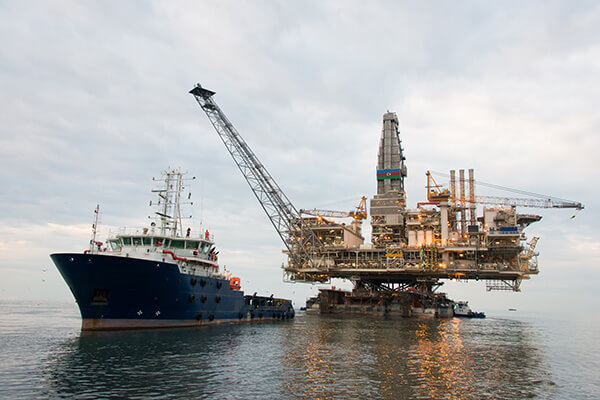
Pemex aligera sus pérdidas hasta el tercer trimestre del 2016

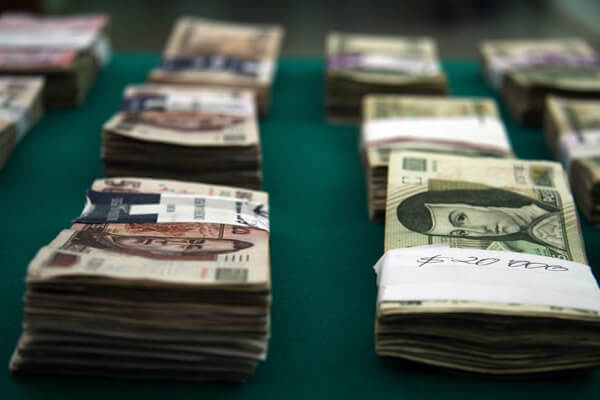
Al tercer trimestre del 2016 Petróleos Mexicanos (Pemex) redujo 26.7% a 250,864 millones de pesos su pérdida integral, gracias a que sus costos, gastos así como el pago de impuestos cayeron más que los ingresos de la estatal, que se han visto golpeados por una menor cotización del petróleo crudo y una baja en la producción.

En los primeros nueve meses del año los ingresos de la empresa fueron 755,696 millones de pesos, con lo que se redujeron 16% en comparación con el mismo periodo del año anterior, derivado principalmente de que el precio de la mezcla mexicana de importación promedió durante el periodo 36 dólares por barril, el precio más bajo al menos en los últimos seis años.

En tanto, la carga impositiva de la empresa fue de 220,522 millones de pesos, un decremento de 26% en comparación con el monto erogado en el mismo periodo del año anterior, en tanto lo tributado representó 29% de los ingresos de la petrolera, cuatro puntos porcentuales menos de lo observado al tercer trimestre del 2015.

Pero, al sumarse los costos de ventas y de administración, además de los gastos por compromisos financieros de deuda adquirida que en el acumulado de enero a septiembre sumaron 210,841 millones de pesos, llevaron a que la estatal concluyera con esta pérdida neta, la cuarta consecutiva para los primeros tres trimestres del año en los últimos ejercicios.

Con ello, Pemex perdió 308% más que lo que registró hace 10 años y 63% más que lo que perdió al arranque de esta administración, en el 2013, cuando su pérdida neta al cierre del tercer trimestre ascendió a 161,000 millones de pesos.

En tanto, los ingresos de la empresa son los menores de la última década, ya que son 28% inferiores a los que obtuvo hace 10 años, y 53% inferiores a los que obtuvo en el primer año de esta administración. En tanto, los impuestos erogados son 62% inferiores a los que tenía hace 10 años y 74% menores a los del primer año de esta administración, reducción que no ha podido contener las pérdidas de la empresa.

En lo que respecta al tercer trimestre del año, los ingresos de Pemex bajaron 12.4% a 275,000 millones de pesos, mientras que sus costos y gastos financieros se redujeron apenas 2.4% a 262,500 millones. Dado que el pago de impuestos y derechos también fue 12.2% menor, al erogarse poco más de 87,400 millones de pesos, la pérdida integral del trimestre se redujo 29.6% a 113,840 millones de pesos.

Recientemente la calificadora Fitch Ratings alertó que Pemex enfrentará en el mediano plazo una insolvencia derivada de su carga fiscal elevada, ya que a diferencia de otros gobiernos emergentes con paraestatales petroleras, como el de Brasil y Colombia, México mantuvo las obligaciones tributarias y de pago de dividendos para la empresa, mismas que la han orillado a endeudarse a 100% y con ello tener elevados costos financieros en cada ejercicio, en una “maniobra de fondeo ineficiente”, según la calificadora.

Dinero-Economía

Fuente: El Economista

Asian Energy Stocks Fall as OPEC Split Hits Oil; Dollar Gains

Asian energy stocks fell with oil after the world’s biggest crude producers failed to agree on supply cuts, while rising metals prices in China spurred gains in mining shares. Gold was buoyed by haven demand following the reopening of an FBI probe into Hillary Clinton.

The MSCI Asia Pacific Energy Index and crude both slipped to one-month lows after the Organization of Petroleum Exporting Countries ended two days of talks on Saturday without agreeing any individual quotas. A gauge of raw-materials producers climbed toward its highest level in almost four months as aluminum and zinc rallied to multi-year highs in Shanghai. Gold rose for a third day after a survey pointed to cooling support for Clinton before next week’s U.S. presidential election, while the rand gained versus major peers.

Global equities have lost ground in October as mixed corporate earnings meld with investor anxiety ahead of the Nov. 8 vote in the U.S. and expectations the Federal Reserve will hike interest rates before the year is out. The S&P 500 Index slid 20 points in about 40 minutes on Friday amid news the Federal Bureau of Investigation was again looking into Clinton’s use of private e-mail while secretary of state, an issue that has dogged her campaign. OPEC talks over two days in Vienna yielded little more than a promise that the world’s top oil producers would keep discussing ways to stabilize the market.

“Until the election, the general theme will be uncertainty, which will have implications not just on the stock market, but on the dollar and Treasuries,” said Chad Morganlander, a money manager in Florham Park, New Jersey at Stifel, Nicolaus & Co., which oversees about $180 billion. “The probability that was factored into the market and the global financial system was a Hillary Clinton victory – investors now need to square their books going into the election based on whatever new odds come out.”

Stocks

A gauge of energy shares on the MSCI Asia Pacific Index was down 0.2 percent as of 3:06 p.m Tokyo time, while a measure of raw-materials producers added 0.8 percent. About the same number of stocks rose as fell on the dollar-denominated benchmark, which has barely moved in October following a third-quarter gain of 8.4 percent that marked its best performance in more than four years.

Japan’s Topix index held near its highest level since April and the Shanghai Composite Index declined for a fourth day. Hong Kong’s Hang Seng Index advanced for the first time in a week, while markets in India and the Philippines were shut for holidays.

AIA Group Ltd. shares slumped as much as 7.2 percent after China UnionPay Co. halted credit and debt card payments for most insurance policies in Hong Kong, making it harder to conduct transactions with Chinese visitors that accounted for about half of the company’s sales in the city. Nippon Yusen KK and Mitsui O.S.K. Lines Ltd. — Japan’s two largest shipping companies — surged more than 5 percent in Tokyo after they agreed to merge their container operations with those of third-ranked Kawasaki Kisen Kaisha Ltd., which added less than 1 percent.

Futures on the S&P 500 Index rose 0.3 percent, after earlier retreating as much as 0.4 percent. An ABC/Washington Post tracking survey released Sunday gave Clinton 46 percent support from likely voters, to Trump’s 45 percent. Clinton was ahead by 12 points a week earlier.

“The race remains very tight and markets are far too complacent about the end result,” said Matthew Sherwood, head of investment strategy in Sydney at Perpetual Ltd., which manages about $21 billion. “If the polls tighten more, or the FBI investigation dominates the headlines, there could be a recalibration in market prices this week.”

Commodities

Crude oil fell 0.4 percent to $48.50 a barrel in New York. OPEC ended a meeting on Friday without reaching a deal on country quotas, according to delegates who took part in the discussions. Major producers from outside OPEC finished talks with the group on Saturday without any supply commitments, Brazil’s Oil and Gas Secretary Marcio Felix said. Oil has fluctuated near $50 amid uncertainty about whether OPEC can implement the first supply cuts in eight years at its official November meeting.

“Talks over the weekend make it seem less likely there will be an agreement on production cuts,” said Ric Spooner, a chief market analyst at CMC Markets in Sydney. “The market has probably made a fair bit of the adjustment, but I wouldn’t be surprised to see oil fall further into the $47 range.”

Gold added 0.2 percent, after rallying 0.6 percent on Friday. The metal’s gains reflect «safe-haven buying after the FBI reopened its inquiry into Hillary Clinton’s use of a private e-mail server,” Australia & New Zealand Banking Group Ltd. analysts wrote in a note on Monday.

Aluminum and zinc extended gains in Shanghai as investors bet that strong domestic demand, surging coal prices and logistical issues will underpin prices. Aluminum rose as much as 3.1 percent to its highest level since September 2014, having jumped by about 10 percent last week. Zinc climbed to the highest since March 2011.

Currencies

The Bloomberg Dollar Spot Index, a gauge of the greenback against 10 major peers, rose less than 0.1 percent after retreating 0.3 percent from a seven-month high in the last session. It’s climbed 2.2 percent this month, the biggest gain since May.

While the Fed is seen leaving policy unchanged at a review this week, futures prices indicate a 69 percent chance of an interest-rate hike at its December meeting, up from 59 percent at the end of September. American data on Monday are forecast to show personal spending and income both increased in September, based on Bloomberg surveys of economists.

The rand strengthened 0.6 percent after City Press newspaper reported that South African prosecutors may drop fraud charges against Finance Minister Pravin Gordhan, who has been a key driver of a campaign to maintain the nation’s investment-grade credit rating. The National Prosecuting Authority said Sunday there were no such plans.

The Mexican peso fluctuated near a two-week low versus the dollar, after three days of losses. Mexico’s currency tends to fall when U.S. presidential candidate Donald Trump gains ground in polls, reflecting concern about his pledges to renegotiate a free-trade agreement and deport millions of undocumented immigrants.

South Korea’s won rose 0.3 percent, having earlier sank to a three-month low as President Park Geun-hye deals with an influence-peddling scandal that’s sparked calls by the ruling party for her to remove the prime minister. Prosecutors raided Park’s office over the weekend to investigate allegations her close friend Choi Soon-sil — a private citizen whom opposition lawmakers have linked to a religious cult — wielded influence on state affairs over an extended period.

China’s yuan strengthened 0.2 percent, paring its biggest monthly loss since May. The currency advanced from near a six-year low following Friday’s retreat in the dollar and as China’s clampdown on UnionPay payments for insurance products in Hong Kong provided support. The transactions have been used as a means of skirting capital controls to take funds out of the mainland.

Bonds

The yield on U.S. Treasuries due in a decade declined one basis point to 1.84 percent, after touching a five-month high of 1.88 percent on Friday. Sovereign debt in the world’s biggest economy has lost 1.2 percent on average this month, the worst performance since February 2015, a Bloomberg index shows.

The selloff in Treasuries may pause because the FBI’s investigation of Clinton could spur demand for the safest assets, said Hiroki Shimazu, an economist and strategist at the Japanese unit of MCP Asset Management in Tokyo.

China’s one-year interest-rate swaps rose four basis points to an 18-month high of 2.75 percent in Shanghai. The increase reflects speculation policy makers will seek to keep money rates high as they tackle asset bubbles and try to stem declines in the yuan.

Copyright: Bloomebrg

En noviembre, gasolina de Pemex será UBA

Petróleos Mexicanos (Pemex) tiene el compromiso de que toda la gasolina distribuida será ultrabaja en azufre (UBA), con un nivel de entre 30 y 80 partes por millón (ppm) en todo el territorio nacional, a partir de noviembre, luego de haber invertido alrededor de 3,000 millones de dólares para revertir el uso de combustible que contiene de entre 300 a 600 ppm (mayor cantidad de azufre).

La industria automotriz se encuentra preocupada porque los tiempos para introducir la gasolina de UBA en niveles mínimos indispensables (de 30 ppm) no se han cumplido; sin embargo, Pemex les ha indicado que en las próximas semanas entrará en operación a nivel nacional.

En México el consumo de gasolina Magna es de 85%, mientras que la compra de Premium es de 15 por ciento.

La norma establece que desde febrero del presente año, Pemex tenía la obligación de ofrecer combustible con un menor grado de azufre, pero ante la falta de inversiones en las refinerías se retrasó la generalización de la gasolina.

Eduardo Solís, presidente de la Asociación Mexicana de la Industria Automotriz (AMIA), mencionó que la Carta Mundial de Combustibles, de la cual México está regido, la exigencia es contar con un combustible de 15 ppm, para avanzar en las normatividad de exigencia vehicular y adoptar compromisos internacionales en emisiones contaminantes.

“En la AMIA estamos confiados en que se pueda dar, porque tendría implicaciones en términos de normatividad”, refirió Solís, pues se encuentran en la mesa de la elaboración de la regulación de emisión de contaminantes.

Apertura debe garantizar calidad: CCE

El presidente del Consejo Coordinador Empresarial (CCE), Juan Pablo Castañón, dijo que la apertura del mercado de la gasolina implicará que la Comisión Reguladora de Energía (CRE) defina las reglas para introducir no sólo marcas sino calidades de combustible, que derivaría en precios.

En entrevista, comentó que lo que se acordó es que la CRE estará dando las bases de la apertura durante el 2017. “Podremos encontrar varias marcas en las gasolineras y eso nos dará distintas calidades (de combustible), servicios y precios”, explicó. Castañón demandó a la autoridad reguladora que defina las reglas de calidad mínima que podrá importarse.

Fuente: El Economista

Oil Extends Decline as OPEC Splits Prevent Deal to Curb Supply

Oil declined for a second day as OPEC’s internal disagreements undermined efforts among major suppliers to reach an agreement in Vienna on trimming output to support prices.

Futures fell as much as 1.1 percent in New York after sliding 2.1 percent at the end of last week. The Organization of Petroleum Exporting Countries ended a meeting on Friday without reaching a deal on country quotas, according to delegates who took part in the discussions. Non-OPEC nations finished talks with the group on Saturday without any supply commitments, Brazil’s Oil and Gas Secretary Marcio Felix said. Brazil attended as an observer.

Oil has fluctuated near $50 a barrel amid uncertainty over whether OPEC can implement the first supply cuts in eight years at its official November meeting. As the gathering opened in Vienna last week, OPEC Secretary-General Mohammed Barkindo warned of the consequences if producers don’t follow through on an agreement to reduce output. The price recovery has already taken far too long and suppliers can’t risk delaying it further, he said.

“Talks over the weekend make it seem less likely there will be an agreement on production cuts,” said Ric Spooner, a chief market analyst at CMC Markets in Sydney. “The market has probably made a fair bit of the adjustment, but I wouldn’t be surprised to see oil fall further into the $47 range.”

West Texas Intermediate for December delivery dropped as much as 53 cents to $48.17 a barrel on the New York Mercantile Exchange, and was at $48.44 at 2:48 p.m. in Singapore. The contract fell $1.02 to $48.70 on Friday. Total volume traded was about 4 percent above the 100-day average. Prices are set for a third monthly gain, up 0.4 percent in October.

OPEC Meeting

Brent for December settlement, which expires Monday, lost as much as 42 cents, or 0.8 percent, to $49.29 a barrel on the London-based ICE Futures Europe exchange after falling 1.5 percent Friday. Front-month prices are up 0.7 percent this month. The global benchmark traded at a premium of $1 to WTI. The more-active January contract slid 27 cents to $50.41 a barrel.

OPEC agreed in Algiers last month to trim output to a range of 32.5 million to 33 million barrels a day and is due to finalize the deal at its Nov. 30 summit in Vienna. The accord helped push prices to a 15-month high above $50 a barrel earlier this month, although they have subsequently fallen amid doubts the group will follow through on the pledge. More than 18 hours of talks over two days in the Austrian capital this weekend yielded little more than a promise that the world’s largest producers would keep on talking.

Some progress was made at the Friday meeting on the methodology to be used for allocating output quotas to OPEC members, said one delegate, who asked not to be identified because the talks were private. Russia reiterated that it’s willing to freeze production, rather than cut, but only if there is an OPEC agreement first, according to participants in Saturday’s meeting.

Oil-market news:

  • Iraq published data showing a rare level of detail for its oil production and exports as it seeks to be excluded from OPEC’s planned output cuts because of its war with Islamic militants.

  • Libyan crude production increased to 640,000 barrels a day, according to a National Oil Corp. official.

  • China’s oil output slump shows no signs of abating as the country’s state-run energy giants hold back spending amid the crash in prices.

  • Rigs targeting crude in the U.S. fell by 2 to 441 last week, according to data from Baker Hughes Inc. Friday.

shutterstock_304303514

Copyright: Bloomberg

Risk Management

Definition of a risk: «Uncertainty concerning a loss arising due to a given set of circumstances.»

Basic principles of risk:

  1. Do not hold more than you can handle in loss

  2. .B. Do not risk much for little.

  3. Consider probability of events and their potential impact.

  4. There is no «uninsured loss». «An uninsured loss» is equal to retention rate.

The risks that companies face around the world have drastically changed over the years. Today, in addition to the concerns of traditional risks, such as natural disasters, the risk scenario has expanded to include the risks of damage to reputation, new regulations, compliance, property damage, increased competition as in the case of Mexico, energy reform that opens up the market to private sector. Therefore it is essential to have a program that has a unique profile of risks and exposures. Which it is known as a Risk Management Program.

It is important to establish risk management: «The process of protecting the assets of an organization through an identification and analysis of exposures, controlling exposures, funding losses with internal and external funds, and implementation and monitoring of the process risk management.”

The objectives of risk management in a business include the before, during and after a loss.

Before:

  1. The efficiency (competitiveness) and growth

  2. Regulatory / Compliance

  3. Focus on manageable risk

  4. Low deviation of objectives

  5. To promote stability and profit maximization

  6. Cash Flow

During:

  1. Protecting people

  2. Protect assets3. To collect data, information and resources to recover loss / claim (internal and external)

  3. Loss duration estimate / claim and lay out an adequate funding

After:

  1. Survival

  2. Stability (return to efficiency, competitiveness, profit maximization as soon as possible)

  3. Maintain profitability or return to profitability

  4. Maintain growth or return to growth

  5. Good Citizenship / Social Responsibility: we must not pass as «bad,» this may represent expenses (public relations) that were not considered necessary before it occurred further loss (eg environmental disasters)

A risk management program consists of 5 stages

  1. Risk Identification: The process of identifying and examining exposures of an organization     a.Property (Real) b. Human Resources c. Liability d. Net Income / Net Income

  2. Risk Analysis: Evaluation of the potential that the various exposures can have impact on the company; there are two types of analysis                                                       a.Qualitative analysis b. quantitative

  3. Risk Control: Any action or inaction that minimizes consents, at optimal cost, probability, frequency, severity, or the uncertainty of loss                                                             a.Avoid, b. Prevent, c. Reduce, d. Segregating / separating / double, e. Transfer (whether contractual, physical, or both)

  4. Risk financing obtaining internal and external funds to the best possible cost to pay for losses through two modalities

       4.1 Retention: internal funds to finance losses

       4.2 Transfer of responsibility: Insurance

  1. Risk Monitoring: implementation and monitoring of the risk management process

In the phase of risk financing should be noted that retention generates a financial burden on companies, which are convinced that the best way of financing risks is the transfer through insurance, there is no «loss uninsured.» «An uninsured loss» is equal to a traffic jam.

In NRGI Broker, we have an expert team in comprehensive risk management and insurance programs that will provide comprehensive solutions, with proven products, which are tailored to suit your needs

Contact us, we are here to help:

info@nrgibroker.com
(55) 9177.2100

Administración de Riesgos

¿Qué es un riesgo? “Incertidumbre concerniente a una pérdida que se presenta debido a un conjunto de circunstancias dadas”.

Principios Básicos del riesgo
A. No retenga más de lo que pueda soportar en pérdida.
B. No arriesgue mucho por poco.
C. Considere la probabilidad de los eventos y su impacto potencial.
D. No existe “una pérdida sin asegurar”; es igual a una retención.


Los riesgos que enfrentan las empresas en todo el mundo han cambiado drásticamente a través de los últimos años. Hoy en día, en adición a las preocupaciones de riesgos tradicionales, como las catástrofes naturales, el panorama de riesgos se ha ampliado para incluir los riesgos de daños a la reputación, nueva reglamentación, cumplimiento de normativas, daños a la propiedad, el aumento en competencia como en el caso de México, que con la reforma energética abre el mercado a la iniciativa privada. Por lo cual es primordial contar con un programa que tenga un perfil único de riesgos y exposiciones. El cual es conocido como un Programa de Administración de Riesgos.


Es importante definir la Administración de riesgos: “El proceso de proteger los activos de una organización a través de una identificación y análisis de las exposiciones, controlando las exposiciones, financiando las pérdidas con fondos internos y externos, y la implementación y monitoreo de dicho proceso de administración de riesgos”.


Los objetivos de la administración de riesgos en una empresa abarcan el antes, durante y después de una perdida

Antes:

  1. La eficiencia (competitividad) y el crecimiento
  2. Regulación/conformidad
  3. Enfoque en riesgos administrables
  4. Mínima desviación de objetivos
  5. Promover la estabilidad y maximización de utilidades
  6. Flujo de efectivo

Durante:

  1. Proteger a las personas
  2. Proteger los activos
  3. Recaudar datos, información y recursos para recuperar la pérdida/reclamación (internas y externas)
  4. Estimación de la duración de la pérdida/reclamación y disponer del financiamiento adecuado

Después:

  1. Supervivencia
  2. Estabilidad (regresar a la eficiencia, competitividad, maximización de utilidades lo antes posible)
  3. Mantener la rentabilidad o el retorno a la rentabilidad
  4. Mantener el crecimiento o retornar al crecimiento
  5. Buen Ciudadano/Responsabilidad Social: no debemos pasar como “los malos;” esto puede representar gastos (relaciones públicas) que no se consideraban necesarios antes de que ocurriera una pérdida mayor (por ejemplo, catástrofes ambientales)


Un programa de administración de riesgos consta de 5 etapas

1. Identificación de Riesgos: el proceso de identificar y examinar las exposiciones de una organización

a. Propiedad (Bienes), b. Recursos Humanos, c. Responsabilidad Civil, d. Utilidad Neta / Ingreso Neto

2. Análisis de Riesgos: La evaluación del impacto potencial que las varias exposiciones pueden tener sobre la compañía, hay dos tipos de análisis

a. Análisis cualitativo, b. Cuantitativo

3. Control de Riesgos: Cualquier acción o inactividad consiente que minimiza, a un costo óptimo, la probabilidad, frecuencia, severidad, o la incertidumbre de la pérdida

 a. Evitar, b. Prevenir, c. Reducir, d. Segregar / separar / duplicar, e. Transferir (ya sea contractual, física, o ambas)

4. Financiamiento de Riesgos la obtención de fondos internos y externos al mejor costo posible para pagar las pérdidas a través de dos modalidades

4.1 Retención: fondos internos para financiar las pérdidas
4.2 Transferencia de la responsabilidad: Seguros

5. Monitoreo de Riesgos: implementación y monitoreo del proceso de administración de riesgos

 
En la etapa del Financiamiento del Riesgo cabe destacar que la retención genera una carga financiera a las empresas, por lo cual estamos convencidos en que la mejor forma de financiar riesgos es la transferencia a través de seguros.

En NRGI Broker, contamos con un equipo experto en administración de riesgos y programas integrales de seguro que le brindará soluciones integrales, con productos comprobados, que se adaptan a la medida de sus necesidades.

ourcore24oct2016

La mayor sacudida del 2017 será la liberación de las gasolinas

El mercado de las gasolinas va a ser un escándalo a partir del próximo año, porque va a combinar una apertura discrecional con un impuesto alto y fijo, en momentos en que los precios del petróleo tienen una tendencia al alza.

El primero que se curó en salud fue el gobierno federal que consiguió fijar el impuesto especial a las gasolinas, con lo que dejó de ser el pivote que permitía recibir los golpes de los precios externos y filtrarlos hacia los consumidores finales.

Ahora, el Impuesto Especial sobre Producción y Servicios (IEPS) es fijo y es alto. Durante estos meses finales del 2016, los incrementos que han sufrido los precios de las gasolinas los contiene Pemex por aquello de que por decreto no pueden subir los precios más de 3% este año.

La realidad es que un mercado cerrado, controlado con criterios más políticos que de mercado, ha generado grandes distorsiones para los consumidores y para las finanzas públicas. Si el Senado avala lo aprobado por los diputados la semana pasada, a partir del próximo año iniciará la apertura del mercado de las gasolinas.

Será una apertura discrecional que dependerá de la opinión de la Comisión Federal de Competencia Económica que a través de la Comisión Reguladora de Energía decidirá quién está listo para un mercado maduro de oferta y demanda y quién necesita que se mantenga el trato infantil de un precio fijado por la Secretaría de Hacienda y Crédito Público.

Esto tiene lógica por los vicios creados por un mercado cerrado y controlado de manera discrecional. Por ejemplo, en las grandes ciudades no debería haber problema para estrenar el año nuevo con una gasolinera en cada esquina.

Pero en poblaciones pequeñas va a ser difícil romper las resistencias, porque al final depende de la autoridad local el dar permisos para nuevas estaciones. Esperemos que no sea el caso, pero por ejemplo, en Cozumel muchas gasolineras pertenecen a una sola familia, la de un político muy poderoso que además atiende asuntos energéticos.

O imagine el precio libre en la gasolinera de aquella carretera que le anuncia que la estación de servicio está a 150 kilómetros. Sin competencia, esa gasolinera le puede vender el litro en 30 pesos y usted paga.

Pero es un hecho que el 1 de enero subirán los precios de las gasolinas y que el fisco recaudará de manera puntual sus impuestos, que equivalen a la mitad del precio que paga el consumidor, entre el IEPS y el IVA.

Y que además de la carga impositiva, cualquier diferencia entre los márgenes de importación, producción, transportación, almacenaje, operación y ganancia será pagada por los consumidores.

El proceso que está por iniciar en poco más de dos meses era algo largamente aplazado en la economía mexicana y que tenía que aplicarse. El mercado cerrado de combustibles es por donde se vea una aberración.

Y en términos políticos, seguro que los promotores vieron como mejor alternativa alterar el avispero en el 2017 y no en año electoral, porque si bien los precios nunca volverán a tener el mismo comportamiento paternal de los controles predecibles, pueden la fascinación de tener muchas marcas y otra clase de servicio compensar a los consumidores.

Me parece que el riesgo político sí está medido ante una determinación que ya resultaba impostergable.


Copyright: El Economista

Oil Investors Ease Back as Market Steadies Before OPEC Talks

Oil investors are playing it safe as OPEC hammers out the details of a deal to trim output.

Money managers reduced bets on falling prices to the lowest since May as oil held above $50 a barrel, prolonging a rally that began when the Organization for Petroleum Exporting Countries announced a deal to cut production to between 32.5 million and 33 million barrels a day. The group plans to finalize the agreement at a meeting in Vienna on Nov. 30.

«The shorts are not laughing off this OPEC deal anymore,» Phil Flynn, a market analyst at Price Futures Group in Chicago, said in a phone interview. «There’s a growing realization that there’s going to be a deal to lock in production. Things will be relatively calm until we get the agreements.»

Saudi Arabia’s Energy Minister Khalid Al-Falih said Oct. 19 that many nations are willing to join OPEC in cutting production. So far, Russia has said it’s considering taking steps to stabilize the market. Alexander Novak, the country’s energy minister, said Sunday that «many scenarios» are being discussed. Venezuelan President Nicolas Maduro, on a tour of oil-producing countries to boost support for the deal, said Oct. 21 he’s in favor of inviting the U.S. to the next OPEC meeting and creating an «alliance» of OPEC and non-OPEC nations.

“This week the market is in a pause after the run-up to $50,» said Michael Lynch, president of Strategic Energy & Economic Research in Winchester, Massachusetts. «There’s still a lot of question about what OPEC is actually going to do next month. Absent that, people are waiting for some more direction than we have now.”

In addition to slashing short bets in West Texas Intermediate crude by 21 percent during the week ended Oct. 18, hedge funds also reduced their long positions by 3.2 percent from a two-year high, according to the Commodity Futures Trading Commission. Net longs increased to the highest in two years.

Oil Inventories

WTI slipped 1 percent during the report week to $50.29 a barrel. The U.S. benchmark rose 0.1 percent on Monday to $50.91 as of 9:41 a.m. London time. Prices reached a 15-month high on Oct. 19 after government data showed U.S. crude stockpiles fell to the lowest level since January.

U.S. stockpiles dropped 5.25 million barrels to 468.7 million in the week ended Oct. 14, according to the Energy Information Administration, after reaching 512.1 million in late April.

«$50 will be the floor through the OPEC meeting, barring some spike in the dollar,» Price Futures Group’s Flynn said. «With U.S. inventories falling at a rapid pace, the prospect of a cut or freeze has real consequences.»

In other markets, net-bullish bets on gasoline rose 9.4 percent to 40,085 contracts, the highest since March 2015, as futures climbed 1.5 percent in the report week. Ultra low sulfur diesel net-longs fell 7 percent to 8,439. Futures slipped 1.2 percent.

WTI held above $50 a barrel even as Russia’s energy minister said the country may produce a new oil-output record next year. As OPEC members head into technical meetings Oct. 28-29, investors will be watching for details on country allocations. Iraq should be exempted from cutting production, Oil Minister Jabbar Al-Luaibi said Sunday.

«The market just wants to see the proof in the pudding,» said Carl Larry, director of oil and gas at consultant Frost & Sullivan in Houston. «We got to $50. That’s as good as it’s getting, going into the November election and the actual OPEC meeting.»


Copyright: Bloomberg.

Privados inician periplo petrolero en aguas someras

Con inversiones superiores a 80 millones de dólares, antes de que concluya el año los primeros operadores privados perforarán al menos dos pozos exploratorios en México, además de que 10 empresas distintas reportan producción de gas y petróleo en 15 campos terrestres, derivado de la Ronda Uno.

Paralelamente, el siguiente capítulo de licitaciones petroleras, la Ronda Dos, ya ha atraído a ocho empresas, que han manifestado su interés por participar en su primer concurso, de acuerdo con la Comisión Nacional de Hidrocarburos (CNH).

Con una inversión cercana a 42 millones de dólares, del 1 de diciembre próximo al 11 de marzo del 2017, la italiana ENI arrancará la perforación del pozo delimitador Amoca 2, en Tabasco, a un tirante de agua de 27 metros en el contrato de producción compartida para el bloque uno de desarrollo de campos obtenido dentro de la segunda licitación de la Ronda Uno.

En el plan de evaluación de los campos Mistón, Amoca y Teocalli con un total de 67 kilómetros cuadrados, la italiana se comprometió a invertir 245 millones de dólares en dos años, de los cuales, 168 millones de dólares serán para la perforación de cuatro pozos exploratorios, incluido el recientemente aprobado por la CNH en la 57 sesión extraordinaria del órgano de gobierno, en el cual se espera un éxito comercial de 63 por ciento.

Además, del 2 de octubre al 9 de febrero, el consorcio Hochki Energy integrado por las argentinas Panamerican Energy (con acciones de British Petroleoum) e E&P Hidrocarburos, perforará el pozo Hochki 2, también en Tabasco, que a su vez tiene una inversión de 41.7 millones de dólares. El plan de evaluación de este consorcio incluye la perforación de cuatro campos en dos años, con una inversión de 212 millones de dólares.

En tanto, el otro operador para campos en desarrollo de la segunda licitación de la Ronda Uno: el consorcio integrado por la mexicana Petrobal (de Grupo Baillères) y la estadounidense Fieldwood (financiada por la inversionista en proyectos energéticos Riverstone Holdings), comprometió 170 millones de dólares en su plan de evaluación para el bloque cuatro de 57 kilómetros compuesto por los campos Ichalkil y Pokoch, en aguas someras con un tirante de agua de 45 metros cercano a las costas de Campeche.

Campos exploratorios y terrestres

La primera fase para campos exploratorios de la Ronda Uno tuvo un sólo ganador de dos contratos de producción compartida: el consorcio compuesto por la mexicana Sierra Oil and Gas, la estadounidense Talos Energy y la británica Premier Oil, que funge como operador con respaldo financiero del fondo estadounidense Black Rock y comprometió 160 millones de dólares durante cuatro años para la fase exploratoria del campo, previo a la evaluación.

En tanto, derivado de la tercera fase de esta Ronda Uno, 10 empresas distintas comenzaron a reportar producción petrolera y de gas en 15 campos terrestres que Petróleos Mexicanos (Pemex) les traspasó desde mayo, de los 25 adjudicados en esta licitación.

En lo que respecta a crudo, Renaissance Oil, Lifting, Diavaz y Canamex extrajeron de mayo a agosto un promedio de 1,741 barriles diarios en cuatro campos, equivalente a casi 0.1% de la extracción de Pemex. En gas, Consorcio Petrolero 5M del Golfo, Strata, Consorcio Manufacturero Mexicano, Dunas Exploración y Producción, Lifting, Diavaz, Canamex y GS Oil and Gas reportaron una producción de 29 millones 167,000 pies cúbicos al día, equivalente a 0.5% que produce la estatal mexicana.


Copyright: El Economista

Russian, Gulf Arab Oil Ministers Meet as OPEC Cut Looms

Russia’s energy minister met with counterparts from Saudi Arabia and other Arab Gulf oil-producers to discuss steps to stabilize crude markets amid OPEC’s drive to win cooperation from the biggest supplier outside the group in limiting output to prop up prices.

Ministers from Saudi Arabia, Kuwait, Bahrain, Qatar and the United Arab Emirates gathered in Riyadh for oil talks at the offices of the Gulf Cooperation Council secretariat. Russian Energy Minister Alexander Novak met with them later on Sunday for a separate round of talks and was expected to speak afterward at a news conference. Oman was the only one of the GCC’s six members not attending.

“Oil markets are on the way to being re-balanced,” Saudi Arabia’s Energy and Industry Minister Khalid Al-Falih said at the start of the GCC meeting. “Low oil prices are putting pressure on GCC countries’ development plans.” Russia was invited to attend the Gulf ministers’ talks, he said. “We are working with Russia and other oil producers to stabilize the market.”

Novak is set to meet representatives of the Organization of Petroleum Exporting Countries on Monday in Vienna for talks that could include production cuts, and officials from Russia and Saudi Arabia will hold bilateral discussions later this month. While Russian President Vladimir Putin has pledged to cooperate with OPEC, he’s been vague about whether the country will trim output or just freeze production at September’s post-Soviet record.

OPEC is seeking to attract other producers to join the plan it agreed to last month at a meeting in Algeria to put into effect the group’s first output cuts in eight years. Crude plunged to a 12-year low in January, squeezing the budgets of producers from Venezuela to Saudi Arabia. The price slide led OPEC to abandon its two-year-old Saudi-led policy of allowing members to pump as much as they could in an effort to protect market share.

“We hope that they can reach an overall agreement on which Russia and other non-OPEC producers will join and cooperate with OPEC members,” Iranian Oil Minister Bijan Namdar Zanganeh told reporters on Sunday in Tehran.

Iraq asked OPEC for an exemption from participation in any cuts, Oil Minister Jabber Al-Luaibi said Sunday at a news conference in Baghdad. He cited Iraq’s war against Islamic militants as the reason the country should be grouped with Iran and Nigeria as members not required to contribute to the collective cuts OPEC agreed on last month in Algeria.

Record Output

Russia is producing about 10.9 million barrels a day on average this year, according to Energy Ministry data. Officials have emphasized the nation’s ability to keep pumping; the latest draft of Russia’s energy strategy sees a potential increase in annual production from 534.1 million metric tons last year to 555 million tons, or 11.1 million barrels a day, by 2020.

OPEC’s 14 members pumped a record 33.75 million barrels a day in September, with the Saudis accounting for 10.58 million barrels, according to data compiled by Bloomberg. Output in Saudi Arabia, the group’s biggest producer, fell short of the 10.66 million-barrel-a-day record in July, the data compiled by Bloomberg show.

Brent crude, the global benchmark, has gained almost 40 percent this year, trading at about $52 a barrel last week. OPEC is trying to determine which members will reduce their output and by how much, with details to be made final at the group’s Nov. 30 meeting.

russian 24oct2016

Copyright:Bloomberg