


Los productores de petróleo retrasan su cita del 27 de septiembre: la reunión de la OPEP será el 28

La esperada reunión de la Organización de Países Productores de Petróleo (OPEP) se retrasa un día: el encuentro de los líderes del crudo será el 28 de septiembre y no el 27, como estaba previsto.

En este escenario, los precios del petróleo han iniciado la semana con subidas. El barril de West Texas y el de Brent cotizan por encima de los 44 y de los 46 dólares, respectivamente, después de que la semana pasada acumulasen un descenso cercano al 6%. 

Parte de las alzas de la jornada está apoyada en las declaraciones del presidente de Venezuela, Nicolás Maduro, asegurando que la OPEP y sus rivales están «cerca» de alcanzar un acuerdo para estabilizar la producción de crudo.

En particular, Maduro afirmó que los países de la OPEP y los que no forman parte del cártel estarían «bastante cerca» de alcanzar un acuerdo para estabilizar el mercado durante este mes de septiembre.

Por su parte, el presidente iraní, Hasán Rouhaní, señaló que Teherán apoyará cualquier movimiento para equilibrar el mercado y elevar los precios, según recoge Shana, la agencia de noticias del Ministerio de Petróleo del país persa.

Fuente: El Economista

RGU Secures Funding to Help Develop Oil, Gas Workforce in Mexico

Robert Gordon University (RGU) in Aberdeen has been awarded funding to create a skills development framework for the oil and gas sector in Mexico. 

The framework will provide recommendations on how to address the potential skills gap in the Mexican oil and gas industry over the next 15 years, both at graduate and vocational level. The university secured the funding, which will be delivered by the British Embassy in Mexico, from the British Government’s Prosperity Fund. 

As part of the development plan, RGU will advise the Ministry of Energy in Mexico (SENER) on appropriate delivery models to train and further develop the Mexican workforce, and to secure a pipeline of future talent.

Work on the development plan has already begun and the framework will be presented to the Mexican Government in December, an RGU spokesperson told Rigzone. In its plan, RGU is undertaking a review of what the UK has done to develop its skilled workforce and is using that information to advise the Mexican Government.

Although Mexico has a long-standing track record as one of the leading hydrocarbon producing countries in the world, it is estimated that it will require more than 135,000 additional skilled people in the oil and gas industry over the next 15 years in order to meet production targets set by the government. 

“The Energy Reform in Mexico presents huge opportunities for the Mexican oil and gas sector,” said Professor Paul de Leeuw, director of RGU’s Oil & Gas Institute.

“RGU is delighted to undertake this important review on behalf of the FCO and to advise the Mexican Government on skills development options for Mexico,” he added.

«As part of the Energy Reform, SENER has developed a coordinated strategic human resource program for the energy sector, seeking to rapidly build capacity to respond to the needs of the transformed energy sector,” said Leonardo Beltran, SENER’s undersecretary for planning and energy transition.

“The partnership with the UK and particularly with RGU will support the development of capacity building of Mexico’s oil and gas sector,” he added.

“We aim to build a strong partnership that promotes an open, robustly-regulated Mexican energy sector with significant British collaboration. The UK is a global centre of energy excellence and we hope our experience can contribute to the successful implementation of Mexico’s new energy markets,” said the British Ambassador to Mexico, Duncan Taylor.

The project builds on the relationship RGU has been developing with SENER following the visit from the President of Mexico, Enrique Peña Nieto and his delegation to the university in March 2015, and builds on the Memorandum of Understanding (MoU) which RGU signed with SENER in September 2015.

This project is funded by the British Embassy in Mexico as part of its Prosperity Fund energy program. This program seeks to support Mexico’s economic development and create commercial opportunities in the energy sector. Through the Prosperity Fund, the British Government has supported Mexico to shape its energy legislation based on international best practices.

Copyright: Rig Zone

Complicaciones durante el control de pozos

El descontrol de pozos se genera por un brote, el cual no se puede manejar a voluntad, y se clasifica en:

  • Descontrol diferencial: Sucede cuando la presión de formación es mayor que la presión hidrostática, invadiendo los fluidos de la formación el fondo del pozo, levantando la columna de fluidos de manera que la expulsa a superficie y el equipo de control superficial no está cerrado.
  • Descontrol inducido: Es ocasionado por el movimiento de la tubería, la cual puede sondear o aligerar la columna hidrostática o fracturar la formación al introducirla complicándose el problema al tener tuberías rotas.


Ante el descontrol se procede a aplicar un método especifico de control según sea el problema que lo genera, sin embargo la realidad es que son pocas las acciones en el Control de Pozos que ocurren como son planeadas, por lo que es importante estar familiarizado con las complicaciones que pueden ocurrir durante la ejecución del control.
A continuación presentamos una lista de las complicaciones más comunes:

  • Tapado / colapsado del anular
  • Sarta tapada
  • Falla de la BOP
  • Falla o daño del revestidor
  • Tapón de cemento
  • Errores conceptuales
  • Complicaciones durante la circulación de un kick
  • Presión excesiva de revestidor
  • Presión reducida no confiable o no disponible
  • Perforación en caliente
  • Consideraciones de control de pozos horizontales
  • Hueco o lavadura en el tubing
  • Congelamiento
  • Detección del punto libre
  • Válvula flotadora de nontra presión en la sarta
  • Pesca
  • Perdidas de circulación
  • Perdidas parciales y severas de circulación
  • Problemas mecánicos del pozo
  • Fresado
  • Tubería fuera del fondo y fuera del pozo
  • Tubería muy débil o muy corroída
  • Cambios en los tanques
  • Bit o embudo tapado
  • Presión entre las sartas de revestidores
  • Falla en los manómetros de presión
  • Problemas más allá del estrangulador
  • Falla o cambio de la bomba
  • Reciprocrado de la tubería durante el control de pozo
  • Consideraciones de las presiones de cierre
  • Snubbing en la sarta o tumbing
  • Pega de tubería
  • Sarta de telescopía


Por lo anterior, es de vital importancia estar siempre alerta ante los indicadores de presión, flujo y equipo involucrado para reconocer el surgimiento de brotes a la brevedad y poder reaccionar buscando evitar incidentes, así como estar protegidos con un Seguro de Control de Pozos que nos respalde ante cualquier inconveniente.
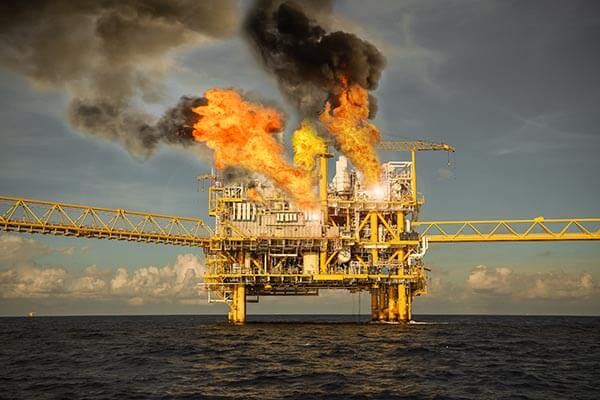
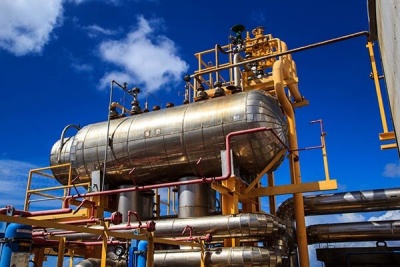
 

En NRGI Broker contamos con un equipo experto en Seguros de Control de Pozos y análisis de riesgo que le brindará soluciones integrales, con productos comprobados, que se adaptan a la medida de sus necesidades.


Complications during well control.

Decontrol wells is generated by an outbreak, which cannot be operated at will, and is classified as:

  • Differential.- happens when formation pressure is greater than the hydrostatic pressure, invading the formation fluids down hole, lifting the column of fluid so that the ejected surface and surface equipment control is not closed .

  • Induced.- is caused by the movement of the pipe, which can probe or lighten the hydrostatic column or fracture the formation to enter complicated the problem by having broken pipes.

Given the lack of control proceeds to apply a specific method of control as the problem that generates it, but the reality is that few actions in the Well Control that occur as they are planned, so it is important to be familiar with complications that can occur during execution of the control.

Below you can find a list of the most common complications:

  • Capping / collapsed the ring

  • covered string

  • Failure of the BOP

  • Failure or damage coating

  • cement plug

  • Misconceptions

  • Complications during circulation of a Kick

  • Excessive pressure casing

  • Unreliable or unavailable reduced pressure

  • Drilling hot

  • Control Considerations Horizontal Wells

  • Hollow or weakness in Tubing

  • Freezing

  • Detection of free point

  • Float valve backpressure in the drill string

  • Fishing

  • Lost Circulation

  • Partial and severe circulation losses

  • Well´s mechanical problems

  • Milling

  • Pipe off the bottom and out of the well

  • Very weak or much corroded pipe

  • Changes in Tanks

  • Bit or clogged funnel

  • Pressure between the strings of coaters

  • Failure pressure gauges

  • Problems beyond the choke

  • Failure or change of pump

  • Reciprocated pipe during Well Control

  • Considerations closure pressures

  • Snubbing in the string or tumbing

  • Paste pipe

  • Telescoping string

Therefore, it is vitally important to always be alert to indicators of pressure, flow and equipment involved to recognize the emergence of outbreaks promptly and react seeking to avoid incidents and be protected with Insurance Well Control we support for any inconvenience.

In NRGI Broker we have an expert in Insurance Well Control and risk analysis that will provide comprehensive solutions, with proven products, which are tailored to suit your needs equipment.


Contact us, we are here to help:

info@nrgibroker.com
(55) 9177.2100

Oil Bears Dominate Market as Doubt Grows Over Output Limits

The longer OPEC and other producers talk about a ceiling on crude output, the more doubts grow in the market.  

Money managers increased wagers on falling prices by the most in three months as a meeting between Russia and Saudi Arabia ended without specific measures to support prices. Producers have pledged to discuss action in Algiers later this month.

“The more they talk, the less people listen,” said Michael D. Cohen, an analyst at Barclays Plc in New York. “If you look at the actual statements from the Saudis, there’s not a lot of enthusiasm. They’re saying that either they don’t believe a substantial intervention is needed right now or that if other producers want a freeze, they’ll go along.”

Saudi Arabia’s Energy Minister Khalid Al-Falih said on Sept. 5 that he’s optimistic producers will agree to cooperate in Algiers. He spoke after meeting with his Russian counterpart, Alexander Novak, at the G-20 summit in China. Novak said that a freeze in production by OPEC and Russia would be the most effective way of stabilizing the market.

The International Energy Forum, including 73 countries that account for about 90 percent of the global supply and demand for oil and natural gas, will meet in the Algerian capital Sept. 26-28. The Organization of Petroleum Exporting Countries will hold informal talks on the sidelines of the gathering.

Parsing Words

“Everyone is sifting for clues on whether OPEC will reach an agreement to limit production or leave it uncapped with the potential for higher output,” said Tim Evans, an energy analyst at Citi Futures Perspective in New York. “At this point we’re waiting for the outcome of the talks. A lot of people are standing to the side while others are building positions with a specific view in mind.”

A freeze deal between OPEC members and other producers was proposed in February. A meeting in April ended with no accord because Iran refused to join, while Saudi Arabia insisted that its rival take part. Iran has said it’s too soon to cap output as it’s still restoring production curbed by sanctions.

Speculators bolstered their short position in West Texas Intermediate crude by 34,954 futures and options during the week ended Sept. 6, according to the Commodity Futures Trading Commission. Bets on rising prices declined.

Prices Drop

WTI futures dropped 3.3 percent to $44.83 a barrel in the report week and prices lost 1.6 percent to $45.15 at 9:18 a.m. New York time.

Futures surged Sept. 8 after the Energy Information Administration reported U.S. crude inventories fell 14.5 million barrels in the week ended Sept. 2, the biggest drop since January 1999. Prices retreated the next day as speculation grew the supply drop was a one-off caused by a tropical storm that disrupted imports and offshore production.

Money managers’ short position in WTI climbed to 130,274 futures and options. Longs fell 1.9 percent. The resulting net-long position dropped 19 percent. Net-long positions in Brent crude decreased by 37,226 contracts, according to ICE Futures Europe.

In other markets, net-bullish bets on gasoline declined 32 percent to 11,148 contracts. Gasoline futures dropped 9.1 percent in the report week. Net-long wagers on U.S. ultra low sulfur diesel tumbled 56 percent to 9,840 contracts. Futures declined 4.3 percent. 

Gambling Momentum

“There’s a lot of gambling taking place,” said Stephen Schork, president of the Schork Group Inc., a consulting company in Villanova, Pennsylvania. “A lot of money managers are betting that a bottom has been put in but I’m skeptical.” 

U.S. crude stockpiles remain at their highest seasonal level in more than 20 years. Refineries plan maintenance programs for September and October when fuel demand is lower. Over the past five years, refiners’ thirst for oil has dropped an average of 1.2 million barrels a day from July to October.

“The market will probably yo-yo in a range through the maintenance season but there’s downside risk,” Schork said. “If demand isn’t a strong as hoped and crude inventories rise, the market could take another leg lower.”

shutterstock_352973621

Copyright: Bloomberg

Proponen liberar precios de gasolina

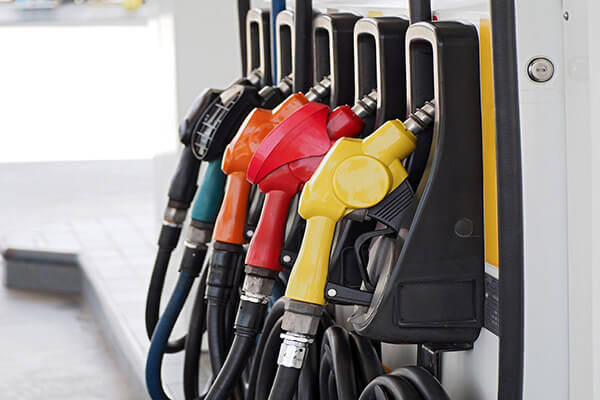
El Gobierno Federal propuso al Congreso de la Unión la liberalización del precio de las gasolinas y el diesel a partir de 1° de enero de 2017

En los Criterios Generales de Política Económica para la Iniciativa de Ley de Ingresos y el Proyecto de Presupuesto de Egresos de la Federación Correspondientes al Ejercicio Fiscal 2017, la propuesta de la SHCP señala que tras adelantar la libre importación de gasolinas para actores distintos a Pemex, en abril pasado aunque estaba prevista para 2017, ahora se deben liberar los precios.

“El siguiente paso que se propone, con el que se consolidaría la reforma energética en materia de combustibles fósiles, es la liberalización gradual y ordenada de los precios al público de las gasolinas y el diésel”, señalan los criterios.

En la propuesta reconocen que la liberación ocurriera a más tardar en el 2018 pero ahora se considera que ya están listas las condiciones fiscales y se están fortaleciendo las capacidades de la autoridad reguladora por lo que puede ser antes aunque de forma gradual y regional.

Se propone la CRE con la opinión de la Comisión Federal de Competencia Económica (COFECE), determinen el ritmo de la liberalización de los precios para las distintas regiones del país y mientras no sean liberalizados los precios al público de las gasolinas y el diésel se propone que la SHCP determine los precios máximos al público aplicables. 

Para proteger a los consumidores se proponen medidas que complementen las facultades de las dos autoridades que podrán monitorear de manera continua los precios al público.

Durante 2017 y 2018, cuando la CRE, previa opinión de la COFECE, informe a la SHCP que se han presentado aumentos desproporcionados en los precios al público de las gasolinas o el diésel, dicha Secretaría podrá establecer precios.

shutterstock_395862259

Fuente: El Economista

Mexico 2017 Budget Cuts To Squeeze Pemex, Primary Surplus Eyed

Mexico’s government on Thursday set out plans for a bigger-than-anticipated cut in public spending in 2017, with struggling state oil company Pemex earmarked for a 100 billion peso ($5.36 billion) reduction in funding.

New Finance Minister Jose Antonio Meade said the budget foresaw planned spending cuts of 239.7 billion pesos ($12.83 billion), targeting a primary surplus of 0.4 percent of gross domestic product (GDP) in 2017. It would be the first such surplus since 2008.

Of the cuts, 100 billion pesos fall on Pemex, which is already facing a funding squeeze and has racked up multi-billion dollar losses for years. Since the government ended its oil and gas monopoly nearly three years ago, Pemex has faced stiff competition from the private sector.

«Pemex is making the biggest contribution to the cuts,» Meade said, presenting the budget proposal to Congress a day after he was sworn in as finance minister following the resignation of Luis Videgaray.

In late 2013, the government threw open the industry to private capital to reverse a protracted slide in oil production, but falling crude prices have undermined those efforts.

Currently running at some 2.16 million barrels per day (bpd), Mexican oil production will slip to an average of 1.928 million bpd in 2017, the budget forecasts. The last time Mexican crude output fell below 2 million bpd was in 1980.

Still, the budget does foresee changes aimed at easing Pemex’s heavy tax load.

Less than two years remain before the next presidential election, and President Enrique Pena Nieto’s government is struggling to ramp up economic growth, having fallen well short of its original ambition to achieve annual rates of 5-6 percent.

Hurt by uneven U.S. demand for its goods, Mexico’s economy shrank in the second quarter for the first time in three years.

Next year, the budget foresees growth of between 2 and 3 percent, compared with 2.0-2.6 percent in 2016.

Despite the 2017 cuts – well above the 175.1 billion the government eyed in April – non-discretionary spending was expected to rise by 144.3 billion pesos, inflated by higher financing costs and a slide in the peso’s value.

Next year the government foresees an overall deficit of 2.9 percent of GDP, 0.6 percentage points less than the 2016 target.

The budget foresaw the peso averaging 18.2 per dollar in 2017, and an average price of $42 per barrel for Mexican crude, in line with the government’s hedging program. ($1 = 18.6600 Mexican pesos)

shutterstock_266679740

Copyright: Rig Zone

Hacienda fija las condiciones para los socios del bloque de Trión

La dependencia presentó un mecanismo para resolver un probable empate entre los aspirantes a participar en la explotación del bloque.

La Secretaría de Hacienda informó en un comunicado que determinó los valores mínimo y máximo para la regalía adicional y los mecanismos a adoptar en caso de empate entre los participantes en el proceso de licitación para ser socios de Pemex en la explotación del campo petrolero de Trión.

El 27 de julio se dio a conocer la convocatoria para seleccionar a los socios con quienes Pemex llevará a cabo las actividades de exploración y extracción de hidrocarburos en el bloque de Trión, ubicado en aguas ultraprofundas del Golfo de México. El proceso de licitación ocurrirá en diciembre.

Según puntualiza el comunicado, las actividades petroleras se llevarán a cabo al amparo de un contrato de licencia donde el Estado recibirá ingresos a través de distintos instrumentos, entre ellos Impuesto sobre la Renta y la Regalía Básica establecida en ley.

De acuerdo con el comunicado de Hacienda, debido a las condiciones imperantes en la industria a nivel internacional además de las condiciones del bloque de Trión y los requerimientos operativos y de ejecución del proyecto, los valores mínimos y máximos para la Regalía Adicional serán de 3% y 4%.

En caso de presentarse un empate entre dos o más licitantes, un 10% del monto en efectivo que ofrezca el consorcio ganador deberá pagarse al Estado y el resto deberá destinarse a inversiones y gastos adicionales en favor de Pemex.

Hacienda apunta que los valores establecidos promoverán el desarrollo óptimo del bloque Trión

La inversión para Trión, uno de los campos con mayor potencial de extracción, está proyectada en 11,000 millones de dólares para los siguientes 10 ó 15 años.

El bloque Trión, ubicado en el Cinturón Plegado Perdido, cerca de la frontera con Estados Unidos, tiene un área de 22.6 kilómetros cuadrados y reservas probadas, probables y posibles (3P) de 305 millones de barriles de petróleo crudo equivalente.

Bloque de Trión

Fuente: Expansión