The importance of documentation and record keeping in the event of an oil well crisis

We have previously said that very few activities during oil well control occur as planned.

It is precisely that point where we derive the importance of always keeping updated records because from these documents can know how to respond to such an eventuality.

The records should be promptly during operation are:

  • Closing pressure: they are not considered as a complication in operations outbreak control, however, some complications may occur if the closing pressures are too high or too low.
  • Circulating Pressure: usually the problem is in the pump and the side of the tube string «U»
  • cursory Gas: It is preferable not close the well, however, when this happens he will empty and if appropriate measures are not taken a lack of control in deep water well can occur.
  • Pump Failures: The speed and cost of the pump are important. If the pump fails for any reason or is not operating properly during well control, it is necessary to change the pump in response to strict procedures.
  • Throttle: A sudden change in pressure can indicate choke a plug below the choke, requiring the pump stops.


To be always prepared before a disaster, aside from maintaining a strict control to maintain updated records, it is important to have insurance for oil Well Control, which it endorses and supports to unforeseen events.

In NRGI Broker we have an expert in Insurance oil Well Control and risk analysis that will provide comprehensive solutions, with proven products, which are tailored to suit your needs equipment.


Contact us, we are here to help:

info@nrgibroker.com
(55) 9177.2100

Importancia de la documentación y registros ante un descontrol de pozos

Ya hemos dicho previamente que son muy pocas las actividades durante el control de pozos que ocurren como fueron planeadas.

Es justamente de ese punto de donde derivamos la importancia de mantener siempre actualizados los registros, ya que a partir de estos documentos se puede saber cómo actuar ante una eventualidad.

Los registros que deben llevarse puntualmente durante la operación son:

  • Presión de cierre: no son consideradas como una complicación en las operaciones de control de brotes, sin embargo, algunas complicaciones pueden ocurrir si las presiones de cierre son demasiado altas o demasiado bajas.
  • Presión circulante: usualmente el problema es en la bomba y el lado de la sarta del tubo en “U”
  • Gas somero: Es preferible no cerrar el pozo, en cambio, cuando esto ocurra él mismo se vaciará y si no se toman las medidas adecuadas, puede ocurrir un descontrol en el pozo de aguas profundas.
  • Fallas de la bomba: La velocidad y el gasto de la bomba son importantes. Si la bomba falla por cualquier motivo o si no está operando de manera correcta durante el control del pozo, es necesario que cambie la bomba atendiendo a procedimientos estrictos.
  • Estrangulador: Un cambio repentino en la presión del estrangulador pueden indicar un tapón debajo del estrangulador, requiriendo que se pare la bomba

Para estar siempre preparado ante un siniestro, aparte de mantener un control estricto para mantener los registros actualizados, es importante contar con un Seguro de Control de Pozos, el cual lo respalda y apoya ante los imprevistos.

En NRGI Broker contamos con un equipo experto en Seguros de Control de Pozos y análisis de riesgo que le brindará soluciones integrales, con productos comprobados, que se adaptan a la medida de sus necesidades.

27 Septiembre_shutterstock_381501832

Comuníquese con nosotros, estamos para ayudarle:
info@nrgibroker.com
(55) 9177.2100

El petróleo mexicano comienza su recuperación con nuevos hallazgos

José Antonio González Anaya, director de Petróleos Mexicanos (Pemex), no puede ocultar su entusiasmo por los hallazgos de nuevos campos que le van a aportar producción «fresca» de crudo y gas a México, pero es cauto y reconoce que «esto no resuelve el problema de Pemex, pero es un muy buen principio».

En entrevista con El Universal, el funcionario señala que los seis descubrimientos «hay que tomarlos poco a poco, pero demuestra que Pemex está trabajando para materializar el potencial que se tiene en el Golfo de México».

«Hoy tenemos a Trión, cuyas reservas ascienden a 485 millones de barriles de crudo y ahora también a Nobilisi-1, con 160 millones, aunque soy optimista y es posible que ese número pueda aumentar, no sabemos cuánto y en qué momento, pero es posible porque no hemos terminado los trabajos», detalló.

La importancia de los descubrimientos y de la licitación de Trión para encontrar socio de Pemex, radica en que se está «configurando una serie de activos en Perdido, cerca de los límites marítimos con Estados Unidos, que van sumando importancia en la incorporación de reservas». Lo malo, enfatizó el director de Pemex, es que desarrollar este campo como Trión, «va a llevar tiempo, y es posible que su producción se dé en seis o siete años».

Lo bueno, es que el otro pozo, Teca-1, que se localizó a 30 kilómetros entre Veracruz y Tabasco con reservas mas pequeñas, estimadas en 60 millones de barriles de crudo equivalente, aportará producción antes, «en un año y medio».

Al ser cuestionado sobre las limitaciones presupuestarias para desarrollar la infraestructura que necesitan estos nuevos activos, González Anaya comentó que «lo óptimo es hacerlo vía asociaciones y así es lo cómo lo estamos percibiendo. No es una particularidad de Pemex, porque cualquier empresa petrolera del mundo que se encontrara con esto también se asociaría».

Asociarse con otra empresa

Esta última es una de las razones del porqué las asociaciones son tan importantes, porque una vez concretadas «no entramos con todo el monto de inversión, va a ser sustancialmente menor y eso nos va a permitir desarrollarlo a una velocidad óptima». Hasta el 9 de septiembre, hay 10 empresas interesadas en asociarse con Pemex para desarrollar el pozo Trión. Están en la etapa de precalificación para obtener el contrato de exploración y producción que se licitará el 5 de diciembre.

Entre ellas, las gigantes estadounidenses Chevron y ExxonMobil; la británica BP; la angloholandesa Shell; la francesa Total, y la rusa Lukoil, entre otras. Sobre el proceso y el posible ganador, el funcionario comenta que «es un proceso competitivo, trasparente y nosotros vamos a trabajar con el que gane».

Además, debemos considerar el escenario que se abre con los nuevos descubrimientos para que estas empresas intensifiquen su presencia en México.

En torno al problema de la caída de la producción, el director de Pemex aseguró que el objetivo de la empresa es estabilizar la producción y con un eventual repunte.

Los escenarios aportados por la Secretaría de Energía (Sener), advierten sobre un derrumbe del 24.3 por ciento en los niveles de extracción durante los seis años del actual Gobierno, lo que significa que el país habrá dejado de producir 620,000 barriles diarios de promedio.

Para 2018, se espera que México produzca 1,925,000 barriles diarios, 3,000 barriles menos que la plataforma prevista para 2017. No obstante, el director de Pemex estima que para 2018, laproducción de la plataforma puede ser un mayor.

Objetivo 2020

Los analistas de la Secretaría de Energía también estiman, basándose en información que les proporcionaron Pemex y la Comisión Nacional de Hidrocarburos, que no habrá una recuperación en la actividad petrolera hasta 2020 y que a partir de 2021 pueden incorporarse los efectos asociados a los campos adjudicados en las licitaciones de las Rondas 1 a 4.

De hecho, consideran que para 2022 México producirá 2,600,000 barriles diarios, 675,000 barriles más que los niveles registrados en el último año de esta administración, lo que significa que la aportación de los campos asignados a Pemex y a las empresas privadas, con la apertura del sector promovida por la Reforma Energética, apenas van a servir para compensar la caída de la producción durante el periodo 2012-2018. Mas aun, la producción de crudo que se alcanzara en 2022, es similar a la que el país producía en 2009 (2,601,000 barriles diarios en promedio).

En cuanto a la producción que se espera alcanzar en 2022, González Anaya afirmó que en 2017 y 2018 van a tratar de estabilizar la plataforma y el descenso de los campos. También reconoció que si no se encuentran nuevos yacimientos, la producción caerá porque campos como Cantarell y Ku-Maloob-Zaap están bajando rápidamente, «entonces para mantener la plataforma debes de tener producción incremental cada año, barriles frescos, y esto se va haciendo cada vez más difícil, pero nuestro objetivo es esta- bilizar la producción con perspectivas positivas hacia delante».,

En cuanto al futuro de la empresa, González se muestra seguro: «Yo veo un Pemex fuerte, eficiente, transparente, que fomente el sector energético y el desarrollo del país y que continúe siendo la empresa emblemática del país, pero que ya no va a ser la única».
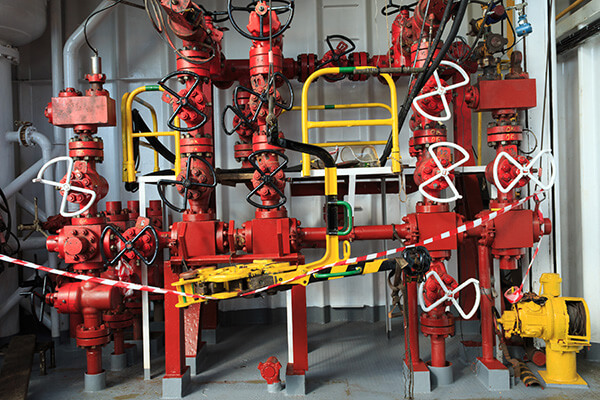
shutterstock_346100930

Fuente: El Economista

At $500 Million A Pop, It’s An Oil Gamble That Has No Precedent

In a far corner of the Caribbean Sea, one of those idyllic spots touched most days by little more than a fisherman chasing blue marlin, billions of dollars worth of the world’s finest oil equipment bobs quietly in the water.

They are high-tech, deepwater drillships — big, hulking things with giant rigs that tower high above the deck. They’re packed tight in a cluster, nine of them in all. The engines are off. The 20-ton anchors are down. The crews are gone. For months now, they’ve been parked here, 12 miles off the coast of Trinidad & Tobago, waiting for the global oil market to recover.

The ships are owned by a company called Transocean Ltd., the biggest offshore-rig operator in the world. And while the decision to idle a chunk of its fleet would seem logical enough given the collapse in oil drilling activity, Transocean is in truth taking an enormous, and unprecedented, risk. No one, it turns out, had ever shut off these ships before. In the two decades since the newest models hit the market, there never had really been a need to. And no one can tell you, with any certainty or precision, what will happen when they flip the switch back on.

It’s a gamble that Transocean, and a couple smaller rig operators, felt compelled to take after having shelled out millions of dollars to keep the motors running on ships not in use. That technique is called warm-stacking. Parked in a safe harbor and manned by a skeleton crew, it typically costs about $40,000 a day. Cold-stacking — when the engines are cut — costs as little as $15,000 a day. Huge savings, yes, but the angst runs high.

“These drillships were not designed to sit idle,” said Willard Duffey Jr., an electrician who spent two decades with Transocean. The Deepwater Pathfinder, a ship he had served on for four years, was among the first to be parked off the Trinidad coast. The ship made the voyage there from the Gulf of Mexico about a year ago. Duffey was one of the last men aboard before the engines were turned off. He fretted constantly — “did I do everything I could?” — as he flew back home to Ore City, Texas. “To get the Pathfinder back up would be very difficult to guess actually,” he said.

These rigs, once famously labeled the “new Ferraris” of the oil world, are no ordinary ships. Carrying a price tag of about $500 million a piece, they are loaded bow to stern with sophisticated, and very heavy, gadgetry.

Below the water line sit a half-dozen Rolls-Royce thrusters, coordinated by satellite to push against each other and keep the rig hovering on top of wells lying as much as two miles underwater. Up on deck, there’s a robot that can be launched to work a screwdriver or a wrench under water pressures on the seabed that no human could survive. And the 220-foot tall, dual-activity oil-drilling derrick is capable of simultaneously lifting and lowering gear down to the seafloor, including a diamond-studded drill bit, a five-story-tall blowout preventer and a heavy-drill pipe. The derrick can handle as much as 5 million pounds of gear — equal to the weight of some 20 adult blue whales — going up and down at one time.

All of these fancy elements, though, are what make turning the ships back on so daunting. Chip Keener, whose rig-storage consulting firm advises Transocean, compares it to what would happen if you left a high-tech new car parked in the garage for months. The battery would be dead, sure, but then there’d also be a slew of pre-sets to reprogram. On a drillship, there are thousands and thousands of pre-sets. And unlike your car, those on a ship are essential to its proper functioning. “It’s a big deal,” says Keener.

For now, cold-stacking has been a huge success for Transocean, a long-time Texas powerhouse that’s based today in Switzerland. (It owned the offshore rig that BP Plc was operating in the 2010 Gulf of Mexico disaster.) The company reported a profit of $77 million in the second quarter, surprising investors who had been bracing for a loss. Its stock price jumped 8.5 percent in minutes the next morning in New York.

«I don’t think a simple congrats on this quarter’s cost beat is really sufficient,» one stunned analyst, Scott Gruber at Citigroup, told Transocean executives on a conference call. “A big kudos to all of you.”

Still, there are any number of deepwater rig operators unwilling to turn the engines off: Noble Corp., Rowan Cos. and Pacific Drilling, to name a few. They’re paying anywhere from $30,000 to $50,000 a day to store their out-of-work ships. Chris Beckett, the CEO of Pacific Drilling, said the unknowns of cold-stacking are just too great and the cost to keep the ships running too manageable — about $10 million a year — to turn them off. He likes the peace of mind that comes with this approach. “We don’t worry about how you start them again,” Beckett said in an interview in the company’s Houston headquarters.

The cold-stack versus warm-stack dilemma doesn’t figure to go away anytime soon.

Nearly half of the world’s available floating rigs are out of work today, and most observers expect that number will climb further. Not only are the drillship operators’ customers — the likes of ConocoPhillips and Total SA — slashing spending in high-cost offshore areas and canceling work contracts early, but new rigs that were ordered in recent years keep rolling out of shipyards. Bloomberg Intelligence estimates as much as $56 billion worth of offshore rigs, capable of drilling in everything from shallow water to oceans more than two miles deep, are still under construction.

It’s a far different mood than a couple years ago, when crude was hovering around $100 a barrel and just about every single deepwater rig on the planet was in use. Transocean’s Pathfinder was in many ways the symbol of those go-go days. In mid-2014, just as oil prices were peaking, Eni SpA agreed to pay Transocean $681,000 a day to lease the ship. It was one of the richest drilling contracts ever, an amount that’s about triple the rate a deal signed today would fetch. By the end of that year, with oil in freefall, Eni canceled the contract four months before it was due to expire.

Things are quiet on the Pathfinder these days. The water is calm off Trinidad, one of the top global destinations for drillship storage. A handful of seamen recruited locally make the rounds, in part to ward off criminal elements. They’re joined every once in a while by Transocean mechanics sent in to monitor the ships. The company’s chief operating officer, John Stobart, recently dropped in to check them out himself. CEO Jeremy Thigpen said Stobart came away encouraged.

«He was really impressed with the preservation of all the critical components,» Thigpen said at an energy conference in New York this month. «His belief is, ‘Listen, we’re going to be able to reactivate these rigs in a timely and low cost manner.’»

Stobart’s going to have to wait for his chance. Oil, after having briefly rebounded above $50 in June, is slumping again. And Transocean seems prepared to be in Trinidad for a while. According to island officials, the contract that the company’s negotiating to lease out seabed space could extend through October of 2020.

Financial Growth

Financial Growth

Copyright: Rig Zone

Reglas para usar equipo de Pemex, esta semana

Por primera vez la industria privada tendrá acceso detallado al estado de la infraestructura de Pemex: su capacidad de almacenamiento y transporte, la edad de sus tubos y sus necesidades, dijo Guillermo Zúñiga, comisionado de la Comisión Reguladora de Energía (CRE).

En un panel organizado por El Financiero Bloomberg puntualizó que dichos datos serán parte de los lineamientos para realizar la temporada abierta que serán publicados en esta semana.

“La temporada abierta es un proceso muy importante en los mercados de gasolina y diésel, Pemex está trabajando con base en las disposiciones de la CRE. Estas disposiciones van a quedar este mes: son las reglas para que Pemex pueda llevar a cabo la temporada abierta”, señaló Zúñiga.

Una temporada abiertaes el proceso establecido en la reforma energética por el que cualquier permisionario, incluido la petrolera nacional “abre sus puertas” a las empresas y entonces éstos pueden pagar una renta para utilizar por ejemplo una terminal de almacenamiento de gasolina de Pemex o un ducto para transportar diésel, los cuales han sido exclusivos para la empresa estatal por 78 años.

“(Estos lineamientos) van a dar mucha información a la industria, la información que necesita, porque hablamos de los tiempos de la industria, pero para mí el hito más importante está en la información necesaria para tomar las decisiones”, indicó.

Con ello, los nuevos participantes de la industria privada, como nuevas marcas de gasolina que buscan entrar al país podrán tomar decisiones de si quieren pagar por dicha capacidad o construir nueva.

Juan Acra, presidente del Consejo Mexicano de la Energía (Comener), resaltó el interés de la industria privada por esta nueva oportunidad.

“Esta temporada abierta que planean sacar en donde la CRE juega un papel mucho muy importante, creemos en el sector privado que se tiene que dar lo antes posible para que podemos ver justamente dónde invertir y se puedan escoger esas terminales, esos ductos y podamos participar de manera activa”, afirmó.

A pesar de la caída del petróleo se estima que 
hay necesidades de infraestructura energética por 
4 mil millones de dólares en México, recordó el empresario.

“En infraestructura nueva se proyectaron más de 4 mil millones de dólares, solamente en infraestructura nueva y a pesar de la caída del petróleo es un área de negocio mucho muy importante y que el país requiere para poder fomentar la competitividad”, dijo Acra.

En todos los procesos de inversión para nueva infraestructura energética de transporte y almacenamiento se debe realizar este procedimiento, de acuerdo con los artículos 73 y 74 de la Ley de Hidrocarburos que rigen los convenios de inversión.

Fuente: El Financiero

What Does OPEC’s Freeze Talk Really Mean?

Heading into the home stretch before a highly anticipated OPEC meeting in Algiers next week, crude industry experts and non-OPEC members alike are opining on what may happen to crude production.

Dave Pursell, managing director and head of macro research at Tudor, Pickering, Holt & Co. in Houston, told Rigzone the production freeze idea is based largely on optics.

“But, they’re raising expectations that there will be an agreement,” he said. “I think they need to do something, and the challenges are less now than they were earlier this year.”

Oil prices have tumbled from more than $100 per barrel in 2014, as prodigious supply outsized demand. More recently, crude prices have hovered in the low $40s.

As Pursell explained, OPEC members Iraq and Libya can’t produce more oil, anyway, at least in the near term. Iraq needs significant capital investment to move forward, and Libyan production is struggling under the weight of political unrest.

“The reality is the only reason you can get a freeze is because people can’t grow. The only spare capacity in the world sits inside of Saudi Arabia and Libya. That doesn’t mean Iran and Iraq can’t grow over time, and the rest of OPEC can’t grow a little bit over time, but it takes a ton of capital,” he said. “There’s no spare capacity that could easily be brought on.”

Still, Pursell said that even if a production freeze agreement is mostly for show, it’s not meaningless.

“But it’s important ‘show’ in that shows they can agree to something. There’s this notion that OPEC is irrelevant and my argument is that if OPEC is irrelevant, how come I’m talking about them every day? And so if they’re going to eventually have to cut – which we don’t think they will – but if they do, you first have to have an agreement to not increase,” he said. “You have to agree on something, and then if you have to make a harder choice down the road that you have to cut, there’s more confidence that it could actually be implemented.”

Many analysts, including Pursell, have said a cut is unlikely, though. Russia recently said it’s off the table. The nation’s energy minister told UPI there are no proposals to slash crude production. Alexander Novak said one option under review would be to maintain production rates at current levels for the up to six months.

According to a new Reuters’ story anonymous sources have said Saudi Arabia would be willing to cut its crude production if Iran will cap its oil output. Iran has steadfastly said it won’t consider a freeze until it has ramped production back up to pre-sanction levels, but that may soon happen.

Copyright: Rig Zone

Characteristics of Environmental Liability Insurance.

Social awareness for the damage caused to the environment has greatly increased, so have an Environmental Liability Insurance to back you against possible infringements by your company has become essential. Especially with the implementation of the Law on Environmental Responsibility, based on the principle «polluter pays».

Environmental Liability Insurance protects you against accidents causing pollution to water, air, land or affect any habitat.

Accidents that jeopardize the company can occur within the insured premises during the transport of dangerous substances or during operation.

We can group the Environmental Liability Insurance in three blocks:

  1. Environmental Insurance land

  2. Insurance for the transport of dangerous substances

  3. Emergency Care

Requiring insurance companies carrying out exploration or extraction of hydrocarbons, crude oil treatment and gas processing must comply with the following characteristics:

  • Containment contaminants

  • Mitigation of impacts and environmental damage

  • Characterization of contaminated sites

  • Remediation of contaminated sites

  • Restoration or environmental compensation

In NRGI Broker we have an expert team of Environmental Liability Insurance and risk analysis that will provide comprehensive solutions, with proven products that adapt to suit your needs.

Contact us, we are here to help:

info@nrgibroker.com
(55) 9177.2100

Características de los seguros de responsabilidad ambiental

La conciencia social por los daños ocasionados al medio ambiente ha incrementado mucho, por lo que contar con un Seguro de Responsabilidad Ambiental que te respalde ante posibles infracciones cometidas por tu empresa se ha convertido en algo imprescindible. Sobre todo ante la aplicación de la Ley de Responsabilidad Medioambiental, basada en el principio “el que contamina paga”.

El Seguro de Responsabilidad Ambiental te protege ante accidentes que causen contaminación al agua, al aire, a la tierra o afecten algún hábitat.

Los siniestros que ponen en riesgo a la empresa pueden ocurrir dentro del predio asegurado, durante el transporte de sustancias peligrosas o bien durante la operación.

Podemos agrupar los Seguros de Responsabilidad Ambiental en tres bloques:

  1. Seguro Ambiental para predios
  2. Seguro Ambiental para el transporte de sustancias peligrosas
  3. Seguro Ambiental para contratistas

Los seguros que requieren las empresas que llevan a cabo actividades de exploración o extracción de hidrocarburos, tratamiento de crudo y procesamiento de gas deben cumplir con las siguientes características:

  • Atención a emergencias
  • Contención de contaminantes
  • Mitigación de impactos y daños ambientales
  • Caracterización de sitios contaminados
  • Remediación de sitios contaminados
  • Restauración o compensación ambiental
En NRGI Broker contamos con un equipo experto en Seguros de Responsabilidad Ambiental y análisis de riesgo que le brindará soluciones integrales, con productos comprobados, que se adaptan a la medida de sus necesidades.<h/6>


Comuníquese con nosotros, estamos para ayudarle:
info@nrgibroker.com
(55) 9177.2100


El precio del barril del petróleo sube un 0,17 % y se sitúa en 41,74 dólares

El crudo de la Organización de Países Exportadores de Petróleo (OPEP) se vendió el pasado viernes a 41,74 dólares el barril, un 0,17 % por encima del nivel anterior, informó hoy el grupo con sede en Viena.

Esta mínima subida viene precedida de cinco bajadas consecutivas y se produjo antes del anuncio del presidente venezolano, Nicolás Maduro, sobre un supuesto acuerdo inminente entre los productores de la OPEP y los No OPEP para estabilizar el mercado.

El próximo 27 de septiembre los ministros de la OPEP celebrarán en Argel una reunión informal, considerada clave para avanzar hacia un acuerdo para limitar la producción y evitar así que los precios sigan tan bajos.

Fuente: El Economista
Stacked Oil and Gas Make Permian Deals Costly in Spite of Rout

Oil prices are depressed, but Texas shale has never been more valuable.

A recent spate of land deals in the sprawling Permian Basin illustrates a counter-intuitive trend: Real estate in the country’s most active oil field is even more expensive today than it was before commodity prices crashed.

QEP Resources Inc. agreed to pay a price that works out to close to $60,000 per net acre in June for a slice of the Permian, in the basin’s priciest land deal on record.

That’s more than double the average $30,000 per net acre explorers paid for Permian land during the first nine months of 2014, when oil topped $100 a barrel, according to data from Citigroup Inc. Oil has been hovering at $45 to $50 per barrel since mid-August.

Over the past few months, at least four other explorers agreed to pay more than $30,000 per net acre to expand in the Permian: Concho Resources Inc., Parsley Energy Inc., SM Energy Co., and Silver Run Acquisition Corp., according to data compiled by Bloomberg.

“The valuations are pretty lofty,” said Bryan Lastrapes, managing director at Moelis & Co. “When you look at the prices being paid for a flowing barrel, they are higher than when oil was at $100.”

Unusual Geography

The obvious question: With oil so much cheaper today, why has Permian land become so pricey? There are a few explanations. The first comes down to the same reason a dingy is more valuable on a sinking ship.

“It’s about scarcity,” said Bruce Cox, global head of energy acquisitions and divestitures with Credit Suisse Group AG.

The Permian is one of the few places in the U.S. where drilling remains profitable amid low prices, thanks to its unusual geography, in which different layers of oil- and gas-soaked rock are stacked like layers in a cake, he said. An explorer can drill multiple horizontal wells after digging straight down.

“What you can’t find in most plays is the Permian hydrocarbon column,” Cox said. “Companies can drill two to four times as many wells over a 10-year development period” in the Permian than in other basins.

QEP Rationale

This is a key part of the rationale QEP used to justify the price it agreed to pay for the 9,400 net acres in the Permian in June.

The company told investors it sees a chance to drill more than 400 horizontal wells along four different benches of shale, more than a half-mile down, where it has already determined there is oil. It sees additional upside potential drilling riskier, wildcat wells on three other benches. So it isn’t buying just one field, but as many as seven.

That deal also addresses a perpetual critique from investors that QEP isn’t big enough in the Permian, by increasing its position there by 50 percent, Richard Doleshek, QEP’s chief financial officer, said in August.

“From a dollar-per-acre standpoint, we heard a lot of conversation about how that was a big number,” Doleshek said during a presentation at an oil and gas conference sponsored by Enercom Inc., according to a transcript compiled by Bloomberg.

“When you look at it on a target basis, it’s relatively reasonable,” he said. “It’s pristine acreage.”

Lower Costs

Another factor driving up Permian land prices is the fact that it has some of the lowest break-even costs in the world. The area has more than a half-dozen fields where drilling can stay profitable even when oil falls below $30 a barrel, according to data compiled by Bloomberg.

The oil rout has set off a land grab for that reason, said Ron Gajdica, co-head of energy acquisitions and divestitures with Citigroup.

“When oil prices were high, there was a high supply of acreage with economic drilling opportunities,” he said. “Now, in a $40 to $50 oil price environment, acreage with economic locations is scarcer. There are only a limited amount of opportunities and many of them are in the Permian.”

A couple of other things are driving up the price of Permian land. First, development costs have come down sharply during the downturn, thanks to lower service costs, technological advances and more efficient techniques, Gajdica said. That means explorers can justify paying higher prices for land.

Second, Wall Street is helping the trend. Publicly traded Permian explorers such as Concho and Parsley trade at a premium to other shale players. They paid for their recent acquisitions with stock. Since their currency is worth more, they can afford to pay up.

In addition, other explorers with operations elsewhere, such as QEP and SM, saw their share prices spike after striking deals in the Permian, which could spur even more dealmaking in the area.

“The market tends to respond favorably when these Permian deals are announced,” Gajdica said.

Copyright: Bloomberg