Mexico to postpone deep water auction, adjust next oil tender terms

Mexico, which has started to open its nationalized oil industry to additional private investment, will postpone auctions for deep-water oil exploration and production contracts and adjust the terms of upcoming tenders after an inaugural oil auction failed to meet the government’s modest expectations.
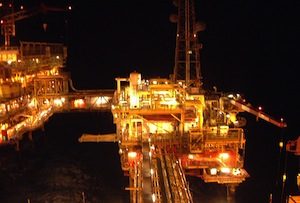
shutterstock_173495Energy Minister Pedro Joaquin Coldwell told local television the government will change rules that scared off potential bidders earlier this month, when it was able to auction only two of 14 blocks in a pivotal oil and gas tender.

He signaled that the government will relax its requirement that consortia bidding on oil parcels must have one member act as a guarantor and hold shareholder equity of at least $6 billion to protect the state’s interest in the event of a major accident.

«We are revising the issue of the guarantees,» said Joaquin Coldwell in a Tuesday night interview with top Mexican broadcaster Televisa’s cable news channel Foro TV.

He also said the government would tweak rules prohibiting a consortium from selecting a new company to replace a pre-selected operator that pulls out. He said that rule thwarted bids in this month’s auction.

He said the government will also allow companies to make a second bid in auctions if an initial bid fails to meet a government set minimum.

This month’s disappointing auction was the first of a scheduled five-phase auction that will extend into next year for oil regulator CNH.

Joaquin Coldwell, also chairman of the board of state-owned oil company Pemex, said the critical fourth phase covering lucrative deep water acreage in the Gulf of Mexico would be postponed to allow the government and companies more time to pore over details.

«We are conducting a full evaluation in order to launch the deep water call for bids by the end of September and give us more time to perfect the criteria because we shouldn’t have any margin for error on that,» he said.

The oil regulator had previously said the call for bids, followed by the opening of the corresponding data rooms, would be made by the end of this month.

Joaquin Coldwell said the fifth phase, which was to focus on higher-cost shale and other so-called non-conventional oil and gas fields, has been frozen.

«Right now we have suspended it pending a future evaluation,» he said.

The government had previously said that the fifth phase would be trimmed but would still go forward.


Con información de REUTERS

Cómo saber si estoy bajo-asegurado

Fijar mal la suma asegurada de su empresa es un riesgo que todos pueden cometer y esto puede acarrear muchas consecuencias. En NRGI Broker sabemos que sus bienes son lo más preciado y por eso le decimos cómo no poner en riesgo su capital.

BajoseguroEl bajo-aseguramiento es cuando el valor que el asegurado atribuye al bien amparado es inferior al que realmente tiene, es decir, cuando algo se asegura por menos de lo que vale. Por ejemplo, si su empresa tiene un valor de $1,000,000 y se asegura por $500,000 se caería en un bajo-seguro del 50%, si se produjera un siniestro en virtud del cual queda destruida la mitad de su compañía, la aseguradora (en virtud de la regla de la proporcionalidad) solo indemnizaría por $250,000.

En resumen, el bajo-seguro se puede definir en pocas palabras así: Porcentaje asegurado de los bienes, es igual al porcentaje pagado del siniestro.

Muchos tienden a creer que al asegurar sus activos por un valor inferior al que realmente tienen, se están ahorrando prima. Esta falsa impresión se desvanece cuando se produce algún siniestro y se ven obligados a asumir parte de la pérdida.

Recomendaciones:

  • No trate de ahorrar en la prima valorando a la baja sus activos.
  • No descarte coberturas que aunque sean algo remotas existe la posibilidad de que ocurran.
  • Incluso en situaciones límites la compañía está autorizada para cancelar el seguro en vigor si advierte que la suma asegurada proporcionada por el asegurado, no es correcta, ya sea por estar muy por arriba o debajo de su valor real.
  • Lo importante es identificar de manera objetiva las coberturas de seguro que requiere su empresa y/o bien.
  • Revise su póliza periódicamente para asegurarse que se ajuste a sus necesidades y, en caso de duda, busque un consejo de un profesional experto para negociar con su compañía un reajuste de las coberturas y las primas.
  • Tome en cuenta que, en algunos casos, las pólizas e indemnizaciones se adecuarán a las variaciones del valor de sus activos; es muy probable que haya adquirido un nuevo patrimonio que tendrá que comunicar a la compañía aseguradora, si quiere tenerlo cubierto.
  • Es conveniente que compare regularmente los seguros que hay en el mercado ya que lo mejor es concertar un seguro a la medida, ponderado y acorde con sus requerimientos.

En NRGI Broker ofrecemos soluciones integrales para usted y para su negocio, somos su aliado estratégico para la protección de su patrimonio. Contamos con un plan personalizado de acuerdo a sus necesidades. Comuníquese con nuestros especialistas:

Comuníquese con nosotros, estamos para ayudarle:

(55) 9177.2100

info@nrgibroker.com 

BEGINS A NEW ERA IN THE MEXICO’S ENERGY INDUSTRY

Two of the 14 shallow-water Gulf of Mexico blocks on offer in the first phase of Mexico’s historic Round One oil auction were awarded, both to a consortium featuring a domestic company.shutterstock_923929

Mexico is starting small with its offer of shallow-water fields and onshore blocks this year and saving the big prizes – deep-water fields in the Gulf of Mexico – for later tenders.

Both of the blocks awarded on Wednesday were won by a consortium made up of Mexico’s Sierra Oil & Gas, Houston-based Talos Energy and Britain’s Premier Oil plc.

One of them covers a 194-sq.-kilometer (75-sq.-mile) area off the coast of the Gulf coast state of Veracruz and is projected to contain light oil and dry gas.

The other covers a 465-sq.-kilometer (180-sq.-mile) area off the Gulf coast state of Tabasco and was contested by four other bidders: Norway’s Statoil, U.S.-based Hunt Overseas Oil Company, Argentina’s E&P Hidrocarburos y Servicios and a consortium made up of Italy’s ENI International and U.S.-based CASA Exploration.

The other 12 blocks either received no bids or had offers that were below the minimum 40 percent of pre-tax profits demanded by Mexico’s Finance Secretariat.

Eighteen individual companies and seven consortia had been pre-qualified for Round One’s first phase, but only nine registered on Wednesday and only seven submitted bids for at least one of the blocks.

The initial batch of 14 Gulf of Mexico blocks – located off the coasts of Veracruz, Tabasco and Campeche states – were placed on offer in the first of five phases of Round One, which comprises a total of 169 onshore and offshore blocks.

The second phase of Round One, in which nine shallow-water fields will be on offer, is scheduled to take place on Sept. 30, while the third phase consisting of 26 onshore blocks is to be held on Dec. 15.

The final two phases of Round One still have no established timetable.

Pemex, which obtained 83 percent of Mexico’s proven and probable reserves and 21 percent of its potential resources in a so-called «Zero Round» of non-competitive bidding last year, said last week it would not participate in the initial phase of Round One.

Mexico’s government is looking to the energy overhaul to attract tens of billions of dollars in investment and reverse a roughly 30 percent decline in Mexico’s oil output, which peaked at 3.38 million barrels per day (bpd) in 2004 and currently stands at roughly 2.3 million bpd.